The Institute for Genomic Health, Icahn School of Medicine at Mount Sinai, New York, NY, USA.
Department of Medicine, Icahn School of Medicine at Mount Sinai, New York, NY, USA.
Genome Med. 2021 Feb 5;13(1):17. doi: 10.1186/s13073-021-00832-y.
Population-based genomic screening has the predicted ability to reduce morbidity and mortality associated with medically actionable conditions. However, much research is needed to develop standards for genomic screening and to understand the perspectives of people offered this new testing modality. This is particularly true for non-European ancestry populations who are vastly underrepresented in genomic medicine research. Therefore, we implemented a pilot genomic screening program in the BioMe Biobank in New York City, where the majority of participants are of non-European ancestry.
We initiated genomic screening for well-established genes associated with hereditary breast and ovarian cancer syndrome (HBOC), Lynch syndrome (LS), and familial hypercholesterolemia (FH). We evaluated and included an additional gene (TTR) associated with hereditary transthyretin amyloidosis (hATTR), which has a common founder variant in African ancestry populations. We evaluated the characteristics of 74 participants who received results associated with these conditions. We also assessed the preferences of 7461 newly enrolled BioMe participants to receive genomic results.
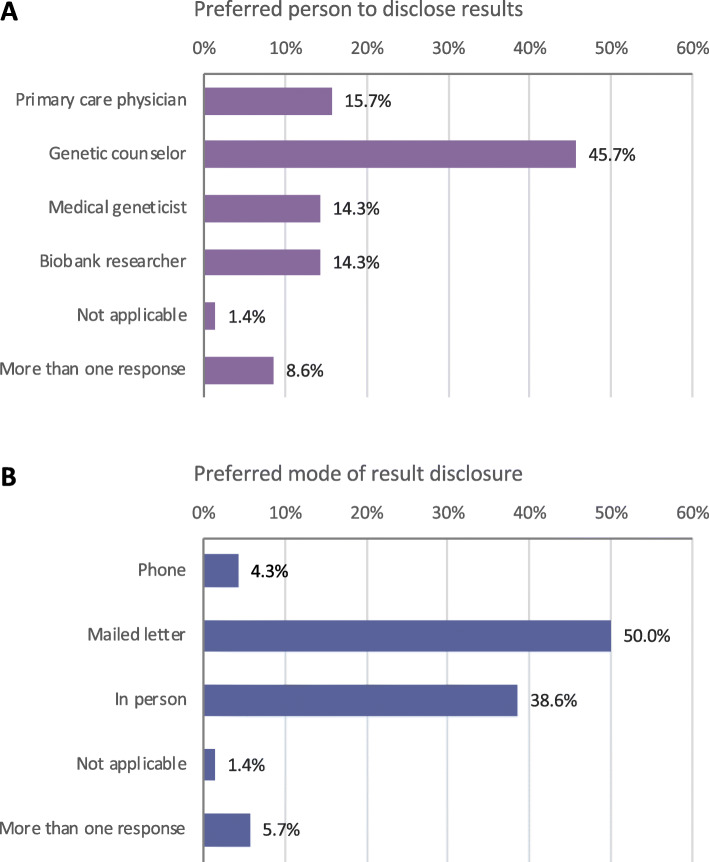
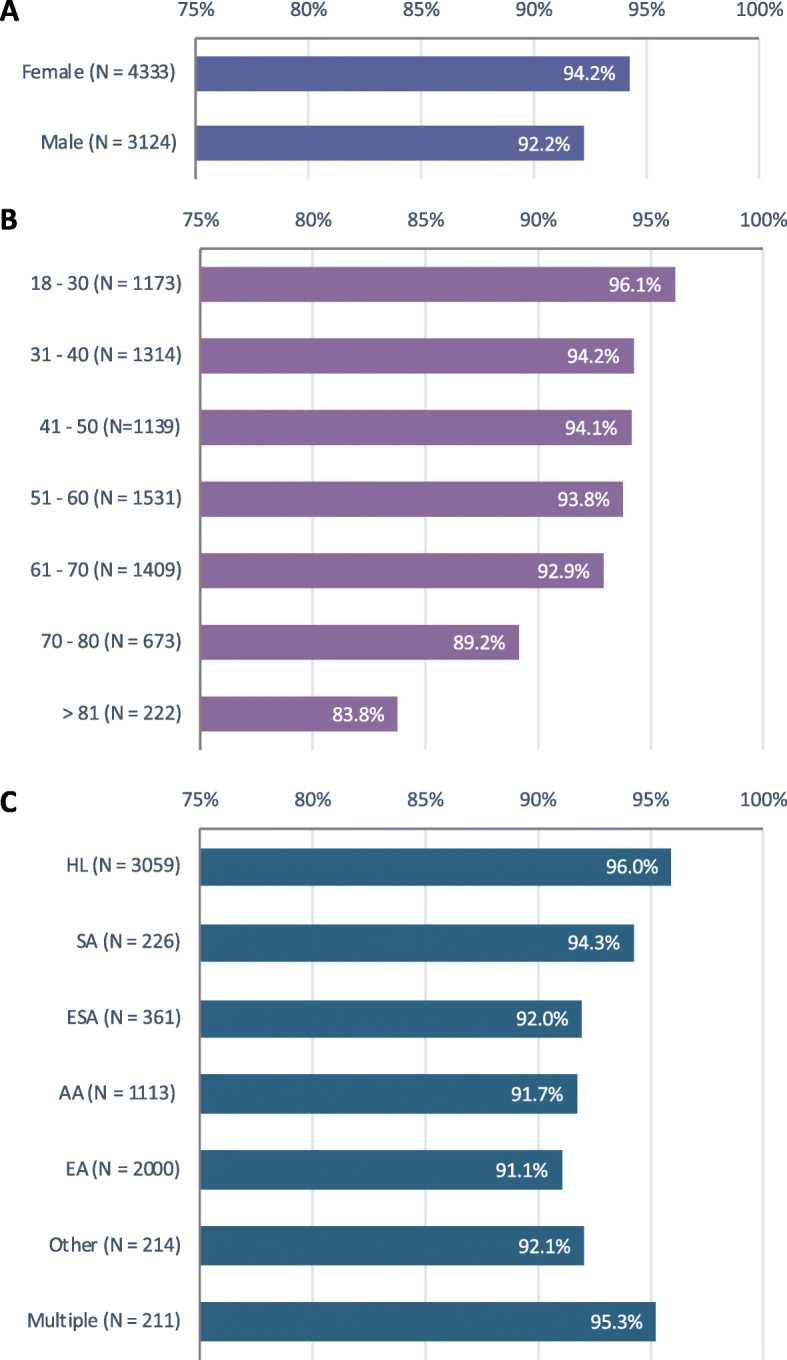
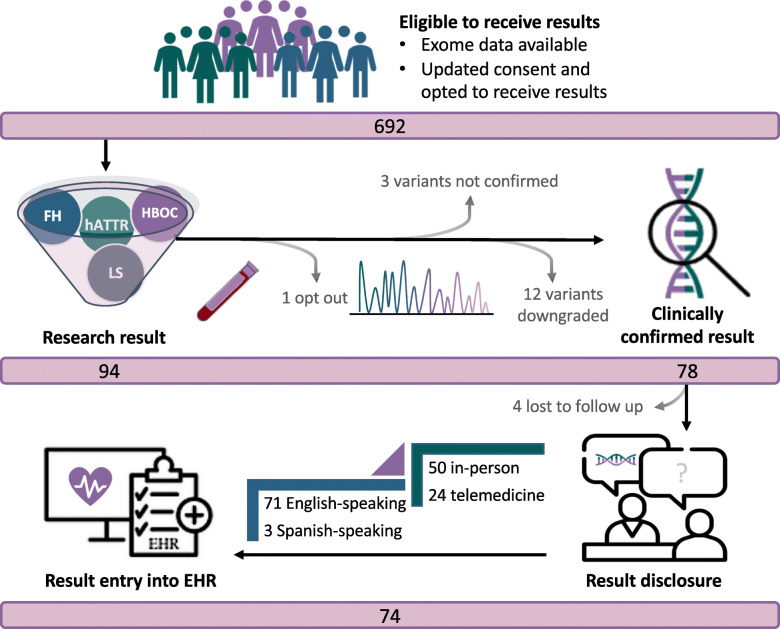
In the pilot genomic screening program, 74 consented participants received results related to HBOC (N = 26), LS (N = 6), FH (N = 8), and hATTR (N = 34). Thirty-three of 34 (97.1%) participants who received a result related to hATTR were self-reported African American/African (AA) or Hispanic/Latinx (HL), compared to 14 of 40 (35.0%) participants who received a result related to HBOC, LS, or FH. Among the 7461 participants enrolled after the BioMe protocol modification to allow the return of genomic results, 93.4% indicated that they would want to receive results. Younger participants, women, and HL participants were more likely to opt to receive results.
The addition of TTR to a pilot genomic screening program meant that we returned results to a higher proportion of AA and HL participants, in comparison with genes traditionally included in genomic screening programs in the USA. We found that the majority of participants in a multi-ethnic biobank are interested in receiving genomic results for medically actionable conditions. These findings increase knowledge about the perspectives of diverse research participants on receiving genomic results and inform the broader implementation of genomic medicine in underrepresented patient populations.
基于人群的基因组筛查具有降低与可治疗疾病相关的发病率和死亡率的预期能力。然而,需要进行大量研究来制定基因组筛查标准,并了解提供这种新检测模式的人群的观点。对于在基因组医学研究中代表性严重不足的非欧洲血统人群来说,尤其如此。因此,我们在纽约市的 BioMe 生物库中实施了一项试点基因组筛查计划,该生物库的大多数参与者都不是欧洲血统。
我们启动了针对与遗传性乳腺癌和卵巢癌综合征(HBOC)、林奇综合征(LS)和家族性高胆固醇血症(FH)相关的既定基因的基因组筛查。我们评估并纳入了一个与遗传性转甲状腺素蛋白淀粉样变性(hATTR)相关的额外基因(TTR),该基因在非洲裔人群中存在常见的创始变体。我们评估了 74 名接受与这些疾病相关结果的参与者的特征。我们还评估了新纳入的 7461 名 BioMe 参与者对接收基因组结果的偏好。
在试点基因组筛查计划中,74 名同意的参与者收到了与 HBOC(N=26)、LS(N=6)、FH(N=8)和 hATTR(N=34)相关的结果。在收到与 hATTR 相关结果的 34 名参与者中,有 33 名(97.1%)自我报告为非裔美国人/非裔(AA)或西班牙裔/拉丁裔(HL),而在收到与 HBOC、LS 或 FH 相关结果的 40 名参与者中,只有 14 名(35.0%)是这样。在 BioMe 方案修改以允许返回基因组结果后纳入的 7461 名参与者中,93.4%表示他们希望收到结果。年轻的参与者、女性和 HL 参与者更有可能选择接受结果。
在试点基因组筛查计划中增加 TTR,意味着我们将结果返还给更高比例的 AA 和 HL 参与者,而不是美国传统的基因组筛查计划中包含的基因。我们发现,多民族生物库中的大多数参与者都有兴趣接收与可治疗疾病相关的基因组结果。这些发现增加了对不同研究参与者接收基因组结果的观点的了解,并为在代表性不足的患者群体中更广泛地实施基因组医学提供了信息。