Genomic Medicine Institute, Geisinger, Danville, PA, USA.
Department of Population Health Sciences, Geisinger, Danville, PA, USA.
Genet Med. 2020 Nov;22(11):1874-1882. doi: 10.1038/s41436-020-0876-4. Epub 2020 Jun 30.
Three genetic conditions-hereditary breast and ovarian cancer syndrome, Lynch syndrome, and familial hypercholesterolemia-have tier 1 evidence for interventions that reduce morbidity and mortality, prompting proposals to screen unselected populations for these conditions. We examined the impact of genomic screening on risk management and early detection in an unselected population.
Observational study of electronic health records (EHR) among individuals in whom a pathogenic/likely pathogenic variant in a tier 1 gene was discovered through Geisinger's MyCode project. EHR of all eligible participants was evaluated for a prior genetic diagnosis and, among participants without such a diagnosis, relevant personal/family history, postdisclosure clinical diagnoses, and postdisclosure risk management.
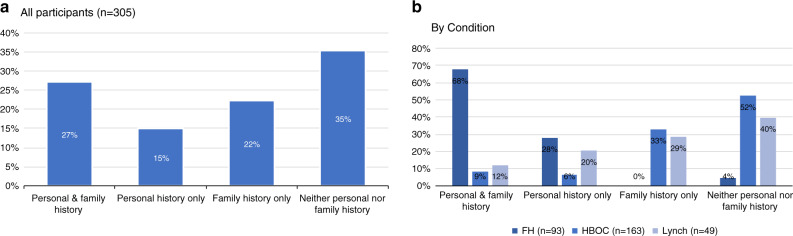
Eighty-seven percent of participants (305/351) did not have a prior genetic diagnosis of their tier 1 result. Of these, 65% had EHR evidence of relevant personal and/or family history of disease. Of 255 individuals eligible to have risk management, 70% (n = 179) had a recommended risk management procedure after results disclosure. Thirteen percent of participants (41/305) received a relevant clinical diagnosis after results disclosure.
Genomic screening programs can identify previously unrecognized individuals at increased risk of cancer and heart disease and facilitate risk management and early cancer detection.
遗传性乳腺癌和卵巢癌综合征、林奇综合征和家族性高胆固醇血症这三种遗传疾病具有一级证据支持的干预措施,可以降低发病率和死亡率,因此有人提议对未选择的人群进行这些疾病的筛查。我们研究了基因组筛查对未选择人群的风险管理和早期检测的影响。
对通过 Geisinger 的 MyCode 项目发现一级基因中致病性/可能致病性变异的个体的电子健康记录(EHR)进行观察性研究。评估所有符合条件的参与者的 EHR 是否有先前的遗传诊断,如果没有这种诊断,则评估相关的个人/家族病史、披露后的临床诊断以及披露后的风险管理。
87%的参与者(305/351)没有一级结果的先前遗传诊断。其中,65%的人有疾病相关的个人和/或家族病史的 EHR 证据。在 255 名有资格进行风险管理的个体中,有 70%(n=179)在结果披露后接受了推荐的风险管理程序。在结果披露后,有 13%的参与者(41/305)获得了相关的临床诊断。
基因组筛查计划可以识别以前未被识别的癌症和心脏病风险增加的个体,并促进风险管理和早期癌症检测。