Center for Biomedical Engineering and Technology, University of Maryland School of Medicine, 111 S. Penn St, Baltimore, MD, 21201, USA.
Department of Anatomy and Neurobiology, University of Maryland School of Medicine, Baltimore, MD, 21201, USA.
Acta Neuropathol Commun. 2021 Feb 5;9(1):22. doi: 10.1186/s40478-021-01123-8.
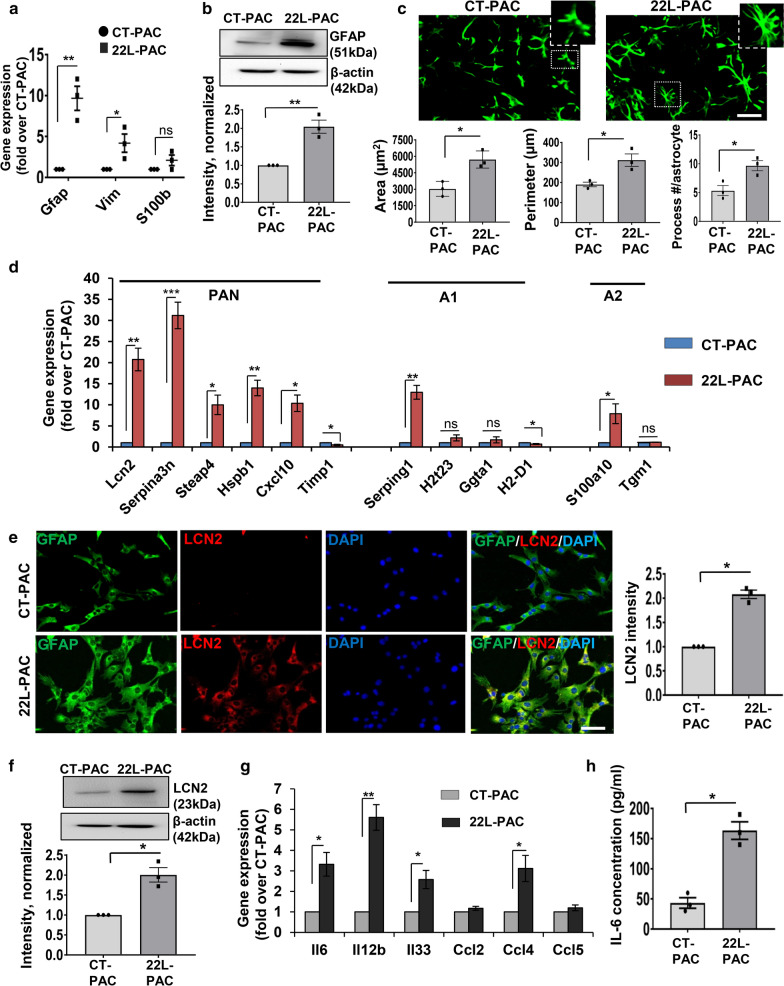
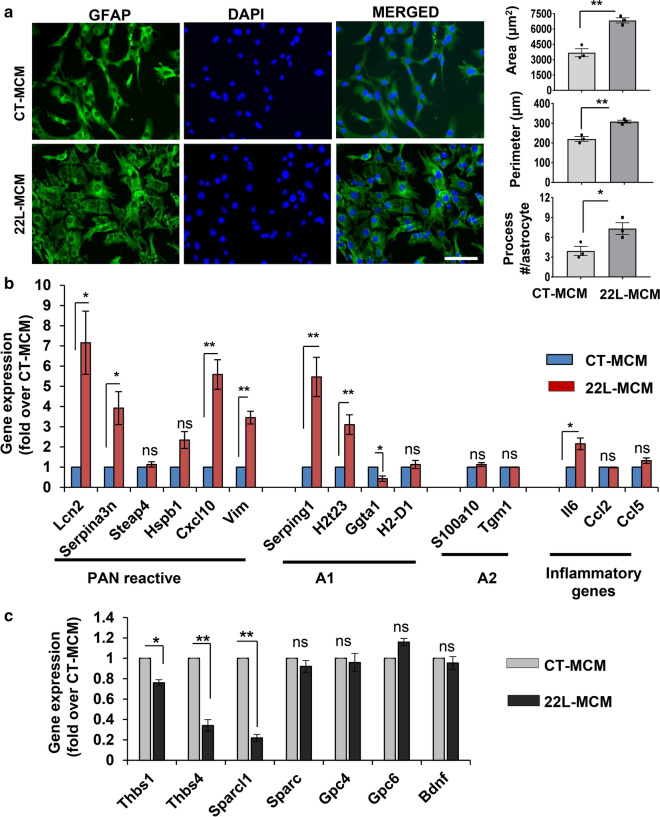
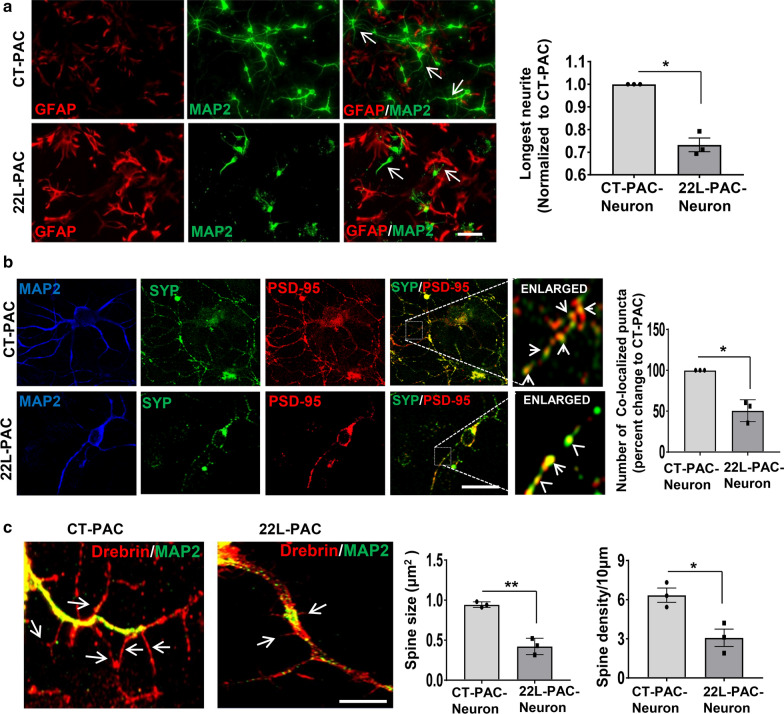
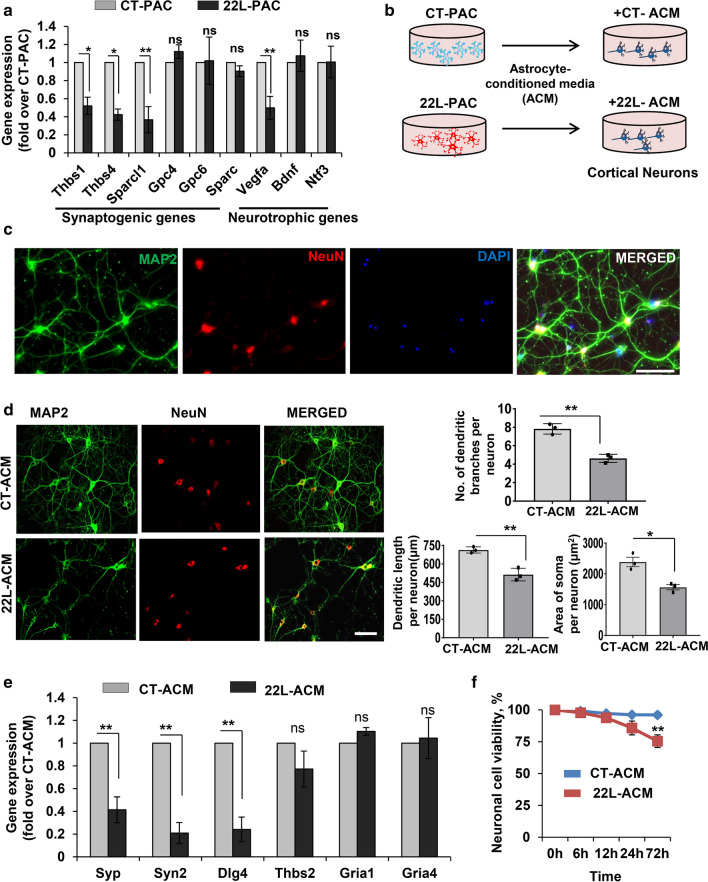
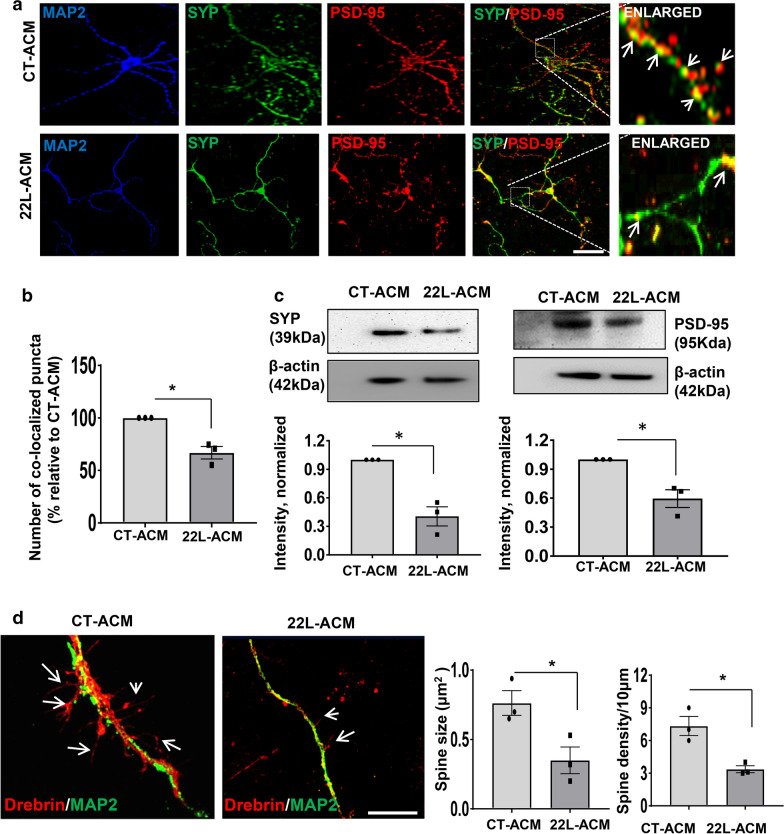
Under normal conditions, astrocytes perform a number of important physiological functions centered around neuronal support and synapse maintenance. In neurodegenerative diseases including Alzheimer's, Parkinson's and prion diseases, astrocytes acquire reactive phenotypes, which are sustained throughout the disease progression. It is not known whether in the reactive states associated with prion diseases, astrocytes lose their ability to perform physiological functions and whether the reactive states are neurotoxic or, on the contrary, neuroprotective. The current work addresses these questions by testing the effects of reactive astrocytes isolated from prion-infected C57BL/6J mice on primary neuronal cultures. We found that astrocytes isolated at the clinical stage of the disease exhibited reactive, pro-inflammatory phenotype, which also showed downregulation of genes involved in neurogenic and synaptogenic functions. In astrocyte-neuron co-cultures, astrocytes from prion-infected animals impaired neuronal growth, dendritic spine development and synapse maturation. Toward examining the role of factors secreted by reactive astrocytes, astrocyte-conditioned media was found to have detrimental effects on neuronal viability and synaptogenic functions via impairing synapse integrity, and by reducing spine size and density. Reactive microglia isolated from prion-infected animals were found to induce phenotypic changes in primary astrocytes reminiscent to those observed in prion-infected mice. In particular, astrocytes cultured with reactive microglia-conditioned media displayed hypertrophic morphology and a downregulation of genes involved in neurogenic and synaptogenic functions. In summary, the current study provided experimental support toward the non-cell autonomous mechanisms behind neurotoxicity in prion diseases and demonstrated that the astrocyte reactive phenotype associated with prion diseases is synaptotoxic.
在正常情况下,星形胶质细胞执行许多围绕神经元支持和突触维持的重要生理功能。在包括阿尔茨海默病、帕金森病和朊病毒病在内的神经退行性疾病中,星形胶质细胞获得反应性表型,这种表型在疾病进展过程中持续存在。目前尚不清楚在与朊病毒病相关的反应状态下,星形胶质细胞是否丧失了执行生理功能的能力,以及反应状态是神经毒性的还是相反是神经保护的。本研究通过测试从朊病毒感染的 C57BL/6J 小鼠中分离的反应性星形胶质细胞对原代神经元培养物的影响来解决这些问题。我们发现,在疾病的临床阶段分离的星形胶质细胞表现出反应性、促炎表型,这也表明参与神经发生和突触发生功能的基因下调。在星形胶质细胞-神经元共培养物中,来自朊病毒感染动物的星形胶质细胞损害神经元生长、树突棘发育和突触成熟。为了研究反应性星形胶质细胞分泌的因子的作用,发现星形胶质细胞条件培养基通过损害突触完整性、减少棘突大小和密度,对神经元活力和突触发生功能产生有害影响。从朊病毒感染动物中分离的反应性小胶质细胞被发现诱导原代星形胶质细胞发生表型变化,类似于在朊病毒感染的小鼠中观察到的变化。特别是,用反应性小胶质细胞条件培养基培养的星形胶质细胞显示出肥大的形态和参与神经发生和突触发生功能的基因下调。总之,本研究为朊病毒病中神经毒性的非细胞自主机制提供了实验支持,并证明与朊病毒病相关的星形胶质细胞反应性表型是突触毒性的。