Majumdar Uddalak, Manivannan Sathiyanarayanan, Basu Madhumita, Ueyama Yukie, Blaser Mark C, Cameron Emily, McDermott Michael R, Lincoln Joy, Cole Susan E, Wood Stephen, Aikawa Elena, Lilly Brenda, Garg Vidu
Center for Cardiovascular Research, Nationwide Children's Hospital, Columbus, OH, USA.
The Heart Center, Nationwide Children's Hospital, Columbus, OH, USA.
Sci Adv. 2021 Feb 5;7(6). doi: 10.1126/sciadv.abe3706. Print 2021 Feb.
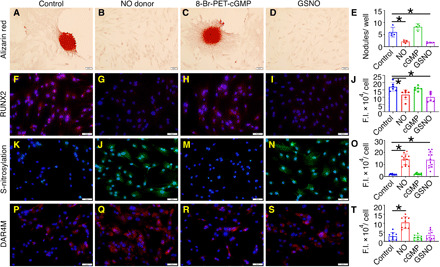
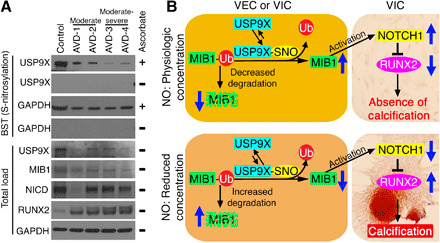
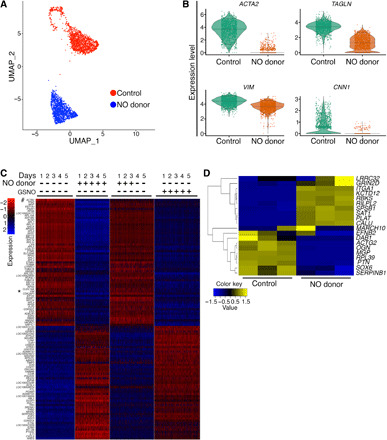
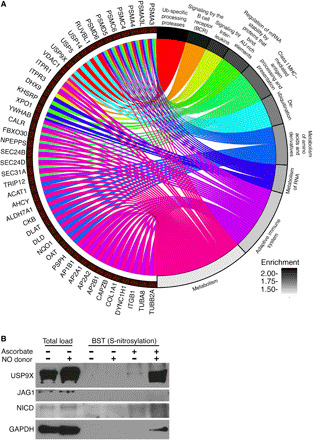
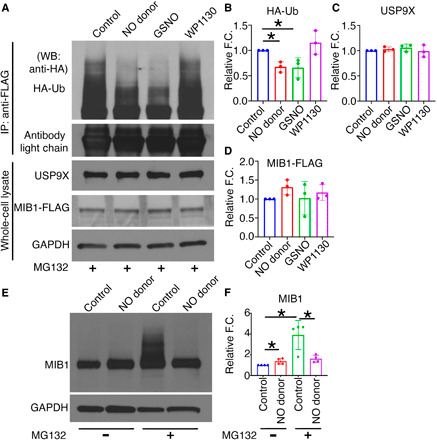
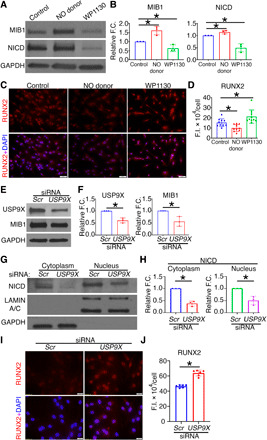
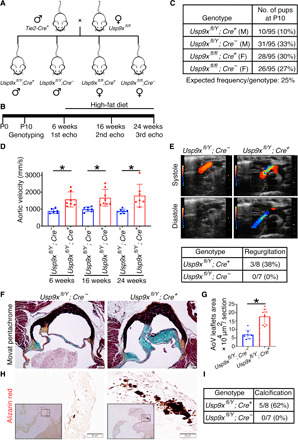
Calcific aortic valve disease (CAVD) is an increasingly prevalent condition, and endothelial dysfunction is implicated in its etiology. We previously identified nitric oxide (NO) as a calcification inhibitor by its activation of , which is genetically linked to human CAVD. Here, we show NO rescues calcification by an S-nitrosylation-mediated mechanism in porcine aortic valve interstitial cells and single-cell RNA-seq demonstrated NO regulates the NOTCH pathway. An unbiased proteomic approach to identify S-nitrosylated proteins in valve cells found enrichment of the ubiquitin-proteasome pathway and implicated S-nitrosylation of USP9X (ubiquitin specific peptidase 9, X-linked) in NOTCH regulation during calcification. Furthermore, S-nitrosylated USP9X was shown to deubiquitinate and stabilize MIB1 for NOTCH1 activation. Consistent with this, genetic deletion of in mice demonstrated CAVD and human calcified aortic valves displayed reduced S-nitrosylation of USP9X. These results demonstrate a previously unidentified mechanism by which S-nitrosylation-dependent regulation of a ubiquitin-associated pathway prevents CAVD.
钙化性主动脉瓣疾病(CAVD)是一种日益普遍的病症,内皮功能障碍与其病因有关。我们之前通过激活 (其与人类CAVD存在基因关联)将一氧化氮(NO)鉴定为一种钙化抑制剂。在此,我们表明NO在猪主动脉瓣间质细胞中通过S-亚硝基化介导的机制挽救钙化,单细胞RNA测序表明NO调节NOTCH信号通路。一种无偏向性蛋白质组学方法用于鉴定瓣膜细胞中的S-亚硝基化蛋白,发现泛素-蛋白酶体途径富集,并表明钙化过程中USP9X(泛素特异性肽酶9,X连锁)的S-亚硝基化与NOTCH调节有关。此外,S-亚硝基化的USP9X被证明可去泛素化并稳定MIB1以激活NOTCH1。与此一致,小鼠中 的基因缺失表现出CAVD,并且人类钙化主动脉瓣中USP9X的S-亚硝基化减少。这些结果证明了一种以前未被识别的机制,即泛素相关途径的S-亚硝基化依赖性调节可预防CAVD。