Division of Toxicology, Wageningen University, P.O. box 8000, 6700 EA, Wageningen, The Netherlands.
Wageningen Food Safety Research, P.O. Box 230, 6700 AE, Wageningen, The Netherlands.
Sci Rep. 2021 Feb 5;11(1):3234. doi: 10.1038/s41598-021-82853-6.
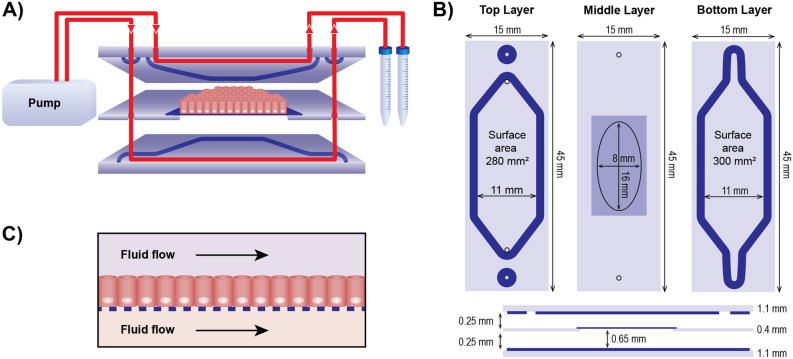
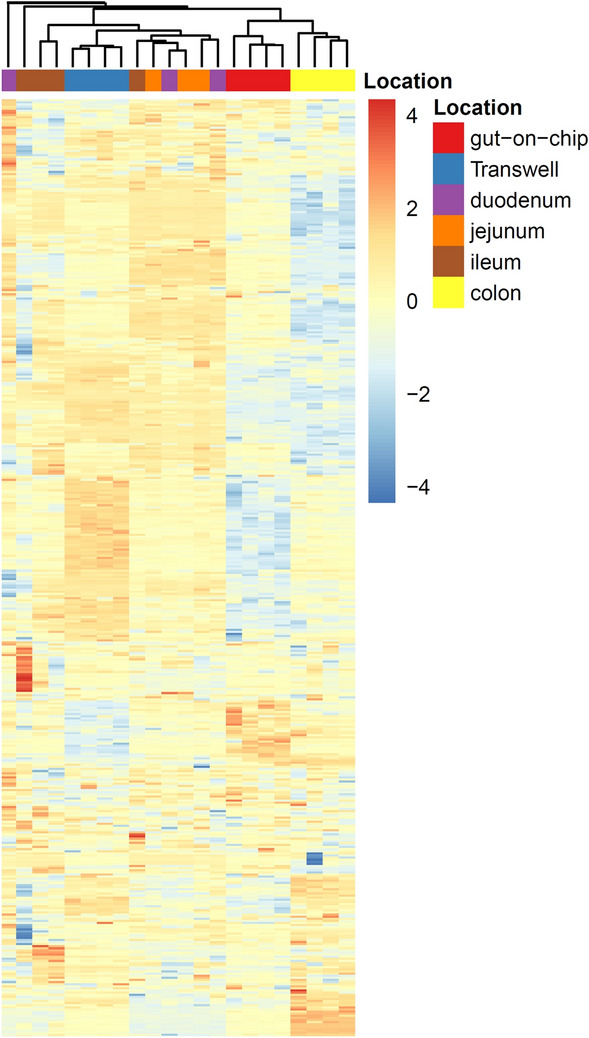
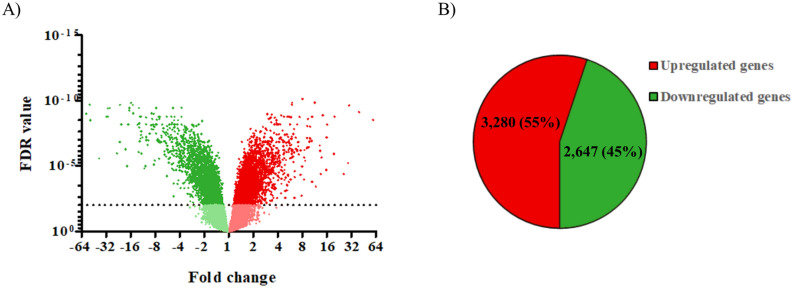
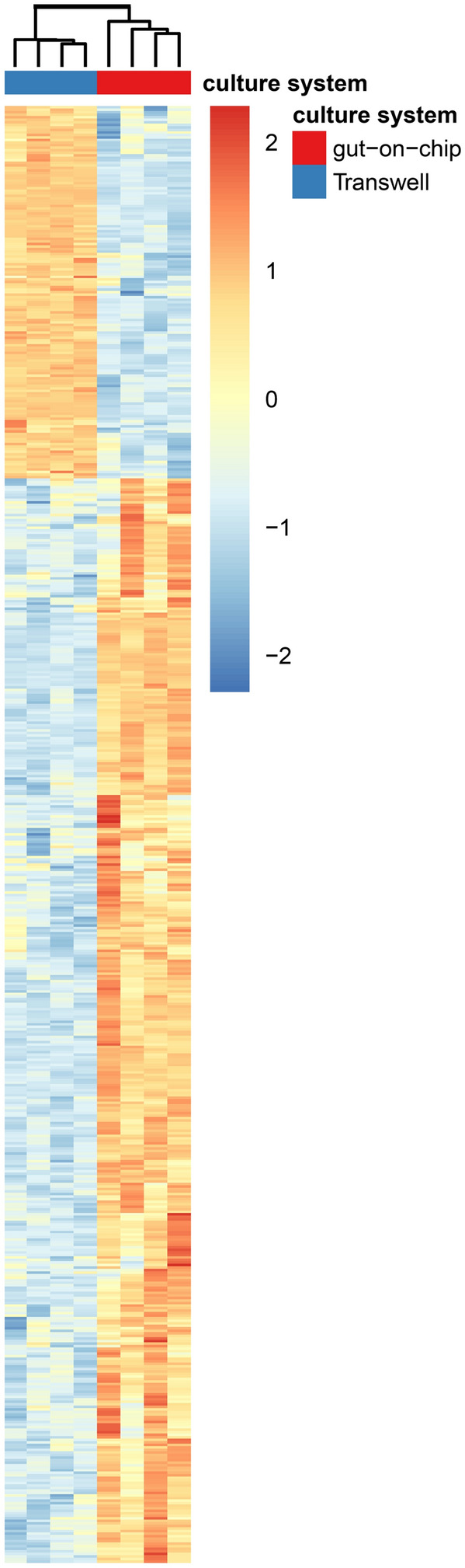
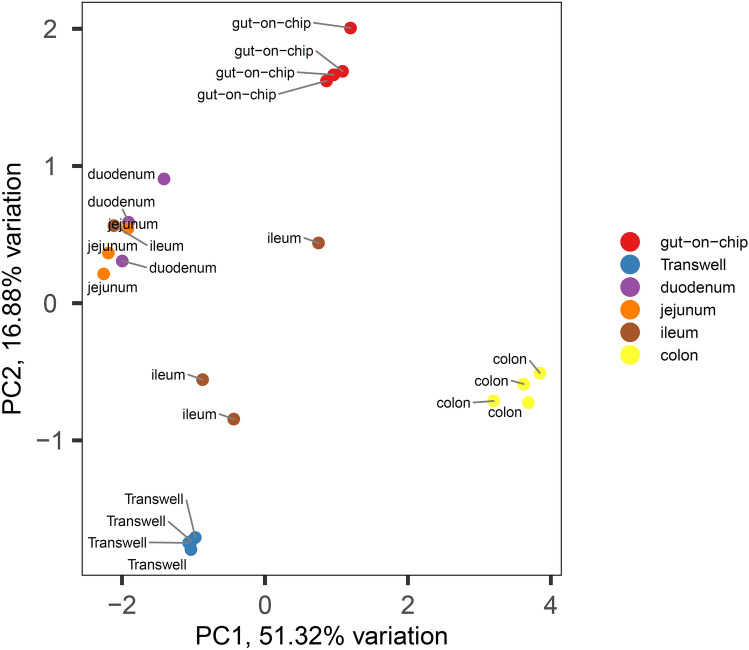
Gut-on-chip devices enable exposure of cells to a continuous flow of culture medium, inducing shear stresses and could thus better recapitulate the in vivo human intestinal environment in an in vitro epithelial model compared to static culture methods. We aimed to study if dynamic culture conditions affect the gene expression of Caco-2 cells cultured statically or dynamically in a gut-on-chip device and how these gene expression patterns compared to that of intestinal segments in vivo. For this we applied whole genome transcriptomics. Dynamic culture conditions led to a total of 5927 differentially expressed genes (3280 upregulated and 2647 downregulated genes) compared to static culture conditions. Gene set enrichment analysis revealed upregulated pathways associated with the immune system, signal transduction and cell growth and death, and downregulated pathways associated with drug metabolism, compound digestion and absorption under dynamic culture conditions. Comparison of the in vitro gene expression data with transcriptome profiles of human in vivo duodenum, jejunum, ileum and colon tissue samples showed similarities in gene expression profiles with intestinal segments. It is concluded that both the static and the dynamic gut-on-chip model are suitable to study human intestinal epithelial responses as an alternative for animal models.
肠芯片设备使细胞能够持续暴露于培养基中,产生切变应力,从而在体外上皮模型中比静态培养方法更好地模拟体内人类肠道环境。我们旨在研究动态培养条件是否会影响静态或动态培养在肠芯片设备中的 Caco-2 细胞的基因表达,以及这些基因表达模式与体内肠道节段的比较。为此,我们应用了全基因组转录组学。与静态培养条件相比,动态培养条件导致总共 5927 个差异表达基因(3280 个上调基因和 2647 个下调基因)。基因集富集分析显示,在动态培养条件下,与免疫系统、信号转导和细胞生长和死亡相关的途径上调,与药物代谢、化合物消化和吸收相关的途径下调。将体外基因表达数据与人类体内十二指肠、空肠、回肠和结肠组织样本的转录组图谱进行比较,显示出与肠道节段相似的基因表达谱。结论是,静态和动态肠芯片模型都适合作为动物模型的替代方法来研究人类肠道上皮反应。