Chen Cynthia Yi-An, Goh Kah Kheng, Chen Chun-Hsin, Lu Mong-Liang
Department of Psychiatry, Wan-Fang Hospital, Taipei Medical University, Taipei, Taiwan.
Psychiatric Research Center, Wan-Fang Hospital, Taipei Medical University, Taipei, Taiwan.
Front Psychiatry. 2021 Jan 20;11:605124. doi: 10.3389/fpsyt.2020.605124. eCollection 2020.
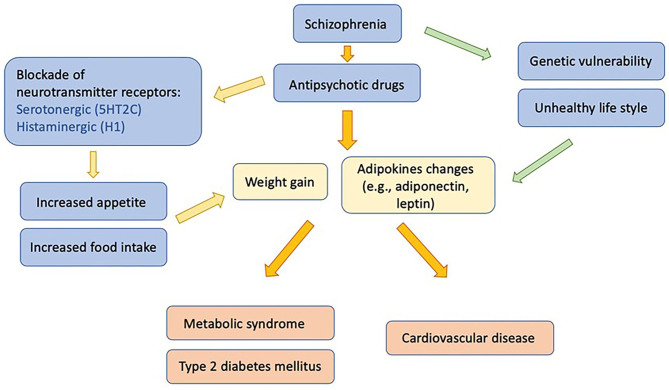
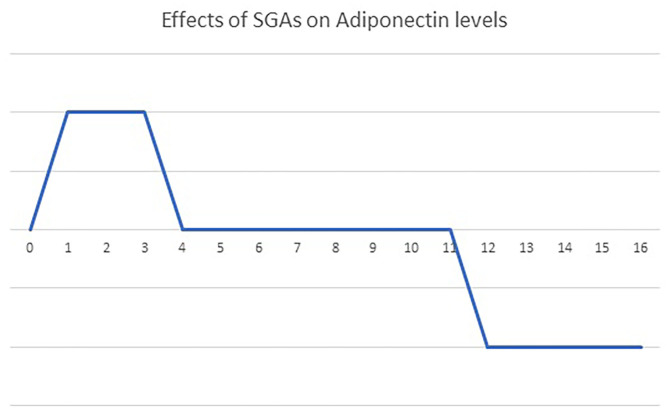
Antipsychotic-induced metabolic disturbance is a common adverse event occurring in patients treated with antipsychotic drugs. The mechanisms underlying metabolic dysregulation are complex, involving various neurochemical and hormonal systems, the interaction of genetic and lifestyle risk factors, and the antipsychotic drug prescribed. Recently, there has been increasing interest in the relationship between antipsychotic-induced metabolic disturbances and body weight regulatory hormones such as adiponectin. Adiponectin, an adipocyte-derived protein related to insulin sensitivity, weight gain, and anti-inflammation, has attracted great attention because of its potential role of being a biomarker to predict cardiovascular and metabolic diseases. Previous studies regarding the effects of antipsychotics on blood adiponectin levels have shown controversial results. Several factors might contribute to those inconsistent results, including different antipsychotic drugs, duration of antipsychotic exposure, age, sex, and ethnicity. Here we summarize the existing evidence on the link between blood adiponectin levels and metabolic disturbances related to antipsychotic drugs in patients with schizophrenia. We further discuss the effects of individual antipsychotics, patients' gender, ethnicity, age, and treatment duration on those relationships. We propose that olanzapine and clozapine might have a time-dependent biphasic effect on blood adiponectin levels in patients with schizophrenia.
抗精神病药物引起的代谢紊乱是接受抗精神病药物治疗的患者中常见的不良事件。代谢失调的潜在机制很复杂,涉及各种神经化学和激素系统、遗传和生活方式风险因素的相互作用以及所开的抗精神病药物。最近,人们对抗精神病药物引起的代谢紊乱与脂联素等体重调节激素之间的关系越来越感兴趣。脂联素是一种由脂肪细胞产生的与胰岛素敏感性、体重增加和抗炎作用相关的蛋白质,因其作为预测心血管和代谢疾病生物标志物的潜在作用而备受关注。先前关于抗精神病药物对血液中脂联素水平影响的研究结果存在争议。几个因素可能导致这些不一致的结果,包括不同的抗精神病药物、抗精神病药物暴露时间、年龄、性别和种族。在此,我们总结了关于精神分裂症患者血液中脂联素水平与抗精神病药物相关代谢紊乱之间联系的现有证据。我们进一步讨论了个体抗精神病药物、患者性别、种族、年龄和治疗时间对这些关系的影响。我们提出,奥氮平和氯氮平可能对精神分裂症患者血液中脂联素水平有时间依赖性的双相作用。