Fu Kong, Chen Miancong, Zheng Hua, Li Chuanzi, Yang Fan, Niu Qian
Department of Radiology, The Second Affiliated Hospital, Hainan Medical University, Haikou, 570311, China.
Department of Critical Care Medicine, The First Affiliated Hospital of Hainan Medical University, Haikou, 570102, China.
Transl Neurosci. 2021 Jan 12;12(1):20-31. doi: 10.1515/tnsci-2021-0006. eCollection 2021 Jan 1.
Morbidity and mortality remain high for ischemic stroke victims, and at present these patients lack effective neuroprotective agents, which improve the cure rate. In recent years, studies have shown that pelargonidin has many biological actions. However, few studies are available regarding the pelargonidin treatment of cerebral ischemia.
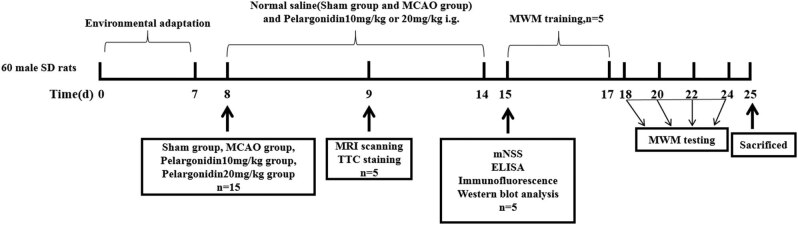
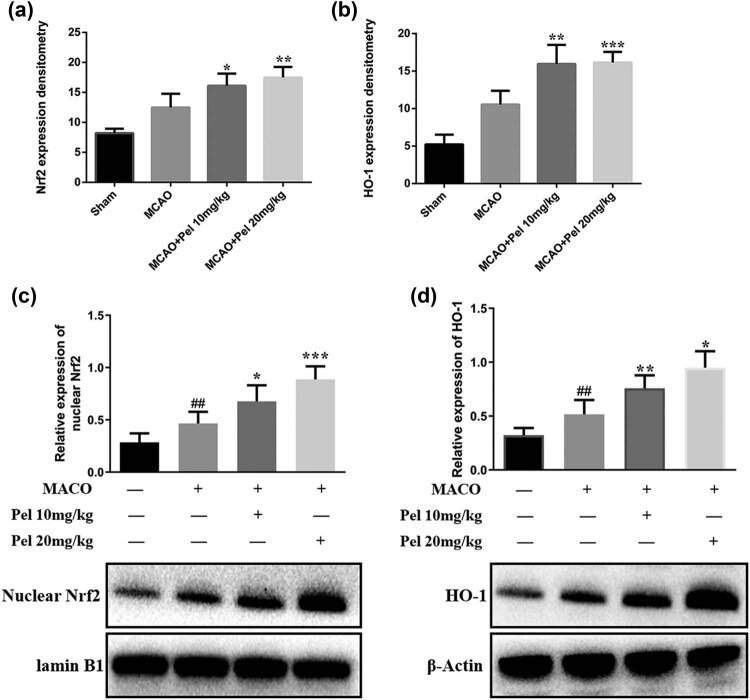
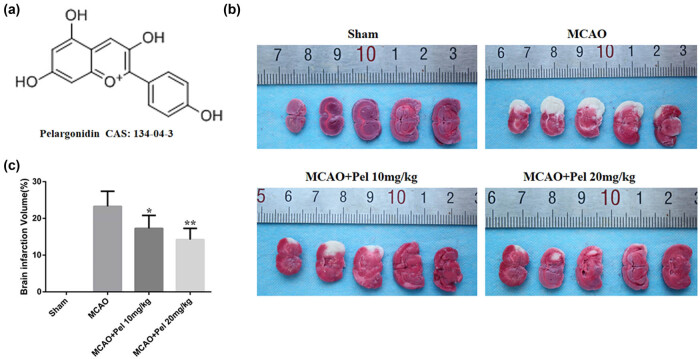
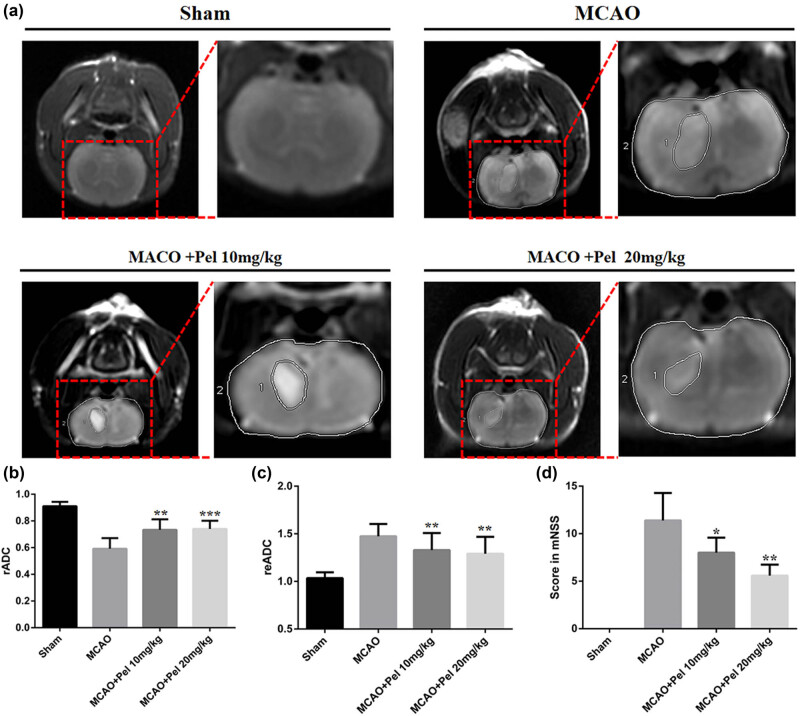
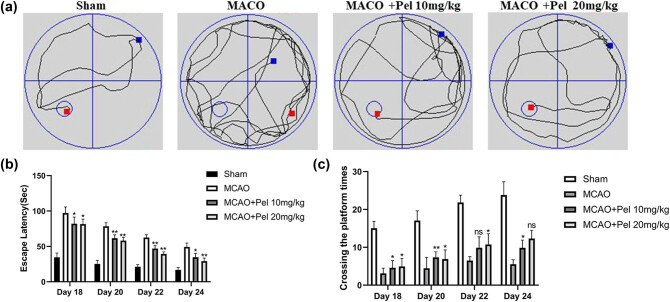
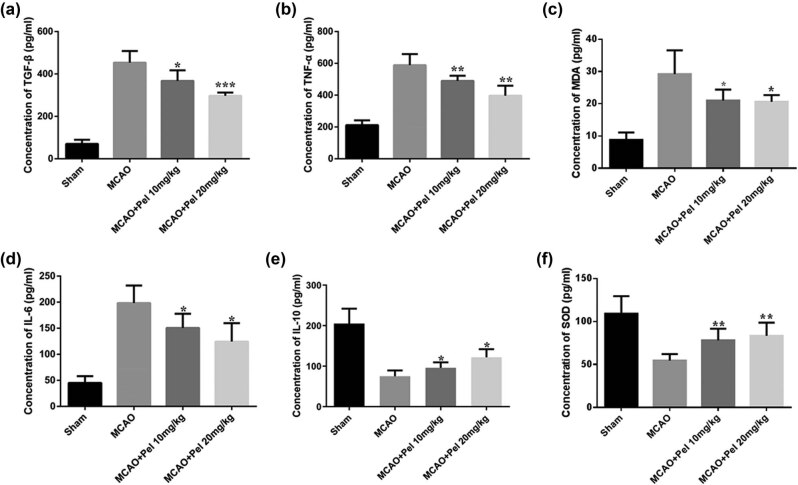
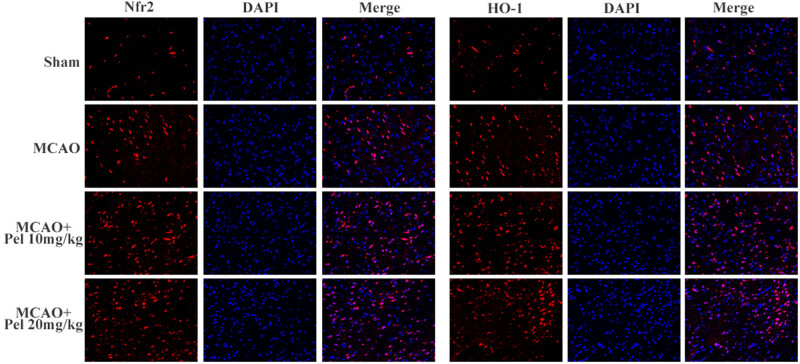
The rat middle cerebral artery occlusion (MCAO) model was established to investigate the neuroprotective effect of pelargonidin on cerebral ischemia/reperfusion injury. Reperfusion was performed 2 h after ischemia; magnetic resonance imaging (MRI) and 2, 3, 5-triphenyltetrazolium chloride (TTC) staining were used to measure the volume of cerebral ischemia. Both modified neurological severity scores (mNSSs) and Morris water maze test were used to assess the neurological functions. ELISA was applied to determine the levels of TNF-α, TGF-β, IL-6, IL-10, MDA, and SOD. The expression of Nuclear factor-E2-related factor 2 (Nrf2) and heme oxygenase 1 (HO-1) protein in brain tissue was measured by immunofluorescence and Western blot assays.
The results showed that pelargonidin could effectively reduce the volume of cerebral ischemia and improve the neurological function in MCAO rats, thereby improving memory and learning ability. With the corresponding decreases in the expression of TNF-α, TGF-β, IL-6, and MDA, the level of IL-10 and SOD increased and also promoted the nuclear metastasis of Nrf2 and the expression of HO-1 in ischemic brain tissues.
Our data demonstrated that pelargonidin ameliorated neurological function deficits in MCAO rats, and its potential mechanism of action was associated with overexpression of the Nrf2/HO-1-signaling pathway. This study will provide a new approach to treat cerebral ischemia/reperfusion injury.
缺血性中风患者的发病率和死亡率仍然很高,目前这些患者缺乏能提高治愈率的有效神经保护剂。近年来,研究表明,天竺葵素具有多种生物学作用。然而,关于天竺葵素治疗脑缺血的研究却很少。
建立大鼠大脑中动脉闭塞(MCAO)模型,以研究天竺葵素对脑缺血/再灌注损伤的神经保护作用。缺血2小时后进行再灌注;采用磁共振成像(MRI)和2,3,5-三苯基氯化四氮唑(TTC)染色测量脑缺血体积。采用改良神经功能缺损评分(mNSS)和莫里斯水迷宫试验评估神经功能。采用酶联免疫吸附测定(ELISA)法测定肿瘤坏死因子-α(TNF-α)、转化生长因子-β(TGF-β)、白细胞介素-6(IL-6)、白细胞介素-10(IL-10)、丙二醛(MDA)和超氧化物歧化酶(SOD)水平。通过免疫荧光和蛋白质印迹法检测脑组织中核因子E2相关因子2(Nrf2)和血红素加氧酶1(HO-1)蛋白的表达。
结果表明,天竺葵素可有效减少MCAO大鼠的脑缺血体积,改善神经功能,从而提高记忆和学习能力。随着TNF-α、TGF-β、IL-6和MDA表达相应降低,IL-10和SOD水平升高,还促进了Nrf2的核转位及缺血脑组织中HO-1的表达。
我们的数据表明,天竺葵素可改善MCAO大鼠的神经功能缺损,其潜在作用机制与Nrf2/HO-1信号通路的过表达有关。本研究将为治疗脑缺血/再灌注损伤提供一种新方法。