Alam Md Mehedi, Haque Mohammad Mahfujul
Department of Aquaculture, Bangladesh Agricultural University, Mymensingh, Bangladesh.
Department of Fishery Resources Conservation and Management, Khulna Agricultural University, Khulna, Bangladesh.
Toxicol Rep. 2021 Jan 18;8:248-257. doi: 10.1016/j.toxrep.2021.01.007. eCollection 2021.
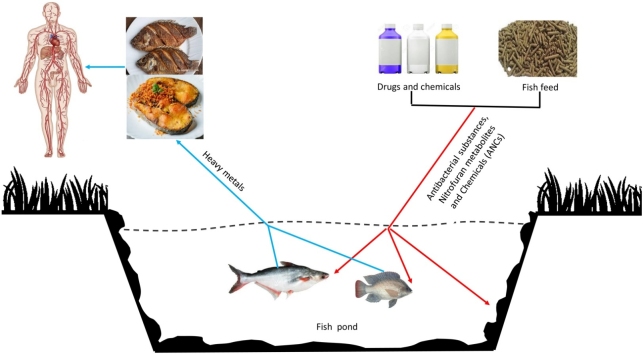
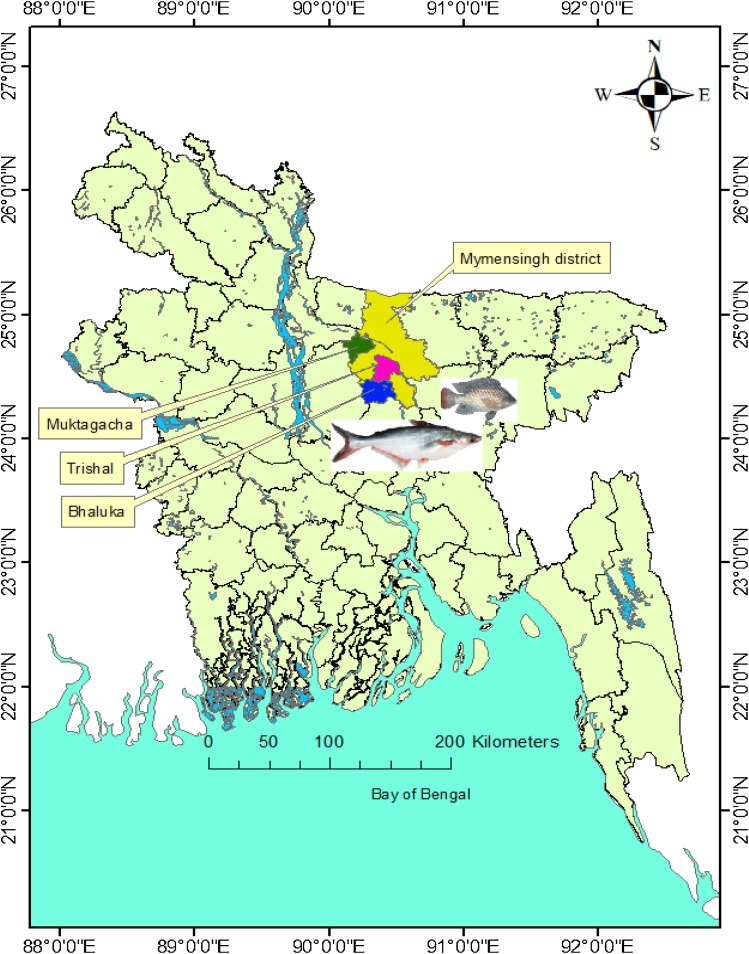
Intensive feeding and the use of drugs and other chemicals for enhancing yield characterised commercial pangasius and tilapia aquaculture in Bangladesh. The residual presence of prohibited antibacterial substances, nitrofuran metabolites and other chemicals (ANCs) in fish, and their effect on public health are a concern for consumers. This study collected samples from 15 pangasius and 15 tilapia ponds to assess the contamination of ANCs, including pesticides, dyes and heavy metals in fish flesh, and heavy metals in feed, sediments and water. Antibacterial substances, nitrofuran metabolites and dyes in fish flesh were detected using LC-MS/MS. Organochlorine pesticides and heavy metals were detected applying GC-MS and AAS, respectively. We found very low residue of the most ANCs in pangasius and tilapia flesh, however, both species contained heavy metals, particularly lead (Pb) and chromium (Cr). The level of metal contamination was affected by the age of the pond; the highest concentration of Pb was in pangasius from old ponds (> 10 years), and the highest concentration of Cr was found in pangasius from new ponds (< 10 years), and tilapia from old ponds. The feed sampled in this study, particularly the commercial pellet and farm-made feed, were highly contaminated with heavy metals. Pond water and sediments were contaminated by heavy metals; fish, water and sediment samples from older ponds had higher concentrations of heavy metals. The concentration of these heavy metals in fish flesh above regulatory limits poses potential risks to human health. To ensure the production of safe fish for human consumption, commercial aquaculture in Bangladesh requires a functional regulatory framework.
在孟加拉国,密集投喂以及使用药物和其他化学物质来提高产量是商业化鲶鱼和罗非鱼养殖的特点。鱼类中违禁抗菌物质、硝基呋喃代谢物及其他化学物质(抗菌化学物质)的残留及其对公众健康的影响是消费者关注的问题。本研究从15个鲶鱼池塘和15个罗非鱼池塘采集样本,以评估抗菌化学物质的污染情况,包括鱼肉中的农药、染料和重金属,以及饲料、沉积物和水中的重金属。使用液相色谱 - 串联质谱法检测鱼肉中的抗菌物质、硝基呋喃代谢物和染料。分别采用气相色谱 - 质谱法和原子吸收光谱法检测有机氯农药和重金属。我们发现鲶鱼和罗非鱼肉中大多数抗菌化学物质的残留量非常低,然而,这两个物种都含有重金属,特别是铅(Pb)和铬(Cr)。金属污染水平受池塘使用年限的影响;旧池塘(>10年)的鲶鱼中铅浓度最高,新池塘(<10年)的鲶鱼和旧池塘的罗非鱼中铬浓度最高。本研究中采集的饲料,尤其是商业颗粒饲料和农场自制饲料,重金属污染严重。池塘水和沉积物受到重金属污染;旧池塘的鱼、水和沉积物样本中重金属浓度更高。鱼肉中这些重金属的浓度超过监管限值对人类健康构成潜在风险。为确保生产供人类食用的安全鱼类,孟加拉国的商业水产养殖需要一个有效的监管框架。