Prusakov Pavel, Goff Debra A, Wozniak Phillip S, Cassim Azraa, Scipion Catherine E A, Urzúa Soledad, Ronchi Andrea, Zeng Lingkong, Ladipo-Ajayi Oluwaseun, Aviles-Otero Noelia, Udeigwe-Okeke Chisom R, Melamed Rimma, Silveira Rita C, Auriti Cinzia, Beltrán-Arroyave Claudia, Zamora-Flores Elena, Sanchez-Codez Maria, Donkor Eric S, Kekomäki Satu, Mainini Nicoletta, Trochez Rosalba Vivas, Casey Jamalyn, Graus Juan M, Muller Mallory, Singh Sara, Loeffen Yvette, Pérez María Eulalia Tamayo, Ferreyra Gloria Isabel, Lima-Rogel Victoria, Perrone Barbara, Izquierdo Giannina, Cernada María, Stoffella Sylvia, Ekenze Sebastian Okwuchukwu, de Alba-Romero Concepción, Tzialla Chryssoula, Pham Jennifer T, Hosoi Kenichiro, Consuegra Magdalena Cecilia Calero, Betta Pasqua, Hoyos O Alvaro, Roilides Emmanuel, Naranjo-Zuñiga Gabriela, Oshiro Makoto, Garay Victor, Mondì Vito, Mazzeo Danila, Stahl James A, Cantey Joseph B, Monsalve Juan Gonzalo Mesa, Normann Erik, Landgrave Lindsay C, Mazouri Ali, Avila Claudia Alarcón, Piersigilli Fiammetta, Trujillo Monica, Kolman Sonya, Delgado Verónica, Guzman Veronica, Abdellatif Mohamed, Monterrosa Luis, Tina Lucia Gabriella, Yunis Khalid, Rodriguez Marco Antonio Belzu, Saux Nicole Le, Leonardi Valentina, Porta Alessandro, Latorre Giuseppe, Nakanishi Hidehiko, Meir Michal, Manzoni Paolo, Norero Ximena, Hoyos Angela, Arias Diana, Sánchez Rubén García, Medoro Alexandra K, Sánchez Pablo J
Department of Pharmacy, Nationwide Children's Hospital, Columbus, OH, USA.
Department of Pharmacy, The Ohio State University Wexner Medical Center, The Ohio State University College of Pharmacy, Columbus, OH, USA.
EClinicalMedicine. 2021 Jan 29;32:100727. doi: 10.1016/j.eclinm.2021.100727. eCollection 2021 Feb.
Global assessment of antimicrobial agents prescribed to infants in the neonatal intensive care unit (NICU) may inform antimicrobial stewardship efforts.
We conducted a one-day global point prevalence study of all antimicrobials provided to NICU infants. Demographic, clinical, and microbiologic data were obtained including NICU level, census, birth weight, gestational/chronologic age, diagnoses, antimicrobial therapy (reason for use; length of therapy), antimicrobial stewardship program (ASP), and 30-day in-hospital mortality.
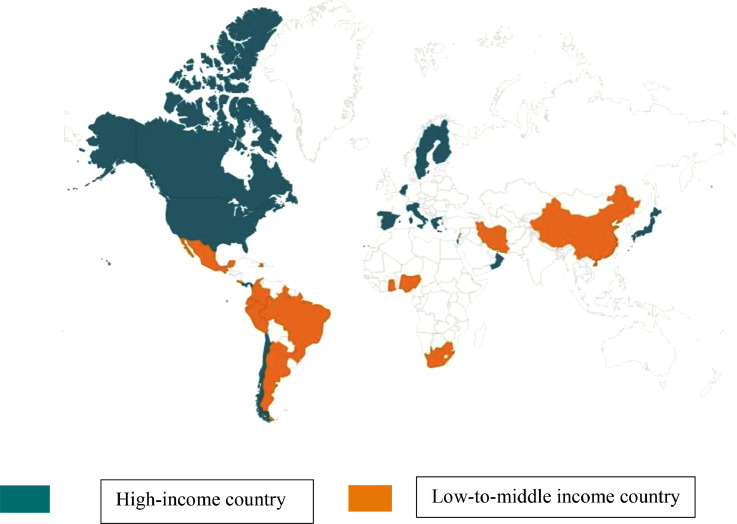
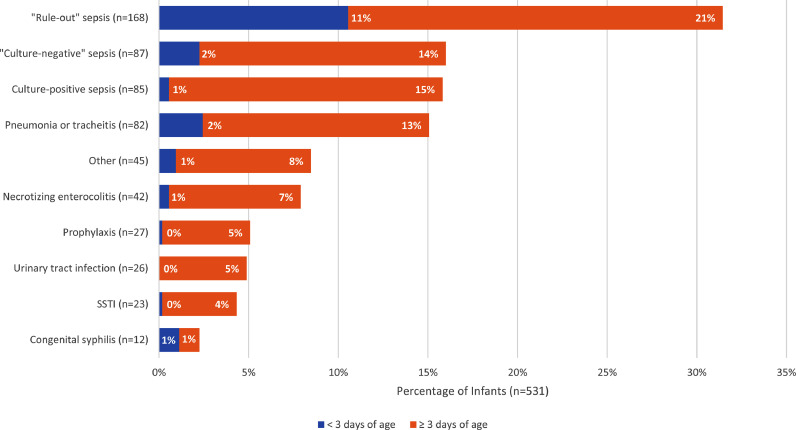
On July 1, 2019, 26% of infants (580/2,265; range, 0-100%; median gestational age, 33 weeks; median birth weight, 1800 g) in 84 NICUs (51, high-income; 33, low-to-middle income) from 29 countries (14, high-income; 15, low-to-middle income) in five continents received ≥1 antimicrobial agent (92%, antibacterial; 19%, antifungal; 4%, antiviral). The most common reasons for antibiotic therapy were "rule-out" sepsis (32%) and "culture-negative" sepsis (16%) with ampicillin (40%), gentamicin (35%), amikacin (19%), vancomycin (15%), and meropenem (9%) used most frequently. For definitive treatment of presumed/confirmed infection, vancomycin (26%), amikacin (20%), and meropenem (16%) were the most prescribed agents. Length of therapy for culture-positive and "culture-negative" infections was 12 days (median; IQR, 8-14) and 7 days (median; IQR, 5-10), respectively. Mortality was 6% (42%, infection-related). An NICU ASP was associated with lower rate of antibiotic utilization ( = 0·02).
Global NICU antibiotic use was frequent and prolonged regardless of culture results. NICU-specific ASPs were associated with lower antibiotic utilization rates, suggesting the need for their implementation worldwide.
Merck & Co.; The Ohio State University College of Medicine Barnes Medical Student Research Scholarship.
对新生儿重症监护病房(NICU)中开具给婴儿的抗菌药物进行全面评估可为抗菌药物管理工作提供参考。
我们对提供给NICU婴儿的所有抗菌药物进行了为期一天的全球现患率研究。收集了人口统计学、临床和微生物学数据,包括NICU级别、普查情况、出生体重、胎龄/实足年龄、诊断结果、抗菌治疗情况(使用原因;治疗时长)、抗菌药物管理计划(ASP)以及30天院内死亡率。
2019年7月1日,来自五大洲29个国家(14个高收入国家;15个中低收入国家)的84个NICU(51个高收入;33个中低收入)中的26%的婴儿(580/2265;范围0 - 100%;中位胎龄33周;中位出生体重1800克)接受了≥1种抗菌药物治疗(92%为抗菌药物;19%为抗真菌药物;4%为抗病毒药物)。抗生素治疗最常见的原因是“排除”败血症(32%)和“培养阴性”败血症(16%),最常使用的药物是氨苄西林(40%)、庆大霉素(35%)、阿米卡星(19%)、万古霉素(15%)和美罗培南(9%)。对于疑似/确诊感染的确定性治疗,最常开具的药物是万古霉素(26%)、阿米卡星(20%)和美罗培南(16%)。培养阳性和“培养阴性”感染的治疗时长分别为12天(中位值;IQR,8 - 14)和7天(中位值;IQR,5 - 10)。死亡率为6%(42%与感染相关)。NICU的ASP与较低的抗生素使用率相关(P = 0.02)。
无论培养结果如何,全球NICU抗生素使用都很频繁且持续时间长。特定于NICU的ASP与较低的抗生素使用率相关,这表明需要在全球范围内实施。
默克公司;俄亥俄州立大学医学院巴恩斯医学生研究奖学金。