Department of Biochemistry and Molecular Biology, University of Arkansas for Medical Sciences, Little Rock, AR 72205, USA.
Arkansas School for Mathematics, Sciences, and the Arts, Hot Springs, AR 71901, USA.
Nucleic Acids Res. 2021 Feb 26;49(4):2065-2084. doi: 10.1093/nar/gkab041.
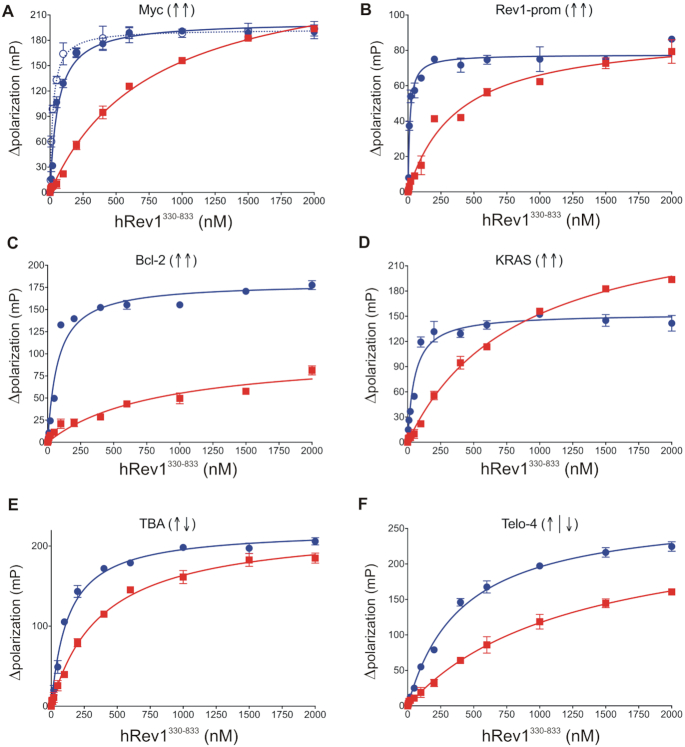
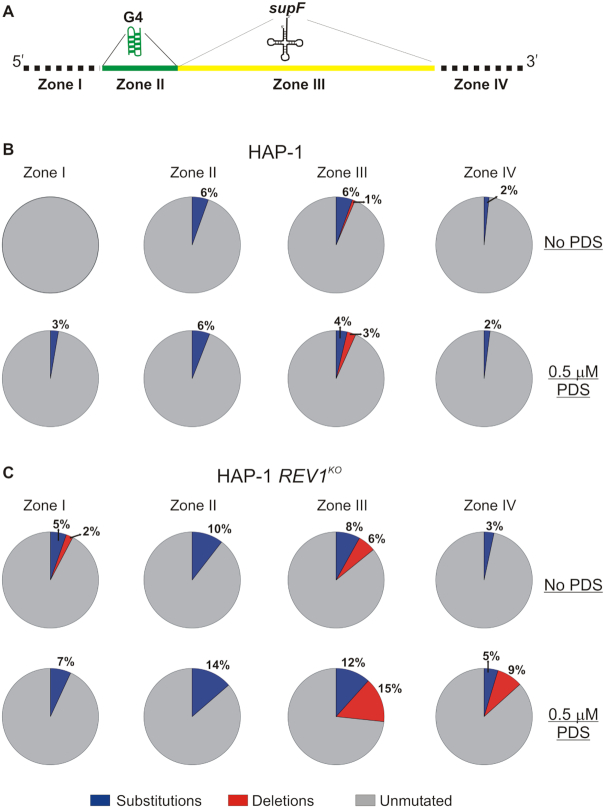
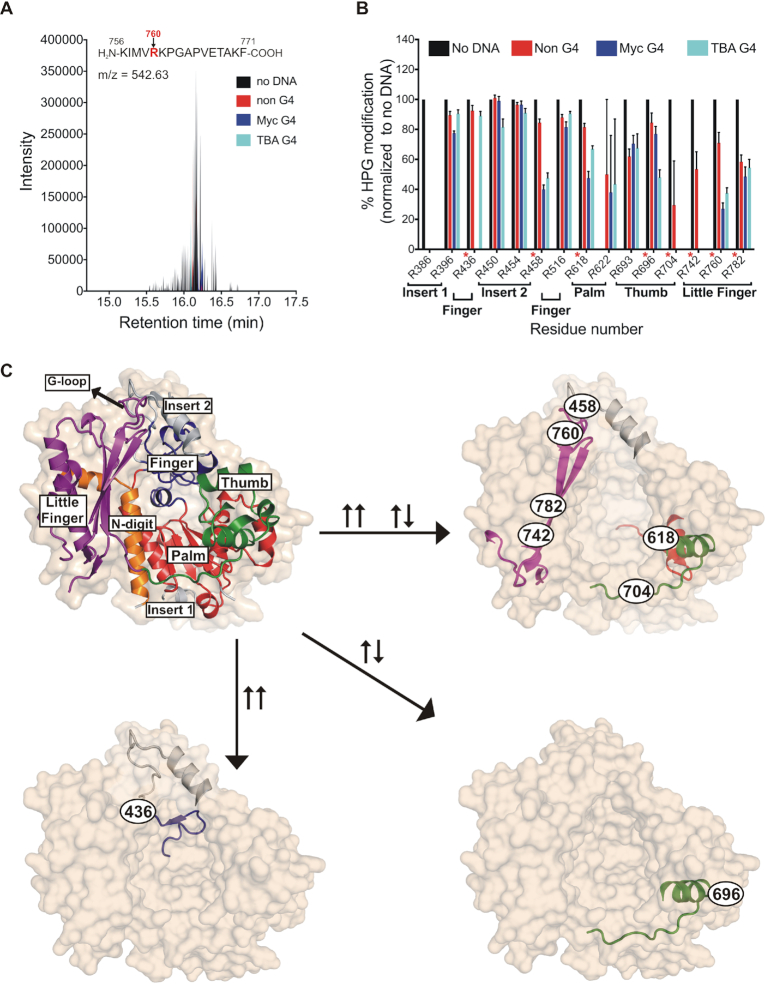
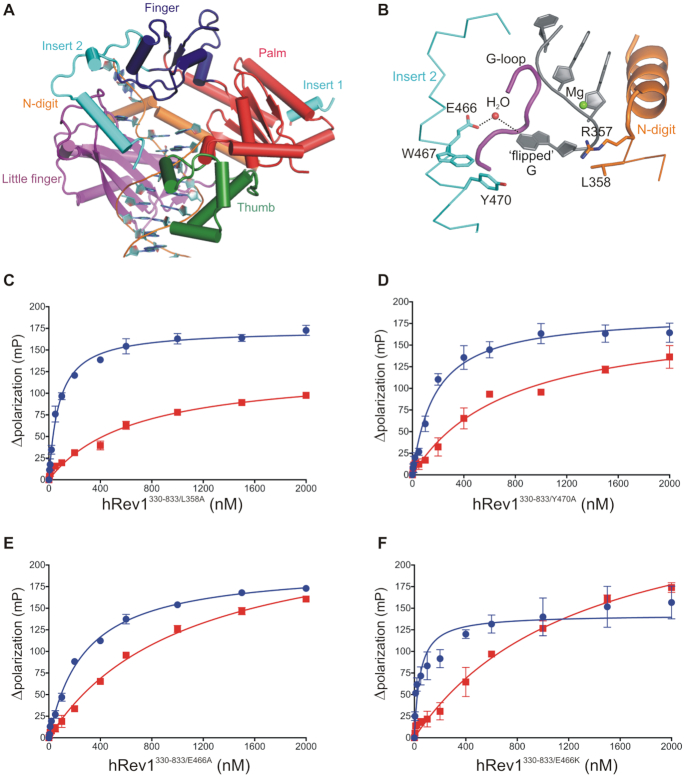
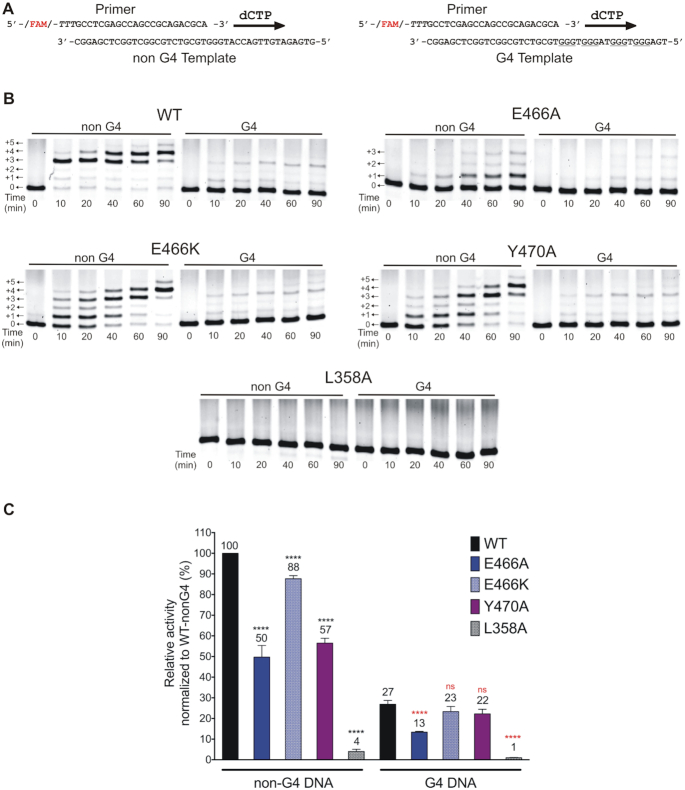
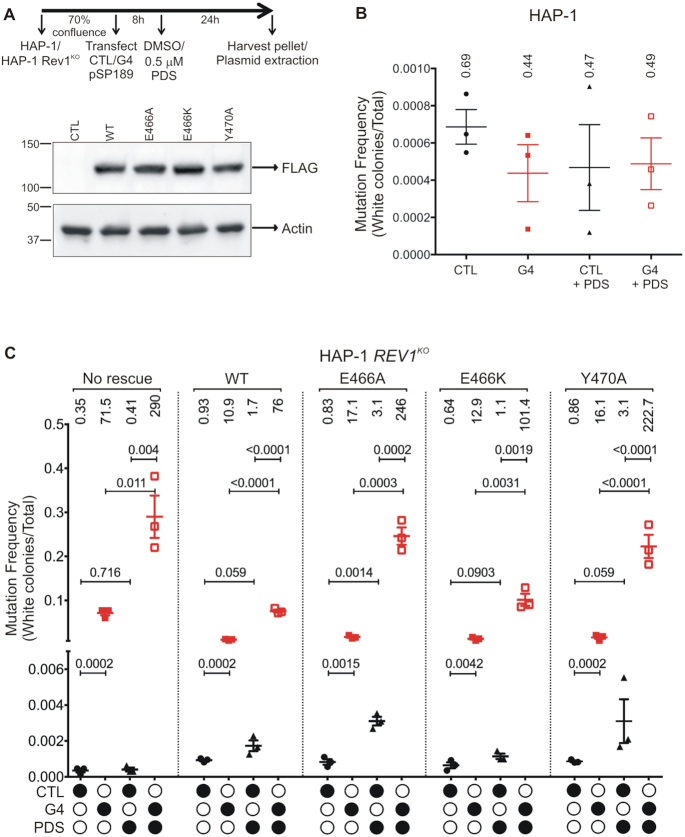
We previously reported that human Rev1 (hRev1) bound to a parallel-stranded G-quadruplex (G4) from the c-MYC promoter with high affinity. We have extended those results to include other G4 motifs, finding that hRev1 exhibited stronger affinity for parallel-stranded G4 than either anti-parallel or hybrid folds. Amino acids in the αE helix of insert-2 were identified as being important for G4 binding. Mutating E466 and Y470 to alanine selectively perturbed G4 binding affinity. The E466K mutant restored wild-type G4 binding properties. Using a forward mutagenesis assay, we discovered that loss of hRev1 increased G4 mutation frequency >200-fold compared to the control sequence. Base substitutions and deletions occurred around and within the G4 motif. Pyridostatin (PDS) exacerbated this effect, as the mutation frequency increased >700-fold over control and deletions upstream of the G4 site more than doubled. Mutagenic replication of G4 DNA (±PDS) was partially rescued by wild-type and E466K hRev1. The E466A or Y470A mutants failed to suppress the PDS-induced increase in G4 mutation frequency. These findings have implications for the role of insert-2, a motif conserved in vertebrates but not yeast or plants, in Rev1-mediated suppression of mutagenesis during G4 replication.
我们之前报道过,人类 Rev1(hRev1)与 c-MYC 启动子上的平行链 G-四链体(G4)具有高亲和力。我们将这些结果扩展到包括其他 G4 基序,发现 hRev1 对平行链 G4 的亲和力强于反平行或杂交折叠。插入-2 的αE 螺旋中的氨基酸被确定为 G4 结合的重要因素。将 E466 和 Y470 突变为丙氨酸会选择性地破坏 G4 结合亲和力。E466K 突变体恢复了野生型 G4 结合特性。通过正向诱变测定,我们发现与对照序列相比,hRev1 的缺失使 G4 突变频率增加了>200 倍。碱基替换和缺失发生在 G4 基序周围和内部。吡啶并[3,2-d]嘧啶(PDS)加剧了这种效应,因为突变频率比对照增加了>700 倍,并且 G4 位点上游的缺失增加了一倍以上。G4 DNA 的诱变复制(±PDS)部分被野生型和 E466K hRev1 挽救。E466A 或 Y470A 突变体未能抑制 PDS 诱导的 G4 突变频率增加。这些发现对插入-2 的作用有影响,插入-2 是脊椎动物中保守的基序,但在酵母或植物中不存在,在 Rev1 介导的 G4 复制期间抑制突变方面发挥作用。