• 文献检索
  • 文档翻译
  • 深度研究
  • 学术资讯
  • Suppr Zotero 插件Zotero 插件
  • 邀请有礼
  • 套餐&价格
  • 历史记录
应用&插件
Suppr Zotero 插件Zotero 插件浏览器插件Mac 客户端Windows 客户端微信小程序
定价
高级版会员购买积分包购买API积分包
服务
文献检索文档翻译深度研究API 文档MCP 服务
关于我们
关于 Suppr公司介绍联系我们用户协议隐私条款
关注我们

Suppr 超能文献

核心技术专利:CN118964589B侵权必究
粤ICP备2023148730 号-1Suppr @ 2026

文献检索

告别复杂PubMed语法,用中文像聊天一样搜索,搜遍4000万医学文献。AI智能推荐,让科研检索更轻松。

立即免费搜索

文件翻译

保留排版,准确专业,支持PDF/Word/PPT等文件格式,支持 12+语言互译。

免费翻译文档

深度研究

AI帮你快速写综述,25分钟生成高质量综述,智能提取关键信息,辅助科研写作。

立即免费体验

儿科学中的远程医疗:随机对照试验的系统评价

Telemedicine in Pediatrics: Systematic Review of Randomized Controlled Trials.

作者信息

Shah Aashaka C, Badawy Sherif M

机构信息

University of Illinois College of Medicine, Chicago, IL, United States.

Division of Hematology, Oncology, Neuro-Oncology and Stem Cell Transplant, Ann & Robert H Lurie Children's Hospital of Chicago, Chicago, IL, United States.

出版信息

JMIR Pediatr Parent. 2021 Feb 24;4(1):e22696. doi: 10.2196/22696.

DOI:10.2196/22696
PMID:33556030
原文链接:https://pmc.ncbi.nlm.nih.gov/articles/PMC8078694/
Abstract

BACKGROUND

Telemedicine modalities, such as videoconferencing, are used by health care providers to remotely deliver health care to patients. Telemedicine use in pediatrics has increased in recent years. This has resulted in improved health care access, optimized disease management, progress in the monitoring of health conditions, and fewer exposures to patients with illnesses during pandemics (eg, the COVID-19 pandemic).

OBJECTIVE

We aimed to systematically evaluate the most recent evidence on the feasibility and accessibility of telemedicine services, patients' and care providers' satisfaction with these services, and treatment outcomes related to telemedicine service use among pediatric populations with different health conditions.

METHODS

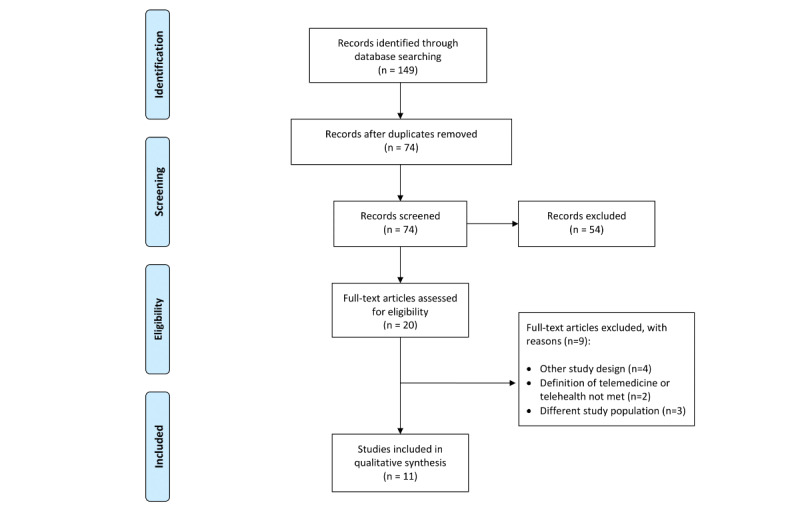
Studies were obtained from the PubMed database on May 10, 2020. We followed the PRISMA (Preferred Reporting Items for Systematic Reviews and Meta-Analyses) guidelines. In this review, we included randomized controlled trials from the last 10 years that used a telemedicine approach as a study intervention or assessed telemedicine as a subspecialty of pediatric care. Titles and abstracts were independently screened based on the eligibility criteria. Afterward, full texts were retrieved and independently screened based on the eligibility criteria. A standardized form was used to extract the following data: publication title, first author's name, publication year, participants' characteristics, study design, the technology-based approach that was used, intervention characteristics, study goals, and study findings.

RESULTS

In total, 11 articles met the inclusion criteria and were included in this review. All studies were categorized as randomized controlled trials (8/11, 73%) or cluster randomized trials (3/11, 27%). The number of participants in each study ranged from 22 to 400. The health conditions that were assessed included obesity (3/11, 27%), asthma (2/11, 18%), mental health conditions (1/11, 9%), otitis media (1/11, 9%), skin conditions (1/11, 9%), type 1 diabetes (1/11, 9%), attention deficit hyperactivity disorder (1/11, 9%), and cystic fibrosis-related pancreatic insufficiency (1/11). The telemedicine approaches that were used included patient and doctor videoconferencing visits (5/11, 45%), smartphone-based interventions (3/11, 27%), telephone counseling (2/11, 18%), and telemedicine-based screening visits (1/11, 9%). The telemedicine interventions in all included studies resulted in outcomes that were comparable to or better than the outcomes of control groups. These outcomes were related to symptom management, quality of life, satisfaction, medication adherence, visit completion rates, and disease progression.

CONCLUSIONS

Although more research is needed, the evidence from this review suggests that telemedicine services for the general public and pediatric care are comparable to or better than in-person services. Patients, health care professionals, and caregivers may benefit from using both telemedicine services and traditional, in-person health care services. To maximize the potential of telemedicine, future research should focus on improving patients' access to care, increasing the cost-effectiveness of telemedicine services, and eliminating barriers to telemedicine use.
https://cdn.ncbi.nlm.nih.gov/pmc/blobs/64ab/8078694/2365a7a6564c/pediatrics_v4i1e22696_fig1.jpg
摘要

背景

远程医疗模式,如视频会议,被医疗服务提供者用于向患者远程提供医疗服务。近年来,儿科领域对远程医疗的使用有所增加。这带来了更好的医疗服务可及性、优化的疾病管理、健康状况监测的进展,以及在大流行期间(如新冠疫情)减少接触患病患者的机会。

目的

我们旨在系统评估关于远程医疗服务的可行性和可及性、患者及医疗服务提供者对这些服务的满意度,以及不同健康状况的儿科人群使用远程医疗服务相关的治疗结果的最新证据。

方法

于2020年5月10日从PubMed数据库获取研究。我们遵循PRISMA(系统评价和Meta分析的首选报告项目)指南。在本综述中,我们纳入了过去10年使用远程医疗方法作为研究干预或评估远程医疗作为儿科护理亚专业的随机对照试验。根据纳入标准独立筛选标题和摘要。之后,检索全文并根据纳入标准独立筛选。使用标准化表格提取以下数据:出版物标题、第一作者姓名、出版年份、参与者特征、研究设计、所采用的基于技术的方法、干预特征、研究目标和研究结果。

结果

共有11篇文章符合纳入标准并纳入本综述。所有研究分为随机对照试验(8/11,73%)或整群随机试验(3/11,27%)。每项研究的参与者数量从22至400不等。评估的健康状况包括肥胖(3/11,27%)、哮喘(2/11,18%)、心理健康状况(1/11,9%)、中耳炎(1/11,9%)、皮肤状况(1/11,9%)、1型糖尿病(1/11,9%)、注意力缺陷多动障碍(1/11,9%)和囊性纤维化相关胰腺功能不全(1/11)。所采用的远程医疗方法包括患者与医生视频会诊(5/11,45%)、基于智能手机的干预(3/11,27%)、电话咨询(2/11,18%)和基于远程医疗的筛查会诊(1/11,9%)。所有纳入研究中的远程医疗干预产生的结果与对照组相当或优于对照组。这些结果与症状管理、生活质量、满意度、药物依从性、会诊完成率和疾病进展有关。

结论

尽管还需要更多研究,但本综述的证据表明,面向公众和儿科护理的远程医疗服务与面对面服务相当或更好。患者、医疗专业人员和护理人员可能会从使用远程医疗服务和传统的面对面医疗服务中受益。为了最大限度发挥远程医疗的潜力,未来研究应专注于改善患者获得护理的机会、提高远程医疗服务的成本效益,以及消除远程医疗使用的障碍。

相似文献

1
Telemedicine in Pediatrics: Systematic Review of Randomized Controlled Trials.儿科学中的远程医疗:随机对照试验的系统评价
JMIR Pediatr Parent. 2021 Feb 24;4(1):e22696. doi: 10.2196/22696.
2
Telemedicine for the Medicare population: pediatric, obstetric, and clinician-indirect home interventions.面向医疗保险人群的远程医疗:儿科、产科及临床医生间接居家干预措施
Evid Rep Technol Assess (Summ). 2001 Aug(24 Suppl):1-32.
3
Satisfaction With Telehealth Services Compared With Nontelehealth Services Among Pediatric Patients and Their Caregivers: Systematic Review of the Literature.儿科患者及其照顾者对远程医疗服务与非远程医疗服务的满意度:文献系统评价
JMIR Pediatr Parent. 2023 Apr 27;6:e41554. doi: 10.2196/41554.
4
Telemedicine in Malignant and Nonmalignant Hematology: Systematic Review of Pediatric and Adult Studies.恶性血液病和非恶性血液病的远程医疗:儿科和成人研究的系统评价。
JMIR Mhealth Uhealth. 2021 Jul 8;9(7):e29619. doi: 10.2196/29619.
5
How Satisfied Are Patients and Surgeons with Telemedicine in Orthopaedic Care During the COVID-19 Pandemic? A Systematic Review and Meta-analysis.在 COVID-19 大流行期间,患者和外科医生对骨科远程医疗的满意度如何?一项系统评价和荟萃分析。
Clin Orthop Relat Res. 2021 Jan 1;479(1):47-56. doi: 10.1097/CORR.0000000000001494.
6
7
8
Patient-Centered Digital Health Records and Their Effects on Health Outcomes: Systematic Review.以患者为中心的数字化健康档案及其对健康结果的影响:系统评价。
J Med Internet Res. 2022 Dec 22;24(12):e43086. doi: 10.2196/43086.
9
Practice-Level Variation in Telemedicine Use in a Pediatric Primary Care Network During the COVID-19 Pandemic: Retrospective Analysis and Survey Study.COVID-19 大流行期间儿科初级保健网络中远程医疗使用的实践水平变化:回顾性分析和调查研究。
J Med Internet Res. 2020 Dec 18;22(12):e24345. doi: 10.2196/24345.
10
The Use of Telehealth Among People Living With Dementia-Caregiver Dyads During the COVID-19 Pandemic: Scoping Review.在 COVID-19 大流行期间,痴呆症患者-照护者对使用远程医疗的情况:范围综述。
J Med Internet Res. 2023 May 25;25:e45045. doi: 10.2196/45045.

引用本文的文献

1
Research hotspots and trends in pediatric telemedicine: a CiteSpace-based bibliometric analysis (1978-2025).儿科远程医疗的研究热点与趋势:基于CiteSpace的文献计量分析(1978 - 2025年)
Front Pediatr. 2025 Jul 30;13:1590663. doi: 10.3389/fped.2025.1590663. eCollection 2025.
2
[Remote glycemic control using devices for wireless data transmission in children with type 1 diabetes mellitus: interim results of clinical approbation].[使用无线数据传输设备对1型糖尿病儿童进行远程血糖控制:临床验证中期结果]
Probl Endokrinol (Mosk). 2025 Jul 22;71(3):39-45. doi: 10.14341/probl13492.
3
Families' and clinicians' experiences with telehealth assessments for autism: A mixed-methods systematic review.

本文引用的文献

1
Psychosocial Challenges and Opportunities for Youth With Chronic Health Conditions During the COVID-19 Pandemic.新冠疫情期间患有慢性健康状况的青少年所面临的心理社会挑战与机遇
JMIR Pediatr Parent. 2020 Oct 12;3(2):e23057. doi: 10.2196/23057.
2
Strategies for Evaluating Telehealth.远程医疗评估策略
Pediatrics. 2020 Nov;146(5). doi: 10.1542/peds.2020-1781. Epub 2020 Aug 18.
3
Telemedicine and Health Disparities During COVID-19.新冠疫情期间的远程医疗与健康差距
家庭与临床医生进行自闭症远程健康评估的经验:一项混合方法的系统综述。
PLOS Digit Health. 2025 Jul 29;4(7):e0000931. doi: 10.1371/journal.pdig.0000931. eCollection 2025 Jul.
4
Harnessing Artificial Intelligence in Pediatric Oncology Diagnosis and Treatment: A Review.利用人工智能进行儿科肿瘤学诊断与治疗:综述
Cancers (Basel). 2025 May 30;17(11):1828. doi: 10.3390/cancers17111828.
5
Day-to-day life during the COVID-19 pandemic: A longitudinal qualitative study with Canadian parents of young children.新冠疫情期间的日常生活:对加拿大幼儿家长的一项纵向定性研究。
Contemp Issues Early Child. 2022 Aug 7:14639491221115475. doi: 10.1177/14639491221115475.
6
Assessing the Impact of a Telemedicine Program on Caregivers of Children With Complex Chronic Conditions: Pre-Post Intervention Study.评估远程医疗项目对患有复杂慢性病儿童的照顾者的影响:干预前后研究。
JMIR Pediatr Parent. 2025 May 20;8:e62953. doi: 10.2196/62953.
7
California provider and advocate perspectives about opportunities to optimize nutrition services and resources in the first 1000 days.加利福尼亚州提供者及倡导者对于在生命最初1000天优化营养服务与资源的机会的看法。
Reprod Female Child Health. 2024 Jun;3(2). doi: 10.1002/rfc2.93. Epub 2024 Jun 11.
8
Telehealth use in the well-child health setting. A systematic review of acceptability and effectiveness for families and practitioners.儿童健康环境中的远程医疗应用。对家庭和从业者的可接受性和有效性的系统评价。
Int J Nurs Stud Adv. 2024 Dec 3;8:100277. doi: 10.1016/j.ijnsa.2024.100277. eCollection 2025 Jun.
9
Access to Primary Care Telemedicine and Visit Characterization in a Pediatric, Low-Income, Primarily Latino Population: Retrospective Study.在以拉丁裔为主的低收入儿科人群中获得初级保健远程医疗服务及就诊特征:回顾性研究
JMIR Pediatr Parent. 2024 Dec 17;7:e57702. doi: 10.2196/57702.
10
Healthcare delivery in the arctic-telehealth prospects.北极地区的医疗保健服务——远程医疗前景
Int J Circumpolar Health. 2025 Dec;84(1):2438429. doi: 10.1080/22423982.2024.2438429. Epub 2024 Dec 17.
Pediatrics. 2020 Aug;146(2). doi: 10.1542/peds.2020-1586.
4
Digital Approaches to Remote Pediatric Health Care Delivery During the COVID-19 Pandemic: Existing Evidence and a Call for Further Research.COVID-19大流行期间远程儿科医疗服务的数字方法:现有证据及进一步研究的呼吁。
JMIR Pediatr Parent. 2020 Jun 25;3(1):e20049. doi: 10.2196/20049.
5
Telemedicine in the face of the COVID-19 pandemic.远程医疗在应对 COVID-19 大流行中的应用。
Aten Primaria. 2020 Jun-Jul;52(6):418-422. doi: 10.1016/j.aprim.2020.04.003. Epub 2020 Apr 17.
6
Telemedicine: Patient-Provider Clinical Engagement During the COVID-19 Pandemic and Beyond.远程医疗:COVID-19 大流行期间及之后的医患临床互动。
J Gastrointest Surg. 2020 Jul;24(7):1692-1697. doi: 10.1007/s11605-020-04623-5. Epub 2020 May 8.
7
Technology Use for Adolescent Health and Wellness.技术在青少年健康和保健中的应用。
Pediatrics. 2020 May;145(Suppl 2):S186-S194. doi: 10.1542/peds.2019-2056G.
8
Zooming Toward a Telehealth Solution for Vulnerable Children with Obesity During Coronavirus Disease 2019.在 2019 冠状病毒病期间,为肥胖脆弱儿童提供远程医疗解决方案。
Obesity (Silver Spring). 2020 Jul;28(7):1184-1186. doi: 10.1002/oby.22860. Epub 2020 Jun 10.
9
The care of patients with Duchenne, Becker, and other muscular dystrophies in the COVID-19 pandemic.在 COVID-19 大流行期间对杜氏肌营养不良症、贝克肌营养不良症和其他肌营养不良症患者的护理。
Muscle Nerve. 2020 Jul;62(1):41-45. doi: 10.1002/mus.26902. Epub 2020 May 5.
10
A Guide to Chatbots for COVID-19 Screening at Pediatric Health Care Facilities.儿科医疗机构 COVID-19 筛查用聊天机器人指南
JMIR Public Health Surveill. 2020 Apr 30;6(2):e18808. doi: 10.2196/18808.