College of Applied Medical Sciences, Shaqra University, Shaqra, Saudi Arabia.
Department of Physical Sport Science, Nutrition and Food Science, Princess Nourah Bint Abdulrahman University, Riyadh, Saudi Arabia.
Pharm Biol. 2021 Dec;59(1):146-156. doi: 10.1080/13880209.2021.1877734.
Kaempferol, a flavonoid glycoside, has many hepatoprotective effects in several animals due to its antioxidant potential.
This study evaluated the hepatoprotective effect of kaempferol against acetaminophen (APAP)-induced liver damage and examined whether the protection involved modulation of silent information regulator 1 (SIRT1) signalling.
Adult male Wistar rats were classified into four groups ( = 8) and treated as follows: control + normal saline (vehicle), control + kaempferol (250 mg/kg), APAP (800 mg/kg, a single dose) and APAP + kaempferol. Kaempferol was administered for the first seven days followed by administration of APAP. The study was ended 24 h after APAP administration.
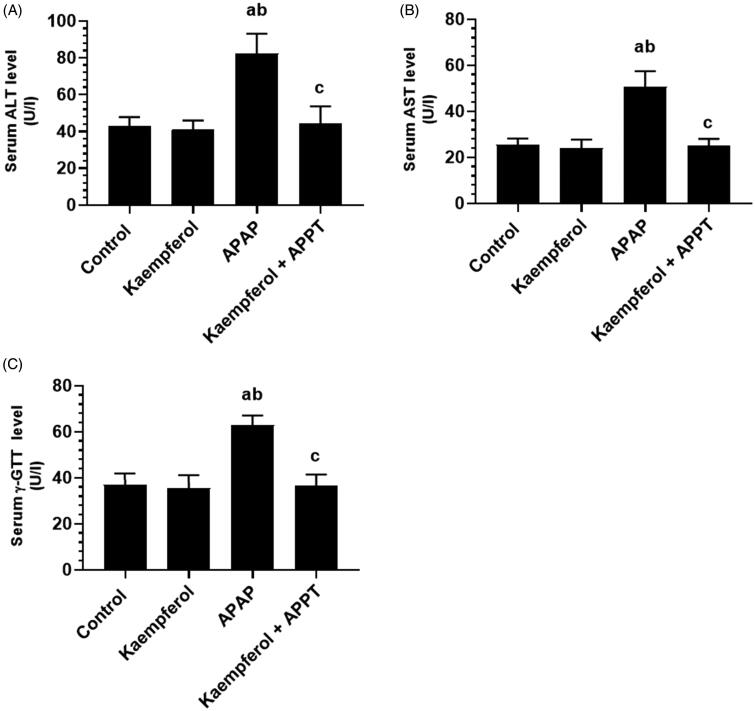
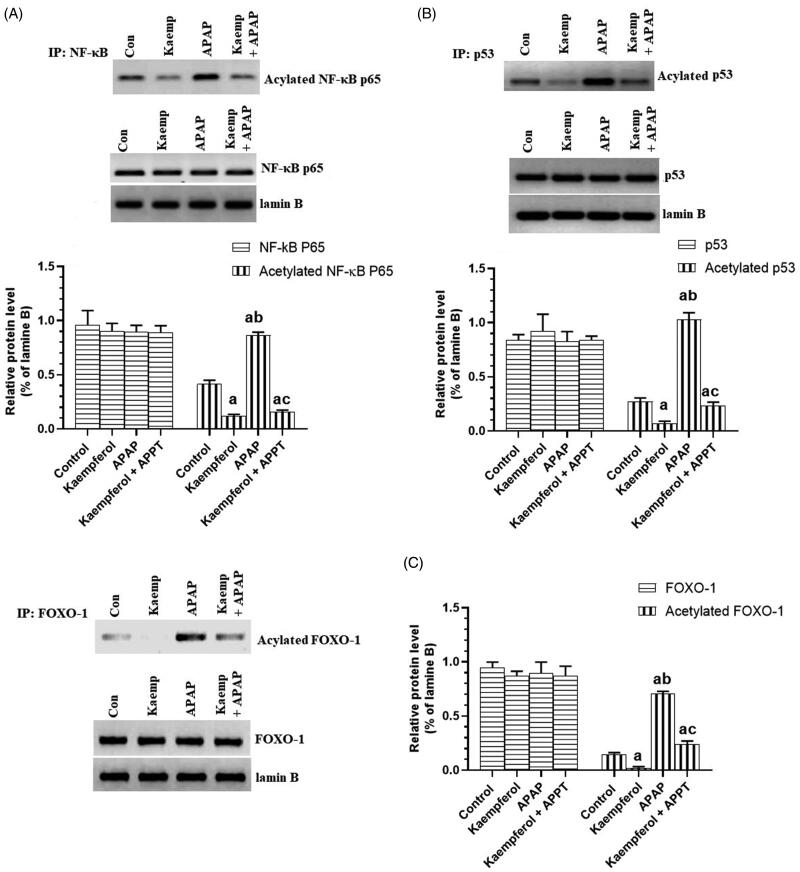
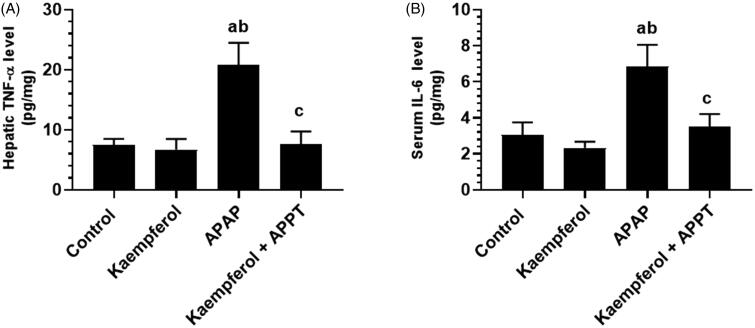
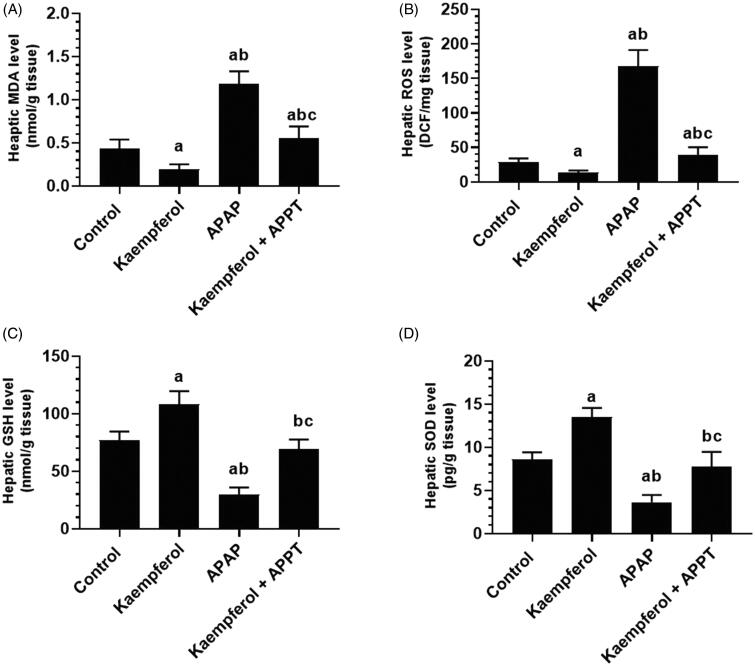
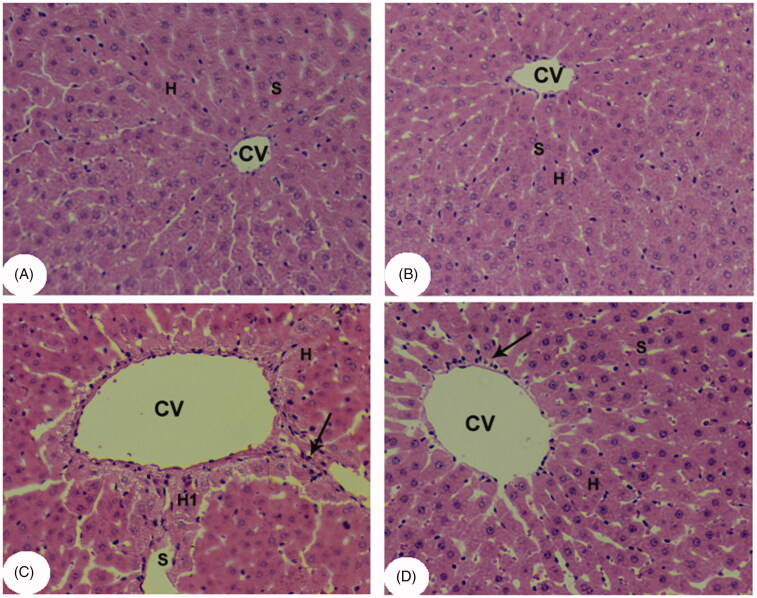
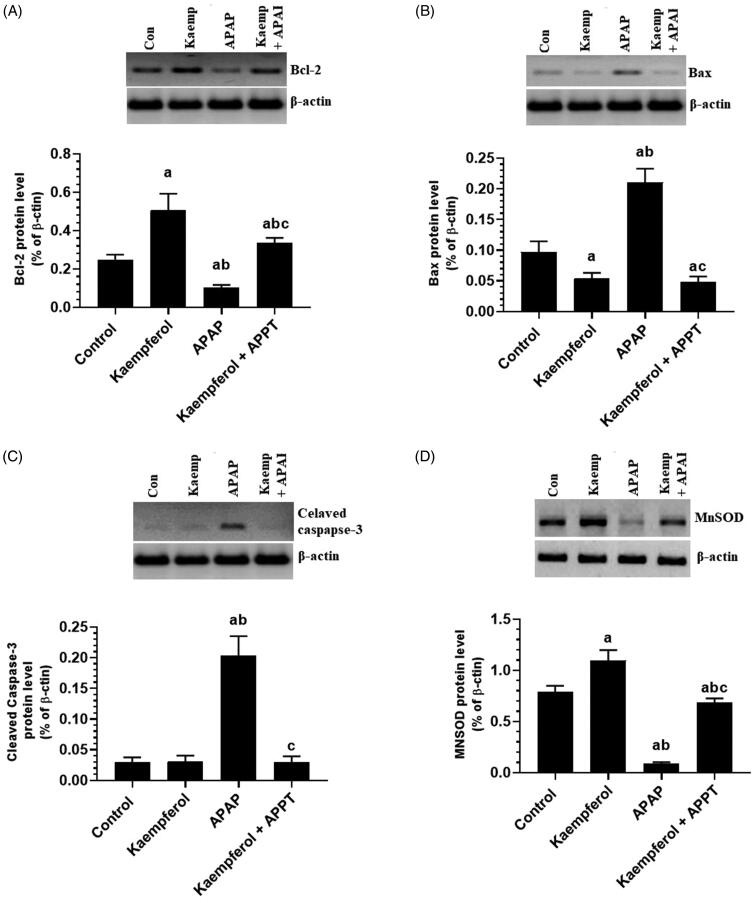
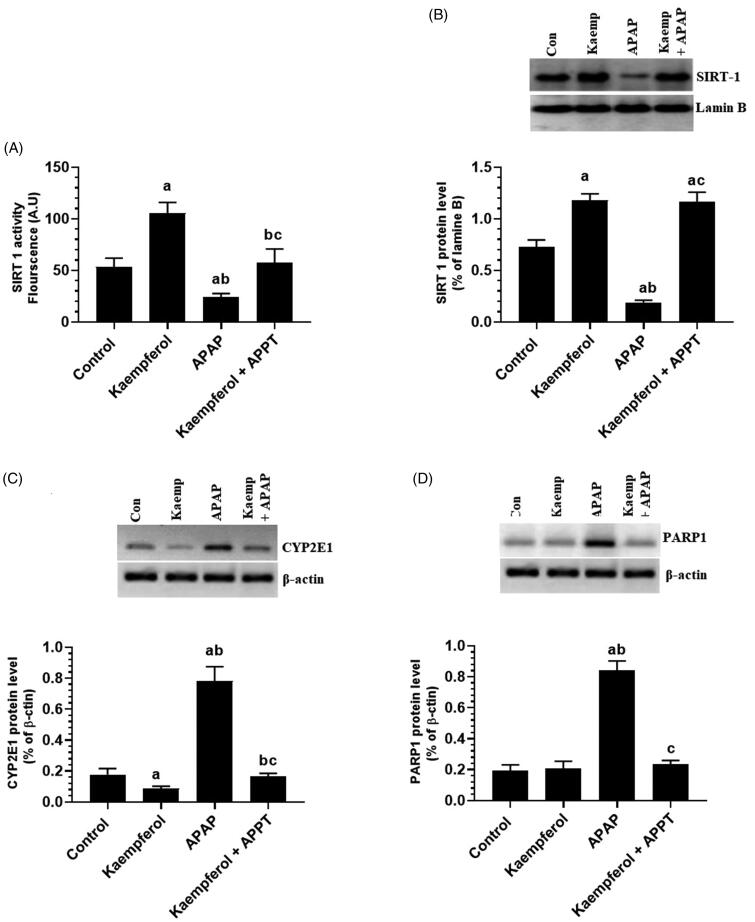
At the histological level, kaempferol reduced liver damage in APAP-treated rats. It also reduced the hepatic levels of TNF-α (66.3%), IL-6 (38.6%) and protein levels of caspase-3 (88.2%), and attenuated the increase in circulatory serum levels of ALT (47.6%), AST (55.8%) and γ-GT (35.2%) in APAP-treated rats. In both the controls and APAP-treated rats, kaempferol significantly increased the hepatic levels of glutathione (GSH) and superoxide dismutase, suppressed MDA and reactive oxygen species (ROS) levels, increased protein levels of Bcl-2 and downregulated protein levels of Bax and cleaved Bax. Concomitantly, it reduced the expression of CYP2E1, and the activity and protein levels of SIRT1. Consequently, it decreased the acetylation of all SIRT1 targets including PARP1, p53, NF-κB, FOXO-1 and p53 that mediate antioxidant, anti-inflammatory and anti-apoptotic effects.
This study encourages the use of kaempferol in further clinical trials to treat APAP-induced hepatotoxicity.
由于具有抗氧化潜力,山奈酚作为一种类黄酮糖苷,在几种动物中具有许多保肝作用。
本研究评估了山奈酚对乙酰氨基酚(APAP)诱导的肝损伤的保护作用,并研究了这种保护是否涉及沉默信息调节因子 1(SIRT1)信号的调节。
成年雄性 Wistar 大鼠分为四组(每组 8 只),并进行如下处理:对照组+生理盐水(载体)、对照组+山奈酚(250mg/kg)、APAP(800mg/kg,单次剂量)和 APAP+山奈酚。山奈酚在第 1 天至第 7 天给药,然后给予 APAP。在给予 APAP 24 小时后结束研究。
在组织学水平上,山奈酚减轻了 APAP 处理大鼠的肝损伤。它还降低了 TNF-α(66.3%)、IL-6(38.6%)和 caspase-3 蛋白水平(88.2%),并减弱了 APAP 处理大鼠循环血清中 ALT(47.6%)、AST(55.8%)和 γ-GT(35.2%)水平的升高。在对照组和 APAP 处理组大鼠中,山奈酚均显著增加了肝组织中谷胱甘肽(GSH)和超氧化物歧化酶的水平,抑制 MDA 和活性氧(ROS)水平,增加 Bcl-2 蛋白水平,并下调 Bax 和 cleaved Bax 蛋白水平。同时,它降低了 CYP2E1 的表达以及 SIRT1 的活性和蛋白水平。结果,它减少了所有 SIRT1 靶标的乙酰化,包括 PARP1、p53、NF-κB、FOXO-1 和 p53,这些靶标介导抗氧化、抗炎和抗细胞凋亡作用。
本研究鼓励在进一步的临床试验中使用山奈酚来治疗 APAP 诱导的肝毒性。