Stavrakaki Eftychia, Dirven Clemens M F, Lamfers Martine L M
Department of Neurosurgery, Brain Tumor Center, Erasmus University Medical Center, 3015 CN Rotterdam, The Netherlands.
Cancers (Basel). 2021 Feb 4;13(4):614. doi: 10.3390/cancers13040614.
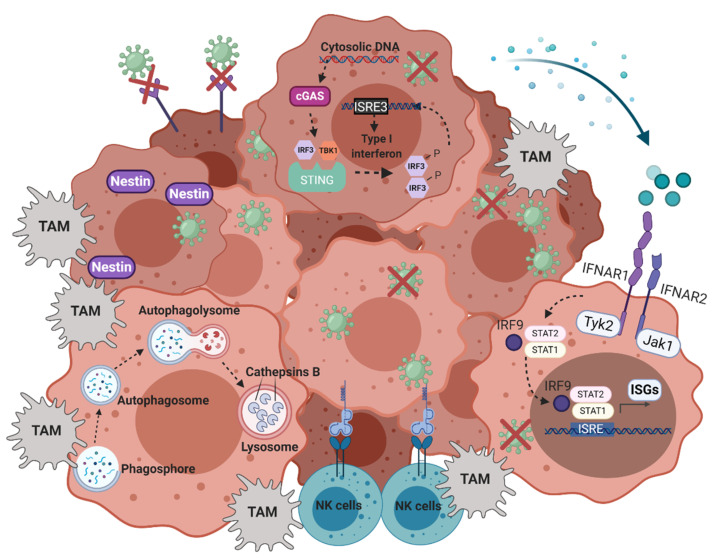
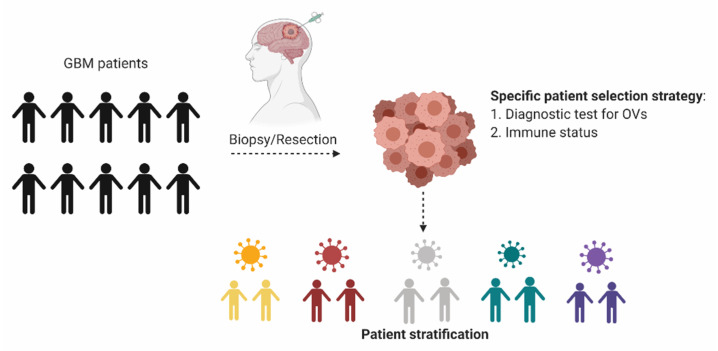
Oncolytic virus (OV) treatment may offer a new treatment option for the aggressive brain tumor glioblastoma. Clinical trials testing oncolytic viruses in this patient group have shown promising results, with patients achieving impressive long-term clinical responses. However, the number of responders to each OV remains low. This is thought to arise from the large heterogeneity of these tumors, both in terms of molecular make-up and their immune-suppressive microenvironment, leading to variability in responses. An approach that may improve response rates is the personalized utilization of oncolytic viruses against Glioblastoma (GBM), based on specific tumor- or patient-related characteristics. In this review, we discuss potential biomarkers for response to different OVs as well as emerging ex vivo assays that in the future may enable selection of optimal OV for a specific patient and design of stratified clinical OV trials for GBM.
溶瘤病毒(OV)治疗可能为侵袭性脑肿瘤胶质母细胞瘤提供一种新的治疗选择。在该患者群体中测试溶瘤病毒的临床试验已显示出有希望的结果,患者实现了令人印象深刻的长期临床反应。然而,对每种OV有反应的患者数量仍然很少。这被认为是由于这些肿瘤在分子组成及其免疫抑制微环境方面存在很大的异质性,导致反应的变异性。一种可能提高反应率的方法是基于特定的肿瘤或患者相关特征,对胶质母细胞瘤(GBM)进行个性化的溶瘤病毒利用。在这篇综述中,我们讨论了对不同OV反应的潜在生物标志物以及新兴的体外检测方法,这些方法未来可能能够为特定患者选择最佳的OV,并设计针对GBM的分层临床OV试验。