Forschungszentrum Jülich, Institute of Biological Information Processing, IBI-1, Leo-Brandt-Straße, 52428 Jülich, Germany.
Department of Biology, University of California, San Diego, La Jolla, CA 92083, USA.
Cells. 2021 Feb 4;10(2):324. doi: 10.3390/cells10020324.
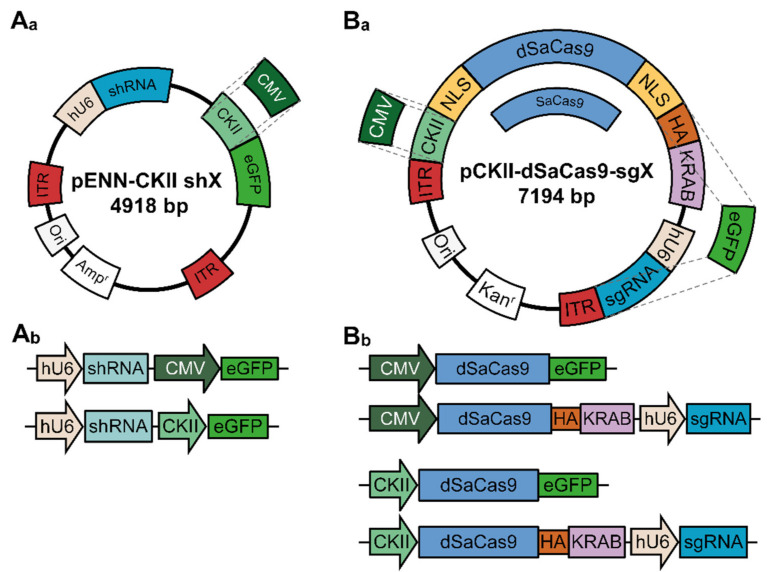
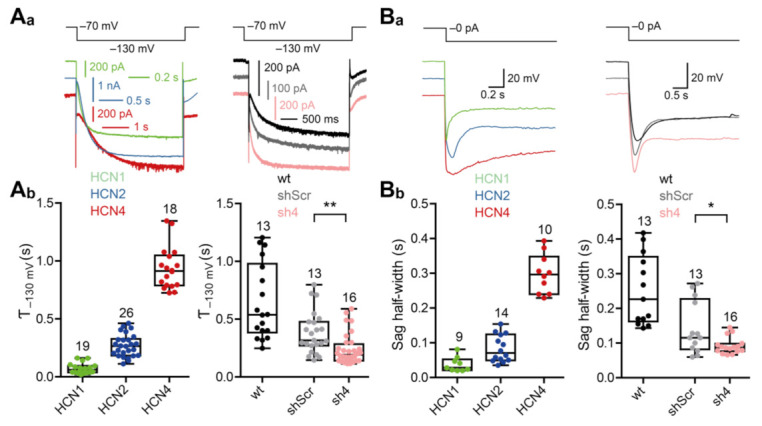
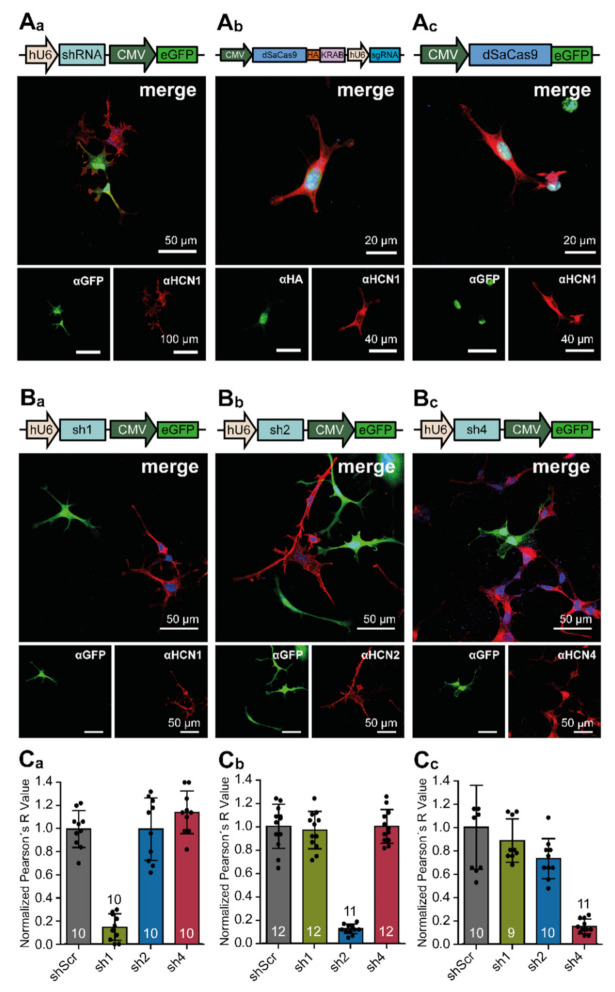
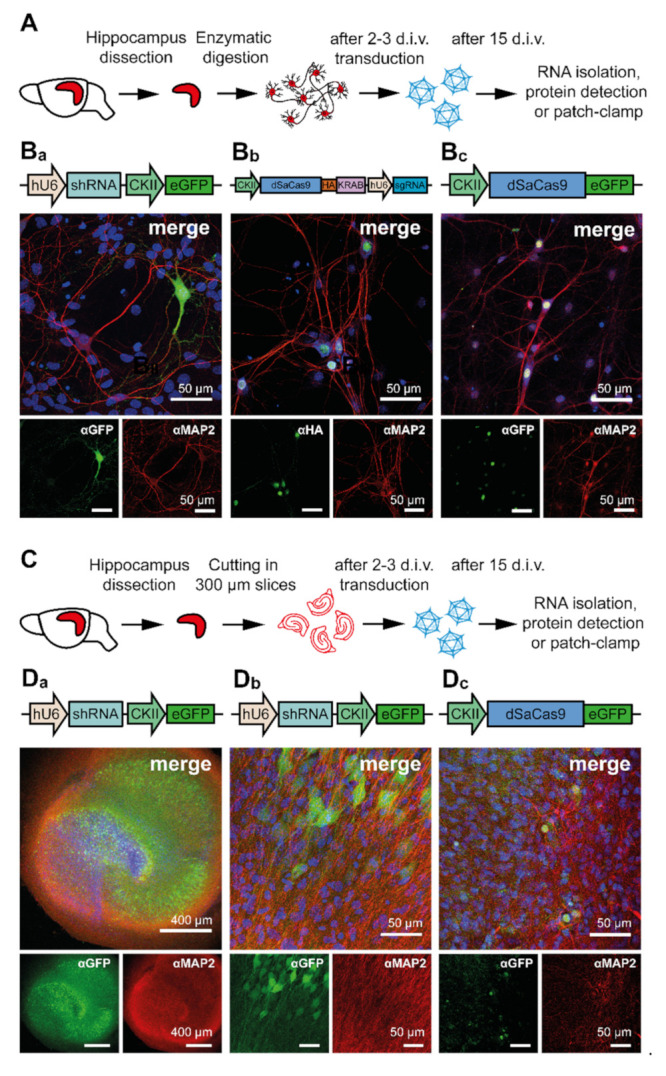
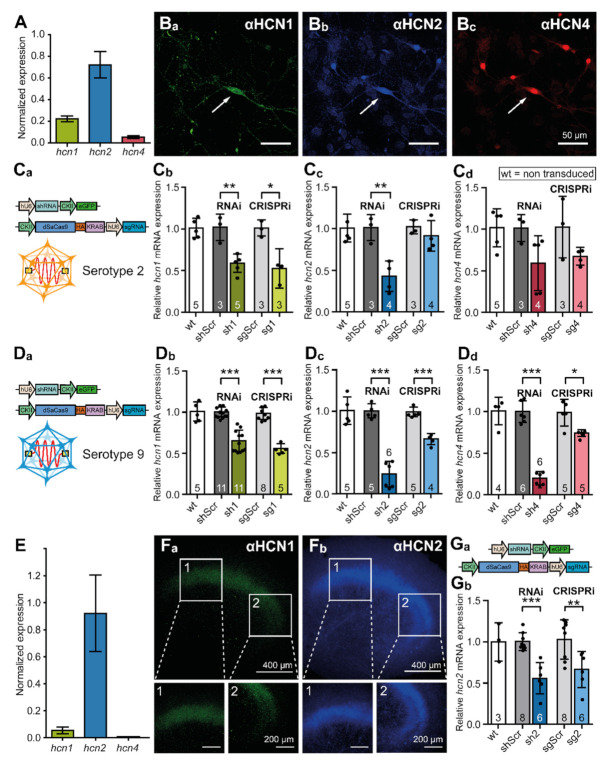
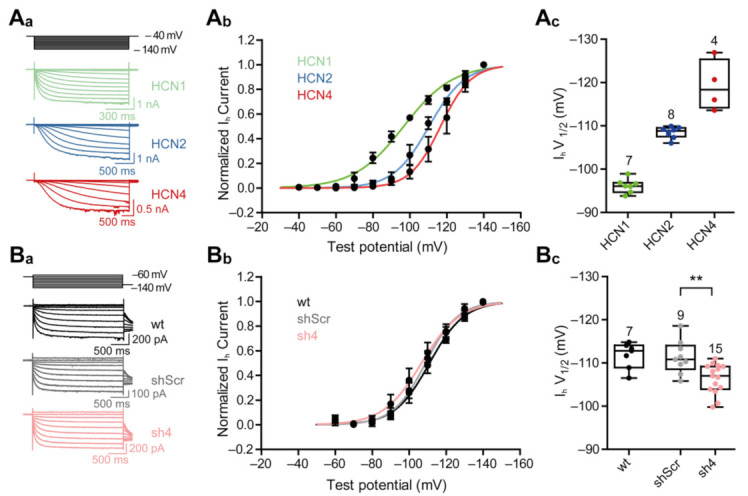
Uncovering the physiological role of individual proteins that are part of the intricate process of cellular signaling is often a complex and challenging task. A straightforward strategy of studying a protein's function is by manipulating the expression rate of its gene. In recent years, the Clustered Regularly Interspaced Short Palindromic Repeat (CRISPR)/Cas9-based technology was established as a powerful gene-editing tool for generating sequence specific changes in proliferating cells. However, obtaining homogeneous populations of transgenic post-mitotic neurons by CRISPR/Cas9 turned out to be challenging. These constraints can be partially overcome by CRISPR interference (CRISPRi), which mediates the inhibition of gene expression by competing with the transcription machinery for promoter binding and, thus, transcription initiation. Notably, CRISPR/Cas is only one of several described approaches for the manipulation of gene expression. Here, we targeted neurons with recombinant Adeno-associated viruses to induce either CRISPRi or RNA interference (RNAi), a well-established method for impairing protein biosynthesis by using cellular regulatory mechanisms that induce the degradation of pre-existing mRNA. We specifically targeted hyperpolarization-activated and cyclic nucleotide-gated (HCN) channels, which are widely expressed in neuronal tissues and play essential physiological roles in maintaining biophysical characteristics in neurons. Both of the strategies reduced the expression levels of three HCN isoforms (HCN1, 2, and 4) with high specificity. Furthermore, detailed analysis revealed that the knock-down of just a single HCN isoform (HCN4) in hippocampal neurons did not affect basic electrical parameters of transduced neurons, whereas substantial changes emerged in HCN-current specific properties.
揭示作为细胞信号转导复杂过程一部分的单个蛋白质的生理作用通常是一项复杂而具有挑战性的任务。研究蛋白质功能的一种直接策略是操纵其基因的表达率。近年来,基于成簇规律间隔短回文重复序列(CRISPR)/Cas9 的技术已成为在增殖细胞中产生序列特异性变化的强大基因编辑工具。然而,通过 CRISPR/Cas9 获得同质的转基因有丝分裂后神经元群体具有挑战性。这些限制可以通过 CRISPR 干扰(CRISPRi)部分克服,CRISPRi 通过与转录机制竞争启动子结合并因此转录起始来介导基因表达的抑制。值得注意的是,CRISPR/Cas 只是用于基因表达操纵的几种描述方法之一。在这里,我们使用重组腺相关病毒靶向神经元,以诱导 CRISPRi 或 RNA 干扰(RNAi),这是一种通过利用诱导降解预先存在的 mRNA 的细胞调节机制来损害蛋白质生物合成的成熟方法。我们特别针对超极化激活和环核苷酸门控(HCN)通道,这些通道广泛表达于神经元组织中,在维持神经元的生物物理特性方面发挥着重要的生理作用。这两种策略都以高特异性降低了三种 HCN 同工型(HCN1、2 和 4)的表达水平。此外,详细分析表明,在海马神经元中敲低单个 HCN 同工型(HCN4)不会影响转导神经元的基本电参数,而在 HCN 电流特异性特性中出现了显著变化。