Department of Neurosurgery, National Cancer Center/National Clinical Research Center for Cancer/Cancer Hospital, Chinese Academy of Medical Sciences and Peking Union Medical College, Beijing, China.
State Key Laboratory of Molecular Oncology, Center for Cancer Precision Medicine, National Cancer Center/National Clinical Research Center for Cancer/Cancer Hospital, Chinese Academy of Medical Sciences and Peking Union Medical College, Beijing, China.
J Biomed Sci. 2021 Feb 9;28(1):13. doi: 10.1186/s12929-020-00705-3.
Although the availability of therapeutic options including temozolomide, radiotherapy and some target agents following neurosurgery, the prognosis of glioma patients remains poor. Thus, there is an urgent need to explore possible targets for clinical treatment of this disease.
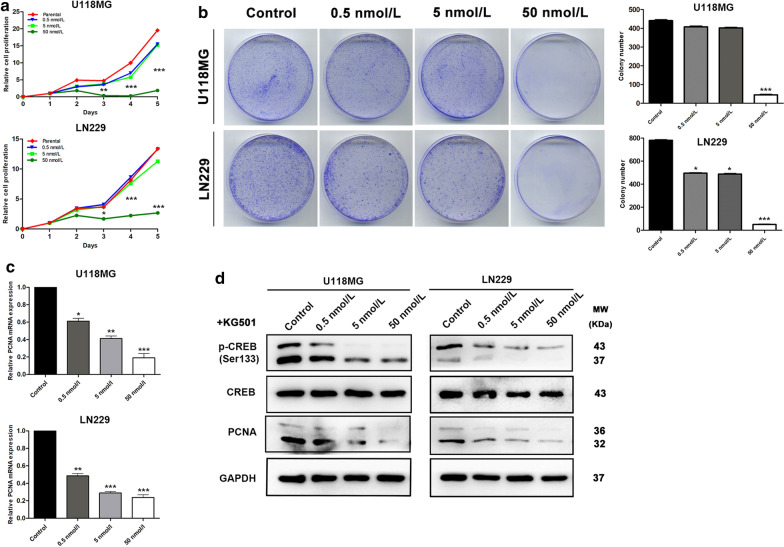
Tissue microarrays and immunohistochemistry were used to detect FKBP10, Hsp47, p-AKT (Ser473), p-CREB (Ser133) and PCNA expression in glioma tissues and xenografts. CCK-8 tests, colony formation assays and xenograft model were performed to test proliferation ability of FKBP10 in glioma cells in vitro and in vivo. Quantitative reverse transcriptase-PCR, western-blotting, GST-pull down, co-immunoprecipitation and confocal-immunofluorescence staining assay were used to explore the molecular mechanism underlying the functions of overexpressed FKBP10 in glioma cells.
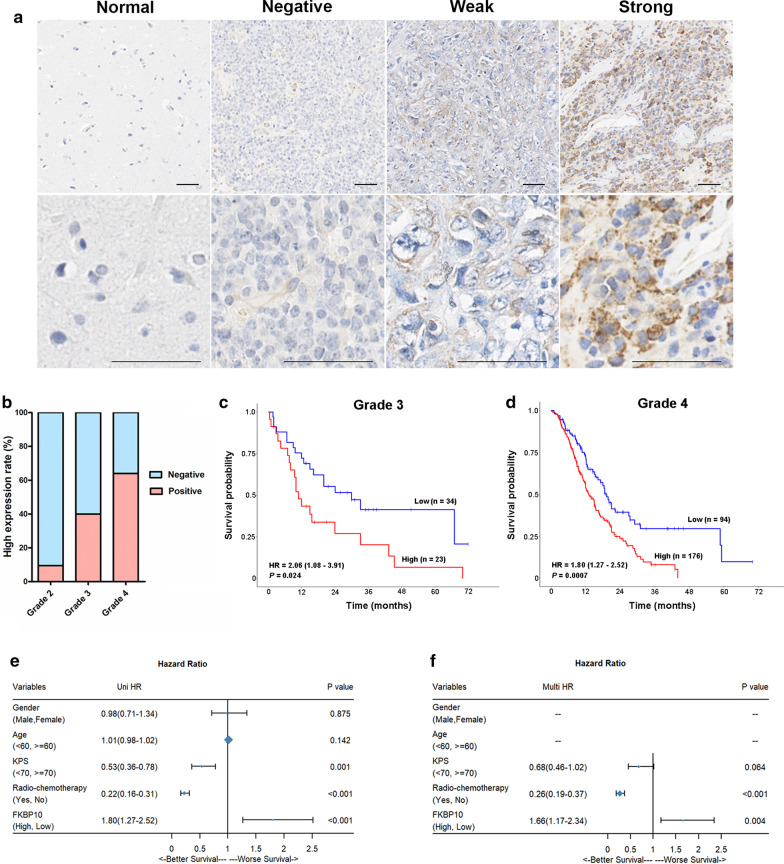
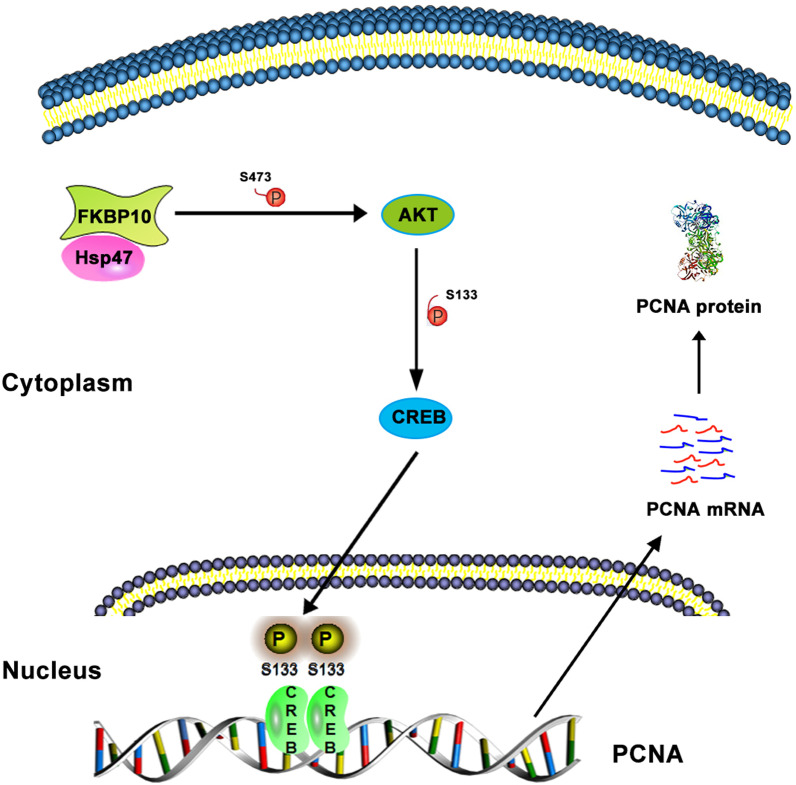
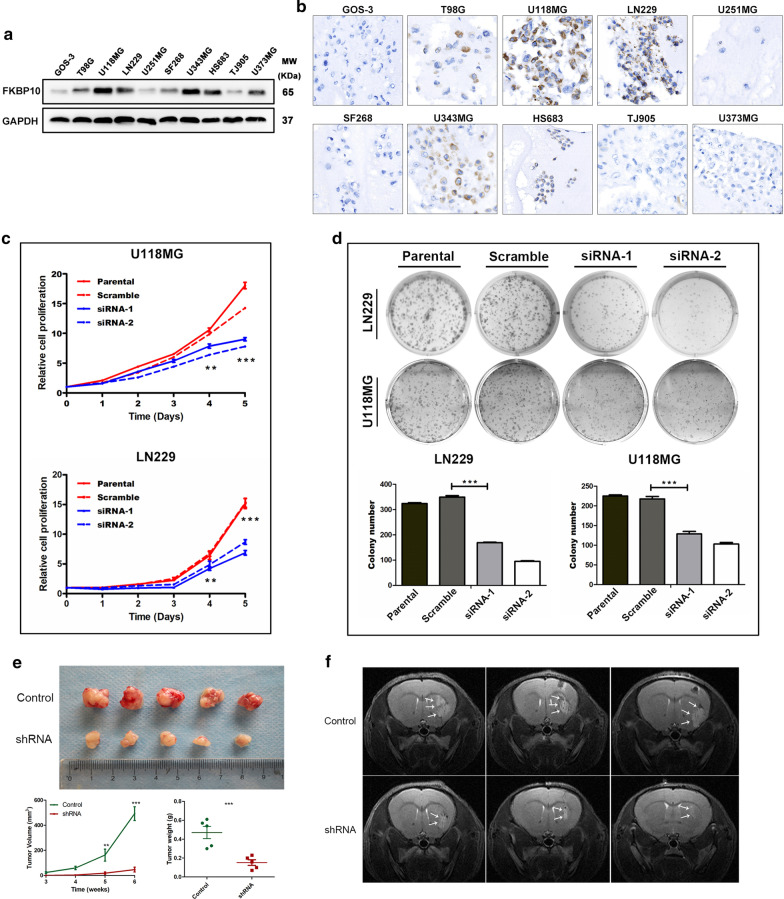
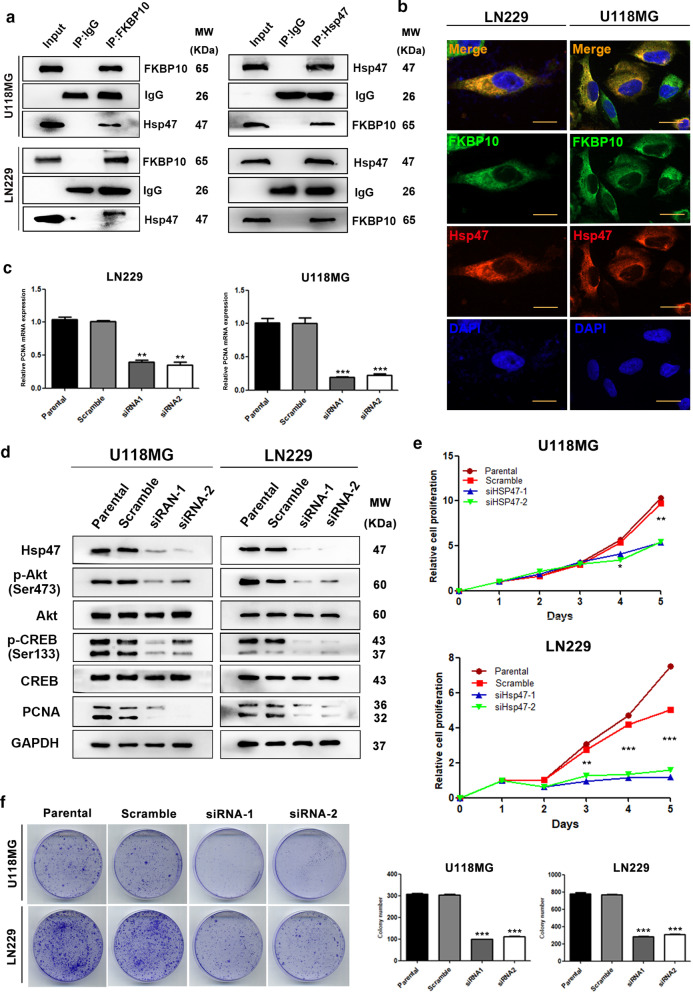
FKBP10 was highly expressed in glioma tissues and its expression was positively correlates with grade, poor prognosis. FKBP10-knockdown suppressed glioma cell proliferation in vitro and subcutaneous/orthotopic xenograft tumor growth in vivo. Silencing of FKBP10 reduced p-AKT (Ser473), p-CREB (Ser133), PCNA mRNA and PCNA protein expression in glioma cells. FKBP10 interacting with Hsp47 enhanced the proliferation ability of glioma cells via AKT-CREB-PCNA cascade. In addition, correlation between these molecules were also found in xenograft tumor and glioma tissues.
We showed for the first time that FKBP10 is overexpressed in glioma and involved in proliferation of glioma cells by interacting with Hsp47 and activating AKT-CREB-PCNA signaling pathways. Our findings suggest that inhibition of FKBP10 related signaling might offer a potential therapeutic option for glioma patients.
尽管神经外科治疗后有替莫唑胺、放疗和一些靶向药物等治疗选择,胶质瘤患者的预后仍然较差。因此,迫切需要探索这种疾病的临床治疗的可能靶点。
使用组织微阵列和免疫组织化学检测胶质瘤组织和异种移植物中 FKBP10、Hsp47、p-AKT(Ser473)、p-CREB(Ser133)和 PCNA 的表达。CCK-8 试验、集落形成试验和异种移植模型用于检测 FKBP10 在体外和体内对胶质瘤细胞增殖能力的影响。定量逆转录酶-PCR、western-blotting、GST 下拉、免疫共沉淀和共聚焦免疫荧光染色实验用于探索过表达 FKBP10 在胶质瘤细胞中功能的分子机制。
FKBP10 在胶质瘤组织中高表达,其表达与分级、预后不良呈正相关。FKBP10 敲低抑制了体外胶质瘤细胞的增殖和皮下/原位异种移植肿瘤的生长。沉默 FKBP10 降低了胶质瘤细胞中 p-AKT(Ser473)、p-CREB(Ser133)、PCNA mRNA 和 PCNA 蛋白的表达。FKBP10 与 Hsp47 相互作用通过 AKT-CREB-PCNA 级联增强了胶质瘤细胞的增殖能力。此外,在异种移植肿瘤和胶质瘤组织中也发现了这些分子之间的相关性。
我们首次表明,FKBP10 在胶质瘤中过表达,并通过与 Hsp47 相互作用和激活 AKT-CREB-PCNA 信号通路参与胶质瘤细胞的增殖。我们的研究结果表明,抑制 FKBP10 相关信号可能为胶质瘤患者提供一种潜在的治疗选择。