Laboratory of Rare Human Circulating Cells, University Medical Center of Montpellier, University of Montpellier, Montpellier, France.
CREEC (CREES), Unité Mixte de Recherches, IRD 224-CNRS 5290-University of Montpellier, Montpellier, France.
Mol Cancer. 2021 Feb 8;20(1):30. doi: 10.1186/s12943-021-01326-6.
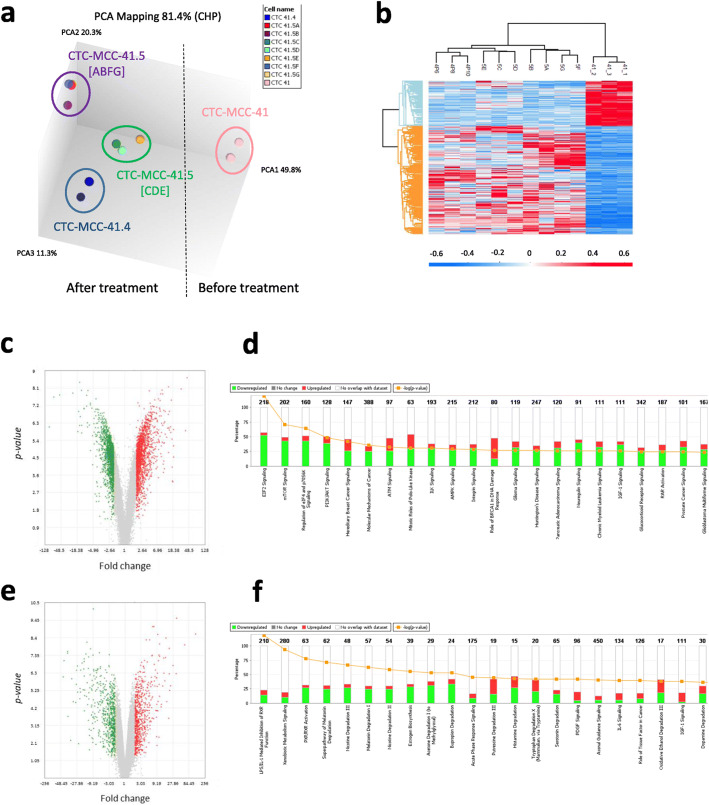
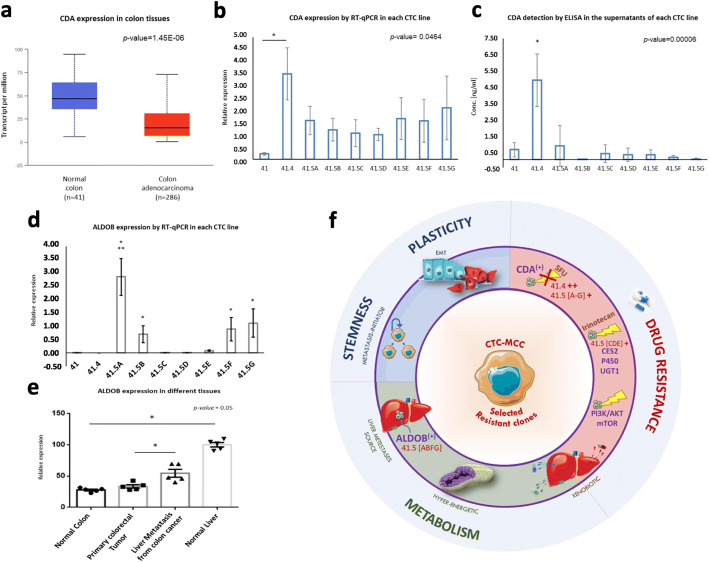
The characterization of circulating tumor cells (CTCs) holds promises for precision medicine because these cells are an important clinical indicator of treatment efficacy. We established the first and still only nine permanent colon CTC lines from peripheral blood samples of a patient with metastatic colon cancer collected at different time points during treatment and cancer progression. The study objectives were (i) to compare the gene expression profiles of these CTC lines, and (ii) to determine the main features acquired during treatment. The number of upregulated genes was higher in the CTC lines obtained after treatment, indicating that they acquired properties to escape treatment pressure. Among these upregulated genes, some are involved in the mTOR and PI3K/AKT signaling pathways. Moreover, cytidine deaminase expression was significantly increased in the CTC lines obtained after failure of the first- and second-line 5-fluorouracile-based treatments, suggesting that these CTCs can eliminate this specific drug and resist to therapy. Several enzymes involved in xenobiotic metabolism also were upregulated after treatment, suggesting the activation of detoxification mechanisms in response to chemotherapy. Finally, the significant higher expression of aldolase B in four of the six CTC lines obtained after treatment withdrawal and cancer progression indicated that these clones originated from liver metastases. In conclusion, these CTC lines generated at different time points during treatment of metastatic colon cancer in a single patient are characterized by the deregulation of different genes that promote (i) drug resistance, (ii) xenobiotic and energy metabolism, and (iii) stem cell properties and plasticity.
循环肿瘤细胞(CTCs)的特征具有精准医疗的潜力,因为这些细胞是治疗效果的重要临床指标。我们从一名转移性结肠癌患者的外周血样本中建立了第一个也是唯一一个九个永久性结肠 CTC 系,这些样本是在治疗和癌症进展的不同时间点收集的。研究目的是:(i)比较这些 CTC 系的基因表达谱;(ii)确定在治疗过程中获得的主要特征。在治疗后获得的 CTC 系中上调基因的数量更高,表明它们获得了逃避治疗压力的特性。在这些上调的基因中,一些涉及 mTOR 和 PI3K/AKT 信号通路。此外,在一线和二线基于氟尿嘧啶的治疗失败后获得的 CTC 系中,胞嘧啶脱氨酶的表达显著增加,表明这些 CTC 可以消除这种特定药物并抵抗治疗。在治疗后,几种参与异生物质代谢的酶也上调,表明在化疗过程中激活了解毒机制。最后,在治疗停止和癌症进展后获得的六个 CTC 系中的四个中,醛缩酶 B 的表达显著升高,表明这些克隆起源于肝转移。总之,这些在一个患者的转移性结肠癌治疗的不同时间点生成的 CTC 系的特征是不同基因的失调,这些基因促进了(i)耐药性、(ii)异生物质和能量代谢,以及(iii)干细胞特性和可塑性。