Key Laboratory of RNA Biology, Key Laboratory of Protein and Peptide Pharmaceutical, Institute of Biophysics, Chinese Academy of Sciences, Beijing 100101, China; University of Chinese Academy of Sciences, Beijing 100049, China; Department of Biomedical Engineering, Duke University, Durham, NC 27708, USA.
Department of Biomedical Engineering, Duke University, Durham, NC 27708, USA.
Cell Metab. 2018 Jun 5;27(6):1249-1262.e4. doi: 10.1016/j.cmet.2018.04.003. Epub 2018 Apr 26.
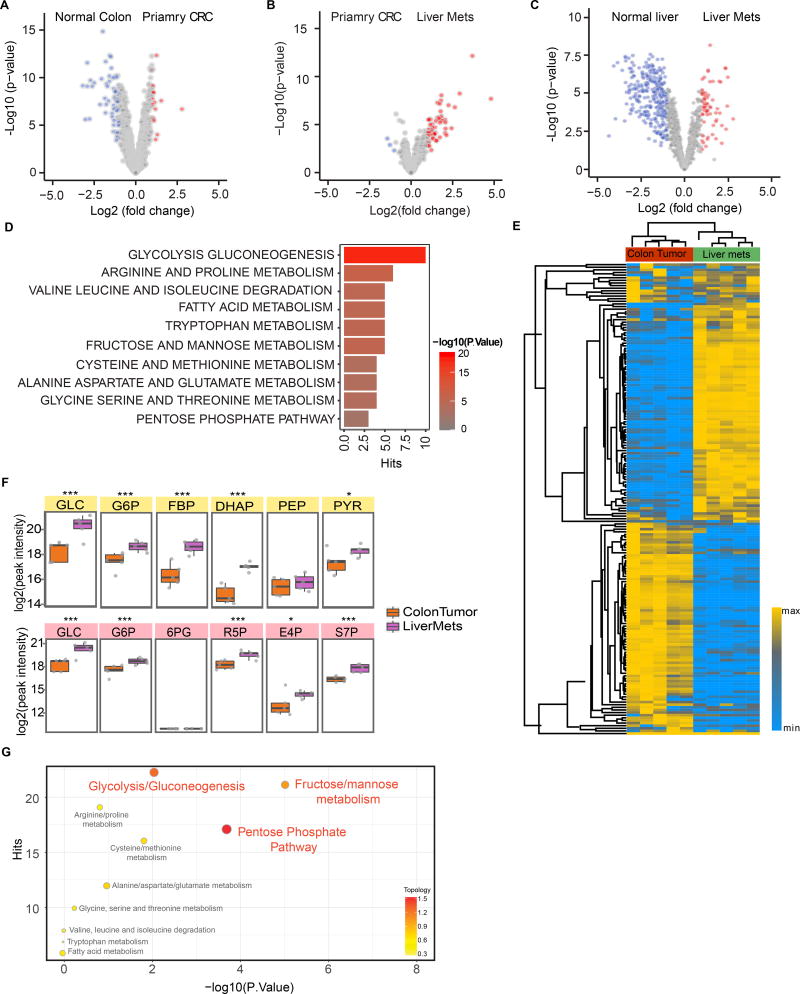
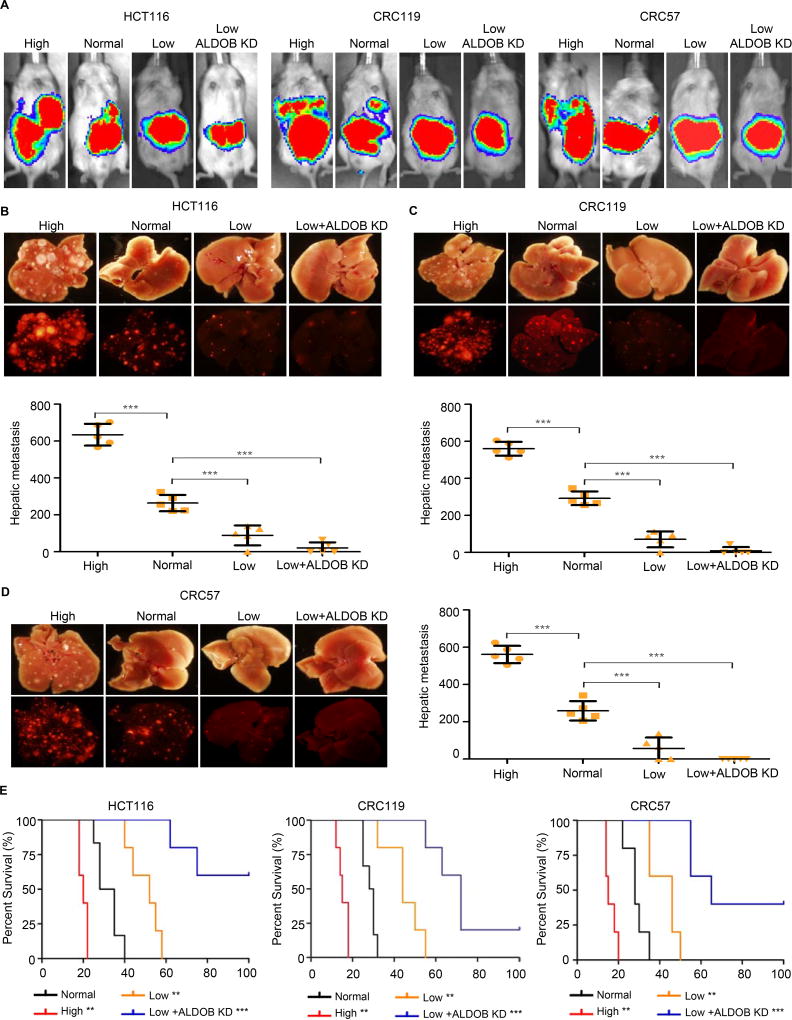
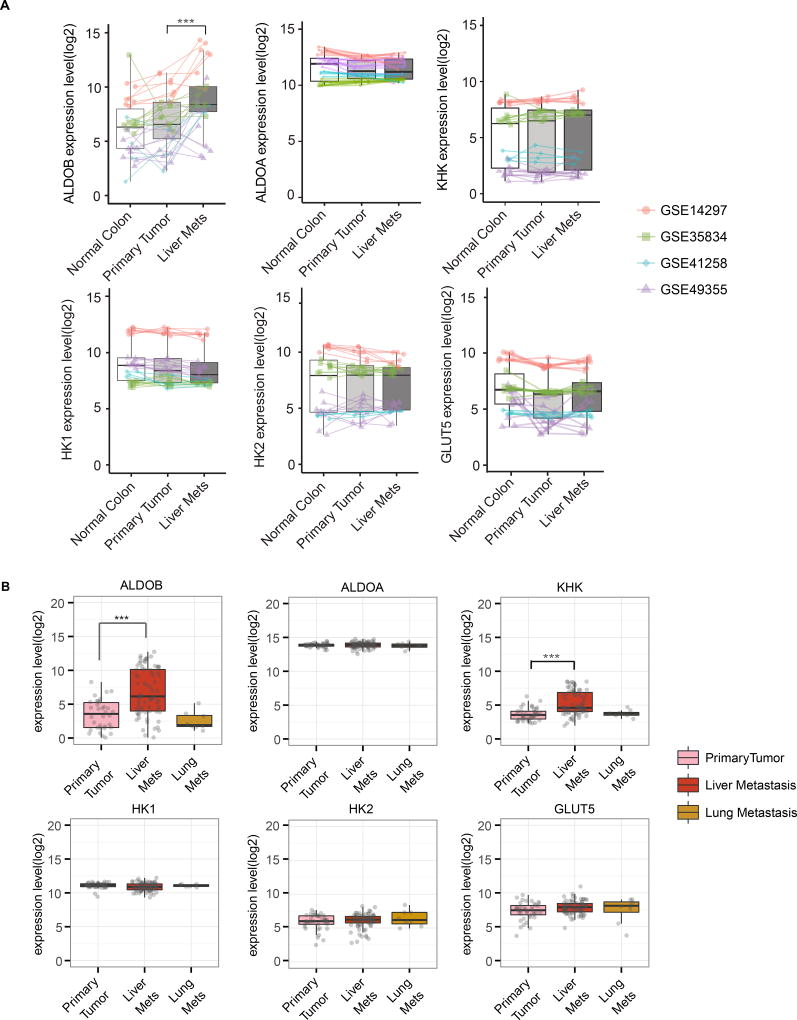
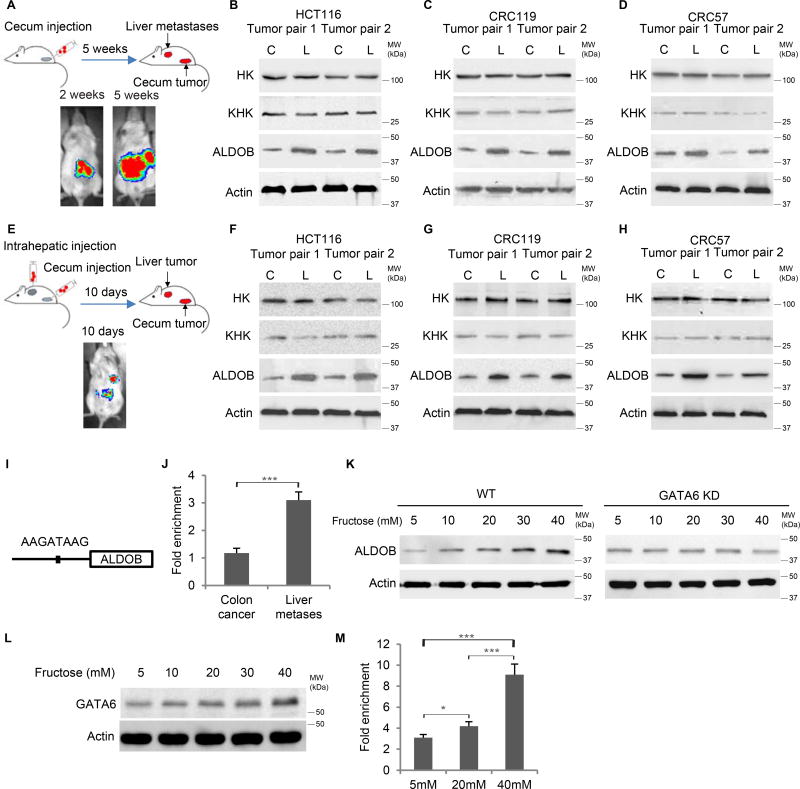
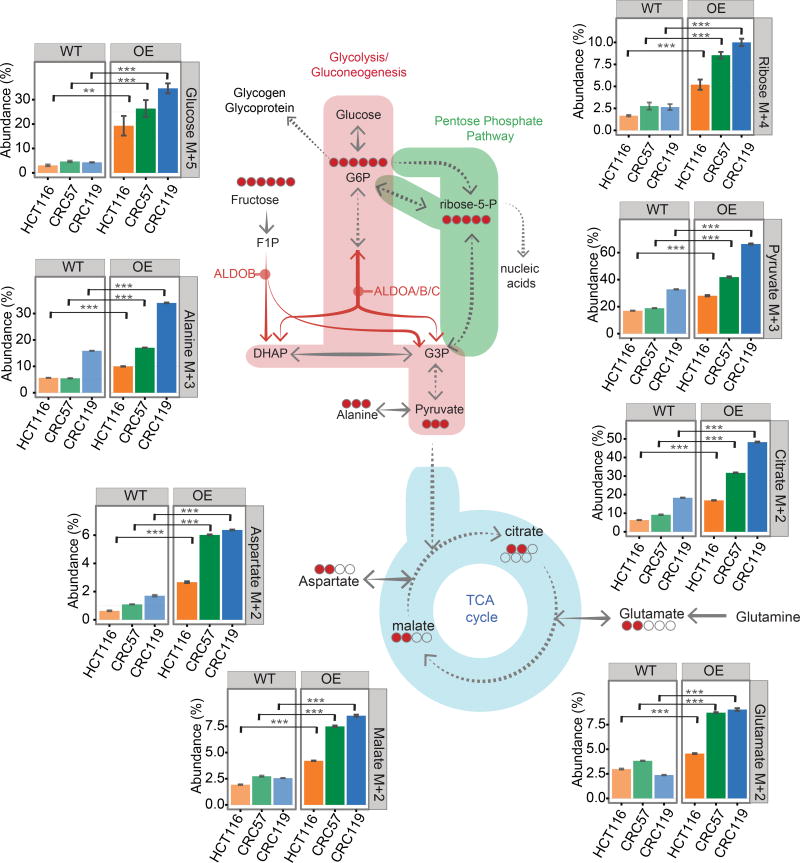
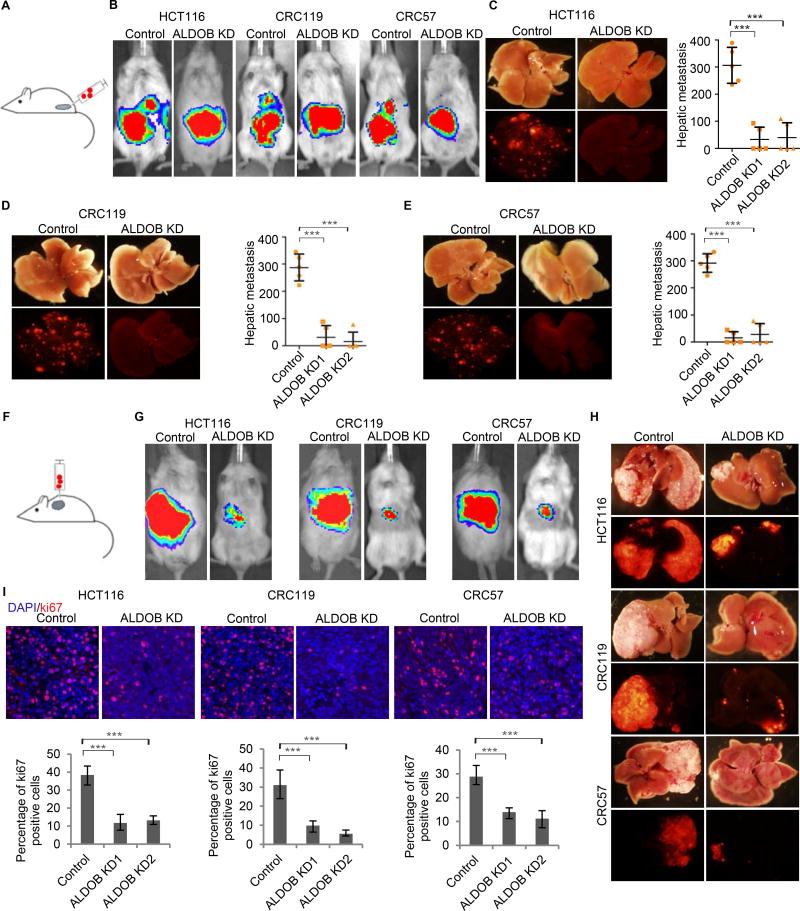
Cancer metastasis accounts for the majority of cancer-related deaths and remains a clinical challenge. Metastatic cancer cells generally resemble cells of the primary cancer, but they may be influenced by the milieu of the organs they colonize. Here, we show that colorectal cancer cells undergo metabolic reprogramming after they metastasize and colonize the liver, a key metabolic organ. In particular, via GATA6, metastatic cells in the liver upregulate the enzyme aldolase B (ALDOB), which enhances fructose metabolism and provides fuel for major pathways of central carbon metabolism during tumor cell proliferation. Targeting ALDOB or reducing dietary fructose significantly reduces liver metastatic growth but has little effect on the primary tumor. Our findings suggest that metastatic cells can take advantage of reprogrammed metabolism in their new microenvironment, especially in a metabolically active organ such as the liver. Manipulation of involved pathways may affect the course of metastatic growth.
癌症转移是导致大多数癌症相关死亡的主要原因,也是临床面临的挑战。转移性癌细胞通常与原发性癌症的细胞相似,但它们可能会受到其定植器官微环境的影响。在这里,我们表明结直肠癌细胞在转移并定植到肝脏这一关键代谢器官后会发生代谢重编程。具体而言,通过 GATA6,肝脏中的转移细胞上调了醛缩酶 B(ALDOB)酶,该酶增强了果糖代谢,并为肿瘤细胞增殖过程中中心碳代谢的主要途径提供燃料。靶向 ALDOB 或减少饮食中的果糖可显著降低肝转移生长,但对原发性肿瘤几乎没有影响。我们的研究结果表明,转移性细胞可以利用其新的微环境中的重编程代谢,特别是在代谢活跃的器官如肝脏中。对相关途径的干预可能会影响转移生长的进程。