Ecological Networks, Technische Universität Darmstadt, Schnittspahnstraße 3, 64287, Darmstadt, Germany.
Institut für Bodenkunde und Standortlehre, Universität Hohenheim, Emil-Wolff-Straße 27, 70599, Stuttgart, Germany.
Exp Appl Acarol. 2021 Mar;83(3):343-373. doi: 10.1007/s10493-020-00586-z. Epub 2021 Feb 9.
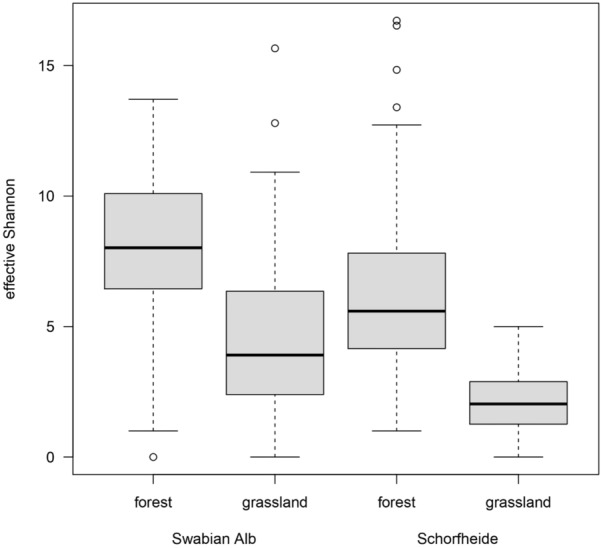
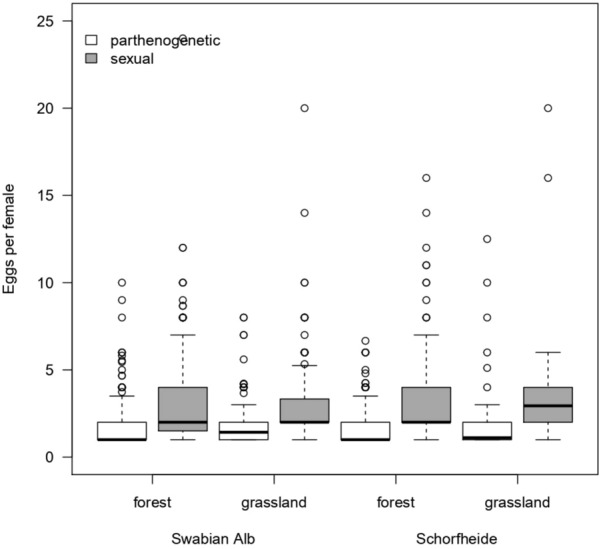
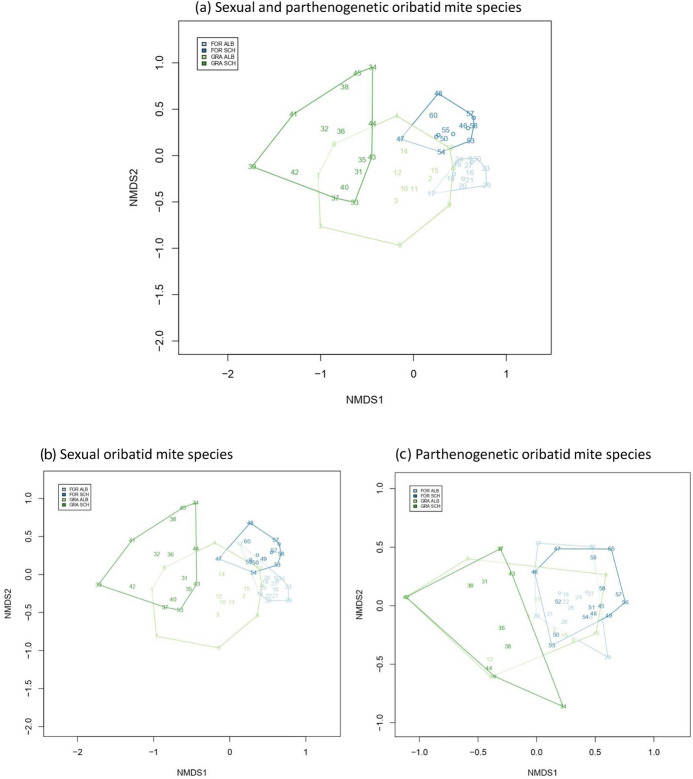
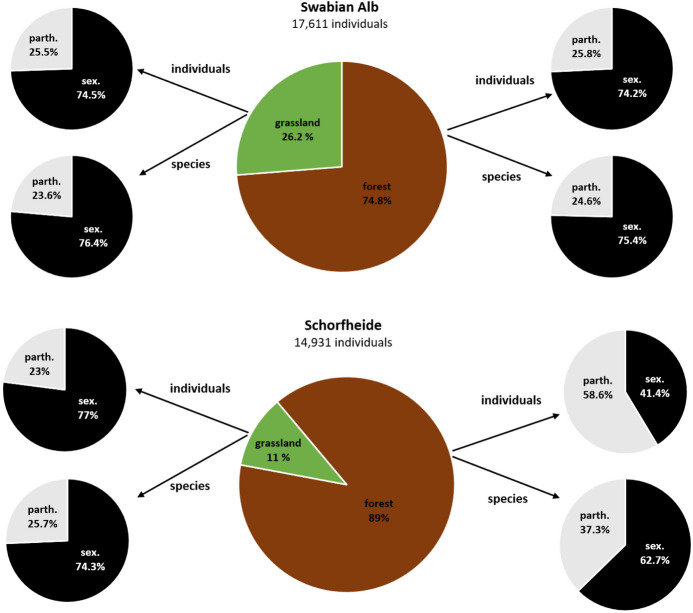
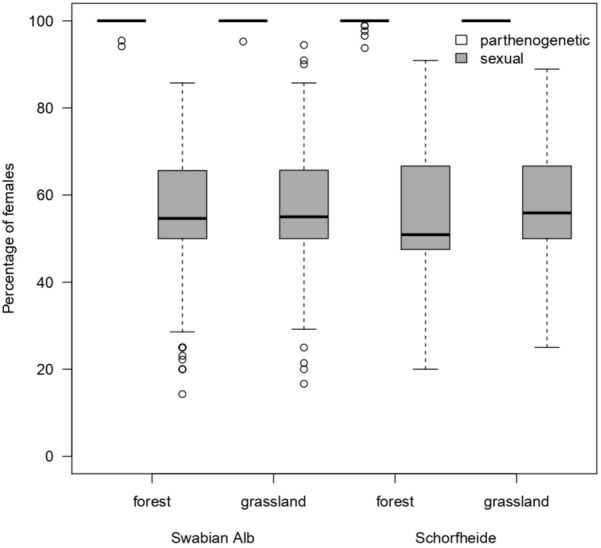
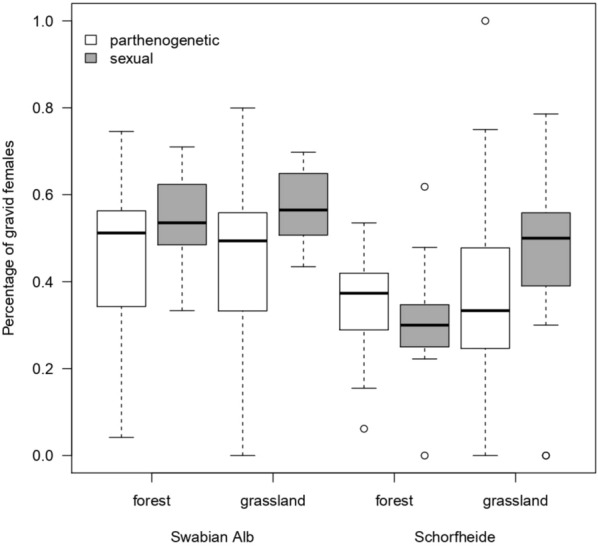
Intensive land use has been shown to alter the composition and functioning of soil communities. Due to their low dispersal ability, oribatid mites are particularly vulnerable to land-use intensification and species which are not adjusted to management-related disturbances become less abundant. We investigated how different land-use parameters in forests and grasslands affect oribatid mite diversity and abundance, with a focus on: (1) species-level impacts, by classifying species as increasing ('winners') or decreasing ('losers') in abundance with higher land-use intensity, and (2) reproductive impact, by investigating whether sexual and parthenogenetic species react differently. We collected 32,542 adult oribatid mites in 60 forests and grasslands of known land-use intensity in two regions of Germany. Diversity and total abundance as well as the proportion of sexual species were higher in forests than in grasslands. Diversity declined with higher land-use intensity in forests, but increased with higher mowing and fertilization in grasslands. Depending on land-use parameter and region, abundance either declined or remained unaffected by increasing intensity. Gravidity was higher in sexual than in parthenogenetic species and sexuals had 1.6× more eggs per gravid female. Proportions of sexual species and gravid females decreased with land-use intensity in forests, but increased with mowing in grasslands. At the species level, 75% of sexuals and 87.5% of parthenogens were 'losers' of higher percentages of dead wood originating from management-related disturbances. Across land-use parameters and habitats, a similar proportion of sexual and parthenogenetic oribatid mite species were 'losers' of high land-use intensity. However, 'winner' species were more common among sexuals.
集约化土地利用已被证明会改变土壤群落的组成和功能。由于其扩散能力较低,食真菌螨类特别容易受到土地利用集约化的影响,而那些没有适应管理相关干扰的物种则变得不那么丰富。我们研究了森林和草原中的不同土地利用参数如何影响食真菌螨类的多样性和丰度,重点关注:(1)物种水平的影响,通过将物种分类为随着土地利用强度的增加而增加(“赢家”)或减少(“输家”)的丰富度,以及(2)繁殖影响,通过研究有性和单性生殖物种是否有不同的反应。我们在德国两个地区的 60 个已知土地利用强度的森林和草原中收集了 32542 只成年食真菌螨类。多样性和总丰度以及有性物种的比例在森林中高于草原。多样性随着森林中土地利用强度的增加而下降,但在草原中随着割草和施肥的增加而增加。根据土地利用参数和地区的不同,丰度要么随着强度的增加而下降,要么保持不变。在有性物种中,雌性的怀卵量高于单性生殖物种,且每只怀孕雌性的卵子数量是单性生殖物种的 1.6 倍。在森林中,有性物种和怀孕雌性的比例随着土地利用强度的增加而下降,但在草原中随着割草的增加而增加。在物种水平上,75%的有性物种和 87.5%的单性生殖物种是由于管理相关干扰而产生的更高比例死木的“输家”。在土地利用参数和栖息地方面,有性和单性生殖食真菌螨类物种中有相似比例的物种是高土地利用强度的“输家”。然而,“赢家”物种在有性物种中更为常见。