Department of Bioengineering, Rice University, Houston, TX, USA.
Center for Engineering Complex Tissues, Houston, TX, USA.
Ann Biomed Eng. 2021 Sep;49(9):2114-2125. doi: 10.1007/s10439-021-02736-9. Epub 2021 Feb 9.
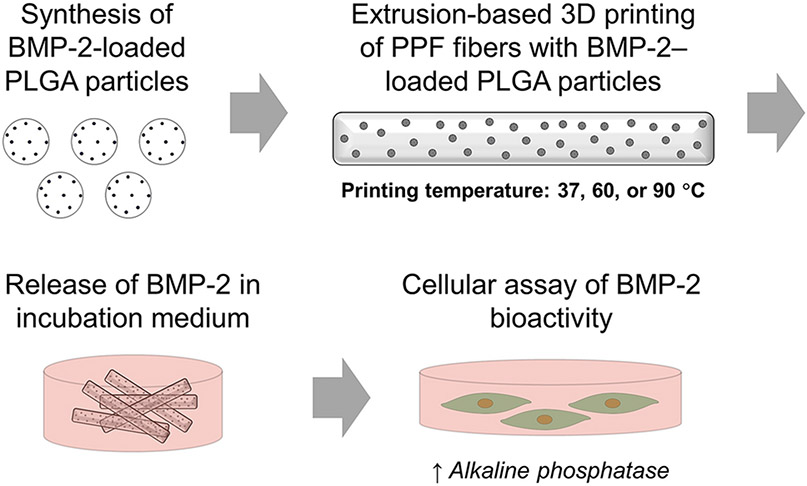
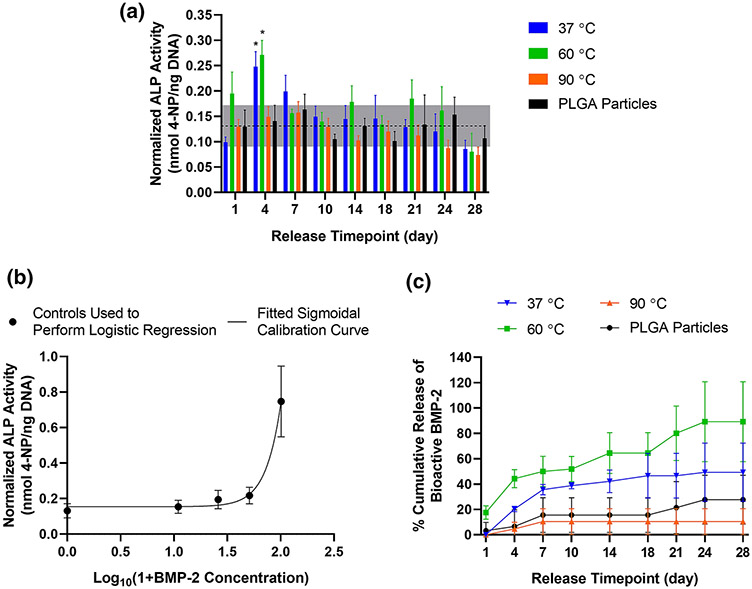
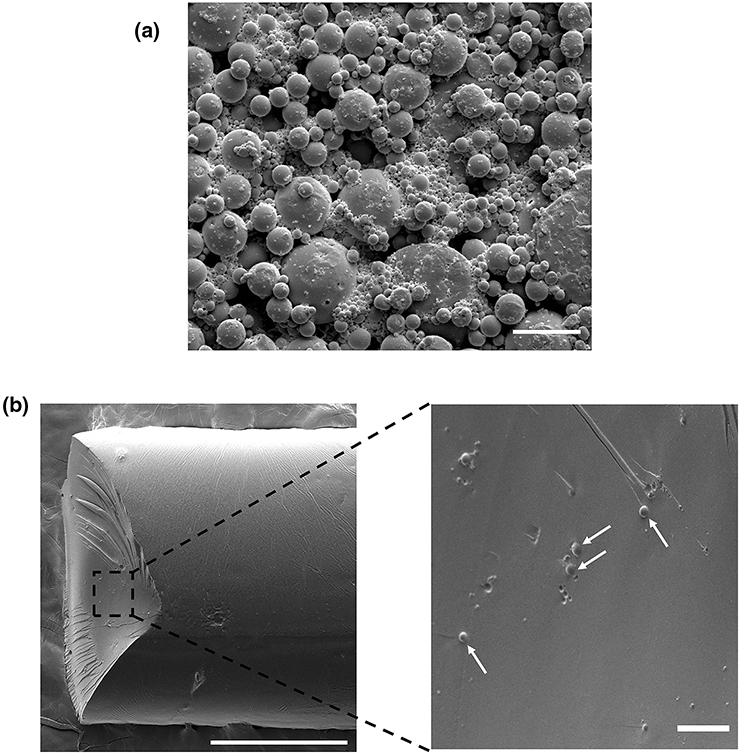
Growth factors such as bone morphogenetic protein-2 (BMP-2) are potent tools for tissue engineering. Three-dimensional (3D) printing offers a potential strategy for delivery of BMP-2 from polymeric constructs; however, these biomolecules are sensitive to inactivation by the elevated temperatures commonly employed during extrusion-based 3D printing. Therefore, we aimed to correlate printing temperature to the bioactivity of BMP-2 released from 3D printed constructs composed of a model polymer, poly(propylene fumarate). Following encapsulation of BMP-2 in poly(DL-lactic-co-glycolic acid) particles, growth factor-loaded fibers were fabricated at three different printing temperatures. Resulting constructs underwent 28 days of aqueous degradation for collection of released BMP-2. Supernatants were then assayed for the presence of bioactive BMP-2 using a cellular assay for alkaline phosphatase activity. Cumulative release profiles indicated that BMP-2 released from constructs that were 3D printed at physiologic and intermediate temperatures exhibited comparable total amounts of bioactive BMP-2 release as those encapsulated in non-printed particulate delivery vehicles. Meanwhile, the elevated printing temperature of 90 °C resulted in a decreased amount of total bioactive BMP-2 release from the fibers. These findings elucidate the effects of elevated printing temperatures on BMP-2 bioactivity during extrusion-based 3D printing, and enlighten polymeric material selection for 3D printing with growth factors.
生长因子,如骨形态发生蛋白-2(BMP-2),是组织工程的有力工具。三维(3D)打印为从聚合物构建体中递送 BMP-2 提供了一种潜在策略;然而,这些生物分子对在基于挤出的 3D 打印过程中常用的高温非常敏感,容易失活。因此,我们旨在将打印温度与从由模型聚合物聚(丙交酯-共-富马酸)组成的 3D 打印构建体中释放的 BMP-2 的生物活性相关联。在 BMP-2 被包封在聚(DL-丙交酯-共-乙交酯)颗粒中之后,在三种不同的打印温度下制造了负载生长因子的纤维。然后,使所得构建体经受 28 天的水性降解以收集释放的 BMP-2。然后使用碱性磷酸酶活性的细胞测定法测定上清液中存在的生物活性 BMP-2。累积释放曲线表明,在生理和中间温度下 3D 打印的构建体中释放的 BMP-2 表现出与包封在未打印的颗粒递送载体中的 BMP-2 相当的总生物活性 BMP-2 释放量。同时,升高的打印温度 90°C 导致纤维中总生物活性 BMP-2 的释放量减少。这些发现阐明了在基于挤出的 3D 打印过程中升高的打印温度对 BMP-2 生物活性的影响,并为 3D 打印生长因子时的聚合物材料选择提供了启示。