Zhu Liwei, Liu Yuzhe, Wang Ao, Zhu Zhengqing, Li Youbin, Zhu Chenyi, Che Zhenjia, Liu Tengyue, Liu He, Huang Lanfeng
Department of Orthopedics, The Second Hospital of Jilin University, Changchun, China.
Orthopaedic Research Institute of Jilin Province, Changchun, China.
Front Bioeng Biotechnol. 2022 Mar 31;10:810880. doi: 10.3389/fbioe.2022.810880. eCollection 2022.
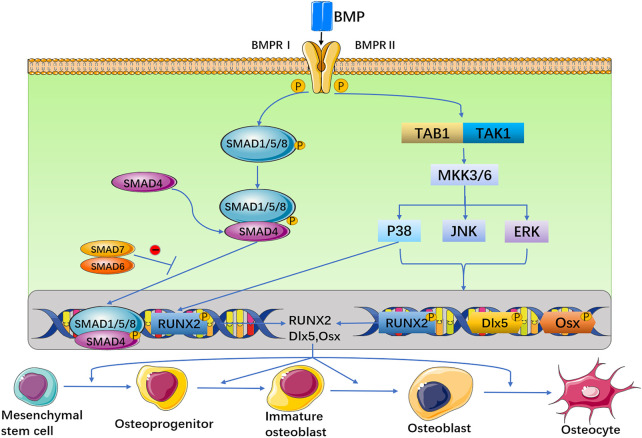
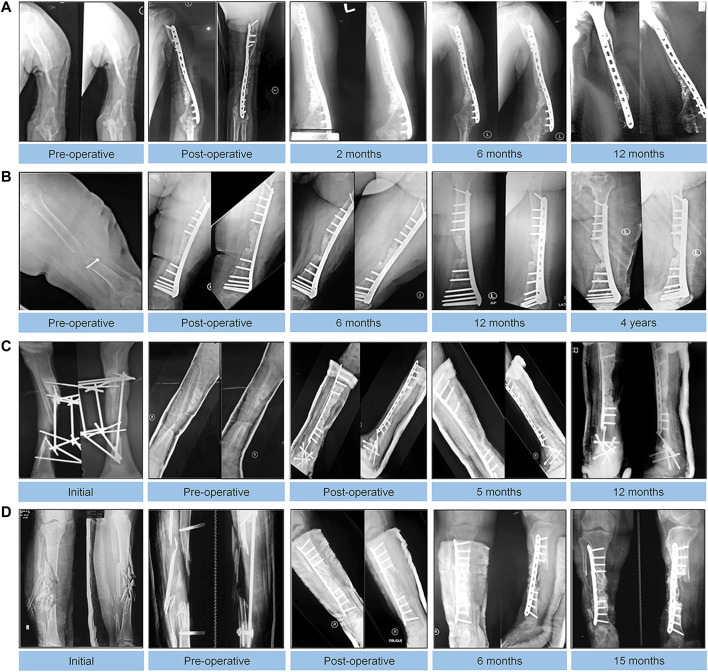
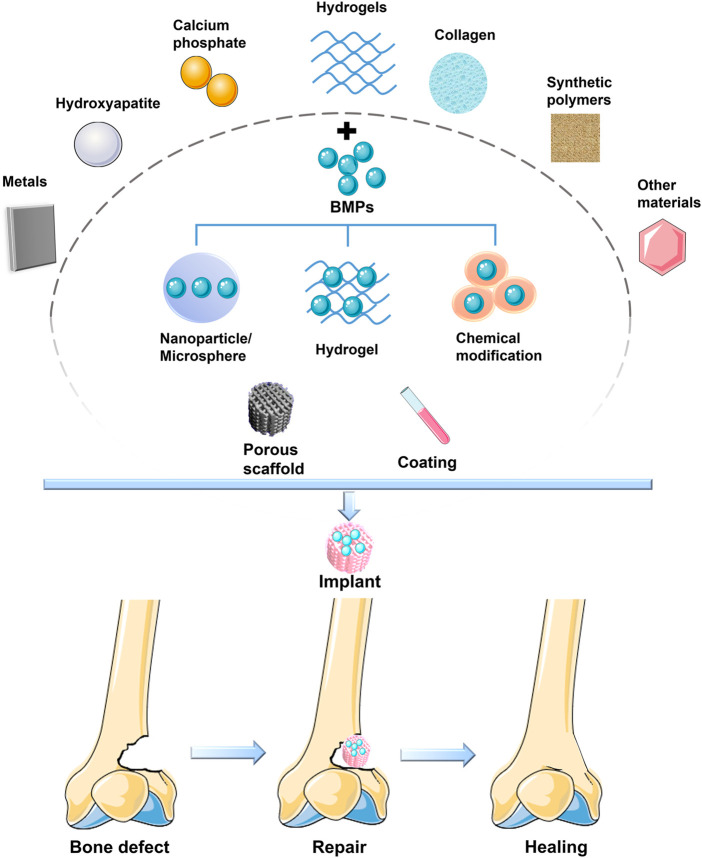
At present, bone nonunion and delayed union are still difficult problems in orthopaedics. Since the discovery of bone morphogenetic protein (BMP), it has been widely used in various studies due to its powerful role in promoting osteogenesis and chondrogenesis. Current results show that BMPs can promote healing of bone defects and reduce the occurrence of complications. However, the mechanism of BMP still needs to be explored, and application of BMP alone to a bone defect site cannot achieve good therapeutic effects. It is particularly important to modify implants to carry BMP to achieve slow and sustained release effects by taking advantage of the nature of the implant. This review aims to explain the mechanism of BMP action , its biological function, and how BMP can be applied to orthopaedic implants to effectively stimulate bone healing in the long term. Notably, implantation of a system that allows sustained release of BMP can provide an effective method to treat bone nonunion and delayed bone healing in the clinic.
目前,骨不连和骨延迟愈合仍是骨科领域的难题。自骨形态发生蛋白(BMP)被发现以来,因其在促进成骨和软骨形成方面的强大作用,已被广泛应用于各类研究。目前的研究结果表明,BMPs可促进骨缺损愈合并减少并发症的发生。然而,BMP的作用机制仍有待探索,单独将BMP应用于骨缺损部位并不能取得良好的治疗效果。利用植入物的特性对其进行改性以携带BMP从而实现缓慢且持续的释放效果尤为重要。本综述旨在阐释BMP的作用机制、其生物学功能,以及BMP如何应用于骨科植入物以长期有效地刺激骨愈合。值得注意的是,植入能够持续释放BMP的系统可为临床治疗骨不连和骨延迟愈合提供一种有效方法。