International Center for the Advancement of Translational Science, University of North Carolina at Chapel Hill, Chapel Hill, NC, USA.
Division of Infectious Diseases, Department of Medicine, University of North Carolina at Chapel Hill, Chapel Hill, NC, USA.
Nature. 2021 Mar;591(7850):451-457. doi: 10.1038/s41586-021-03312-w. Epub 2021 Feb 9.
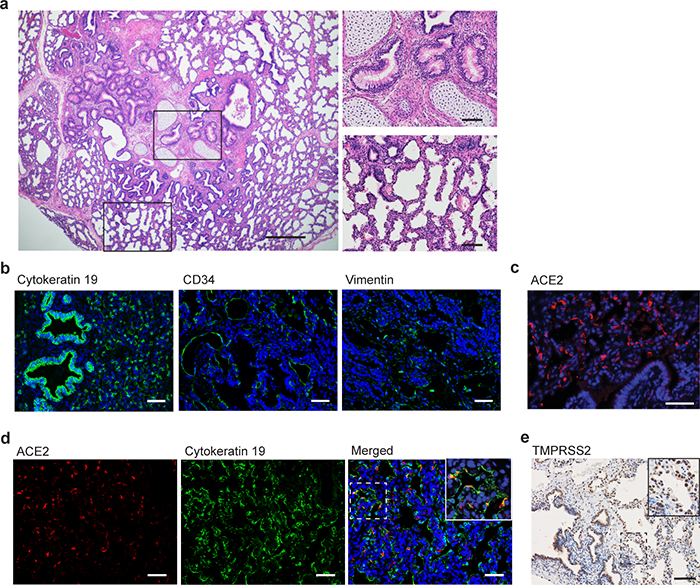
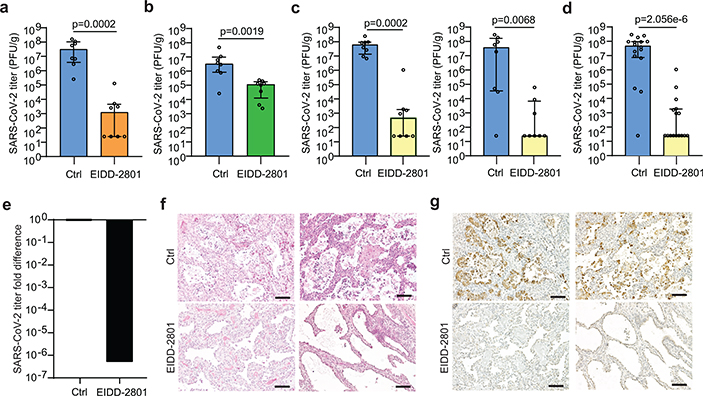
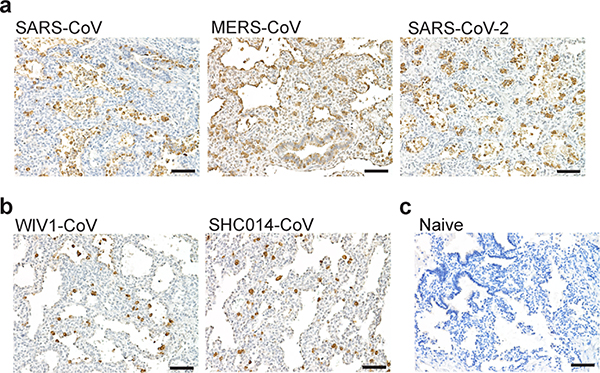
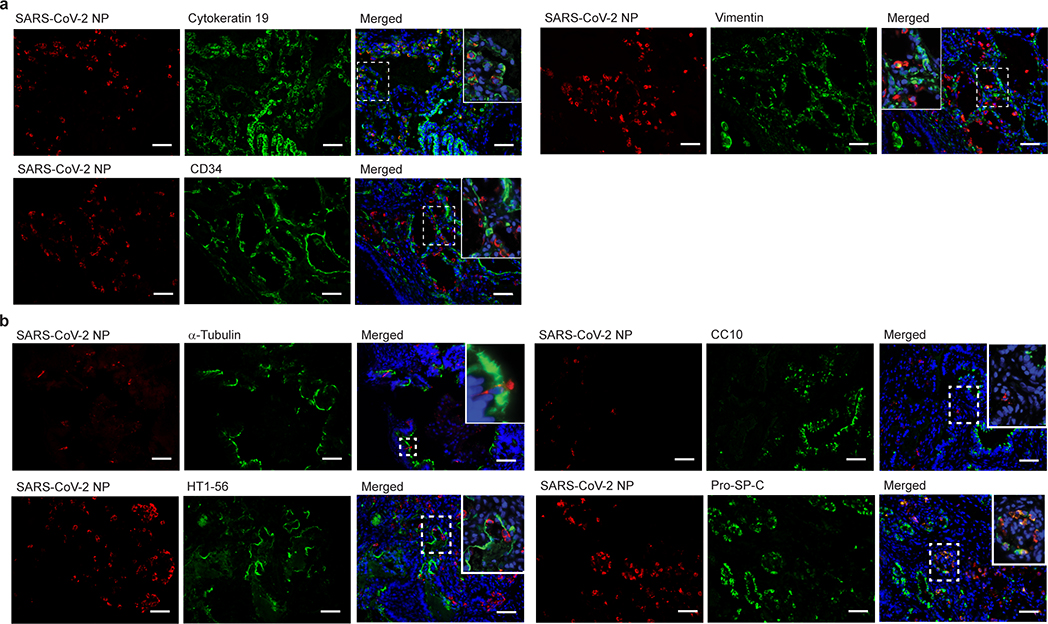
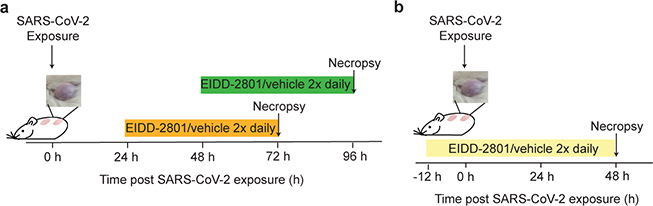
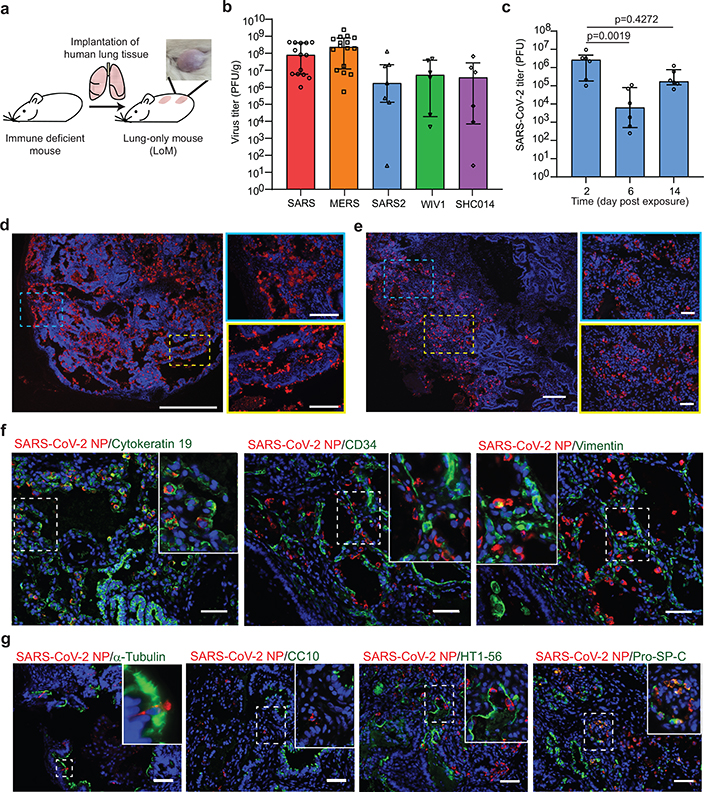
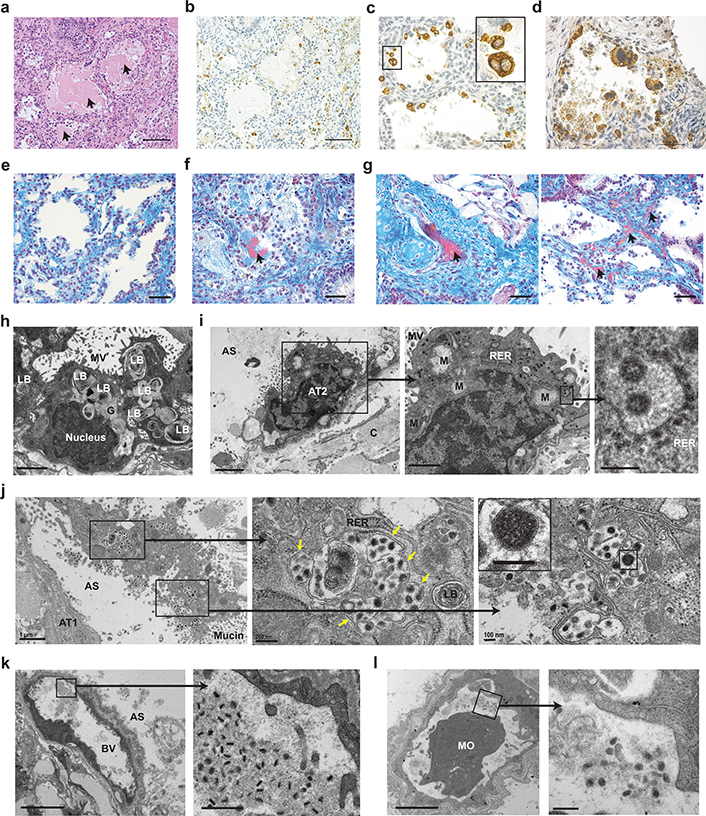
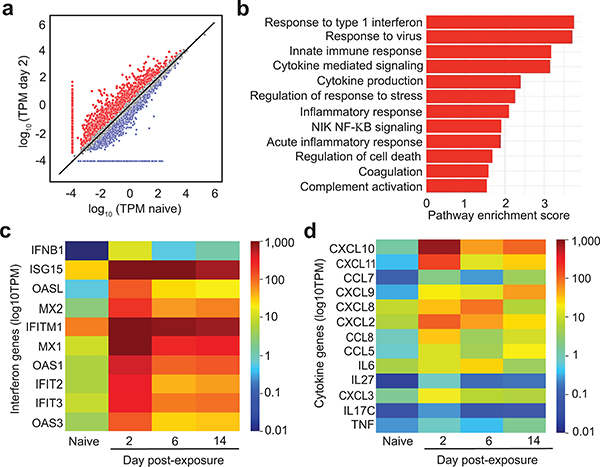
All coronaviruses known to have recently emerged as human pathogens probably originated in bats. Here we use a single experimental platform based on immunodeficient mice implanted with human lung tissue (hereafter, human lung-only mice (LoM)) to demonstrate the efficient in vivo replication of severe acute respiratory syndrome coronavirus (SARS-CoV), Middle East respiratory syndrome coronavirus (MERS-CoV) and severe acute respiratory syndrome coronavirus 2 (SARS-CoV-2), as well as two endogenous SARS-like bat coronaviruses that show potential for emergence as human pathogens. Virus replication in this model occurs in bona fide human lung tissue and does not require any type of adaptation of the virus or the host. Our results indicate that bats contain endogenous coronaviruses that are capable of direct transmission to humans. Our detailed analysis of in vivo infection with SARS-CoV-2 in human lung tissue from LoM showed a predominant infection of human lung epithelial cells, including type-2 pneumocytes that are present in alveoli and ciliated airway cells. Acute infection with SARS-CoV-2 was highly cytopathic and induced a robust and sustained type-I interferon and inflammatory cytokine and chemokine response. Finally, we evaluated a therapeutic and pre-exposure prophylaxis strategy for SARS-CoV-2 infection. Our results show that therapeutic and prophylactic administration of EIDD-2801-an oral broad-spectrum antiviral agent that is currently in phase II/III clinical trials-markedly inhibited SARS-CoV-2 replication in vivo, and thus has considerable potential for the prevention and treatment of COVID-19.
所有已知最近成为人类病原体的冠状病毒可能都起源于蝙蝠。在这里,我们使用一个基于免疫缺陷小鼠植入人肺组织的单一实验平台(以下简称人肺唯一小鼠(LoM)),证明了严重急性呼吸综合征冠状病毒(SARS-CoV)、中东呼吸综合征冠状病毒(MERS-CoV)和严重急性呼吸综合征冠状病毒 2(SARS-CoV-2)在体内的有效复制,以及两种具有作为人类病原体出现潜力的内源性 SARS 样蝙蝠冠状病毒。该模型中的病毒复制发生在真正的人肺组织中,不需要病毒或宿主的任何类型的适应性。我们的结果表明,蝙蝠携带的内源性冠状病毒能够直接传播给人类。我们对 LoM 中的人肺组织中 SARS-CoV-2 的体内感染进行了详细分析,结果表明病毒主要感染人肺上皮细胞,包括存在于肺泡和纤毛气道细胞中的 2 型肺细胞。SARS-CoV-2 的急性感染具有很强的细胞病变作用,并诱导强烈而持续的 I 型干扰素和炎症细胞因子和趋化因子反应。最后,我们评估了 SARS-CoV-2 感染的治疗和暴露前预防策略。我们的结果表明,EIDD-2801 的治疗和预防给药——一种目前正在进行 II/III 期临床试验的口服广谱抗病毒药物——显著抑制了 SARS-CoV-2 在体内的复制,因此具有预防和治疗 COVID-19 的巨大潜力。