Melini Valentina, Melini Francesca
CREA Research Centre for Food and Nutrition, Via Ardeatina 546, I-00178 Rome, Italy.
Foods. 2021 Feb 7;10(2):351. doi: 10.3390/foods10020351.
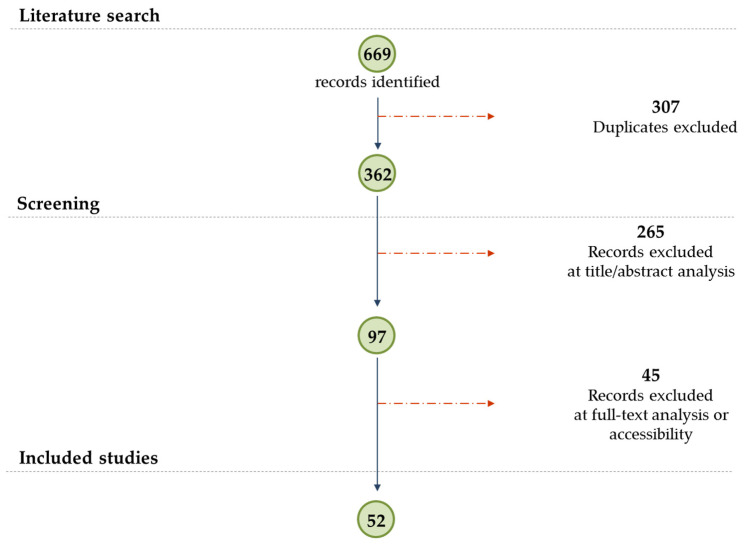
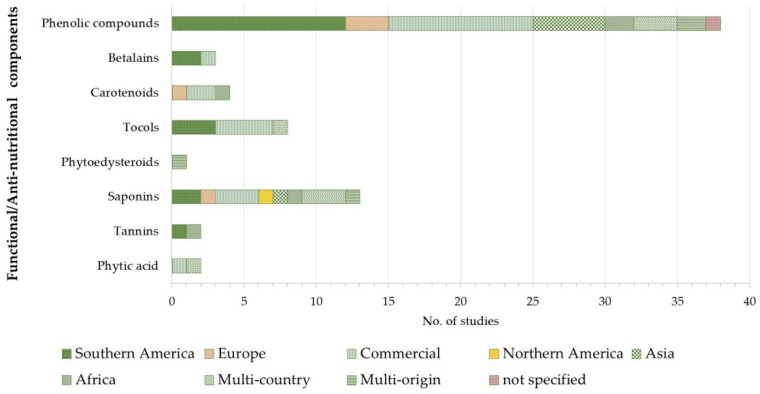
Quinoa ( Willd.) has recently received increasing interest from both scientists and consumers due to its suitability in gluten-free diets, its sustainability, and its claimed superfood qualities. The aim of this paper is to systematically review up-to-date studies on quinoa functional components and anti-nutritional factors, in order to define a baseline for food scientists approaching the investigation of quinoa phytochemicals and providing evidence for the identification of healthier sustainable foods. State of the art evaluations of phytochemical contents in quinoa seeds were obtained. It emerged that phenolic compounds are the most investigated functional components, and spectrophotometric methods have been mostly applied, despite the fact that they do not provide information about single components. Saponins are the most studied among anti-nutritional factors. Betalains, tannins, and phytoecdysteroids have been poorly explored. Information on factors affecting the phytochemical content at harvesting, such as quinoa ecotypes, crop geographical location and growing conditions, are not always available. A comprehensive characterization, encompassing several classes of functional components and anti-nutritional factors, is mainly available for quinoa varieties from South America. However, defining a standard of quality for quinoa seeds is still challenging and requires a harmonization of the analytical approaches, among others.
藜麦(Chenopodium quinoa Willd.)最近受到了科学家和消费者越来越多的关注,因为它适合无麸质饮食、具有可持续性,并且号称具有超级食物的特质。本文旨在系统回顾关于藜麦功能成分和抗营养因子的最新研究,以便为食品科学家研究藜麦植物化学物质确定一个基线,并为识别更健康的可持续食品提供证据。获得了藜麦种子中植物化学物质含量的最新评估。结果表明,酚类化合物是研究最多的功能成分,尽管分光光度法无法提供关于单一成分的信息,但该方法应用最为广泛。皂苷是抗营养因子中研究最多的。甜菜碱、单宁和植物蜕皮甾类的研究较少。关于收获时影响植物化学物质含量的因素,如藜麦生态型、作物地理位置和生长条件等信息并不总是可得。目前主要有关于南美洲藜麦品种的综合特征描述,涵盖了几类功能成分和抗营养因子。然而,为藜麦种子定义一个质量标准仍然具有挑战性,这需要统一分析方法等。