University of Edinburgh Centre for Inflammation Research, Queen's Medical Research Institute, Edinburgh Bioquarter, Edinburgh EH16 4TJ, UK.
Cells. 2021 Feb 5;10(2):339. doi: 10.3390/cells10020339.
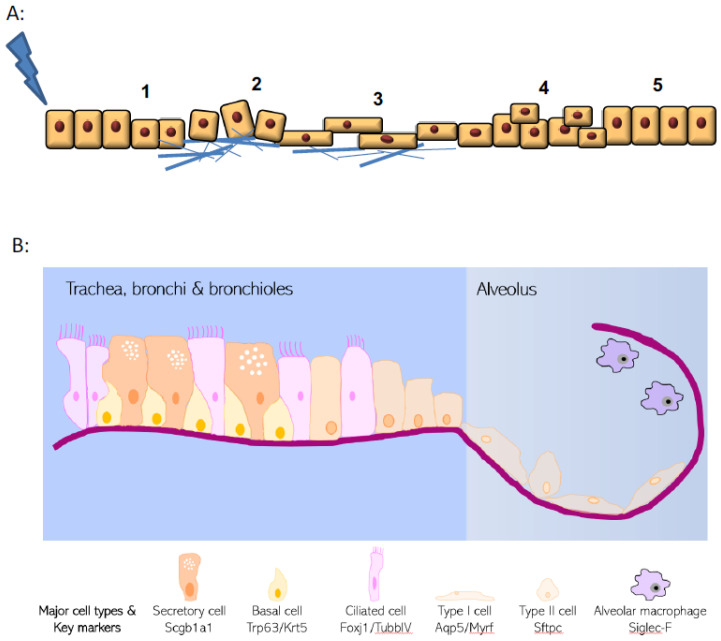
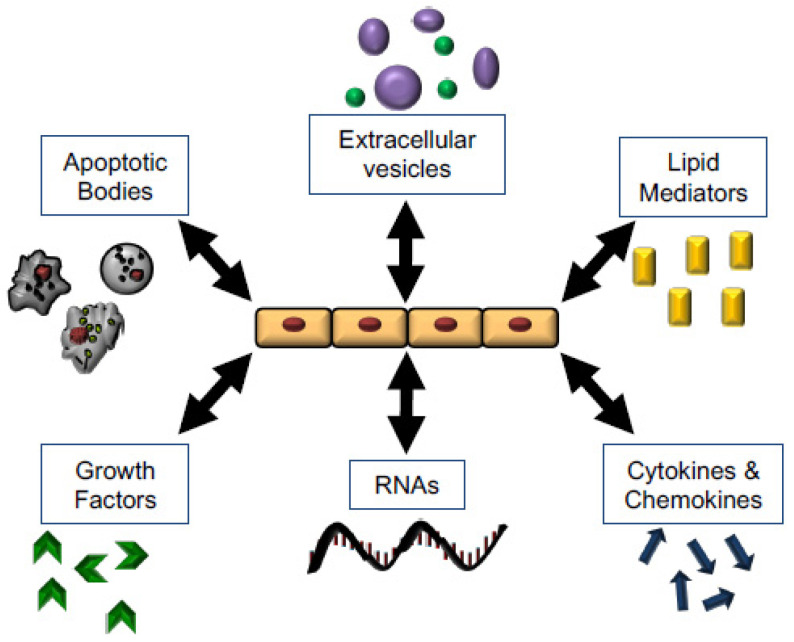
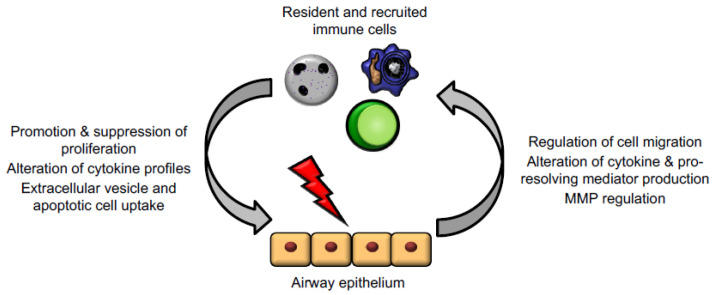
Respiratory diseases are frequently characterised by epithelial injury, airway inflammation, defective tissue repair, and airway remodelling. This may occur in a subacute or chronic context, such as asthma and chronic obstructive pulmonary disease, or occur acutely as in pathogen challenge and acute respiratory distress syndrome (ARDS). Despite the frequent challenge of lung homeostasis, not all pulmonary insults lead to disease. Traditionally thought of as a quiescent organ, emerging evidence highlights that the lung has significant capacity to respond to injury by repairing and replacing damaged cells. This occurs with the appropriate and timely resolution of inflammation and concurrent initiation of tissue repair programmes. Airway epithelial cells are key effectors in lung homeostasis and host defence; continual exposure to pathogens, toxins, and particulate matter challenge homeostasis, requiring robust defence and repair mechanisms. As such, the epithelium is critically involved in the return to homeostasis, orchestrating the resolution of inflammation and initiating tissue repair. This review examines the pivotal role of pulmonary airway epithelial cells in initiating and moderating tissue repair and restitution. We discuss emerging evidence of the interactions between airway epithelial cells and candidate stem or progenitor cells to initiate tissue repair as well as with cells of the innate and adaptive immune systems in driving successful tissue regeneration. Understanding the mechanisms of intercellular communication is rapidly increasing, and a major focus of this review includes the various mediators involved, including growth factors, extracellular vesicles, soluble lipid mediators, cytokines, and chemokines. Understanding these areas will ultimately identify potential cells, mediators, and interactions for therapeutic targeting.
呼吸系统疾病通常以上皮损伤、气道炎症、组织修复缺陷和气道重塑为特征。这种情况可能发生在亚急性或慢性背景下,如哮喘和慢性阻塞性肺疾病,也可能在病原体侵袭和急性呼吸窘迫综合征(ARDS)等急性情况下发生。尽管肺部的内稳态经常受到挑战,但并非所有肺部损伤都会导致疾病。传统上被认为是一个静止的器官,新出现的证据强调,肺部有很大的能力通过修复和替换受损细胞来应对损伤。这是在炎症的适当和及时解决以及组织修复程序的同时启动的情况下发生的。气道上皮细胞是肺内稳态和宿主防御的关键效应器;持续暴露于病原体、毒素和颗粒物会挑战内稳态,需要强大的防御和修复机制。因此,上皮细胞在恢复内稳态方面起着至关重要的作用,协调炎症的消退并启动组织修复。本文综述了肺气道上皮细胞在启动和调节组织修复和恢复方面的关键作用。我们讨论了气道上皮细胞与候选干细胞或祖细胞之间相互作用的新证据,这些细胞可启动组织修复,以及与固有和适应性免疫系统细胞之间的相互作用,以促进成功的组织再生。对细胞间通讯机制的理解正在迅速增加,本文综述的一个重点包括涉及的各种介质,包括生长因子、细胞外囊泡、可溶性脂质介质、细胞因子和趋化因子。了解这些领域最终将确定潜在的细胞、介质和相互作用,以进行治疗靶向。