Kifle Hilawi, Merga Bedasa Taye, Dessie Yadeta, Demena Melake, Fekadu Gelana, Negash Belay
Haramaya University Higher Health Center, Haramaya University, Haramaya, Ethiopia.
School of Public Health, College of Health and Medical Sciences, Haramaya University, Harar, Ethiopia.
Clinicoecon Outcomes Res. 2021 Feb 2;13:89-98. doi: 10.2147/CEOR.S286253. eCollection 2021.
Inequity in healthcare use is avoidable inequality, and it exists when there are differences in the use of healthcare after standardization of different needs among the population. In Ethiopia, wide variation and lower achievement exists in outpatient visit per person per year against the target to reach by 2020. Therefore, this study is aimed at measuring inequalities and inequities in outpatient care utilization in Ethiopia.
The study utilized data from 2015/16 Ethiopian National Health Account survey. The analysis included a weighted sample of 42,460 individuals. Concentration curve and indices were used to measure inequality in outpatient care utilization. Deviations in the degree to which outpatient care was distributed according to need were measured by the horizontal inequity index. All statistical analyses were done using STATA version 14. In all analyses statistical significance was declared at a -value < 0.05 and a 95% confidence interval.
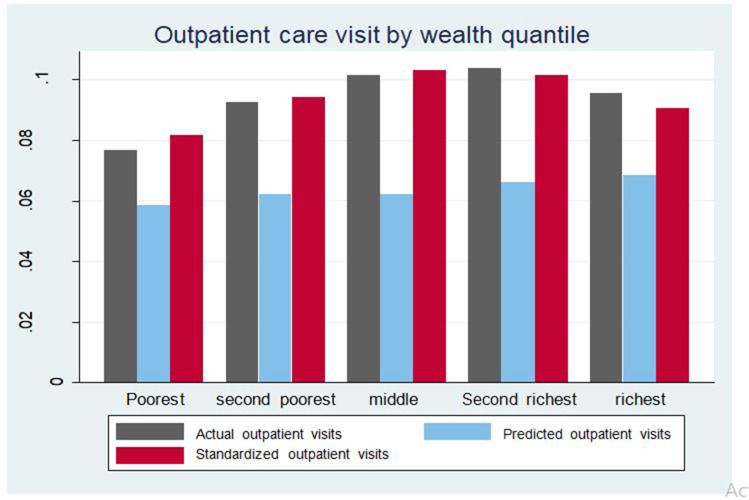
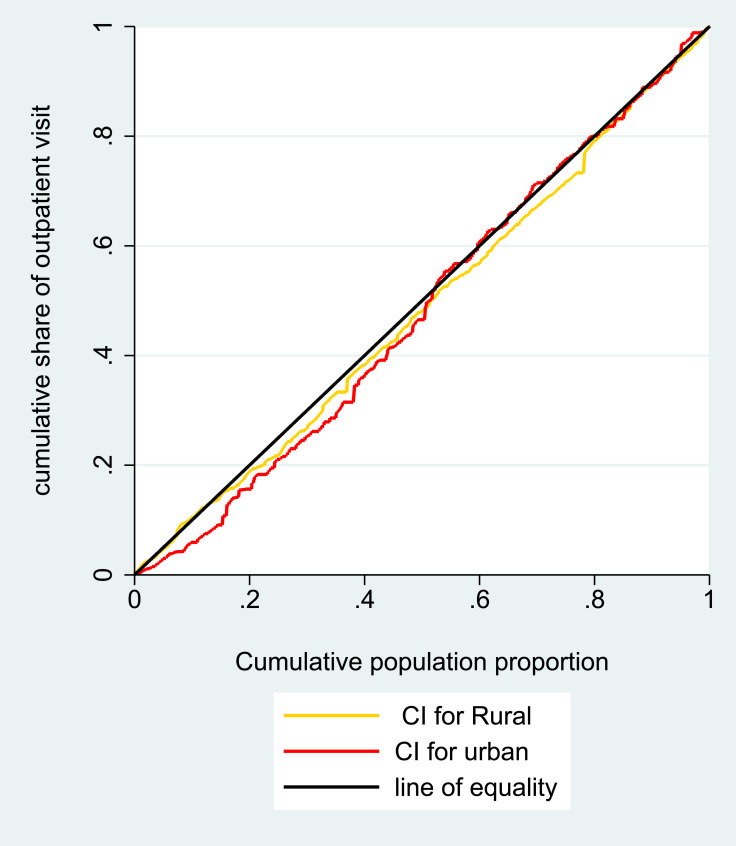
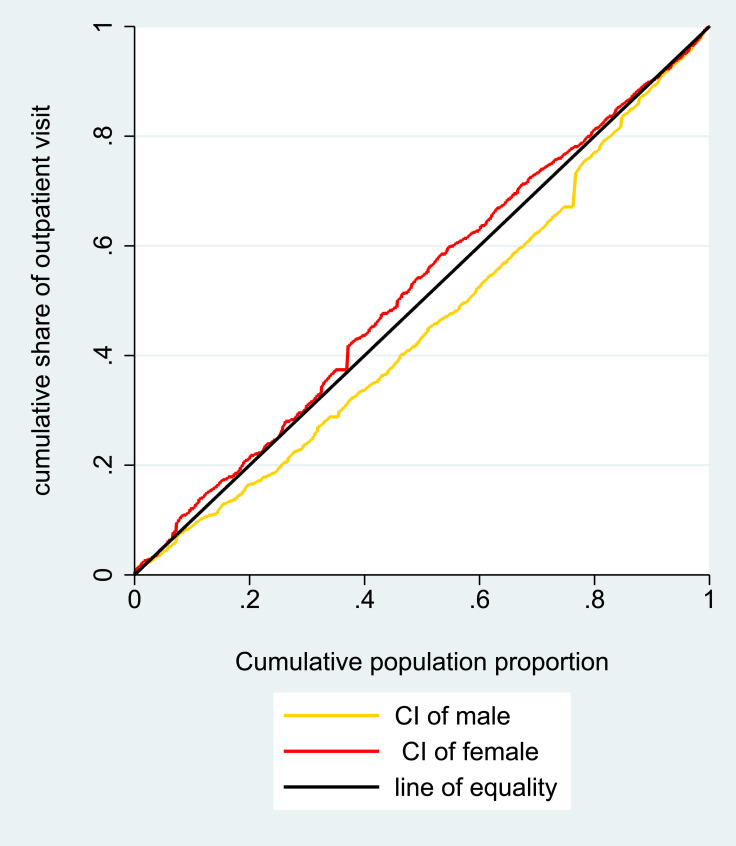
The outpatient care utilizations were found to be concentrated among the rich. The actual (C = 0.0335, 95% CI: 0.0298, 0.0431) and need predicted (C = 0.0157, 95% CI: 0.0117, 0.0413) utilizations were concentrated among the rich. The distributions of outpatient care in Ethiopians were pro-rich (rich-favoring). The decomposition analysis revealed that need factors were the main positive contributors to the inequality (23.6%) and non-need factors were among the negative contributors to the inequality (-48.4%).
This study evidenced the presence of rich-favoring inequality and inequity in outpatient care utilization in Ethiopia. Therefore, there is a need to consider implementation strategies that focus on fairness in healthcare utilization.
医疗保健利用方面的不公平是可避免的不平等现象,当人群中不同需求标准化后医疗保健使用仍存在差异时,这种现象就会出现。在埃塞俄比亚,人均每年门诊就诊次数与2020年目标相比存在很大差异且达标率较低。因此,本研究旨在衡量埃塞俄比亚门诊医疗服务利用中的不平等和不公平现象。
本研究使用了2015/16年埃塞俄比亚国家卫生账户调查的数据。分析纳入了42460名个体的加权样本。使用集中曲线和指数来衡量门诊医疗服务利用中的不平等。通过横向不公平指数衡量门诊医疗服务根据需求分配的程度偏差。所有统计分析均使用STATA 14版本完成。在所有分析中,当P值<0.05且置信区间为95%时判定具有统计学意义。
发现门诊医疗服务利用集中在富人中。实际利用情况(C = 0.0335,95%置信区间:0.0298,0.0431)和需求预测利用情况(C = 0.0157,95%置信区间:0.0117,0.0413)都集中在富人中。埃塞俄比亚人的门诊医疗服务分配有利于富人。分解分析表明,需求因素是不平等的主要正向贡献因素(23.6%),而非需求因素是不平等的负向贡献因素之一(-48.4%)。
本研究证明埃塞俄比亚门诊医疗服务利用中存在有利于富人的不平等和不公平现象。因此,有必要考虑实施注重医疗保健利用公平性的策略。