Kramer Anneke, Boenink Rianne, Stel Vianda S, Santiuste de Pablos Carmen, Tomović Filip, Golan Eliezer, Kerschbaum Julia, Seyahi Nurhan, Ioanou Kyriakos, Beltrán Palma, Zurriaga Oscar, Magaz Ángela, Slon Roblero María F, Gjorgjievski Nikola, Garneata Liliana, Arribas Federico, Galvão Ana A, Bell Samira, Ots-Rosenberg Mai, Muñoz-Terol José M, Winzeler Rebecca, Hommel Kristine, Åsberg Anders, Spustova Viera, Palencia García María Ángeles, Vazelov Evgueniy, Finne Patrik, Ten Dam Marc A G J, Lopot František, Trujillo-Alemán Sara, Lassalle Mathilde, Kolesnyk Mykola O, Santhakumaran Shalini, Idrizi Alma, Andrusev Anton, Comas Farnés Jordi, Komissarov Kirill, Resić Halima, Palsson Runolfur, Kuzema Viktorija, Garcia Bazaga Maria Angeles, Ziginskiene Edita, Stendahl Maria, Bonthuis Marjolein, Massy Ziad A, Jager Kitty J
Department of Medical Informatics, ERA-EDTA Registry, UMC, University of Amsterdam, Amsterdam Public Health research institute, Amsterdam, The Netherlands.
Department of Epidemiology, Murcia Renal Registry, Murcia Regional Health Authority, IMIB-Arrixaca, Murcia, Spain.
Clin Kidney J. 2020 Dec 24;14(1):107-123. doi: 10.1093/ckj/sfaa271. eCollection 2021 Jan.
The European Renal Association - European Dialysis and Transplant Association (ERA-EDTA) Registry collects data on kidney replacement therapy (KRT) via national and regional renal registries in Europe and countries bordering the Mediterranean Sea. This article summarizes the 2018 ERA-EDTA Registry Annual Report, and describes the epidemiology of KRT for kidney failure in 34 countries.
Individual patient data on patients undergoing KRT in 2018 were provided by 34 national or regional renal registries and aggregated data by 17 registries. The incidence and prevalence of KRT, the kidney transplantation activity and the survival probabilities of these patients were calculated.
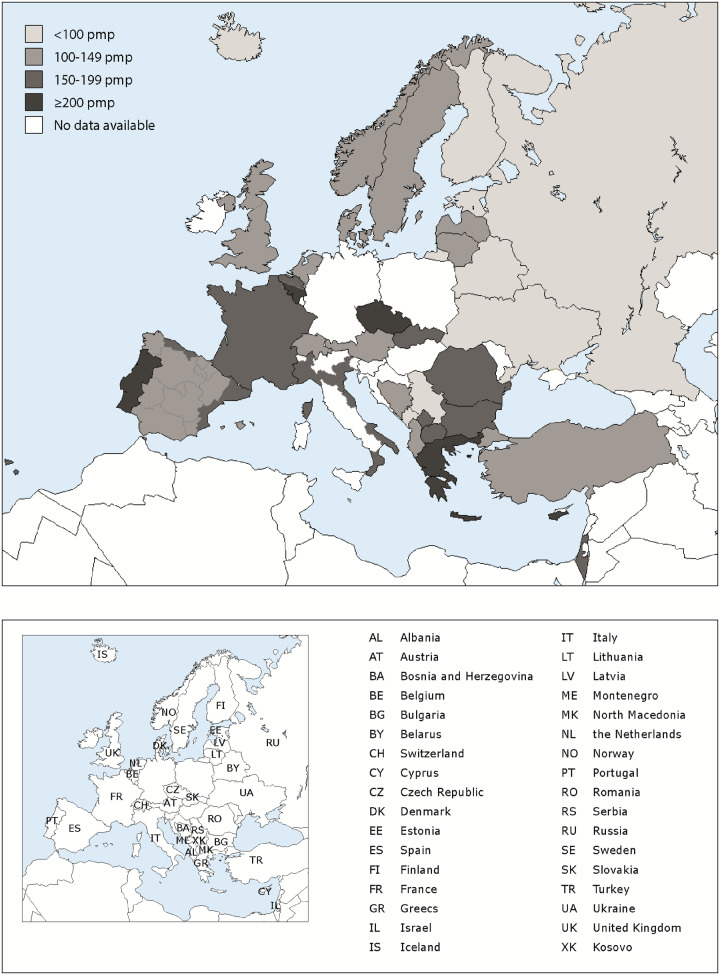
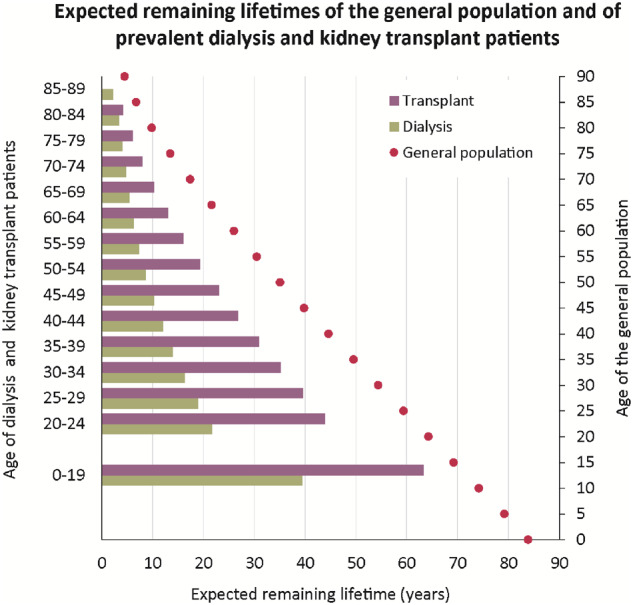
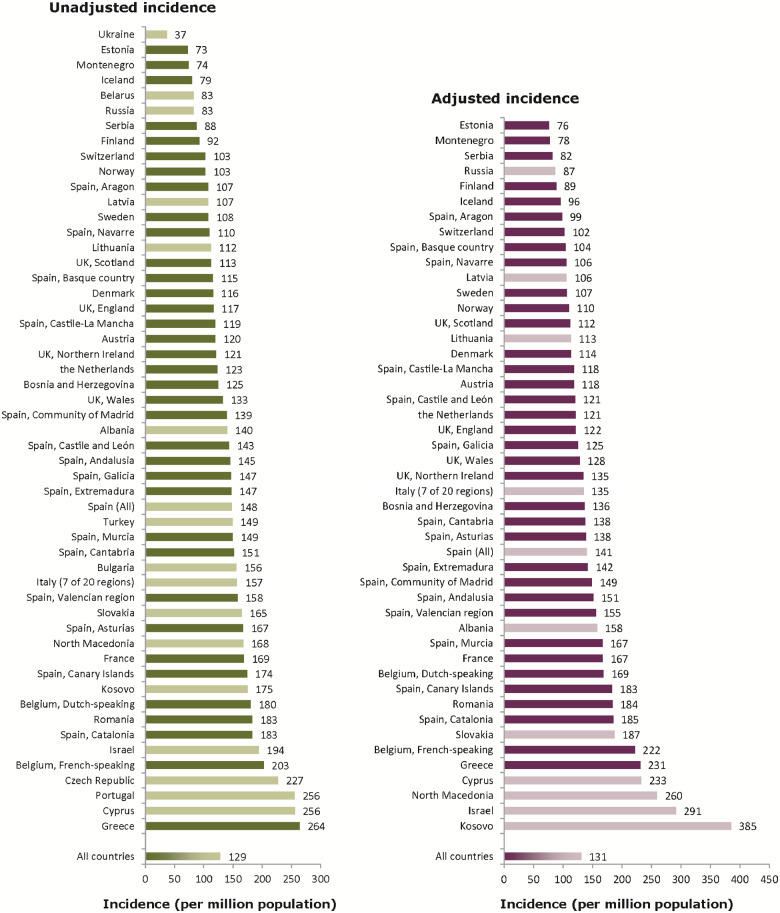
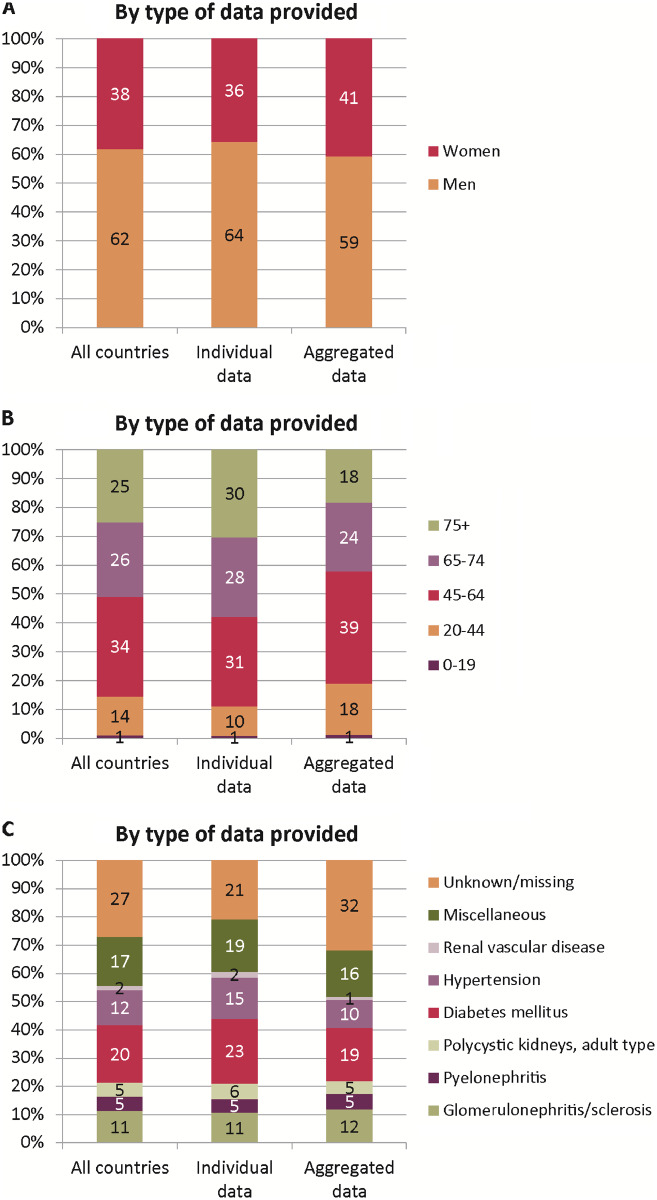
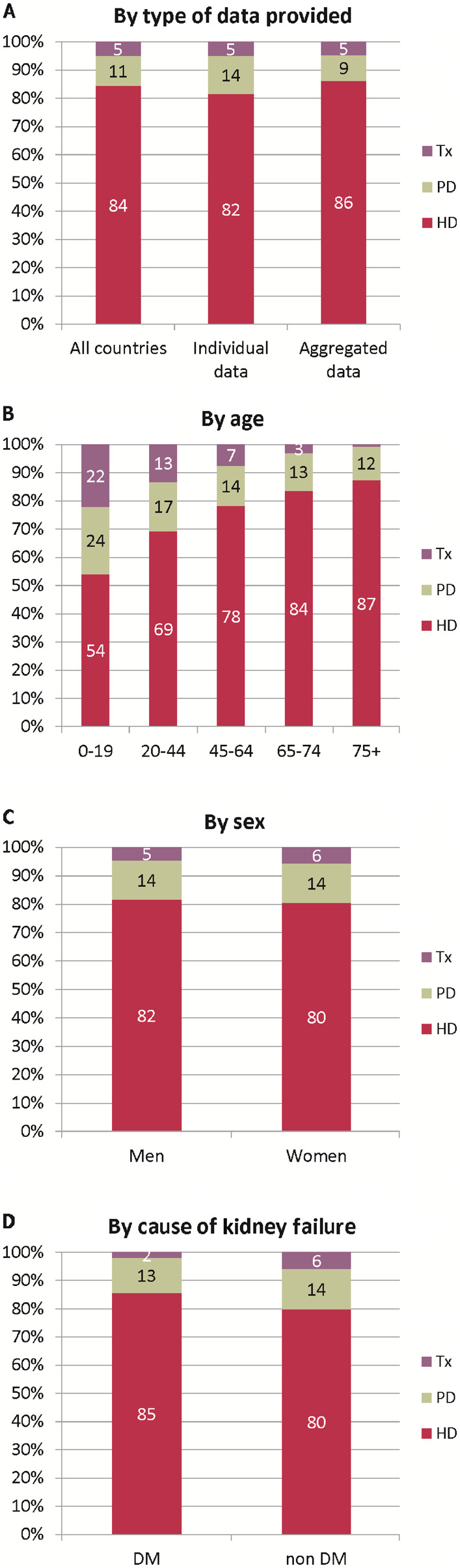
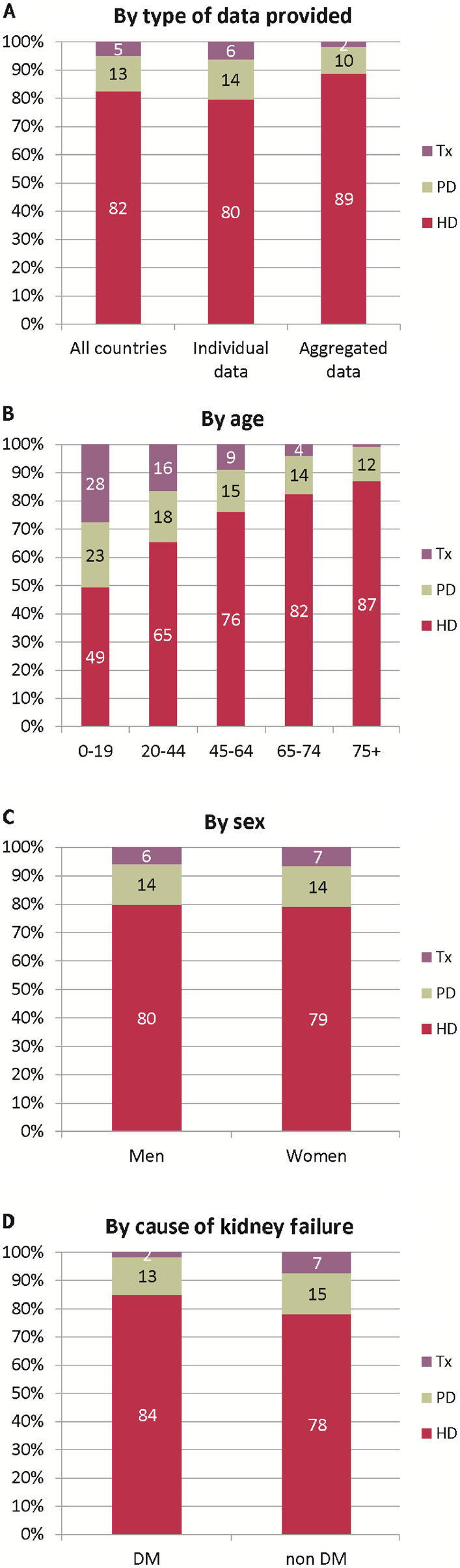
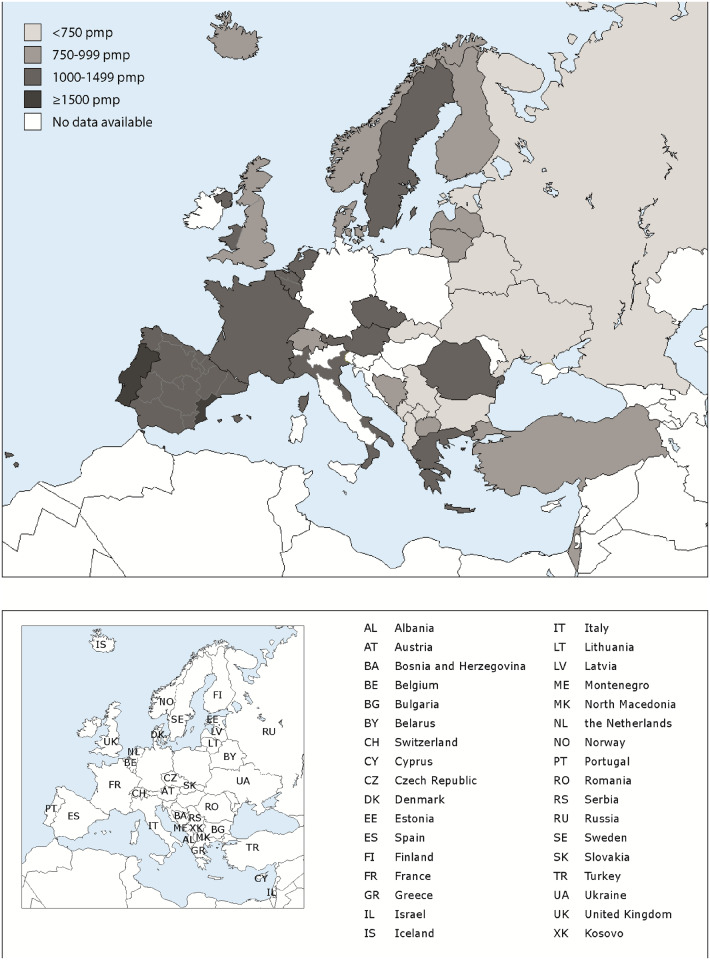
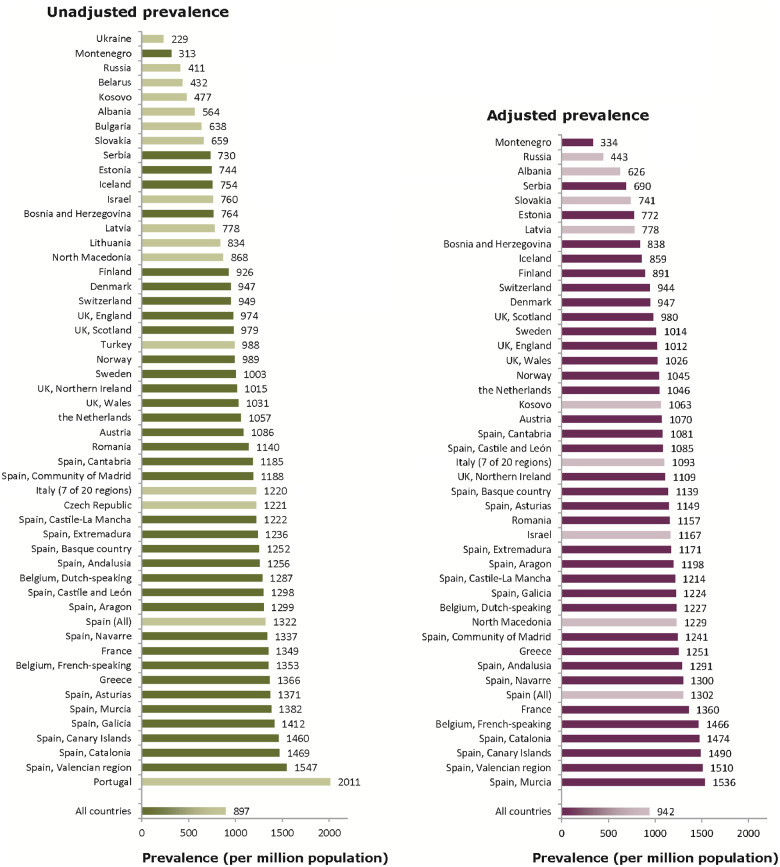
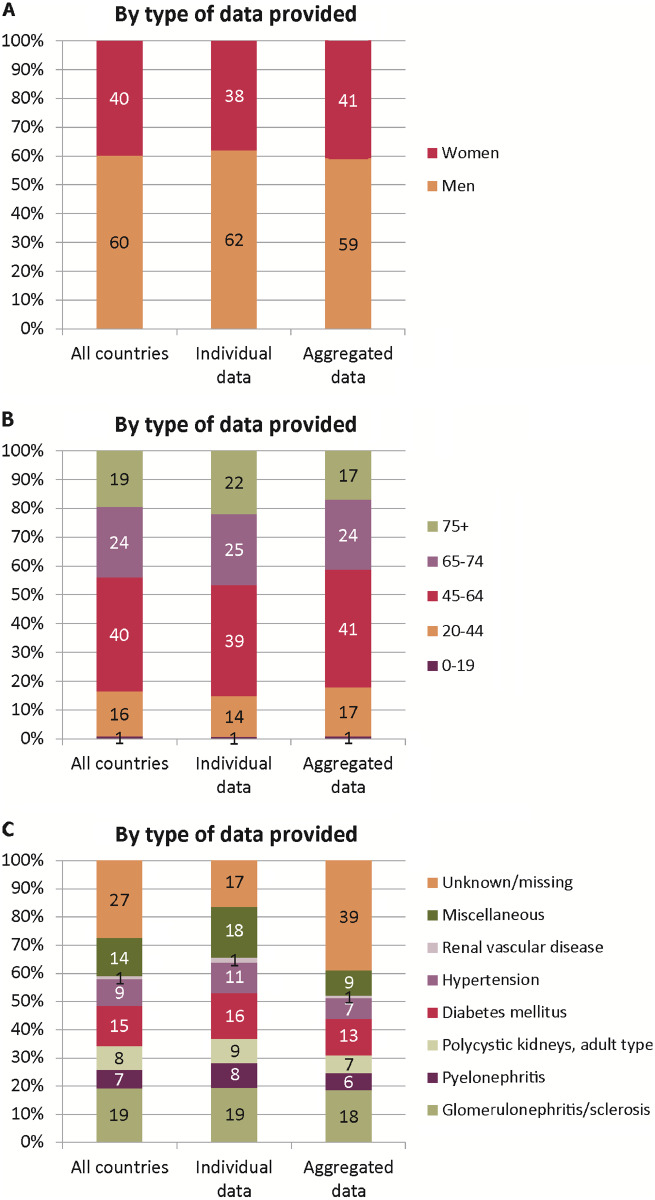
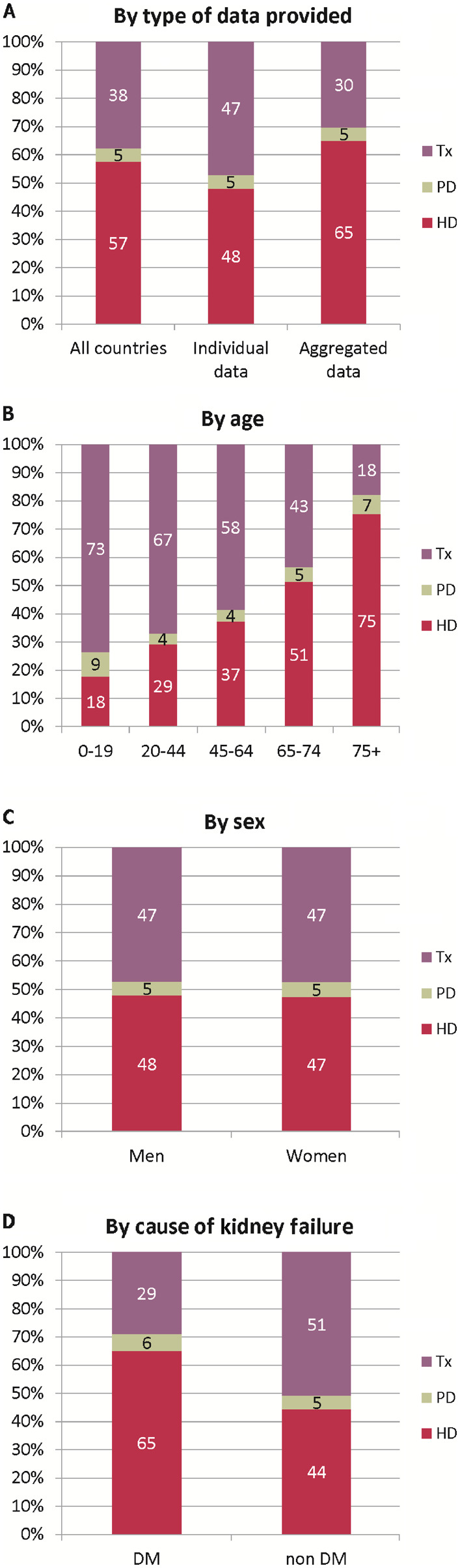
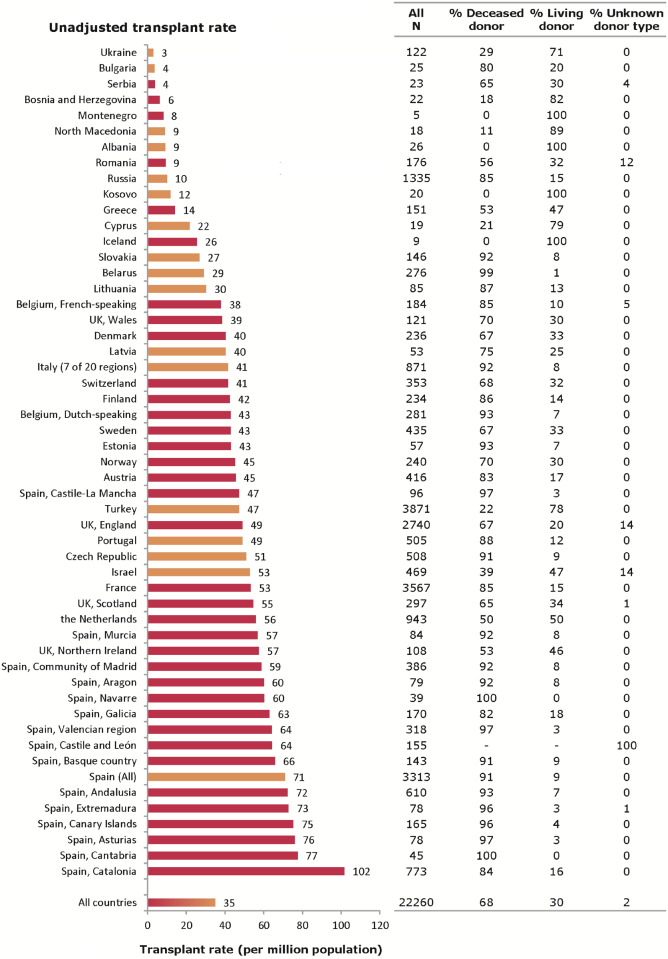
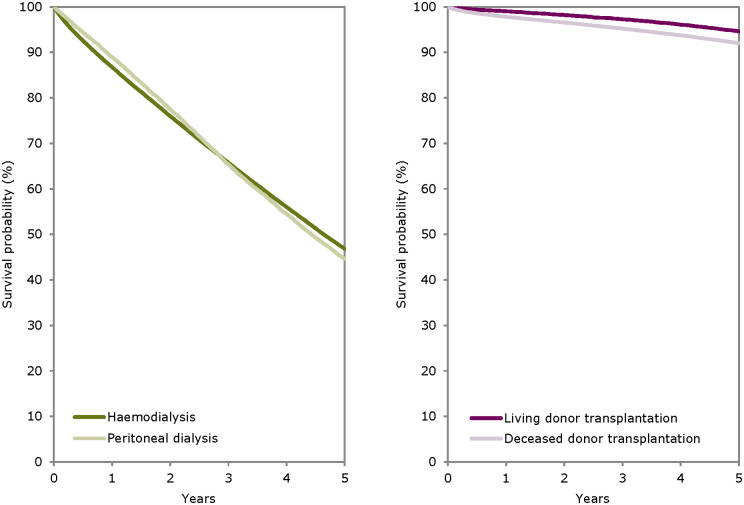
In 2018, the ERA-EDTA Registry covered a general population of 636 million people. Overall, the incidence of KRT for kidney failure was 129 per million population (p.m.p.), 62% of patients were men, 51% were ≥65 years of age and 20% had diabetes mellitus as cause of kidney failure. Treatment modality at the onset of KRT was haemodialysis (HD) for 84%, peritoneal dialysis (PD) for 11% and pre-emptive kidney transplantation for 5% of patients. On 31 December 2018, the prevalence of KRT was 897 p.m.p., with 57% of patients on HD, 5% on PD and 38% living with a kidney transplant. The transplant rate in 2018 was 35 p.m.p.: 68% received a kidney from a deceased donor, 30% from a living donor and for 2% the donor source was unknown. For patients commencing dialysis during 2009-13, the unadjusted 5-year survival probability was 42.6%. For patients receiving a kidney transplant within this period, the unadjusted 5-year survival probability was 86.6% for recipients of deceased donor grafts and 93.9% for recipients of living donor grafts.
欧洲肾脏协会 - 欧洲透析与移植协会(ERA - EDTA)登记处通过欧洲及地中海沿岸国家的国家和地区肾脏登记处收集肾脏替代治疗(KRT)的数据。本文总结了2018年ERA - EDTA登记处年度报告,并描述了34个国家肾衰竭患者接受KRT的流行病学情况。
2018年接受KRT治疗的患者的个体数据由34个国家或地区肾脏登记处提供,17个登记处提供汇总数据。计算了KRT的发病率和患病率、肾脏移植活动情况以及这些患者的生存概率。
2018年,ERA - EDTA登记处覆盖的总人口为6.36亿。总体而言,肾衰竭患者接受KRT的发病率为每百万人口129例(p.m.p.),62%的患者为男性,51%的患者年龄≥65岁,20%的患者因糖尿病导致肾衰竭。KRT开始时的治疗方式为血液透析(HD)的患者占84%,腹膜透析(PD)的患者占11%,预先进行肾脏移植的患者占5%。2018年12月31日,KRT的患病率为每百万人口897例,其中57%的患者接受血液透析,5%的患者接受腹膜透析,38%的患者接受肾脏移植后存活。2018年的移植率为每百万人口35例:68%的患者接受来自 deceased donor(脑死亡器官捐献者)的肾脏,30%的患者接受来自活体捐献者的肾脏,2%的患者捐献者来源不明。对于2009 - 2013年开始透析的患者,未经调整的5年生存概率为42.6%。在此期间接受肾脏移植的患者,接受 deceased donor(脑死亡器官捐献者)移植的患者未经调整的5年生存概率为86.6%,接受活体捐献者移植的患者为93.9%。