Astley Megan E, Boenink Rianne, Abd ElHafeez Samar, Trujillo-Alemán Sara, Arribas Federico, Åsberg Anders, Beckerman Pazit, Bell Samira, Bouzas-Caamaño María Encarnación, Farnés Jordi Comas, Galvão Ana Amélia, Gjorgjievski Nikola, Kelmendi Vjollca Godanci, Guidotti Rebecca, Helve Jaakko, Idrizi Alma, Indriðason Ólafur S, Ioannou Kyriakos, Kerschbaum Julia, Komissarov Kirill, Castro de la Nuez Pablo, Lassalle Mathilde, Nordio Maurizio, Arévalo Olga Lucía Rodríguez, Santiuste Carmen, Seyahi Nurhan, Roblero María Fernanda Slon, Steenkamp Retha, Ten Dam Marc A G J, Zakharova Elena V, Ziginskiene Edita, Bonthuis Marjolein, Stel Vianda S, Ortiz Alberto, Jager Kitty J, Kramer Anneke
ERA Registry, Department of Medical Informatics, Amsterdam UMC location University of Amsterdam, Amsterdam, The Netherlands.
Amsterdam Public Health, Health Behaviours & Chronic Diseases and Methodology, Amsterdam, The Netherlands.
Clin Kidney J. 2023 Apr 21;16(8):1330-1354. doi: 10.1093/ckj/sfad087. eCollection 2023 Aug.
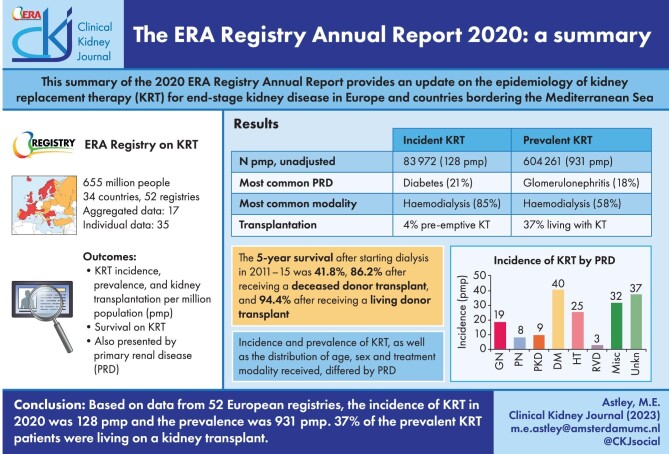
The European Renal Association (ERA) Registry collects data on kidney replacement therapy (KRT) in patients with ESKD. This paper is a summary of the ERA Registry Annual Report 2020, also including comparisons among primary renal disease (PRD) groups.
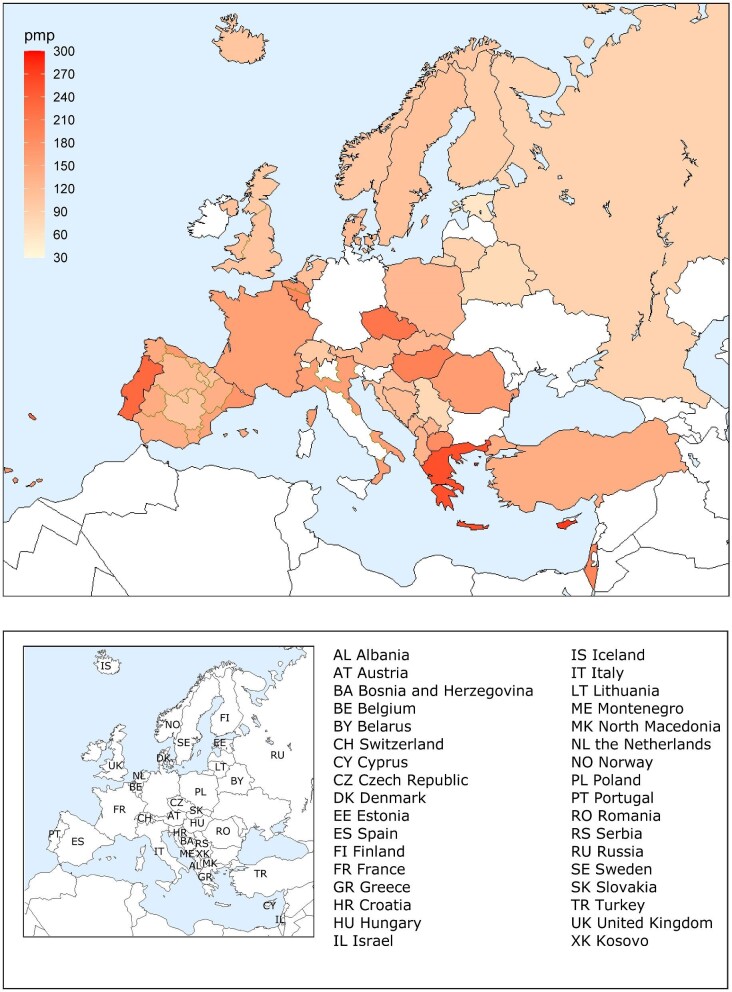
Data were collected from 52 national and regional registries from 34 European countries and countries bordering the Mediterranean Sea: 35 registries from 18 countries providing individual level data and 17 registries from 17 countries providing aggregated data. Using this data, KRT incidence and prevalence, kidney transplantation rates, expected remaining lifetimes and survival probabilities were calculated.
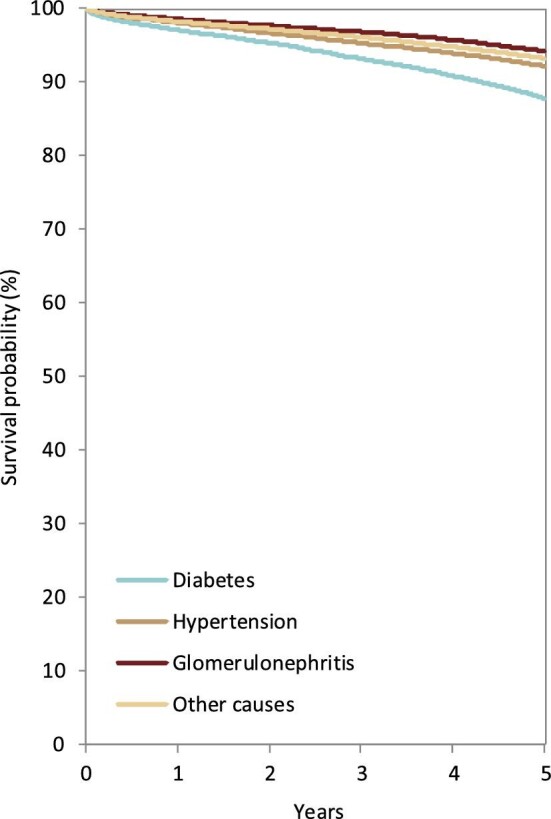
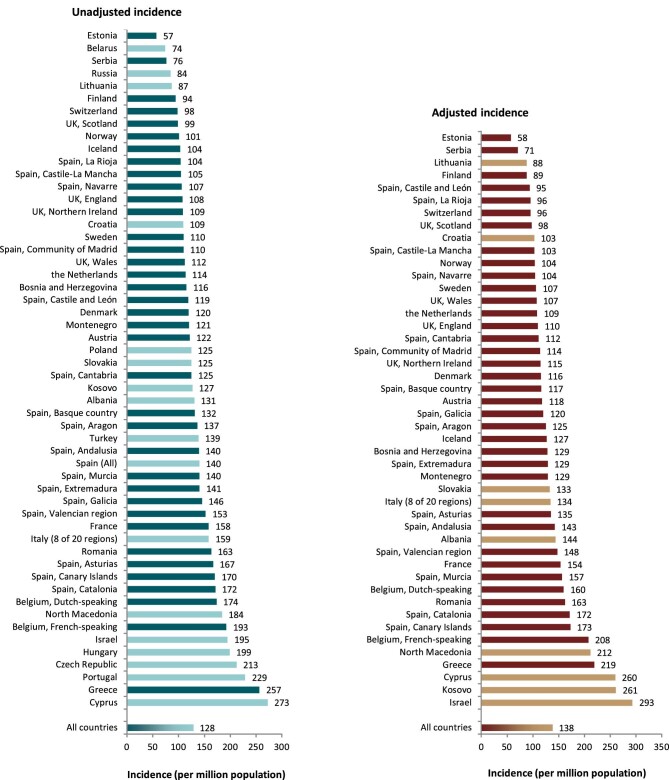
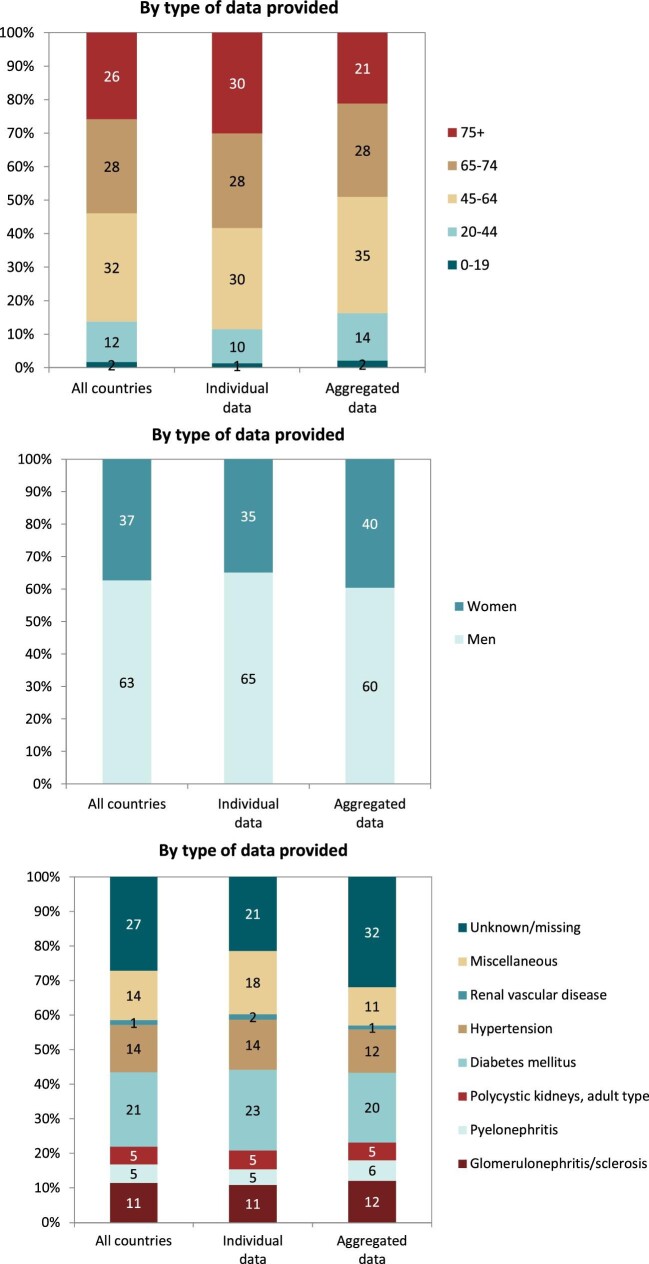
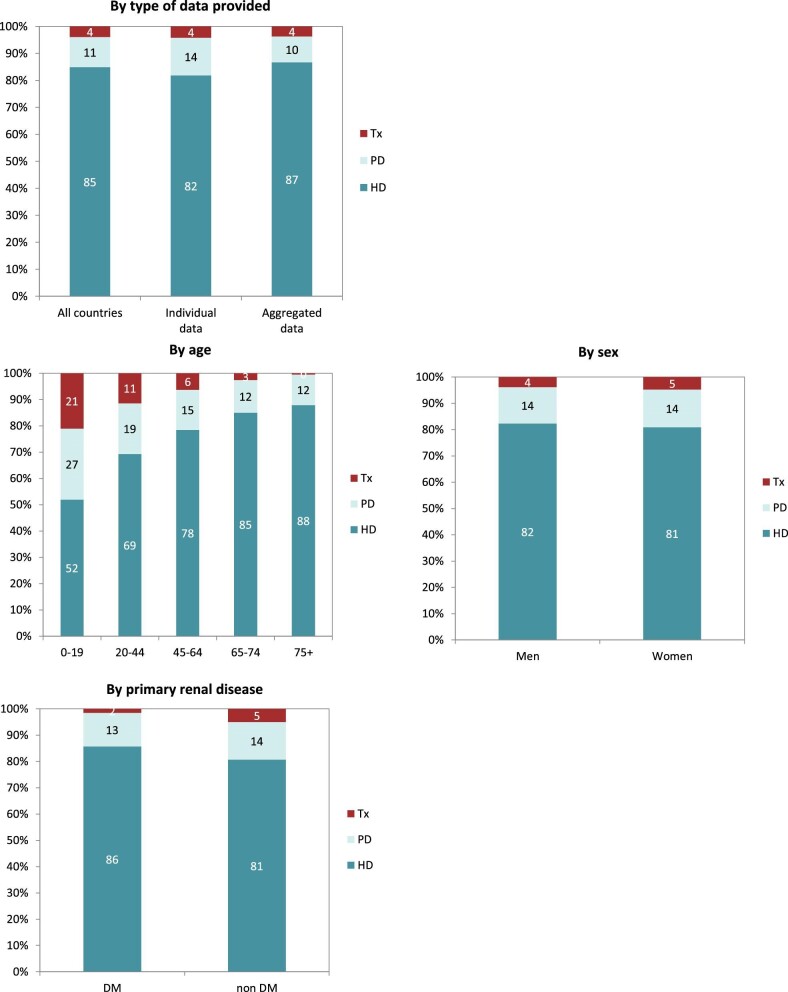
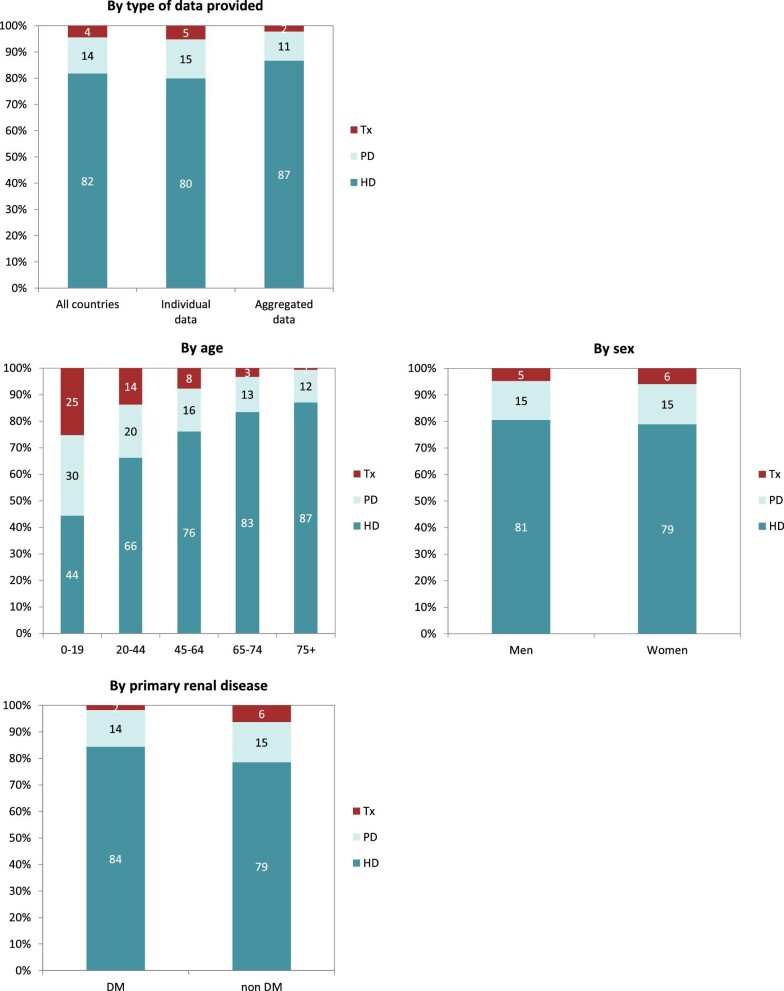
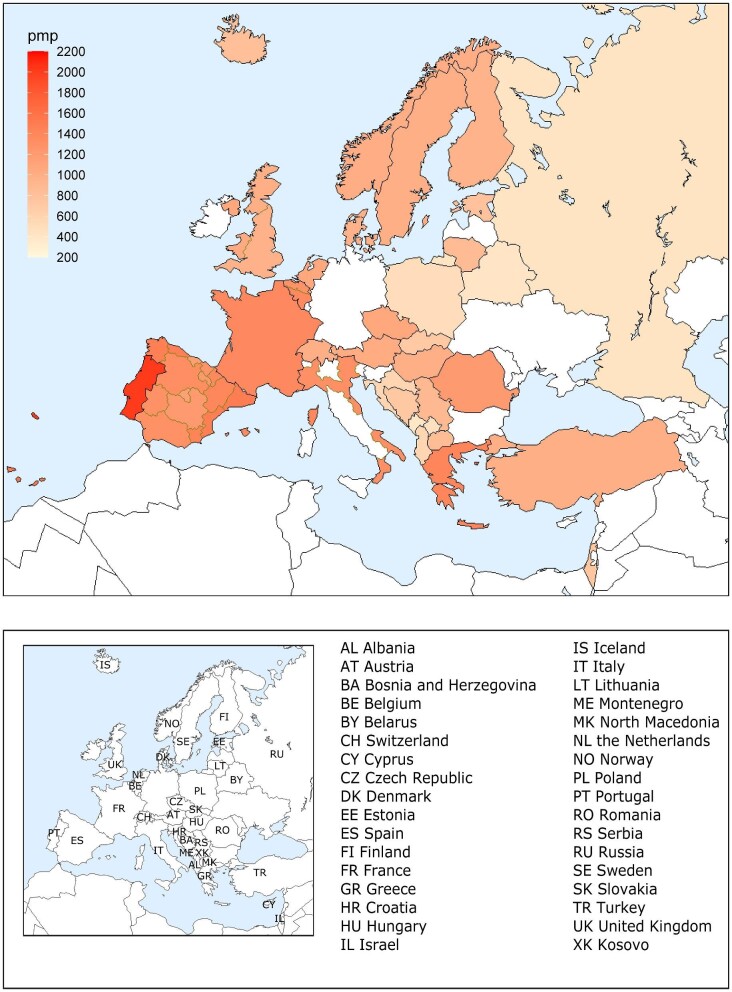
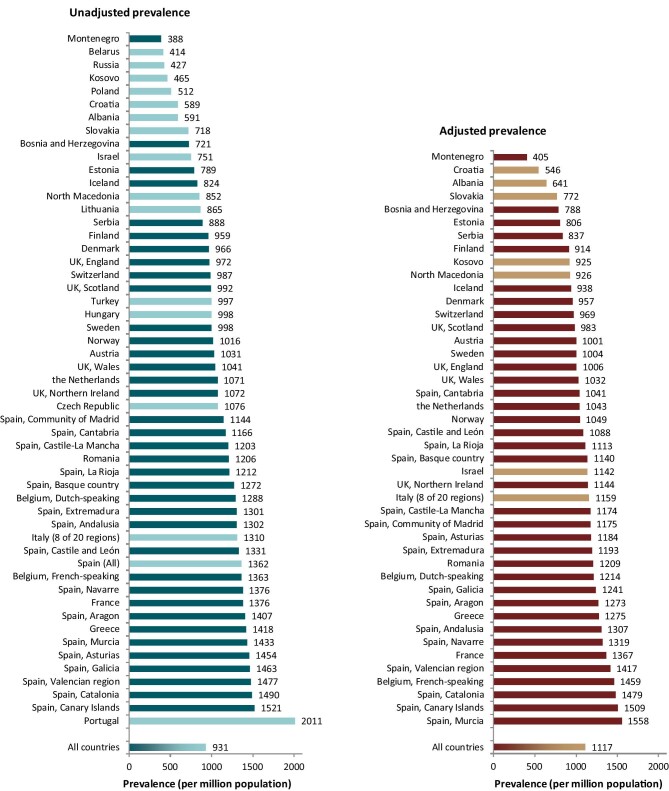
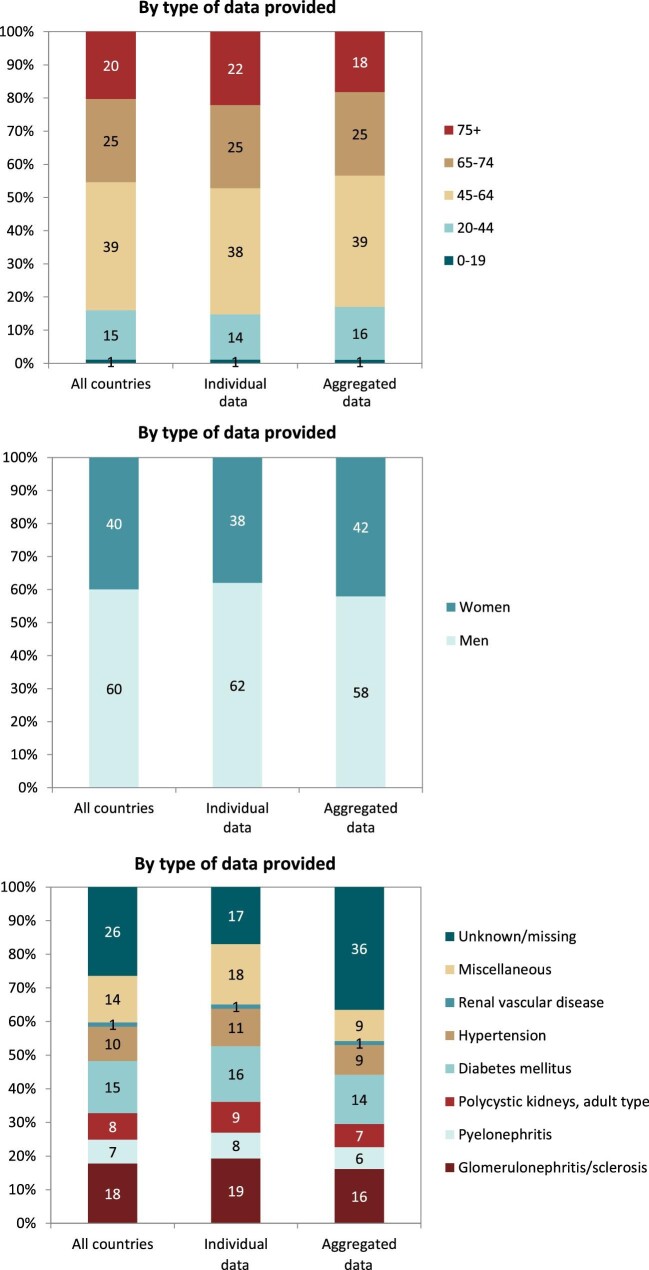
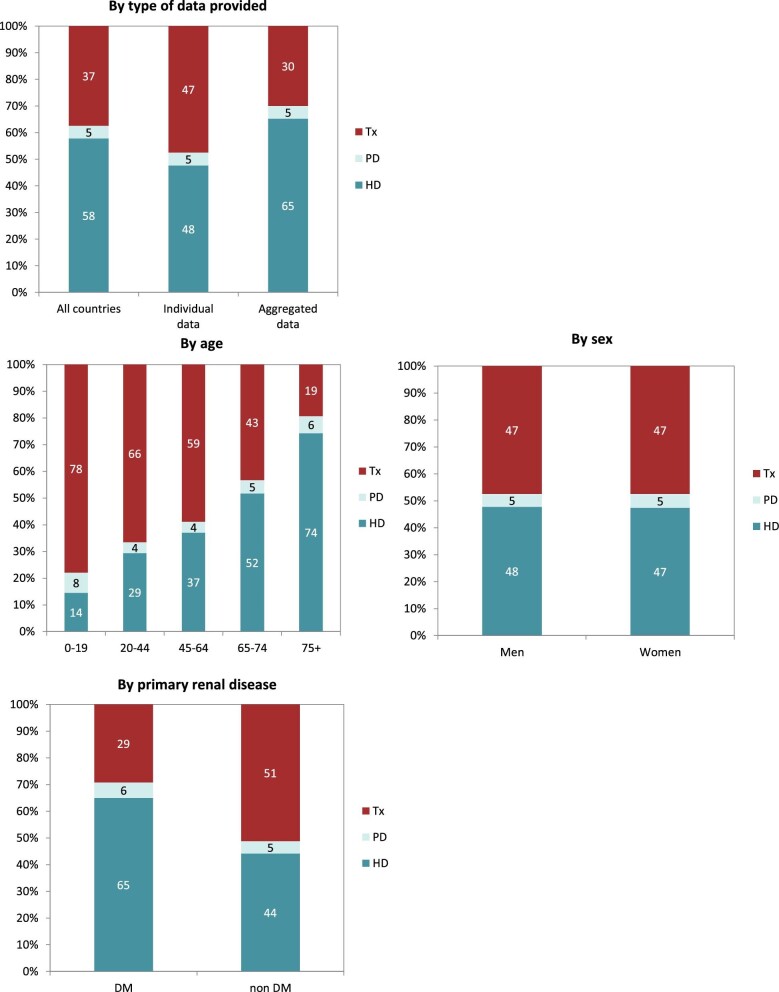
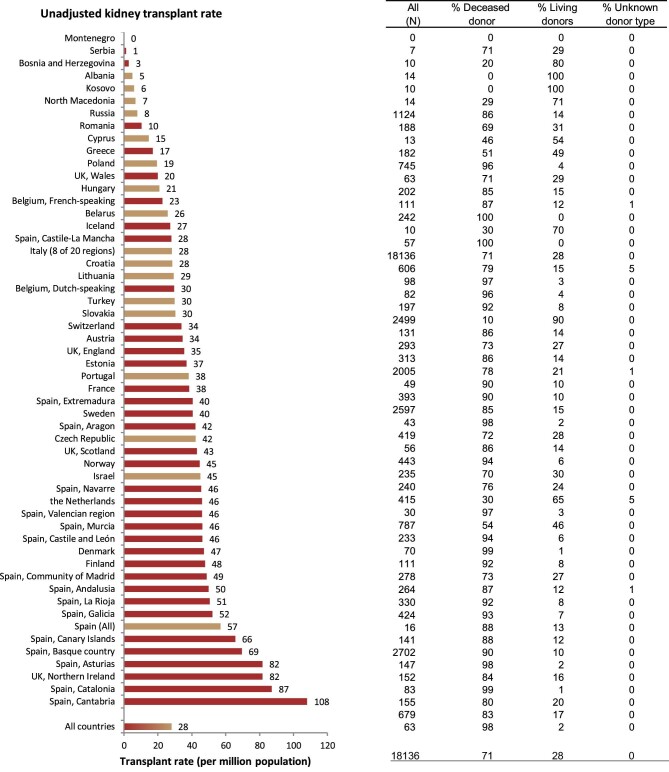
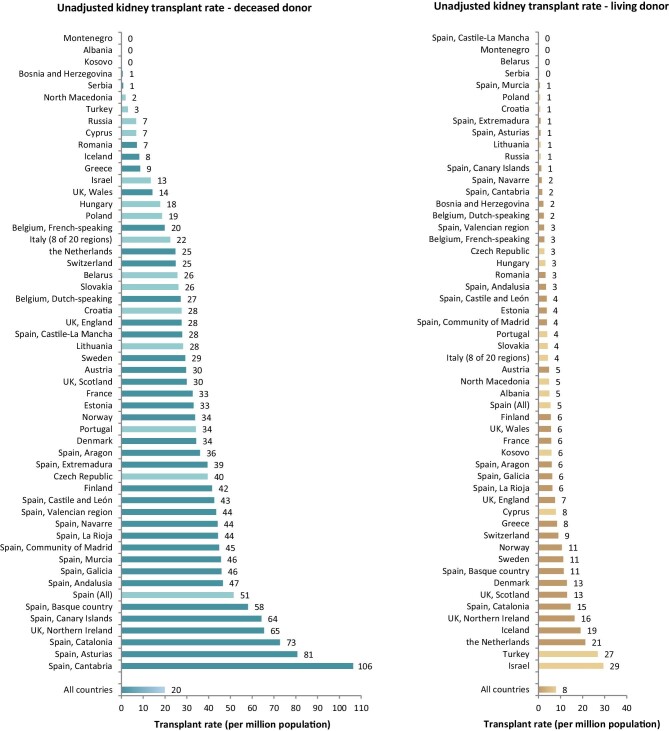
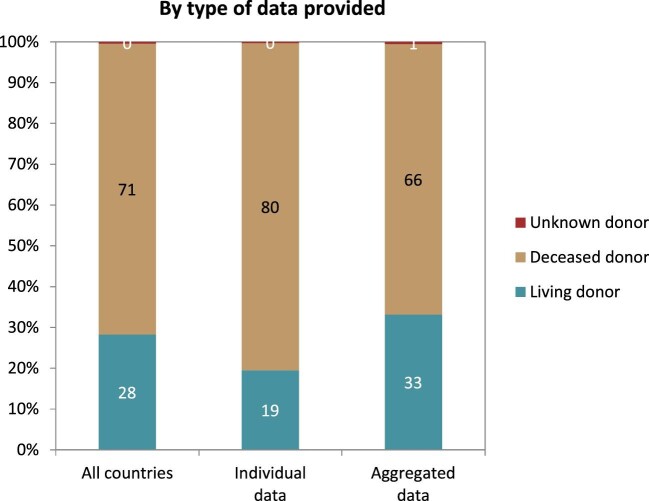
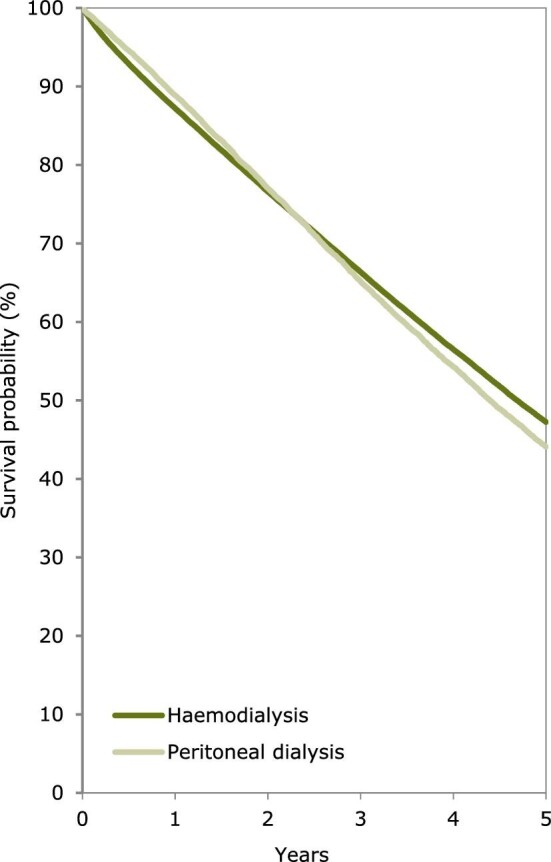
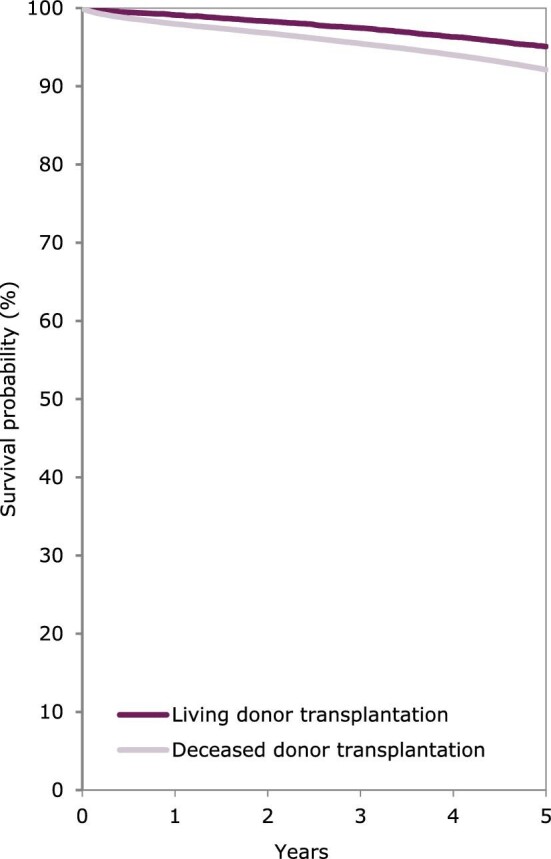
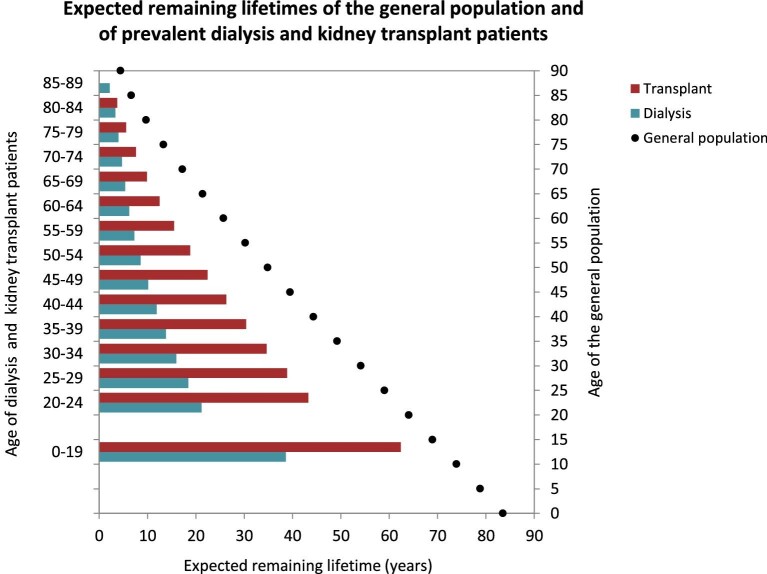
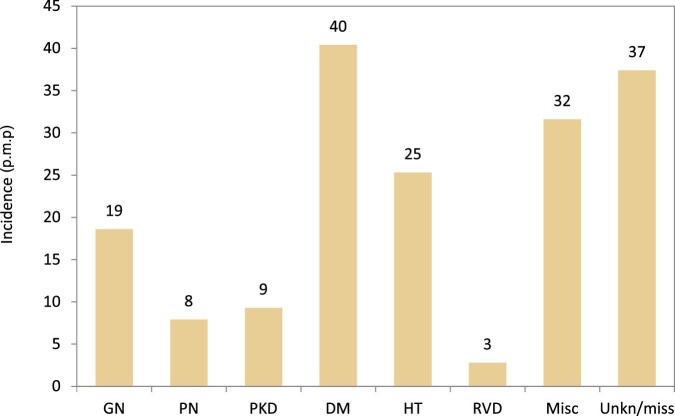
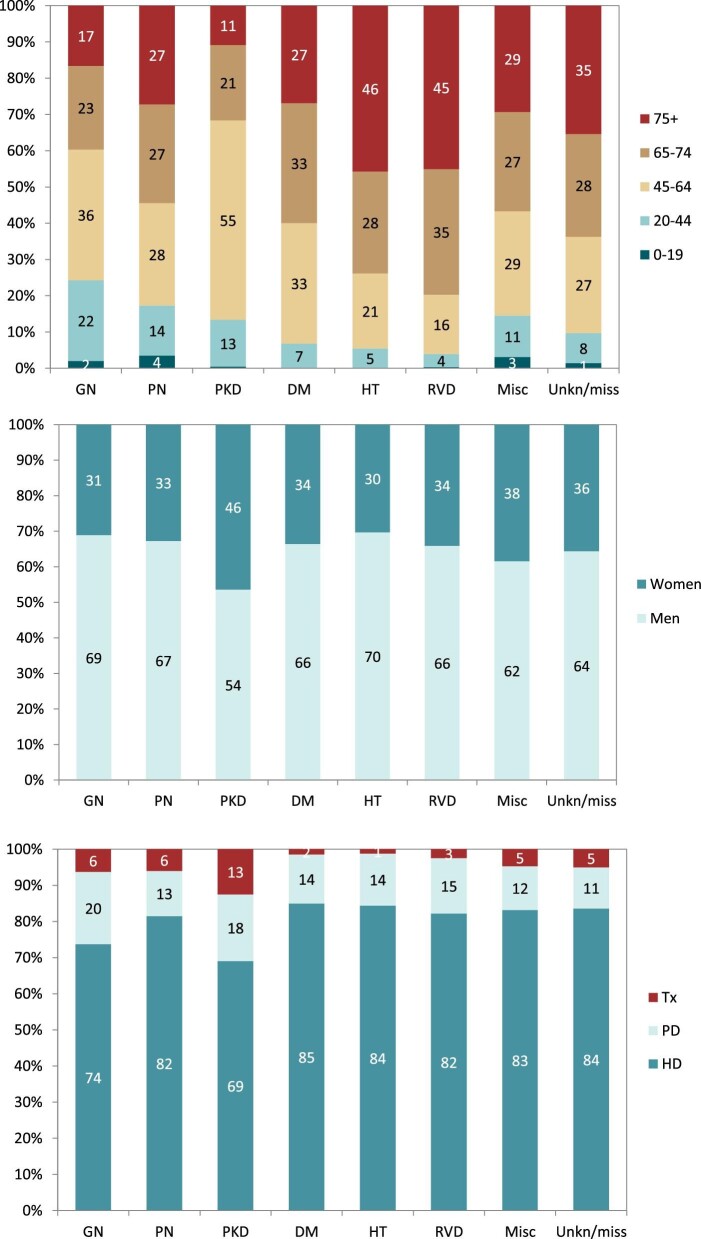
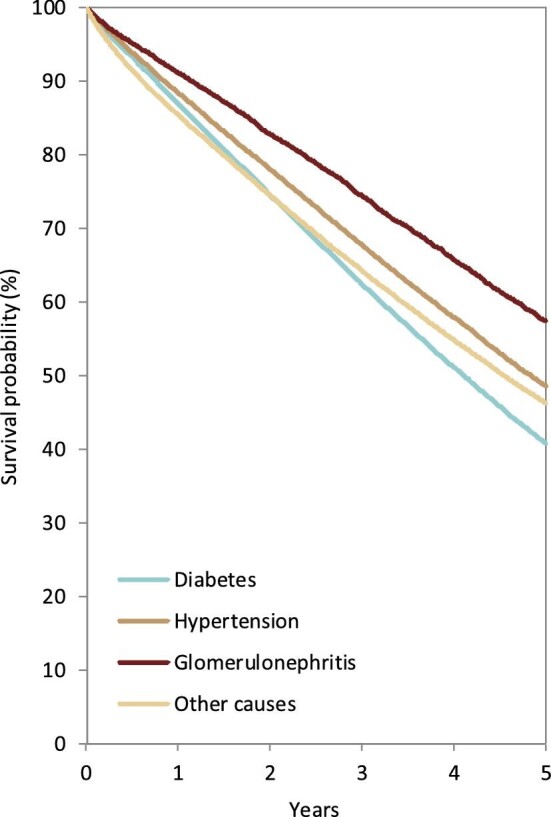
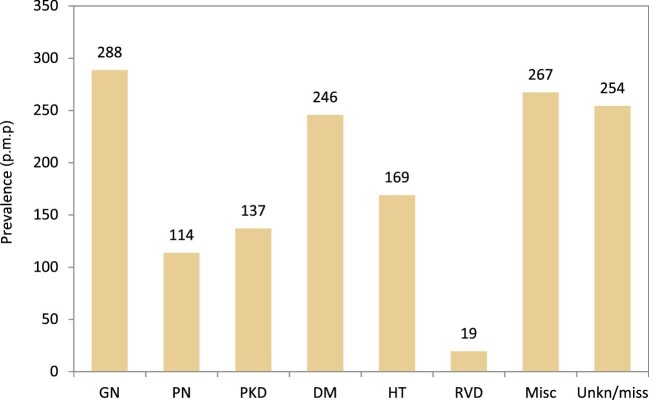
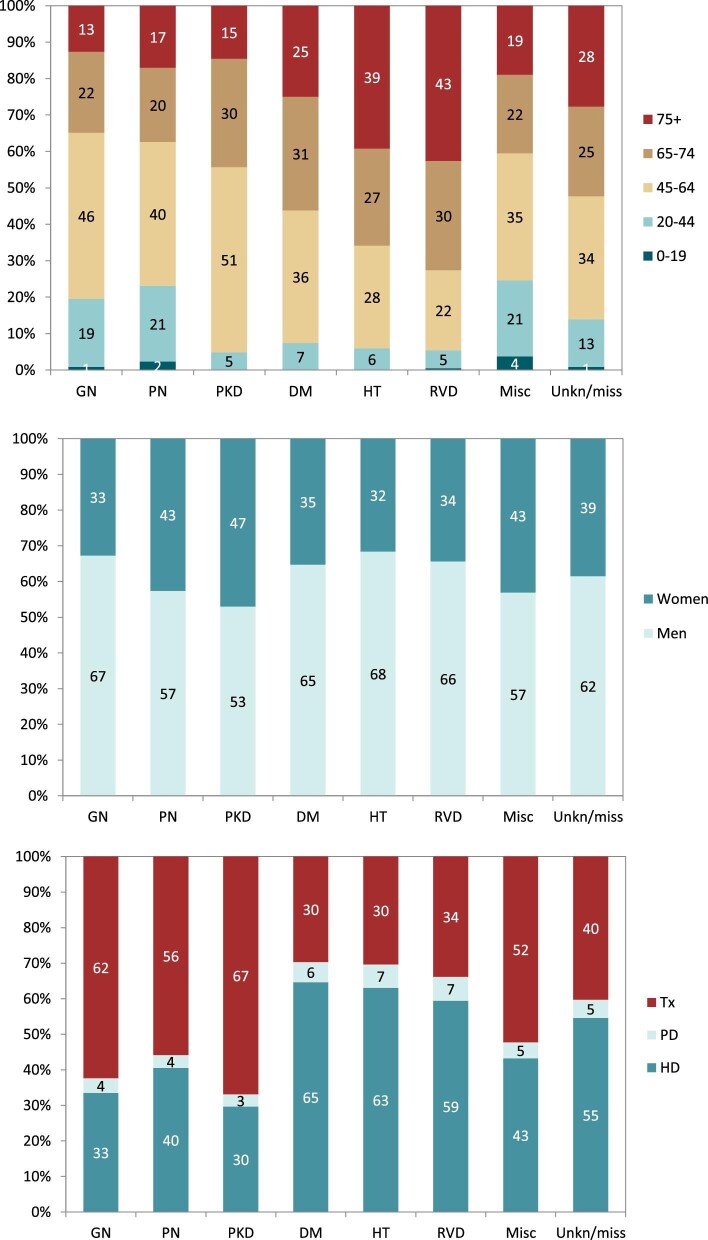
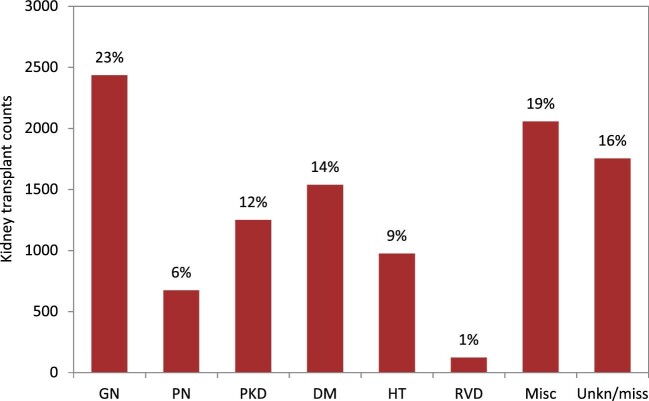
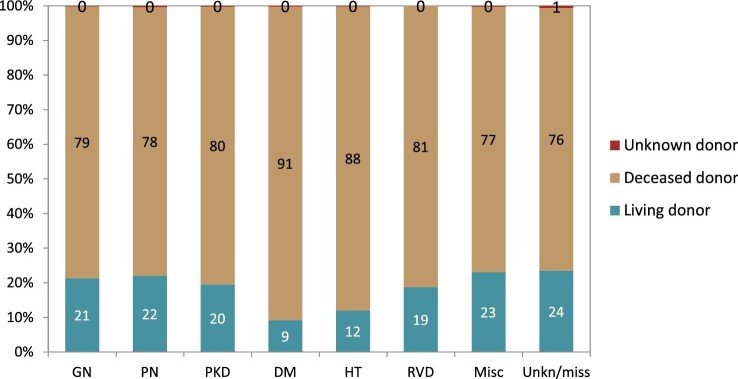
A general population of 654.9 million people was covered by the ERA Registry in 2020. The overall incidence of KRT was 128 per million population (p.m.p.). In incident KRT patients, 54% were older than 65 years, 63% were men and the most common PRD was diabetes mellitus (21%). Regarding initial treatment modality in incident patients, 85% received haemodialysis (HD), 11% received peritoneal dialysis (PD) and 4% received a pre-emptive kidney transplant. On 31 December 2020, the prevalence of KRT was 931 p.m.p. In prevalent patients, 45% were older than 65 years, 60% were men and glomerulonephritis was the most common PRD (18%). Of these patients, 58% were on HD, 5% on PD and 37% were living with a kidney transplant. The overall kidney transplantation rate in 2020 was 28 p.m.p., with a majority of kidney grafts from deceased donors (71%). The unadjusted 5-year survival, based on incident dialysis patient from 2011-15, was 41.8%. For patients having received a deceased donor transplant, the unadjusted 5-year survival probability was 86.2% and for patients having received a living donor transplant it was 94.4%. When comparing data by PRD group, differences were found regarding the distribution of age groups, sex and treatment modality received.
欧洲肾脏协会(ERA)登记处收集了终末期肾病(ESKD)患者肾脏替代治疗(KRT)的数据。本文是ERA登记处2020年年报的总结,还包括原发性肾脏疾病(PRD)组之间的比较。
数据收集自34个欧洲国家和地中海沿岸国家的52个国家和地区登记处:18个国家的35个登记处提供个体水平数据,17个国家的17个登记处提供汇总数据。利用这些数据,计算了KRT的发病率和患病率、肾脏移植率、预期剩余寿命和生存概率。
2020年ERA登记处覆盖的总人口为6.549亿人。KRT的总体发病率为每百万人口128例(p.m.p.)。在新发病的KRT患者中,54%年龄超过65岁,63%为男性,最常见的PRD是糖尿病(21%)。关于新发病例的初始治疗方式,85%接受血液透析(HD),11%接受腹膜透析(PD),4%接受抢先肾移植。截至2020年12月31日,KRT的患病率为每百万人口931例。在现患患者中,45%年龄超过65岁,60%为男性,肾小球肾炎是最常见的PRD(18%)。在这些患者中,58%接受HD治疗,5%接受PD治疗,37%接受肾移植。2020年的总体肾脏移植率为每百万人口28例,大多数肾脏移植来自 deceased 供体(71%)。基于2011 - 2015年新发病透析患者的未经调整的5年生存率为41.8%。对于接受 deceased 供体移植的患者,未经调整的5年生存概率为86.2%,对于接受活体供体移植的患者,该概率为94.4%。按PRD组比较数据时,发现年龄组、性别和接受的治疗方式分布存在差异。