Department of Biochemistry and Molecular Biology, Virginia Commonwealth University School of Medicine, Richmond, VA, USA.
Division of Gastroenterology, Hepatology, and Nutrition, Department of Internal Medicine, Virginia Commonwealth University School of Medicine, Richmond, VA, USA.
FASEB J. 2021 Mar;35(3):e21415. doi: 10.1096/fj.202002540R.
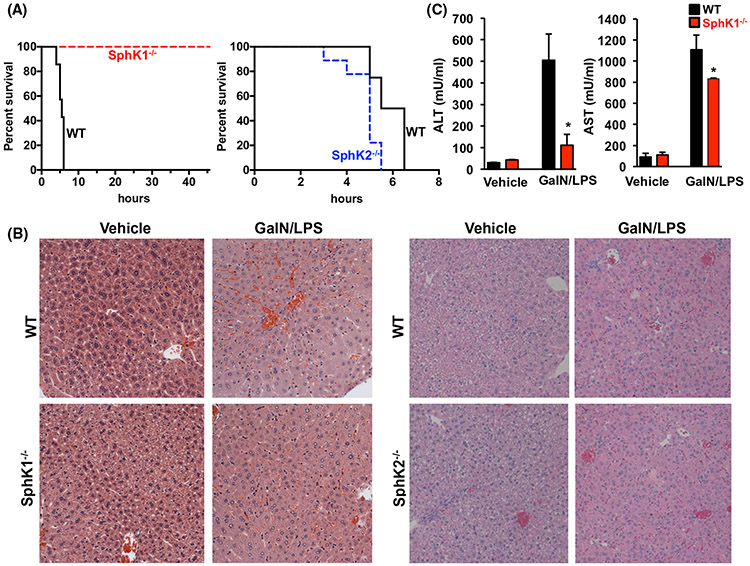
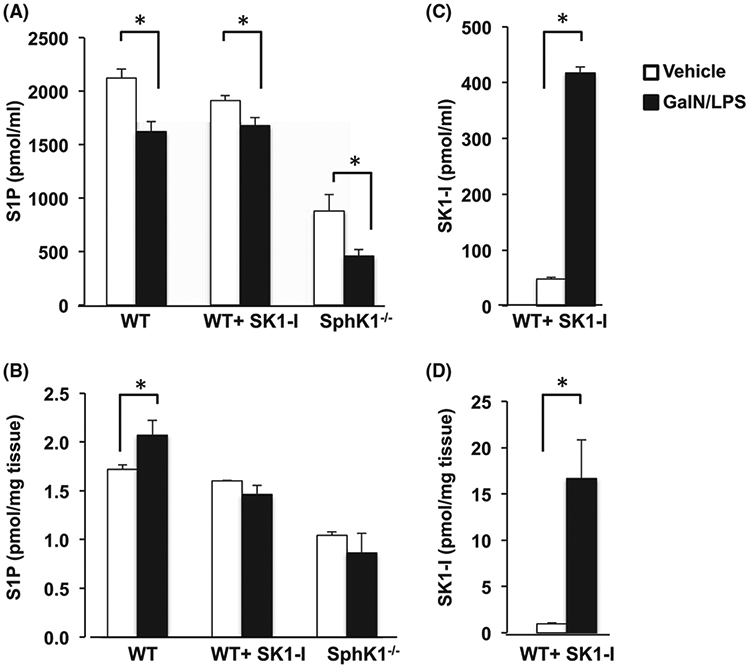
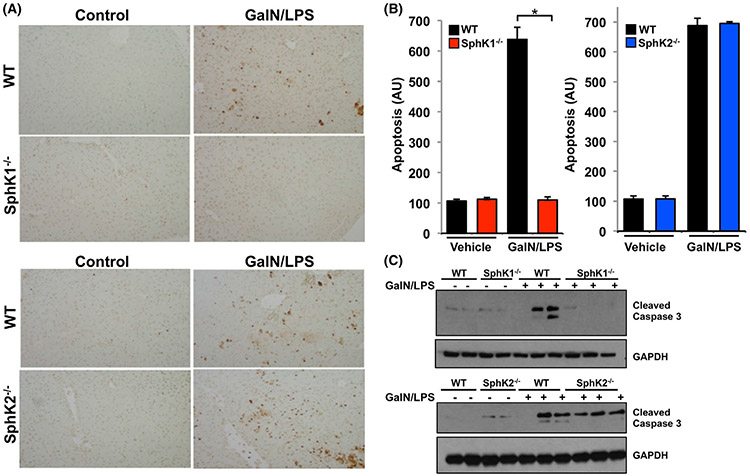
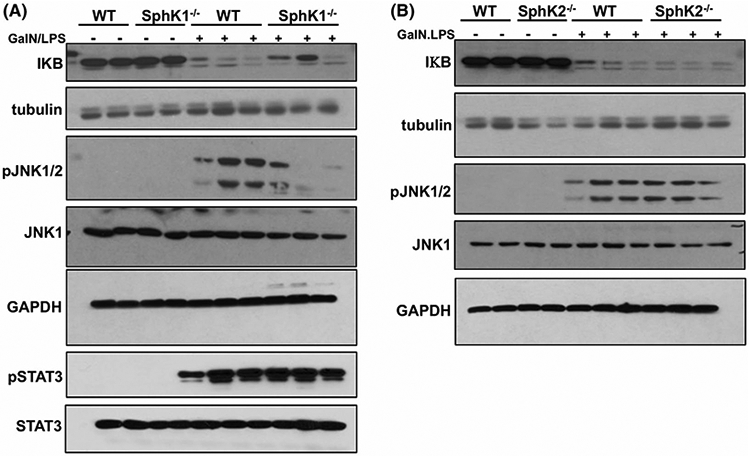
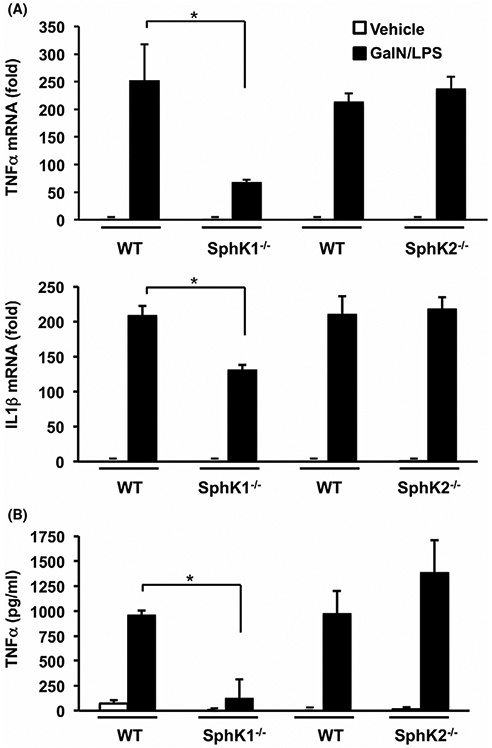
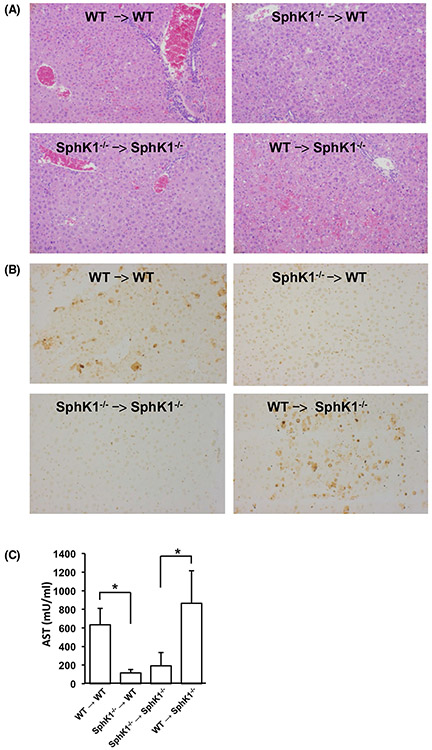
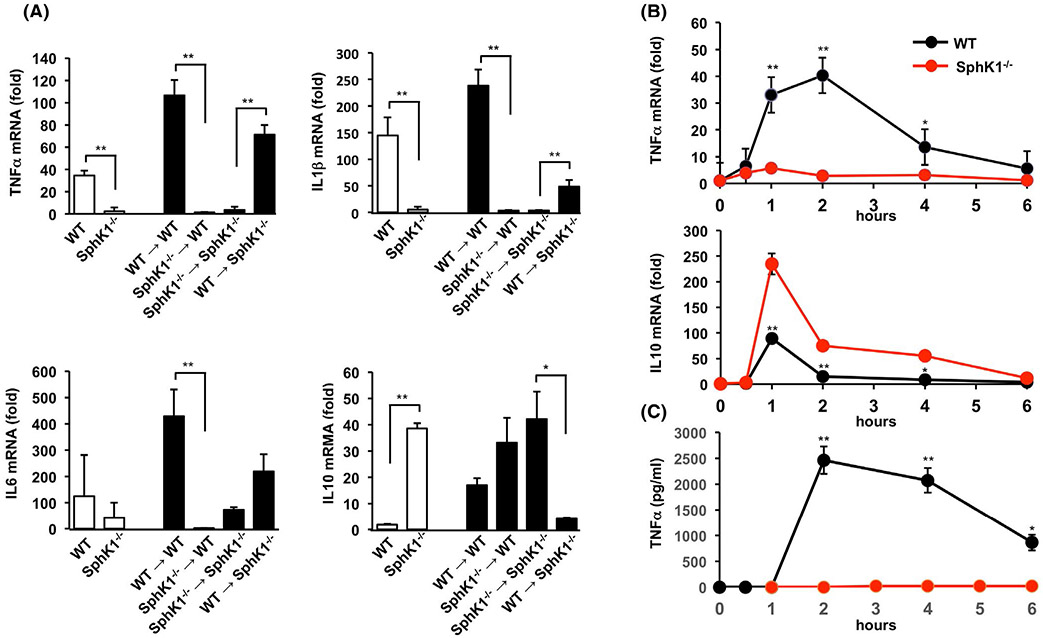
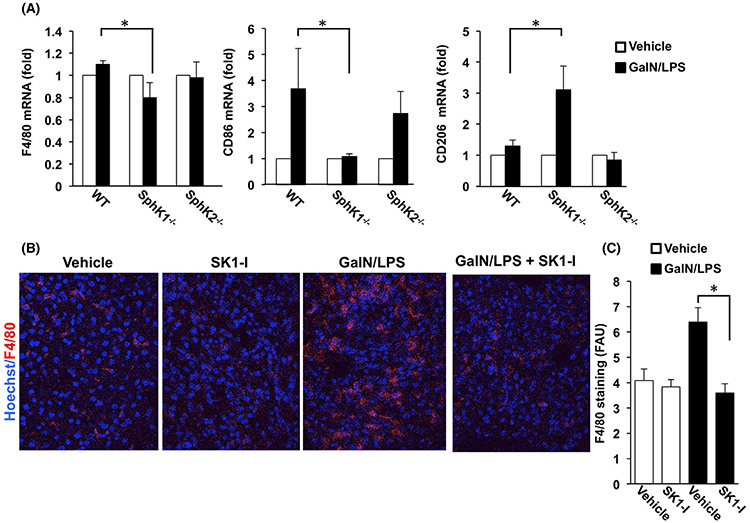
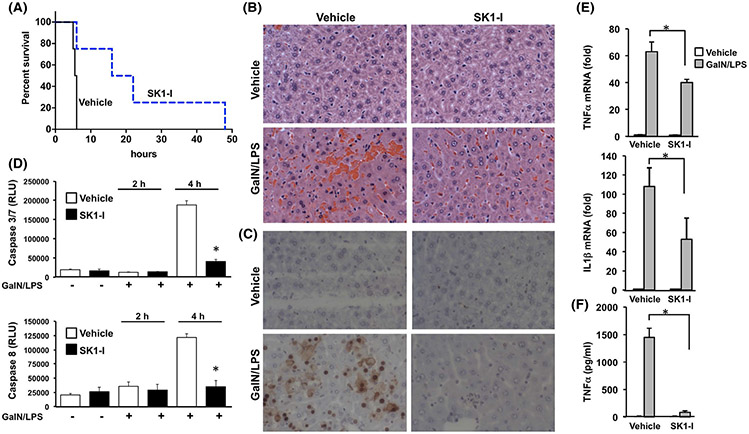
Acute liver failure (ALF) causes severe liver dysfunction that can lead to multi-organ failure and death. Previous studies suggest that sphingosine kinase 1 (SphK1) protects against hepatocyte injury, yet not much is still known about its involvement in ALF. This study examines the role of SphK1 in D-galactosamine (GalN)/lipopolysaccharide (LPS)-induced ALF, which is a well-established experimental mouse model that mimics the fulminant hepatitis. Here we report that deletion of SphK1, but not SphK2, dramatically decreased GalN/LPS-induced liver damage, hepatic apoptosis, serum alanine aminotransferase levels, and mortality rate compared to wild-type mice. Whereas GalN/LPS treatment-induced hepatic activation of NF-κB and JNK in wild-type and SphK2 mice, these signaling pathways were reduced in SphK1 mice. Moreover, repression of ALF in SphK1 mice correlated with decreased expression of the pro-inflammatory cytokine TNFα. Adoptive transfer experiments indicated that SphK1 in bone marrow-derived infiltrating immune cells but not in host liver-resident cells, contribute to the development of ALF. Interestingly, LPS-induced TNFα production was drastically suppressed in SphK1-deleted macrophages, whereas IL-10 expression was markedly enhanced, suggesting a switch to the anti-inflammatory phenotype. Finally, treatment with a specific SphK1 inhibitor ameliorated inflammation and protected mice from ALF. Our findings suggest that SphK1 regulates TNFα secretion from macrophages and inhibition or deletion of SphK1 mitigated ALF. Thus, a potent inhibitor of SphK1 could potentially be a therapeutic agent for fulminant hepatitis.
急性肝衰竭 (ALF) 导致严重的肝功能障碍,可导致多器官衰竭和死亡。先前的研究表明,鞘氨醇激酶 1 (SphK1) 可保护肝细胞免受损伤,但对于其在 ALF 中的作用知之甚少。本研究探讨了 SphK1 在 D-半乳糖胺 (GalN)/脂多糖 (LPS) 诱导的 ALF 中的作用,这是一种模拟暴发性肝炎的成熟实验小鼠模型。在这里,我们报告说 SphK1 的缺失,但不是 SphK2 的缺失,与野生型小鼠相比,大大降低了 GalN/LPS 诱导的肝损伤、肝凋亡、血清丙氨酸氨基转移酶水平和死亡率。虽然 GalN/LPS 处理诱导野生型和 SphK2 小鼠中 NF-κB 和 JNK 的肝激活,但这些信号通路在 SphK1 小鼠中减少。此外,SphK1 小鼠中 ALF 的抑制与促炎细胞因子 TNFα 的表达降低相关。过继转移实验表明,骨髓来源的浸润免疫细胞中的 SphK1 而不是宿主肝驻留细胞中的 SphK1 有助于 ALF 的发展。有趣的是,SphK1 缺失的巨噬细胞中 LPS 诱导的 TNFα 产生被明显抑制,而 IL-10 表达明显增强,表明向抗炎表型转变。最后,特异性 SphK1 抑制剂的治疗改善了炎症并保护了小鼠免受 ALF 的影响。我们的研究结果表明,SphK1 调节巨噬细胞中 TNFα 的分泌,抑制或缺失 SphK1 减轻了 ALF。因此,SphK1 的有效抑制剂可能成为暴发性肝炎的治疗剂。