Department of Orthopedic Surgery, Seoul National University College of Medicine, SMG-SNU Boramae Medical Center, Seoul, South Korea.
Department of Biomedical Engineering (BME), Jungwon University, Chungcheongbuk-do, South Korea.
PLoS One. 2021 Feb 10;16(2):e0246866. doi: 10.1371/journal.pone.0246866. eCollection 2021.
Implant material is a more important factor for periprosthetic tibial bone resorption than implant design after total knee arthroplasty (TKA). The virtual perturbation study was planned to perform using single case of proximal tibia model. We determined whether the implant materials' stiffness affects the degree of periprosthetic tibial bone resorption, and whether the effect of material change with the same implant design differed according to the proximal tibial plateau areas.
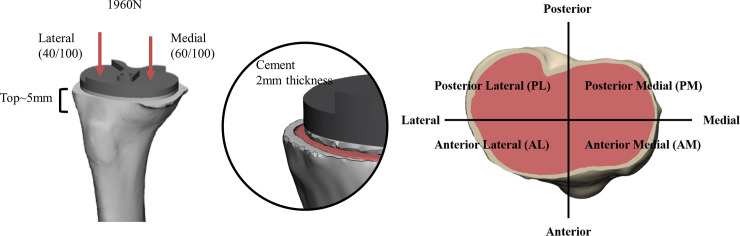
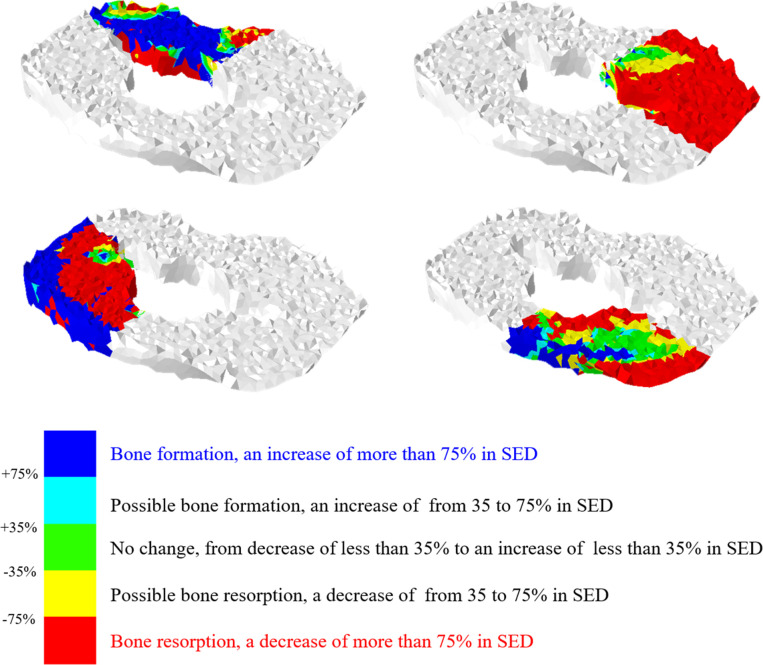
This three-dimensional finite element analysis included two cobalt-chromium (CoCr) and two titanium (Ti) tibial implants with different designs. They were implanted into the proximal tibial model reconstructed using extracted images from computed tomography. The degree of bone resorption or formation was measured using the strain energy density after applying axial load. The same analysis was performed after exchanging the materials while maintaining the design of each implant.
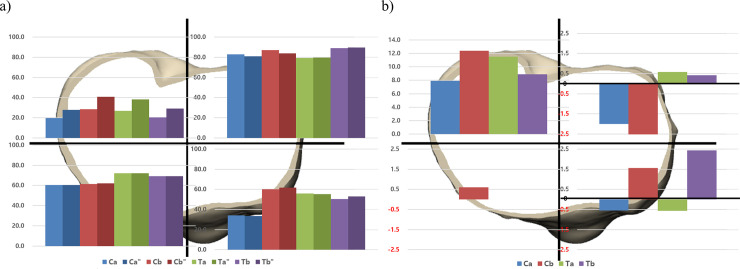
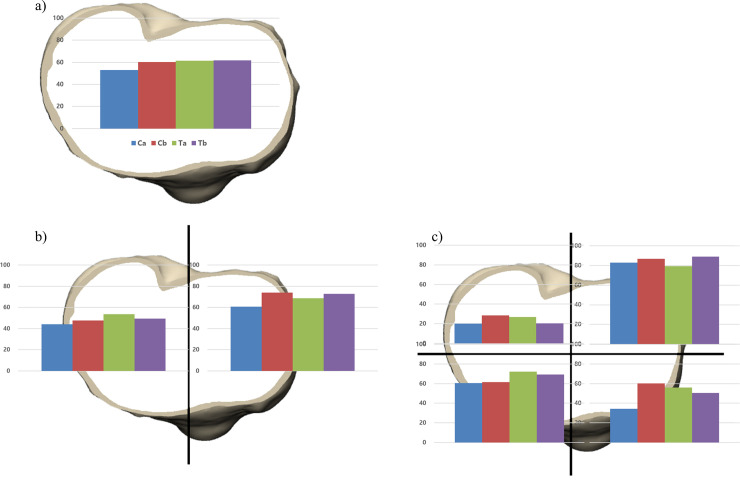
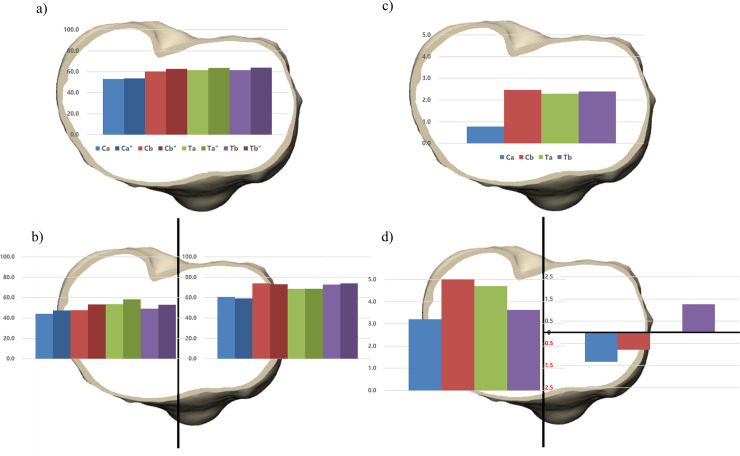
The degree of periprosthetic tibial bone resorption was not determined by the type of implant materials alone. When the implant materials were changed from Ti to CoCr, the bone resorption in the medial compartment increased and vice versa. The effect of material composition's change on anterior and posterior areas varied accordingly.
Although the degree of bone resorption was associated with implant materials, it differed depending on the design of each implant. The effect on the degree of bone resorption according to the materials after TKA should be evaluated while concomitantly considering design.
全膝关节置换术后(TKA),与植入物设计相比,植入物材料是导致假体周围胫骨骨吸收的更重要因素。本研究计划采用单一胫骨近端模型进行虚拟扰动研究。我们旨在确定植入物材料的刚度是否会影响假体周围胫骨骨吸收的程度,以及在相同的植入物设计下,材料变化的影响是否因胫骨平台区域的不同而不同。
本三维有限元分析包括两种不同设计的钴铬(CoCr)和两种钛(Ti)胫骨植入物。将它们植入使用从 CT 重建的胫骨近端模型中。在施加轴向载荷后,使用应变能密度测量骨吸收或形成的程度。在保持每个植入物设计的同时,交换材料后,也进行了相同的分析。
假体周围胫骨骨吸收的程度不仅取决于植入物材料的类型。当将植入物材料从 Ti 更改为 CoCr 时,内侧间隙的骨吸收增加,反之亦然。材料组成变化对前、后区域的影响也随之变化。
尽管骨吸收的程度与植入物材料有关,但它因每个植入物的设计而异。在考虑设计的同时,应评估 TKA 后根据材料对骨吸收程度的影响。