Division of Gastroenterology, Hepatology and Nutrition, Children's Hospital Los Angeles, Los Angeles, California, USA.
Division of Endocrinology, Cincinnati Children's Hospital Medical Center, Cincinnati, Ohio, USA.
Endocrinology. 2021 Apr 1;162(4). doi: 10.1210/endocr/bqab007.
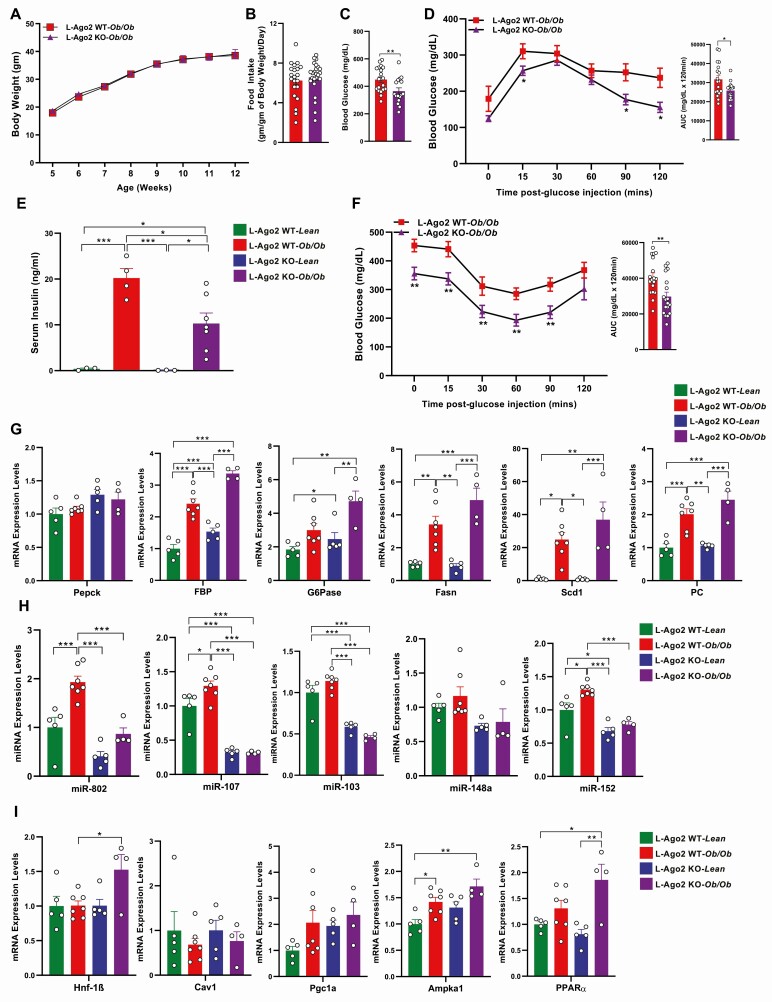
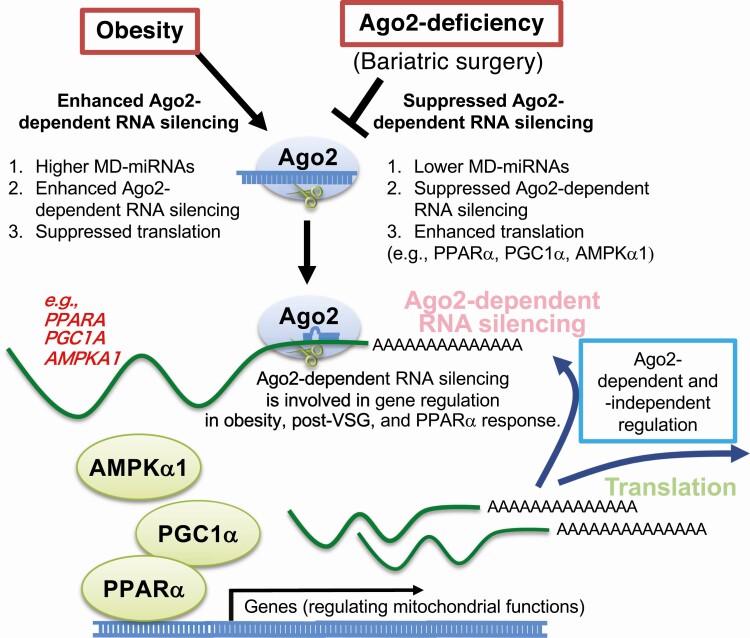
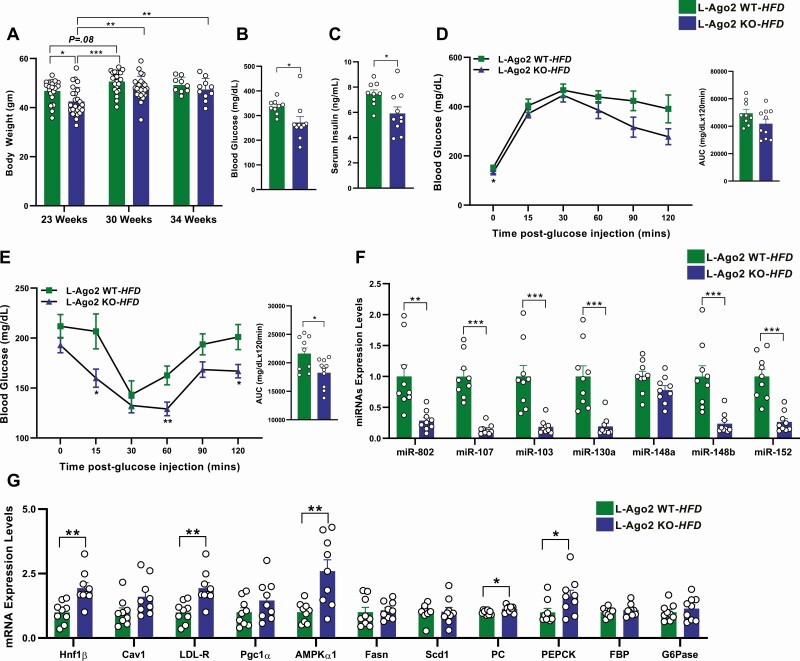
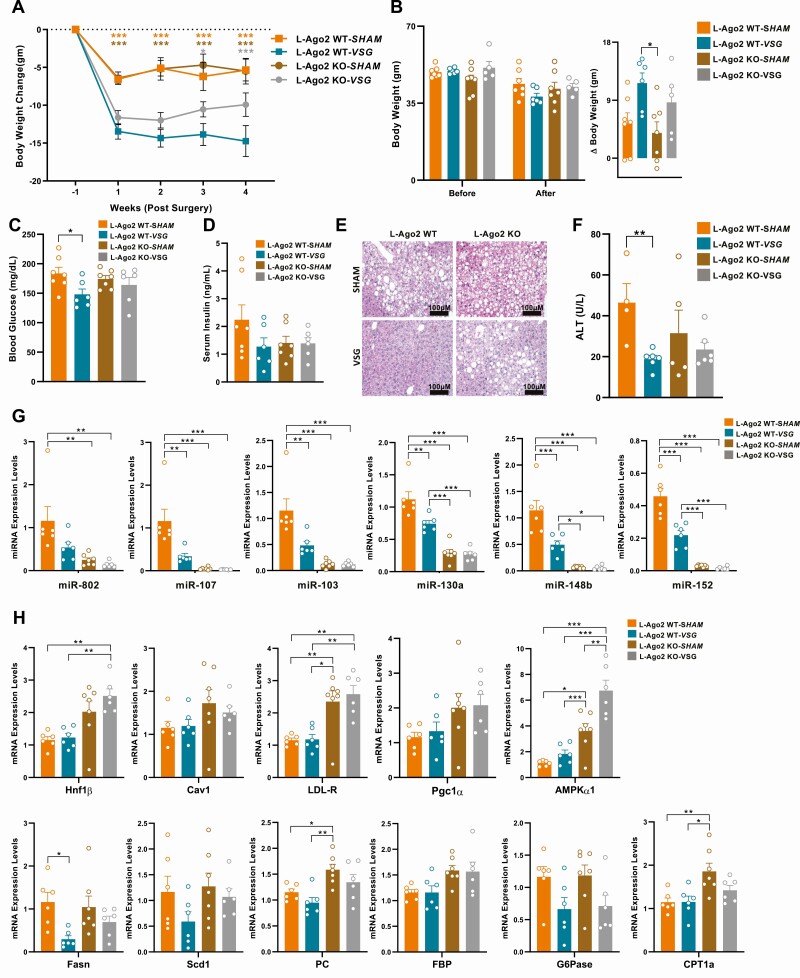
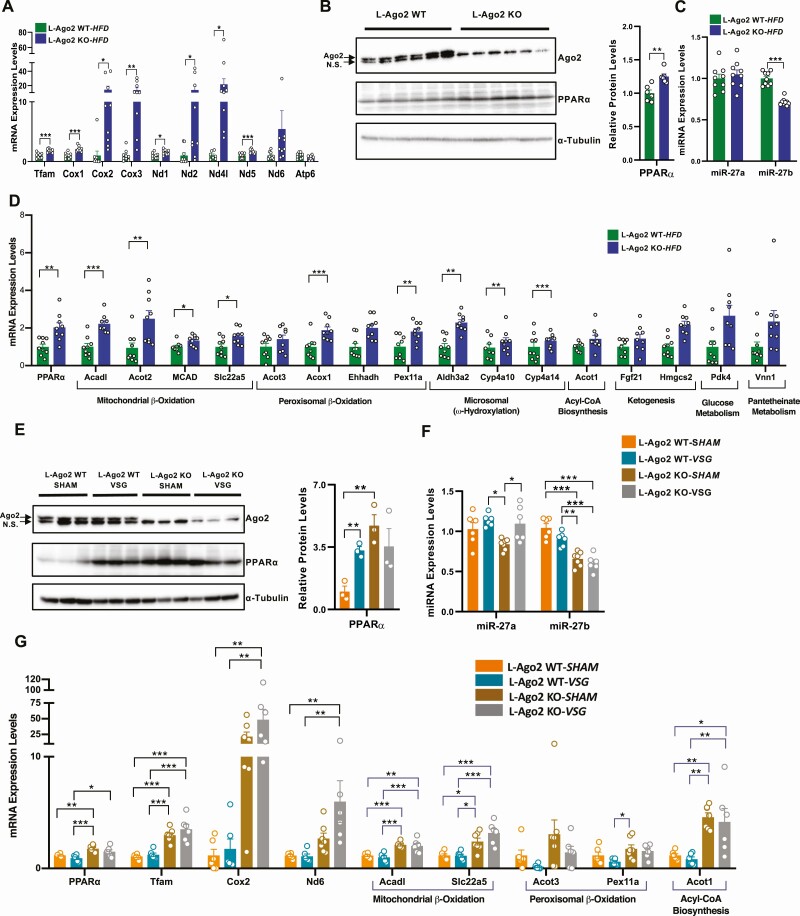
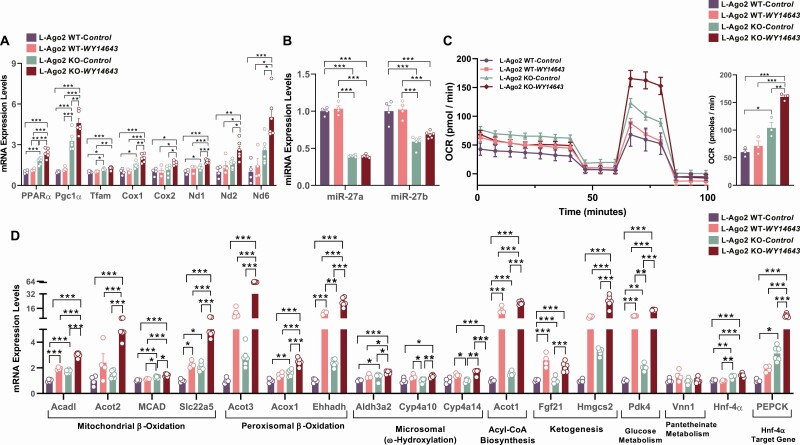
Argonaute 2 (Ago2) is the main component of the RNA-induced silencing complex. We recently showed that liver-specific Ago2-deficiency in mice (L-Ago2 knockout [KO] mice) enhances mitochondrial oxidation and alleviates obesity-associated pathophysiology. However, the precise mechanisms behind the role of hepatic Ago2 in regulating the mitochondrial oxidation associated with glucose metabolism are still unclear. Here, we show that hepatic Ago2 regulates the function of peroxisome proliferator-activated receptor α (PPARα) for oxidative metabolism. In both genetically and diet-induced severe obese conditions, L-Ago2 KO mice developed obesity and hepatic steatosis but exhibited improved glucose metabolism accompanied by lowered expression levels of pathologic microRNAs (miRNAs), including miR-802, miR-103/107, and miR-152, and enhanced expression of PPARα and its target genes regulating oxidative metabolism in the liver. We then investigated the role of hepatic Ago2 in the outcomes of vertical sleeve gastrectomy (VSG) in which PPARα plays a crucial role in a drastic transcription reprogram associated with improved glycemia post VSG. Whereas VSG reduced body weight and improved fatty liver in wild-type mice, these effects were not observed in hepatic Ago2-deficient mice. Conversely, glucose metabolism was improved in a hepatic Ago2-dependent manner post VSG. Treating Ago2-deficient primary hepatocytes with WY-14643, a PPARα agonist, showed that Ago2-deficiency enhances sensitivity to WY-14643 and increases expression of PPARα target genes and mitochondrial oxidation. Our findings suggest that hepatic Ago2 function is intrinsically associated with PPARα that links Ago2-mediated RNA silencing with mitochondrial functions for oxidation and obesity-associated pathophysiology.
Argonaute 2(Ago2)是 RNA 诱导沉默复合物的主要组成部分。我们最近表明,小鼠肝脏特异性 Ago2 缺失(L-Ago2 敲除[KO]小鼠)增强了线粒体氧化作用,并减轻了肥胖相关的病理生理学变化。然而,肝 Ago2 调节与葡萄糖代谢相关的线粒体氧化作用的精确机制仍不清楚。在这里,我们表明肝 Ago2 调节过氧化物酶体增殖物激活受体α(PPARα)的功能,以进行氧化代谢。在遗传和饮食诱导的严重肥胖条件下,L-Ago2 KO 小鼠发展为肥胖和肝脂肪变性,但表现出改善的葡萄糖代谢,伴有病理 microRNAs(miRNAs)的表达水平降低,包括 miR-802、miR-103/107 和 miR-152,以及增强的 PPARα 及其靶基因的表达,这些基因调节肝脏中的氧化代谢。然后,我们研究了肝 Ago2 在垂直袖状胃切除术(VSG)结果中的作用,其中 PPARα 在与 VSG 后血糖改善相关的剧烈转录重编程中发挥关键作用。虽然 VSG 降低了野生型小鼠的体重并改善了脂肪肝,但在肝 Ago2 缺陷型小鼠中未观察到这些效果。相反,VSG 后葡萄糖代谢以肝 Ago2 依赖的方式得到改善。用 WY-14643(一种 PPARα 激动剂)处理 Ago2 缺陷型原代肝细胞表明,Ago2 缺陷增强了对 WY-14643 的敏感性,并增加了 PPARα 靶基因和线粒体氧化的表达。我们的研究结果表明,肝 Ago2 功能与 PPARα 内在相关,它将 Ago2 介导的 RNA 沉默与氧化作用和肥胖相关的病理生理学联系起来。