Hajj Imad, Al-Masri Mahmoud, Bashaireh Kaldoun, Hani Mohammed Bani, Hamouri Shadi, Khouzami Joe, Sabra Nisrine, Fadel Chahine
Department of Surgery, Saint George Hospital University Medical Center, Ashrafiyeh, Beirut, Lebanon.
Department of Surgery, King Hussein Cancer Center, PO Box 1269, Al-Jubeiha, Amman, 11941, Jordan.
Thromb J. 2021 Feb 10;19(1):9. doi: 10.1186/s12959-021-00261-2.
There is a growing body of evidence showing substantial underuse of appropriate venous thromboembolism (VTE) prophylaxis in patients at risk. In the present study, our goal was to assess the current practices in the use rate of VTE prophylaxis among hospitalized patients in Jordan and Lebanon.
A cross-sectional, multicenter, observational study was conducted on 40 centers across Lebanon and Jordan. We included patients who were admitted to the participating hospitals for the treatment of a serious medical or surgical illness. The patients' records were screened for the fulfillment of inclusion/exclusion criteria during a single assessment visit. The proportion of medical and surgical patients who were at risk of VTE and the thrombo-prophylactic measures employed by physicians for these patients were assessed according to the American College of Chest Physicians (ACCP 2016) guidelines.
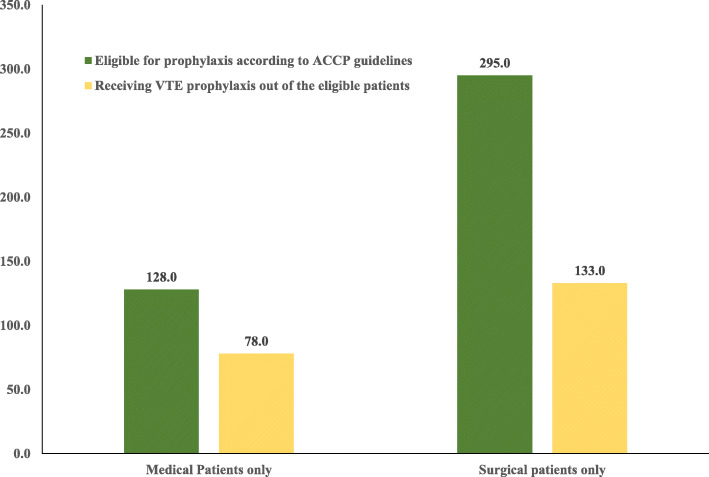
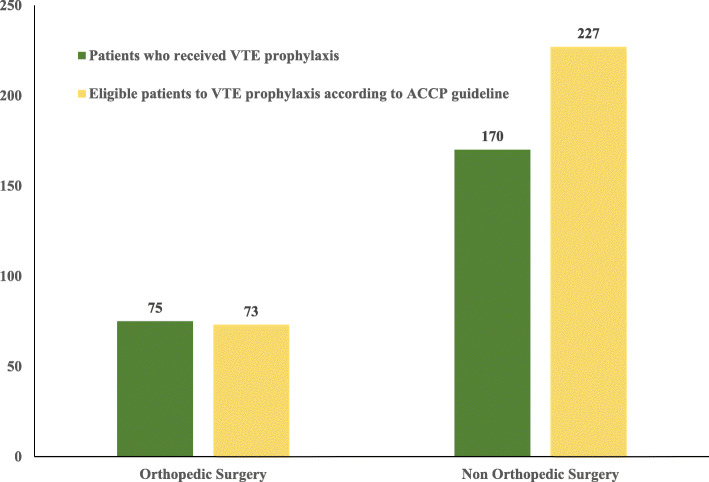
The present study included 704 patients (400 from Jordan and 304 from Lebanon) with a mean age of 54.9 ± 17.5 years. Almost 59% of the patients received prophylaxis treatment in form of pharmacological anticoagulant prophylaxis and/or mechanical prophylaxis. Low molecular weight heparin was the most commonly used anticoagulant for VTE prophylaxis in 366 out of the total 704 (51.9%) patients in the analysis cohort. Two hundred and sixteen patients (52, 95% confidence interval [47.1-56.9%]) received appropriate prophylactic agents out of 415 patients who were eligible for prophylaxis according to the ACCP 2016 guidelines. On the other hand, 199 (72.1, 95% confidence interval [66.4-77.3%) patients received prophylaxis out of 276 ineligible patients. The rate of compliance to guidelines showed wide variations according to the type of hospital, specialty, and the patients' age. The multivariate logistic regression analysis showed that only age was a significant predictor of appropriate VTE prophylaxis (odds ratio [OR] 1.05, P < 0.001).
The rates of the appropriate use of VTE prophylaxis are low in Lebanon and Jordan. There is a lack of compliance to guidelines for VTE prophylaxis use for hospitalized patients in both countries.
越来越多的证据表明,有风险的患者在适当的静脉血栓栓塞(VTE)预防措施方面存在大量未充分利用的情况。在本研究中,我们的目标是评估约旦和黎巴嫩住院患者VTE预防措施使用率的当前情况。
在黎巴嫩和约旦的40个中心进行了一项横断面、多中心观察性研究。我们纳入了因严重内科或外科疾病入院接受治疗的患者。在单次评估访视期间,对患者记录进行筛查以确定是否符合纳入/排除标准。根据美国胸科医师学会(ACCP 2016)指南,评估有VTE风险的内科和外科患者比例以及医生对这些患者采取的血栓预防措施。
本研究纳入了704例患者(400例来自约旦,304例来自黎巴嫩),平均年龄为54.9±17.5岁。几乎59%的患者接受了药物抗凝预防和/或机械预防形式的预防治疗。在分析队列的704例患者中,366例(51.9%)最常使用低分子量肝素进行VTE预防。根据ACCP 2016指南,在415例符合预防条件的患者中,有216例(52,95%置信区间[47.1 - 56.9%])接受了适当的预防药物。另一方面,在276例不符合条件的患者中,有199例(72.1,95%置信区间[66.4 - 77.3%])接受了预防。根据医院类型、专业和患者年龄,指南依从率显示出很大差异。多因素逻辑回归分析表明,只有年龄是适当VTE预防的显著预测因素(优势比[OR] 1.05,P < 0.001)。
黎巴嫩和约旦VTE预防措施的适当使用率较低。两国住院患者在VTE预防措施使用方面均缺乏对指南的依从性。