Department of Psychosomatic Internal Medicine, Kagoshima University Graduate School of Medical and Dental Sciences, Kagoshima, Japan
Department of Psychosomatic Internal Medicine, Kagoshima University Graduate School of Medical and Dental Sciences, Kagoshima, Japan.
BMJ Open Diabetes Res Care. 2021 Feb;9(1). doi: 10.1136/bmjdrc-2020-001492.
A diet high in saturated fat is well known to affect neuronal function and contribute to cognitive decline in experimental animals and humans. Fractalkine released from neurons acts on its receptor, CX3C chemokine receptor 1 (CX3CR1), in the microglia to regulate several brain functions. The present study addressed whether fractalkine-CX3CR1 signaling in the brain, especially the hippocampus, contributes to the cognitive deficits observed in diet-induced obese (DIO) mice.
Mice were given 60% high-fat diet for 16 weeks. The expression of fractalkine and CX3CR1 in the hippocampus, amygdala and prefrontal cortex of DIO mice was analyzed. Cognitive ability in the Y-maze test and hippocampal glutamate receptors and synaptic markers were observed in DIO and CX3CR1 antagonist-treated mice. Regulation of fractalkine and CX3CR1 expression in the hippocampus was examined following administration of a selective insulin-like growth factor-1 (IGF-1) receptor inhibitor and a tyrosine receptor kinase B (TrkB) antagonist in normal mice.
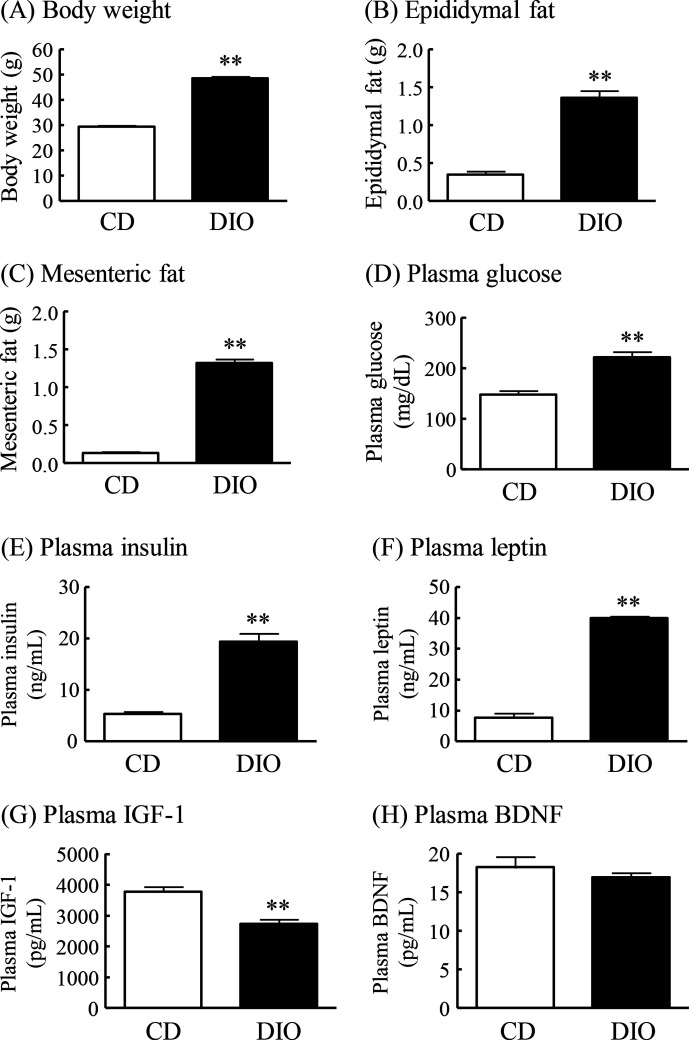
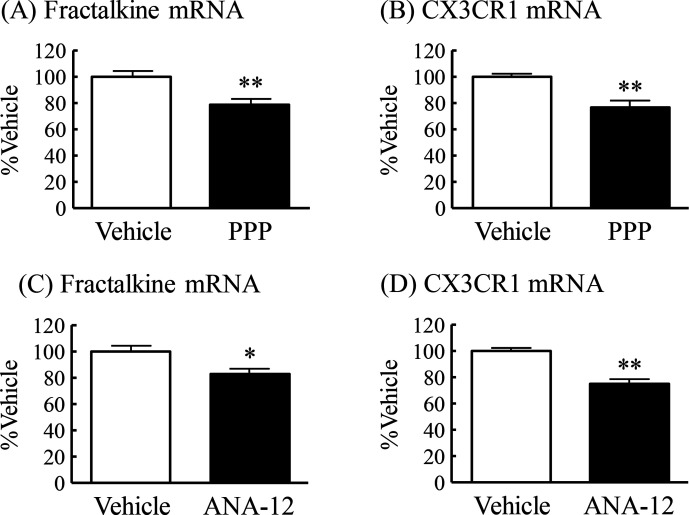
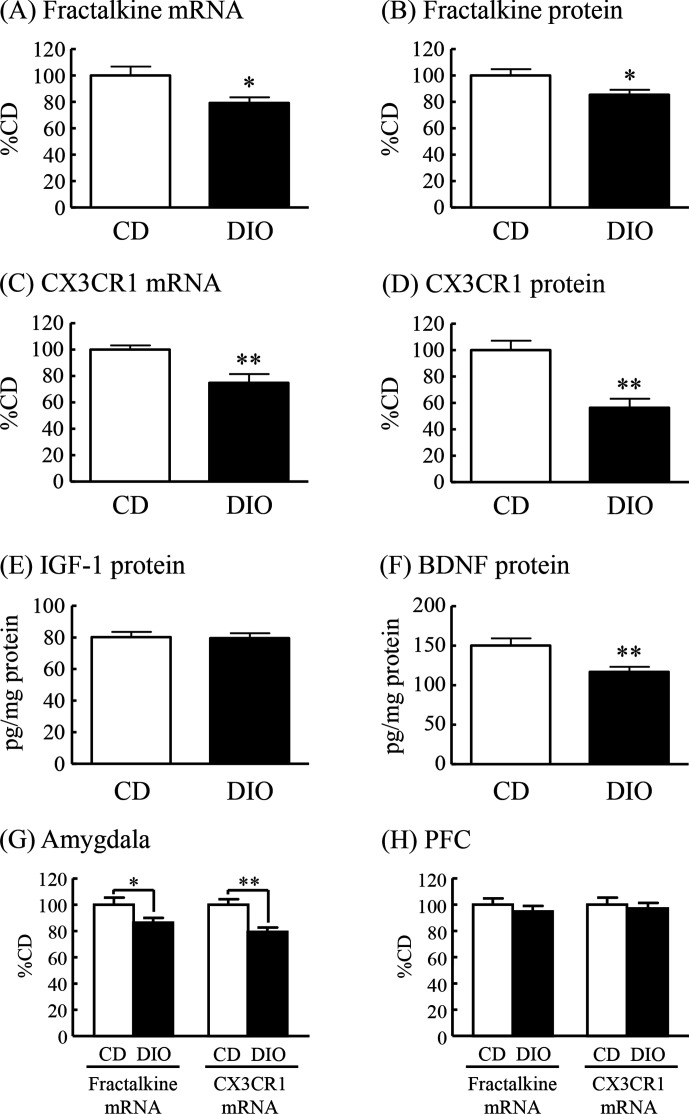
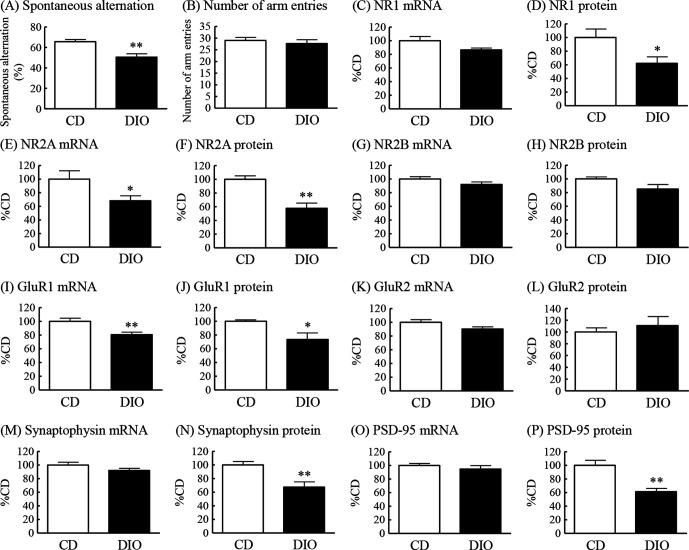
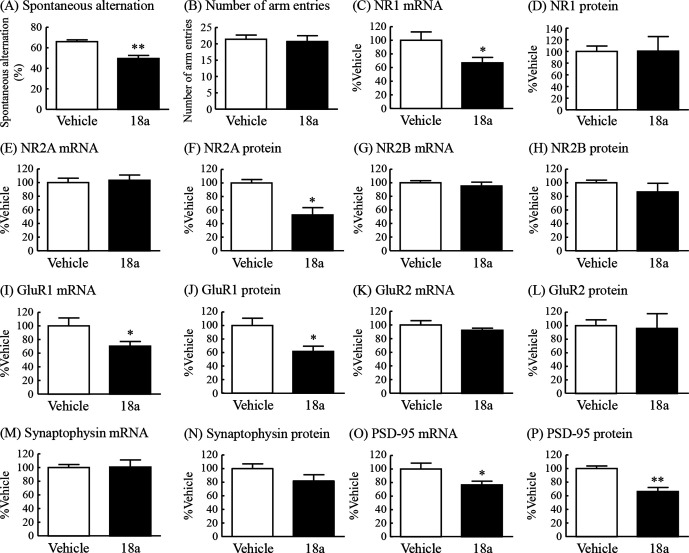
DIO mice exhibited significant cognitive deficits in the Y-maze test and decrease in fractalkine and CX3CR1 in the hippocampus and amygdala compared with mice fed a control diet (CD mice). Administration of the CX3CR1 antagonist 18a in normal mice induced significant cognitive deficits in the Y-maze test. DIO mice and CX3CR1 antagonist-treated mice exhibited significant decreases in protein levels of NMDA (N-methyl-D-aspartate) receptor subunit (NR2A), AMPA (α-amino-5-methyl-3-hydroxy-4-isoxazole propionate) receptor subunit (GluR1) and postsynaptic density protein 95 in the hippocampus compared with their respective controls. Furthermore, plasma IGF-1 and hippocampal brain-derived neurotrophic factor were significantly decreased in DIO mice compared with CD mice. Administration of a selective IGF-1 receptor inhibitor and a TrkB antagonist in normal mice significantly decreased fractalkine and CX3CR1 in the hippocampus.
These findings indicate that the cognitive decline observed in DIO mice is due, in part, to reduced fractalkine-CX3CR1 signaling in the corticolimbic system.
众所周知,高饱和脂肪饮食会影响神经元功能,并导致实验动物和人类的认知能力下降。神经元释放的 fractalkine 作用于其受体 CX3C 趋化因子受体 1(CX3CR1),在小胶质细胞中调节多种大脑功能。本研究旨在探讨大脑中 fractalkine-CX3CR1 信号通路,特别是海马体中的信号通路,是否会导致饮食诱导肥胖(DIO)小鼠观察到的认知缺陷。
将小鼠给予 60%高脂肪饮食 16 周。分析 DIO 小鼠海马体、杏仁核和前额叶皮层中 fractalkine 和 CX3CR1 的表达。在 DIO 小鼠和 CX3CR1 拮抗剂治疗的小鼠中观察 Y 迷宫测试中的认知能力以及海马体中的谷氨酸受体和突触标志物。在正常小鼠中给予选择性胰岛素样生长因子-1(IGF-1)受体抑制剂和酪氨酸受体激酶 B(TrkB)拮抗剂后,检查海马体中 fractalkine 和 CX3CR1 表达的调节。
与给予对照饮食(CD 小鼠)的小鼠相比,DIO 小鼠在 Y 迷宫测试中表现出明显的认知缺陷,并且海马体和杏仁核中的 fractalkine 和 CX3CR1 减少。在正常小鼠中给予 CX3CR1 拮抗剂 18a 会导致 Y 迷宫测试中的认知缺陷。DIO 小鼠和 CX3CR1 拮抗剂治疗的小鼠的海马体中 NMDA(N-甲基-D-天冬氨酸)受体亚基(NR2A)、AMPA(α-氨基-5-甲基-3-羟基-4-异恶唑丙酸)受体亚基(GluR1)和突触后密度蛋白 95 的蛋白水平明显降低与各自的对照相比。此外,与 CD 小鼠相比,DIO 小鼠的血浆 IGF-1 和海马脑源性神经营养因子明显降低。在正常小鼠中给予选择性 IGF-1 受体抑制剂和 TrkB 拮抗剂会导致海马体中 fractalkine 和 CX3CR1 明显减少。
这些发现表明,DIO 小鼠观察到的认知能力下降部分归因于皮质边缘系统中 fractalkine-CX3CR1 信号的减少。