Li Yuanyuan, Kottwitz Matthew, Vincent Joshua L, Enright Michael J, Liu Zongyuan, Zhang Lihua, Huang Jiahao, Senanayake Sanjaya D, Yang Wei-Chang D, Crozier Peter A, Nuzzo Ralph G, Frenkel Anatoly I
Department of Materials Science and Chemical Engineering, Stony Brook University, Stony Brook, NY, 11794, USA.
Department of Chemistry, University of Illinois, Urbana, IL, 61801, USA.
Nat Commun. 2021 Feb 10;12(1):914. doi: 10.1038/s41467-021-21132-4.
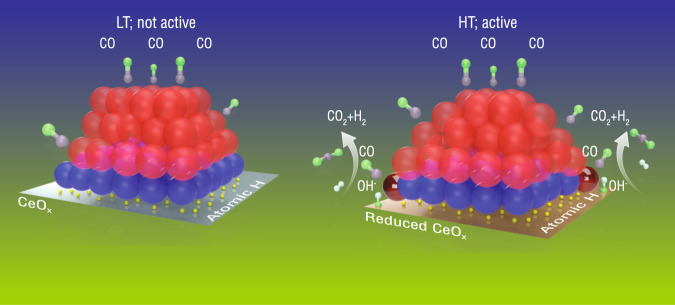
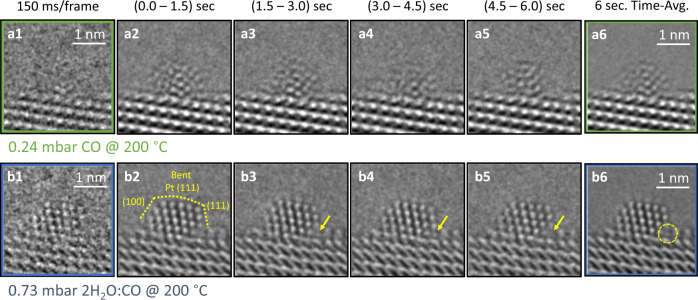
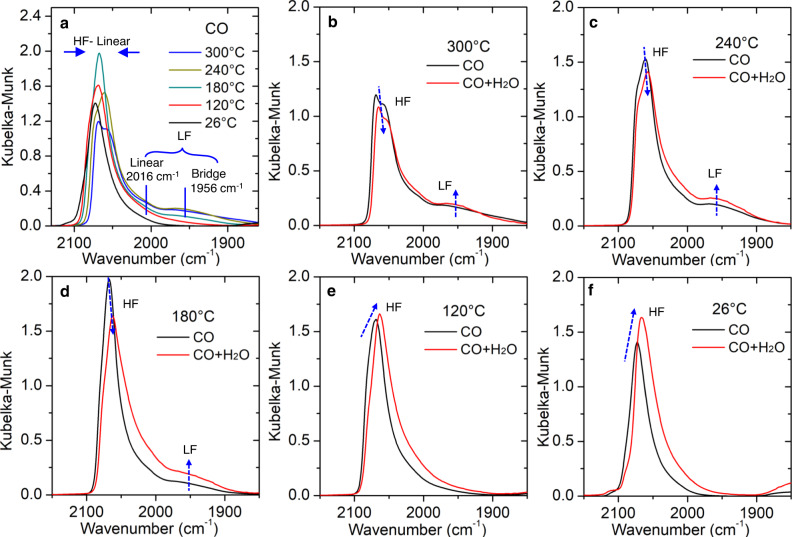
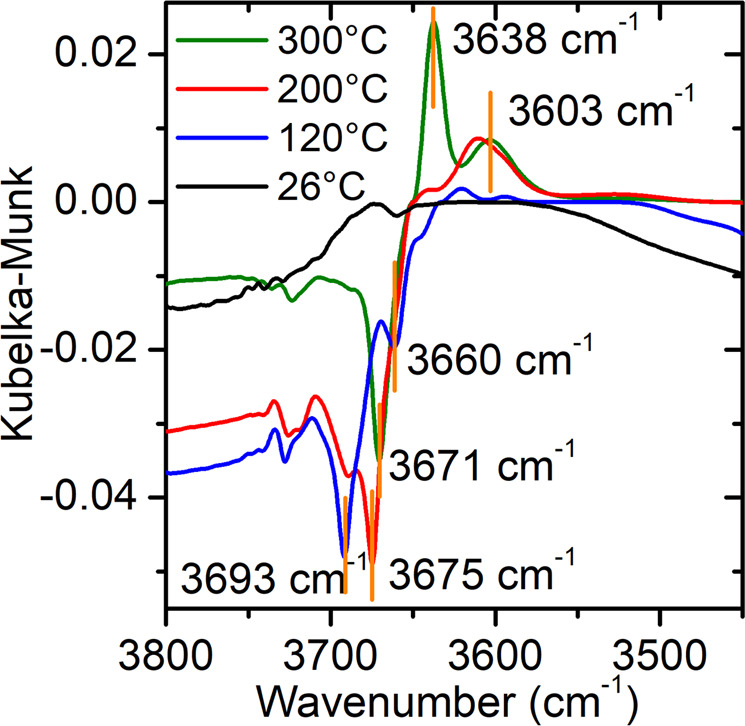
Oxide-supported noble metal catalysts have been extensively studied for decades for the water gas shift (WGS) reaction, a catalytic transformation central to a host of large volume processes that variously utilize or produce hydrogen. There remains considerable uncertainty as to how the specific features of the active metal-support interfacial bonding-perhaps most importantly the temporal dynamic changes occurring therein-serve to enable high activity and selectivity. Here we report the dynamic characteristics of a Pt/CeO system at the atomic level for the WGS reaction and specifically reveal the synergistic effects of metal-support bonding at the perimeter region. We find that the perimeter Pt - O vacancy-Ce sites are formed in the active structure, transformed at working temperatures and their appearance regulates the adsorbate behaviors. We find that the dynamic nature of this site is a key mechanistic step for the WGS reaction.
几十年来,负载型贵金属氧化物催化剂一直被广泛研究用于水煤气变换(WGS)反应,这是许多大量使用或生产氢气的工艺中的核心催化转化反应。关于活性金属-载体界面键合的具体特征——也许最重要的是其中发生的时间动态变化——如何导致高活性和选择性,仍然存在相当大的不确定性。在此,我们报告了用于WGS反应的Pt/CeO体系在原子水平上的动态特性,并特别揭示了周边区域金属-载体键合的协同效应。我们发现,活性结构中形成了周边Pt-O空位-Ce位点,在工作温度下发生转变,其出现调节了吸附质行为。我们发现,该位点的动态性质是WGS反应的关键机理步骤。