Centre for Molecular Medicine and Therapeutics, Vancouver, BC, V5Z 4H4, Canada.
BC Children's Hospital Research Institute, Vancouver, BC, V5Z 4H4, Canada.
Transl Neurodegener. 2024 Oct 8;13(1):50. doi: 10.1186/s40035-024-00443-8.
Therapeutic approaches aimed at lowering toxic mutant huntingtin (mHTT) levels in the brain can reverse disease phenotypes in animal models of Huntington's disease (HD) and are currently being evaluated in clinical trials. Sensitive and dynamic response biomarkers are needed to assess the efficacy of such candidate therapies. Neurofilament light chain (NfL) is a biomarker of neurodegeneration that increases in cerebrospinal fluid (CSF) and blood with progression of HD. However, it remains unknown whether NfL in biofluids could serve as a response biomarker for assessing the efficacy of disease-modifying therapies for HD.
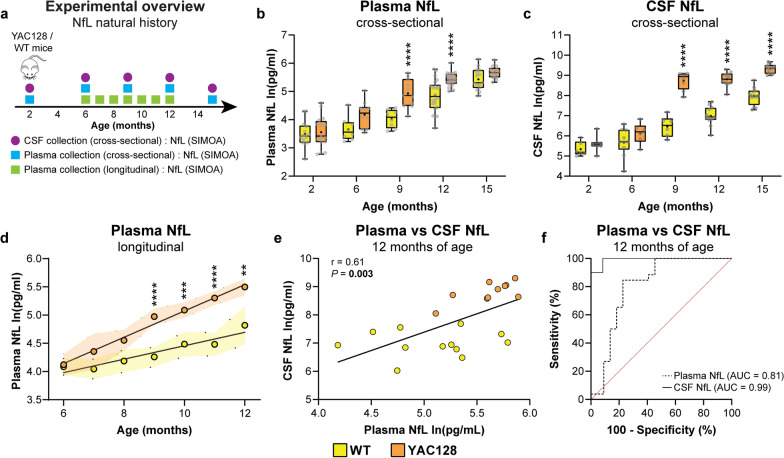
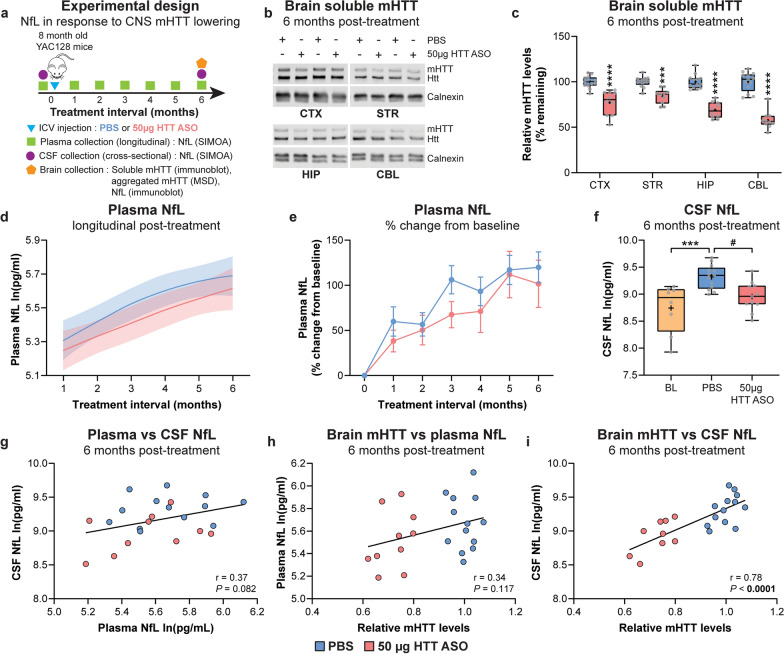
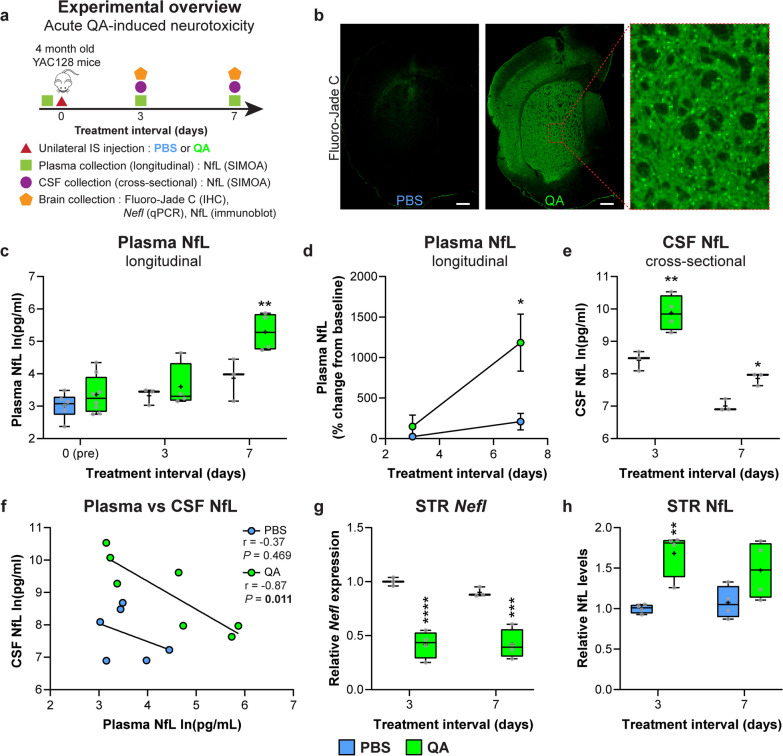
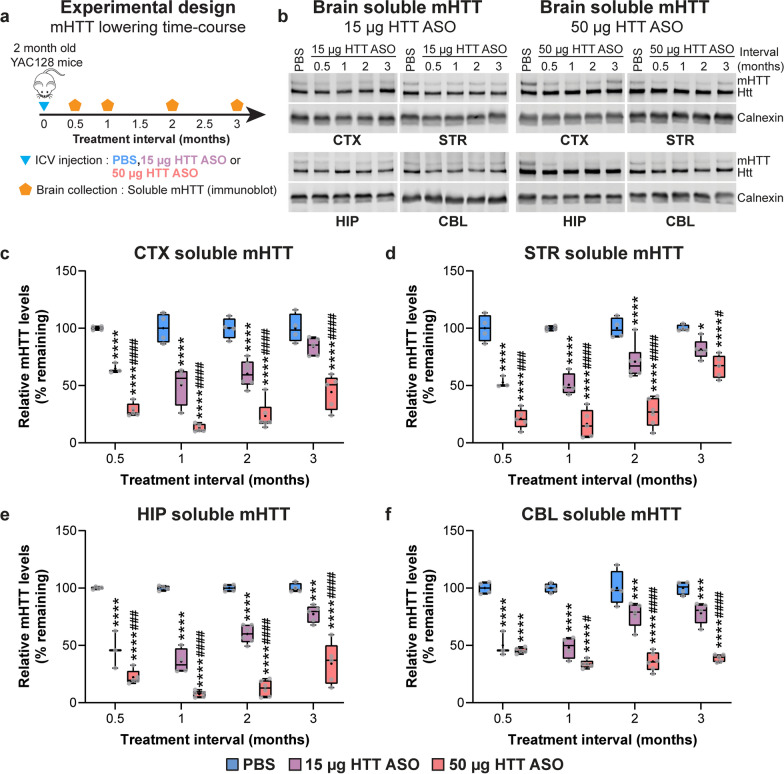
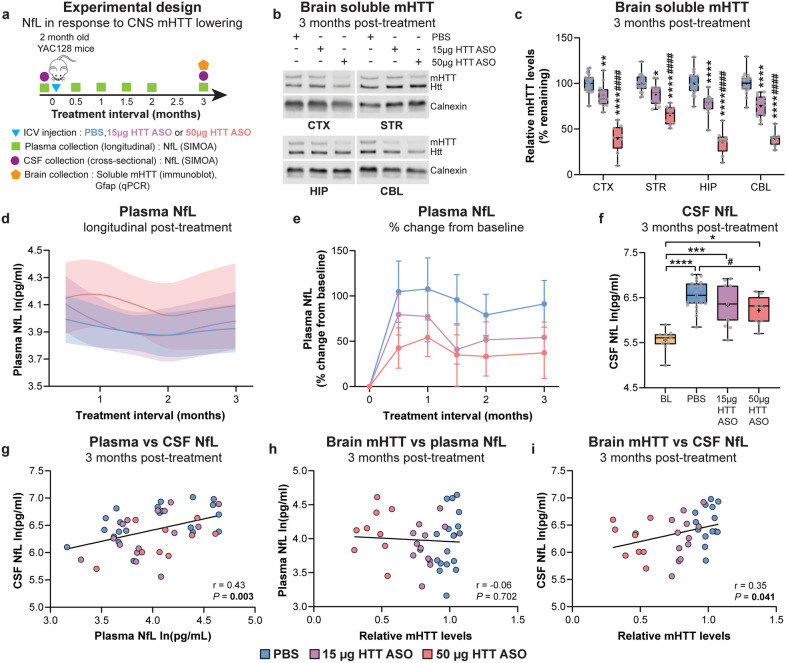
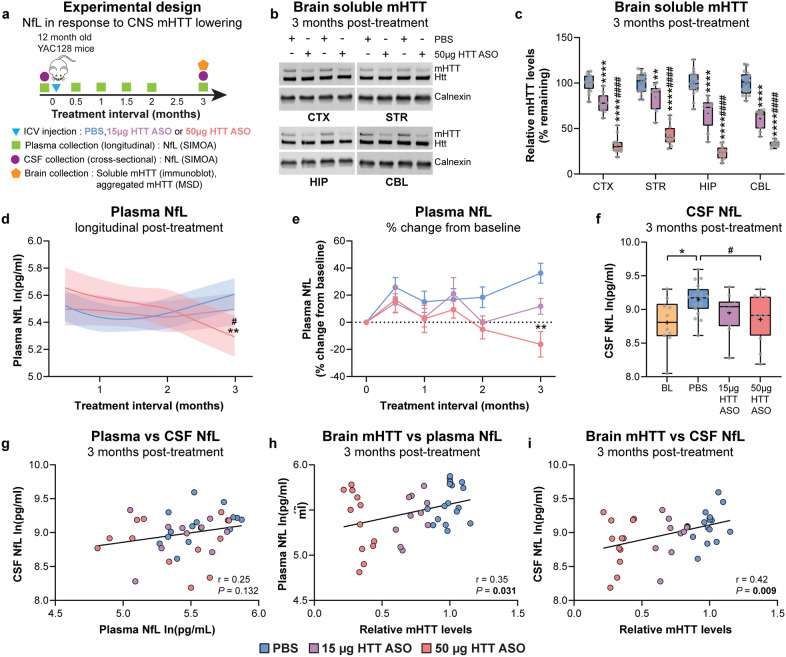
Longitudinal plasma and cross-sectional CSF samples were collected from the YAC128 transgenic mouse model of HD and wild-type (WT) littermate control mice throughout the natural history of disease. Additionally, biofluids were collected from YAC128 mice following intracerebroventricular administration of an antisense oligonucleotide (ASO) targeting the mutant HTT transgene (HTT ASO), at ages both before and after the onset of disease phenotypes. NfL concentrations in plasma and CSF were quantified using ultrasensitive single-molecule array technology.
Plasma and CSF NfL concentrations were significantly elevated in YAC128 compared to WT littermate control mice from 9 months of age. Treatment of YAC128 mice with either 15 or 50 µg HTT ASO resulted in a dose-dependent, allele-selective reduction of mHTT throughout the brain at a 3-month interval, which was sustained with high-dose HTT ASO treatment for up to 6 months. Lowering of brain mHTT prior to the onset of regional brain atrophy and HD-like motor deficits in this model had minimal effect on plasma NfL at either dose, but led to a dose-dependent reduction of CSF NfL. In contrast, initiating mHTT lowering in the brain after the onset of neuropathological and behavioural phenotypes in YAC128 mice resulted in a dose-dependent stabilization of NfL increases in both plasma and CSF.
Our data provide evidence that the response of NfL in biofluids is influenced by the magnitude of mHTT lowering in the brain and the timing of intervention, suggesting that NfL may serve as a promising exploratory response biomarker for HD.
旨在降低大脑中有毒突变亨廷顿蛋白(mHTT)水平的治疗方法可以逆转亨廷顿病(HD)动物模型中的疾病表型,目前正在临床试验中进行评估。需要敏感和动态的反应生物标志物来评估此类候选疗法的疗效。神经丝轻链(NfL)是一种神经退行性变的生物标志物,随着 HD 的进展,其在脑脊液(CSF)和血液中的含量增加。然而,目前尚不清楚生物液中的 NfL 是否可以作为评估 HD 疾病修饰疗法疗效的反应生物标志物。
在疾病的自然史中,从 YAC128 转基因 HD 小鼠模型和野生型(WT)同窝对照小鼠中收集纵向血浆和横向 CSF 样本。此外,在疾病表型出现之前和之后,在 YAC128 小鼠中通过鞘内给予针对突变 HTT 转基因的反义寡核苷酸(HTT ASO),收集生物液。使用超灵敏单分子阵列技术定量测定血浆和 CSF 中的 NfL 浓度。
从 9 个月大开始,与 WT 同窝对照小鼠相比,YAC128 中的血浆和 CSF NfL 浓度显着升高。用 15 或 50μg HTT ASO 治疗 YAC128 小鼠,在 3 个月的间隔内导致整个大脑中的 mHTT 呈剂量依赖性、等位基因选择性降低,用高剂量 HTT ASO 治疗长达 6 个月。在该模型中,在区域性脑萎缩和类似 HD 的运动缺陷出现之前降低脑 mHTT 对任何剂量的血浆 NfL 几乎没有影响,但导致 CSF NfL 呈剂量依赖性降低。相比之下,在 YAC128 小鼠的神经病理学和行为表型出现后开始降低脑 mHTT,导致血浆和 CSF 中 NfL 增加呈剂量依赖性稳定。
我们的数据提供了证据,表明生物液中 NfL 的反应受大脑中 mHTT 降低的幅度和干预的时间影响,这表明 NfL 可能是一种有前途的 HD 探索性反应生物标志物。