Rice University, Scalable Health Labs, Electrical and Computer Engineering Department, Houston, Texa, United States.
J Biomed Opt. 2021 Feb;26(2). doi: 10.1117/1.JBO.26.2.022707.
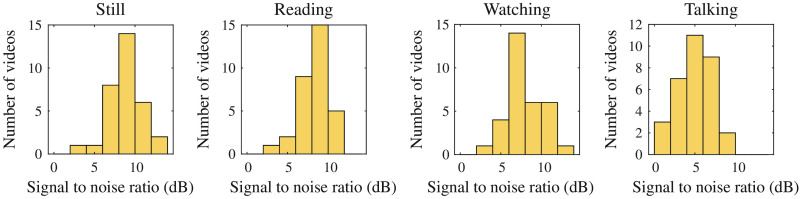
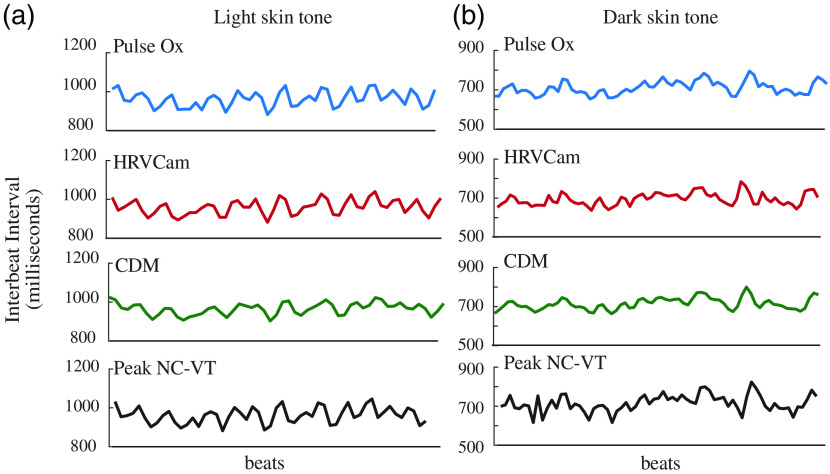
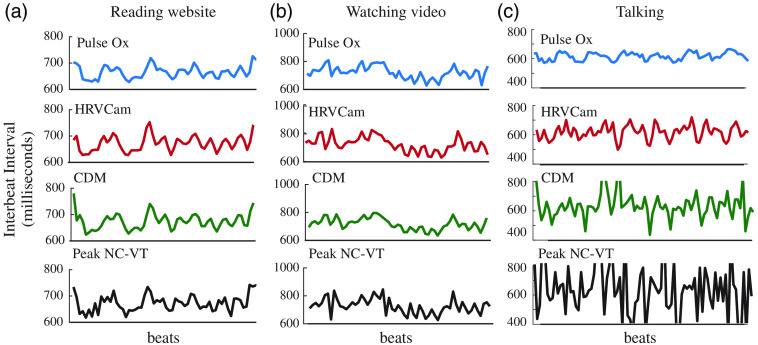
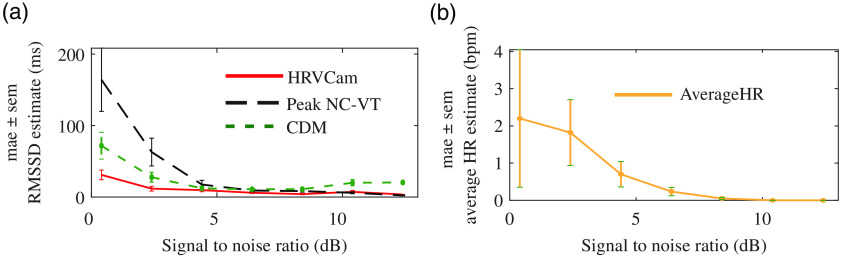
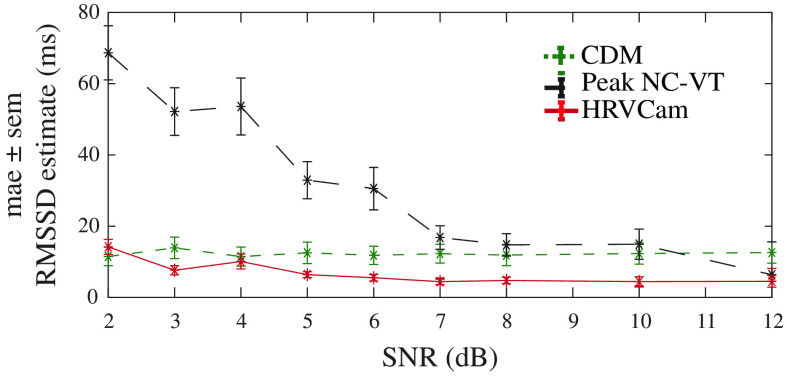
Non-contact, camera-based heart rate variability estimation is desirable in numerous applications, including medical, automotive, and entertainment. Unfortunately, camera-based HRV accuracy and reliability suffer due to two challenges: (a) darker skin tones result in lower SNR and (b) relative motion induces measurement artifacts.
We propose an algorithm HRVCam that provides sufficient robustness to low SNR and motion-induced artifacts commonly present in imaging photoplethysmography (iPPG) signals.
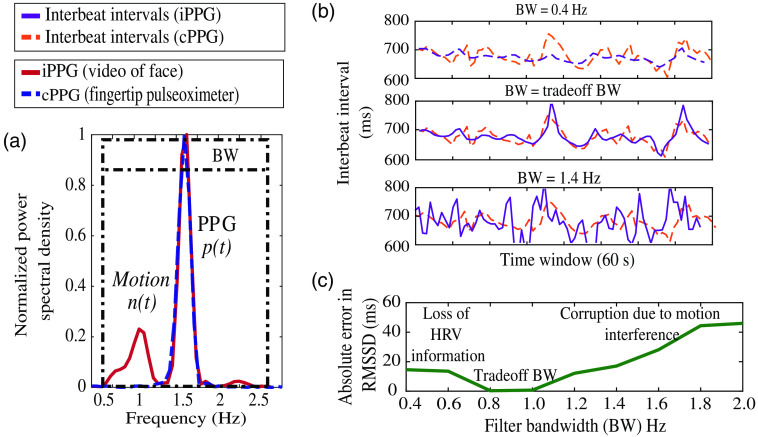
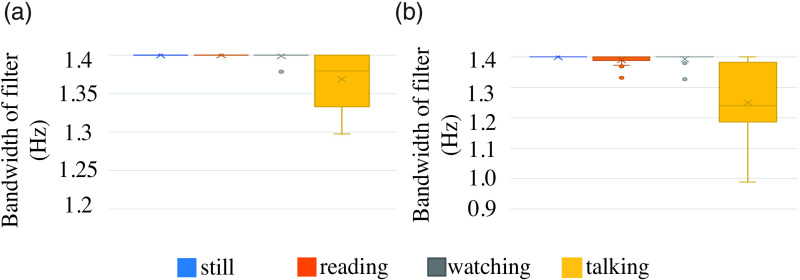
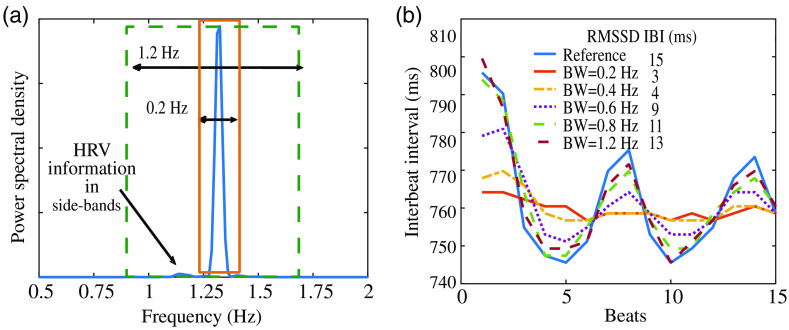
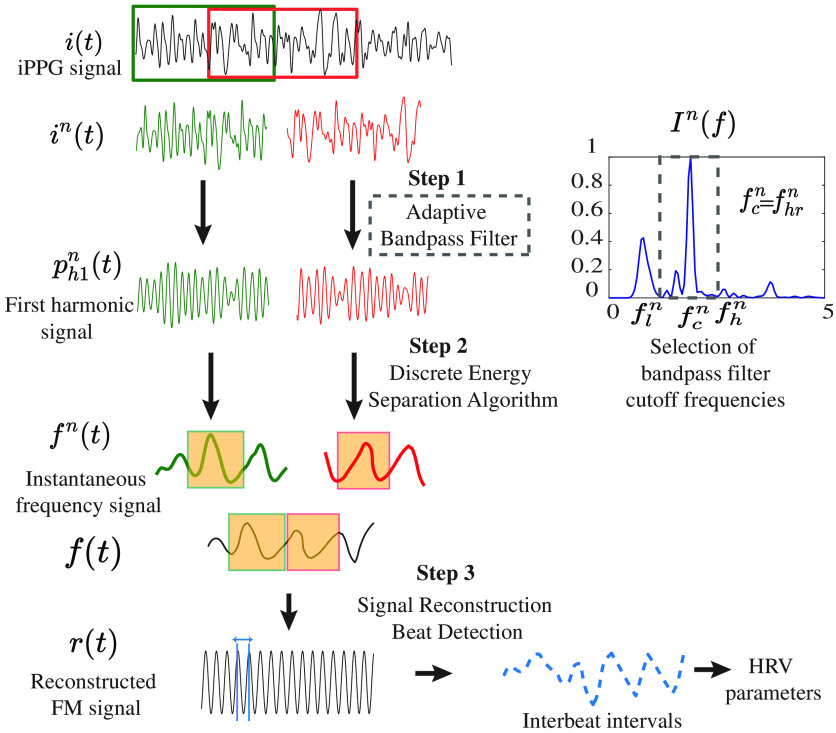
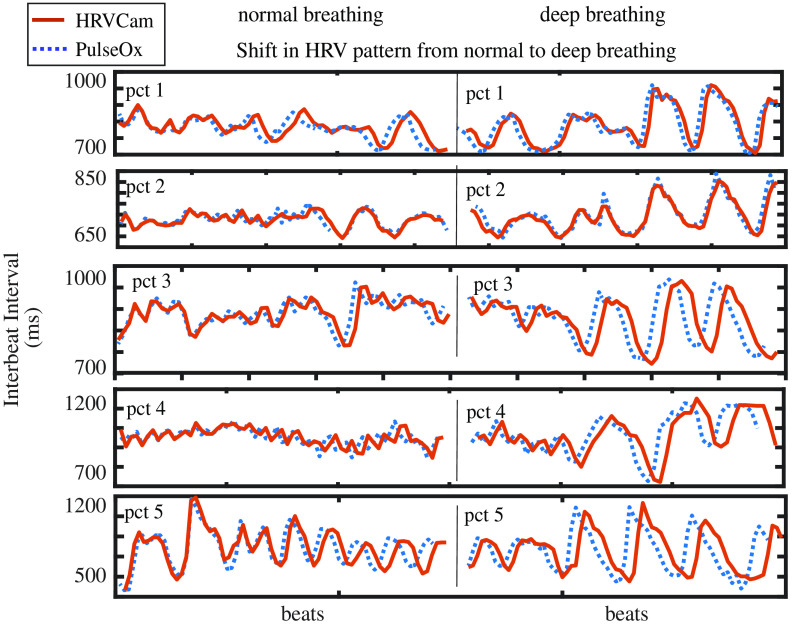
HRVCam computes camera-based HRV from the instantaneous frequency of the iPPG signal. HRVCam uses automatic adaptive bandwidth filtering along with discrete energy separation to estimate the instantaneous frequency. The parameters of HRVCam use the observed characteristics of HRV and iPPG signals.
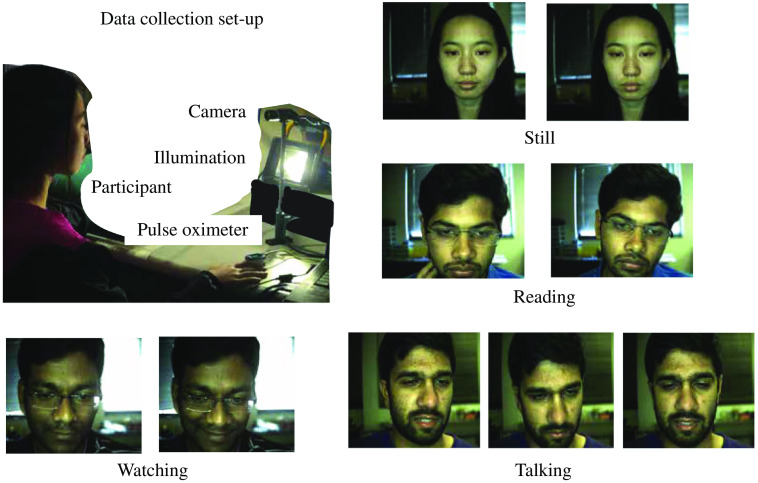
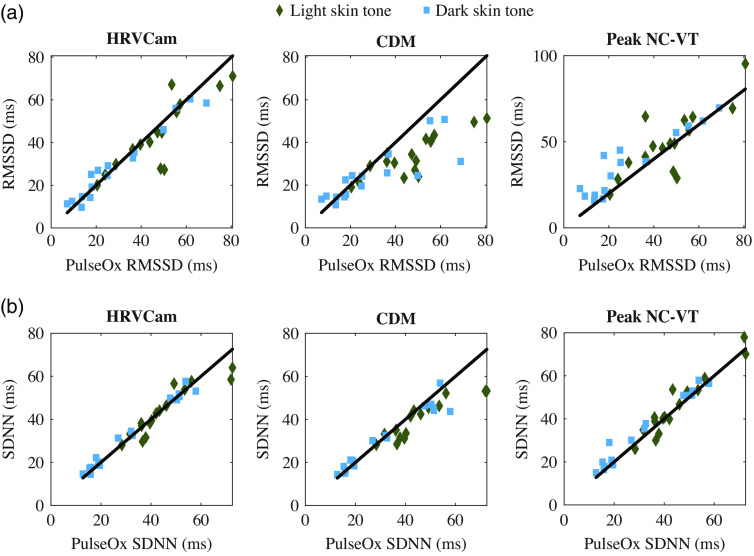
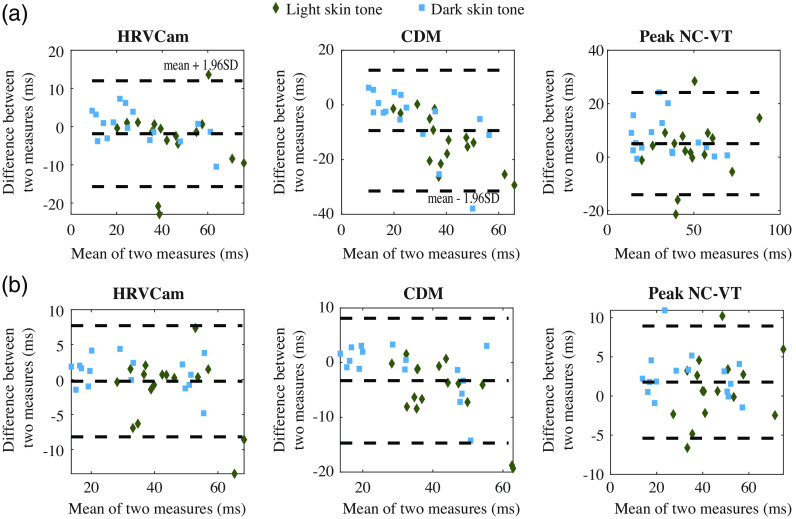
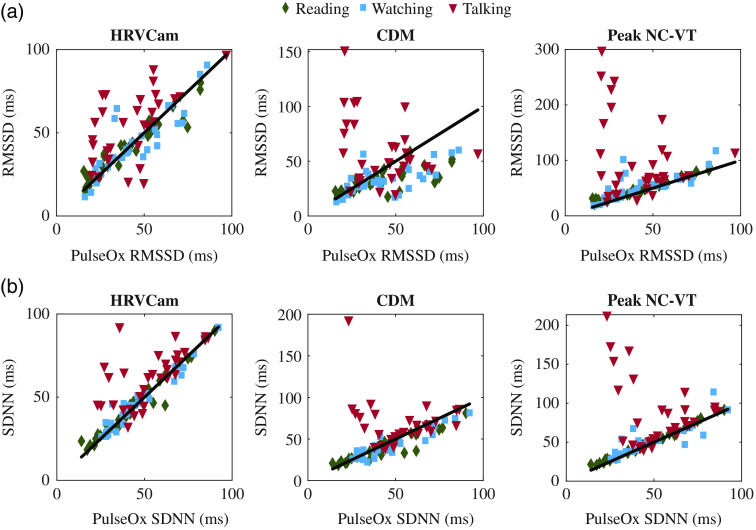
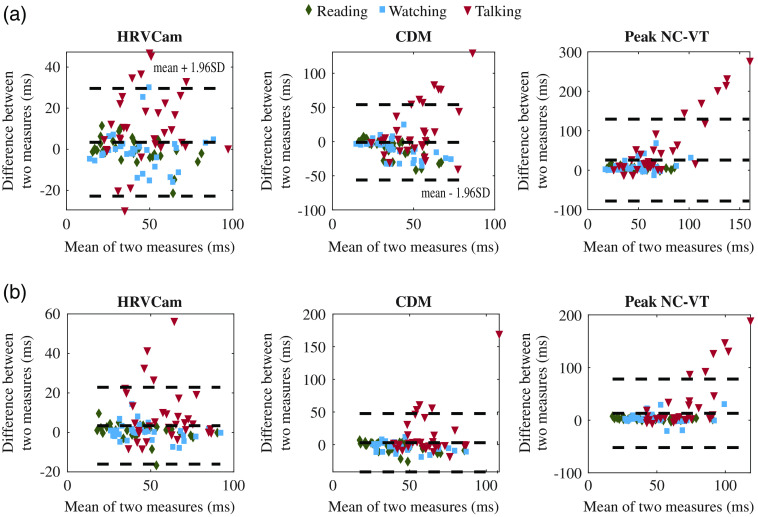
We capture a new dataset containing 16 participants with diverse skin tones. We demonstrate that HRVCam reduces the error in camera-based HRV metrics significantly (more than 50% reduction) for videos with dark skin and face motion.
HRVCam can be used on top of iPPG estimation algorithms to provide robust HRV measurements making camera-based HRV practical.
非接触式、基于摄像头的心率变异性估计在许多应用中都很理想,包括医疗、汽车和娱乐。不幸的是,由于两个挑战,基于摄像头的 HRV 准确性和可靠性受到影响:(a)较深的肤色会导致较低的信噪比;(b)相对运动会引起测量伪影。
我们提出了一种算法 HRVCam,它对成像光体积描记图(iPPG)信号中常见的低 SNR 和运动引起的伪影具有足够的鲁棒性。
HRVCam 从 iPPG 信号的瞬时频率计算基于摄像头的 HRV。HRVCam 使用自动自适应带宽滤波和离散能量分离来估计瞬时频率。HRVCam 的参数使用 HRV 和 iPPG 信号的观察特性。
我们捕获了一个包含 16 名不同肤色参与者的新数据集。我们证明,对于肤色较深和面部运动的视频,HRVCam 显著降低了基于摄像头的 HRV 指标的误差(降低超过 50%)。
HRVCam 可以在 iPPG 估计算法之上使用,以提供稳健的 HRV 测量,从而使基于摄像头的 HRV 变得实用。