Department of Applied Physics, Graduate School of Engineering, Osaka University, 2-1 Yamadaoka, Suita, Osaka 565-0871, Japan.
Advanced Photonics and Biosensing Open Innovation Laboratory, AIST-Osaka University, Photonics Center, Osaka University, P3 Building, 2-1 Yamadaoka, Suita, Osaka 565-0871, Japan.
Sensors (Basel). 2021 Feb 9;21(4):1225. doi: 10.3390/s21041225.
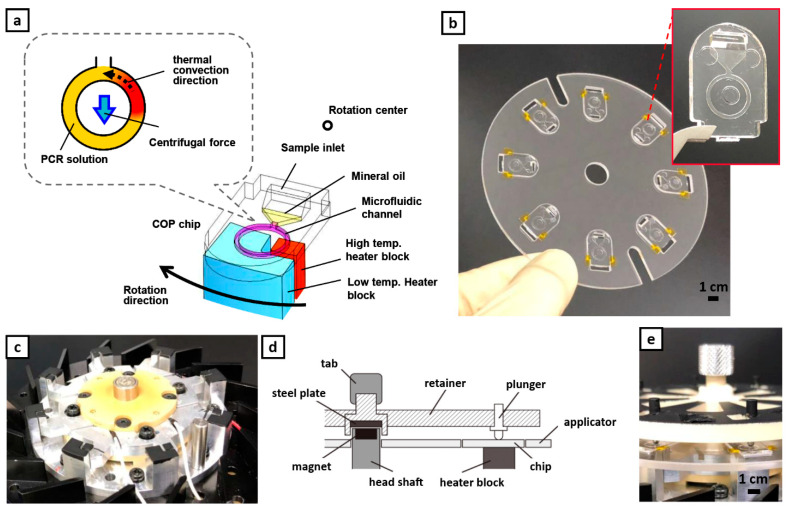
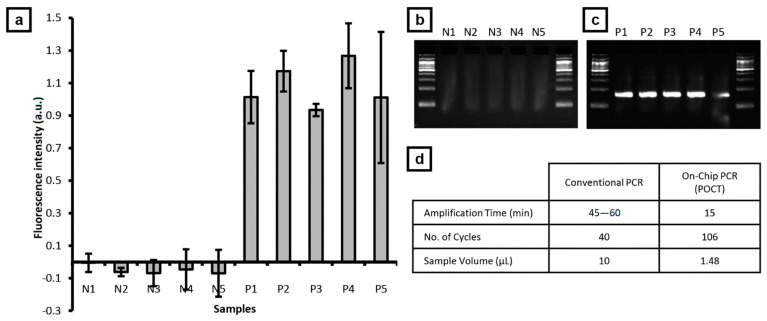
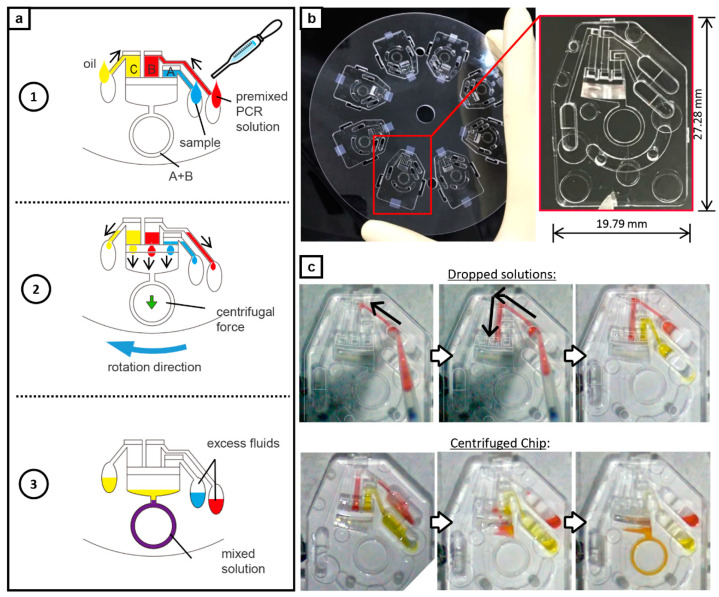
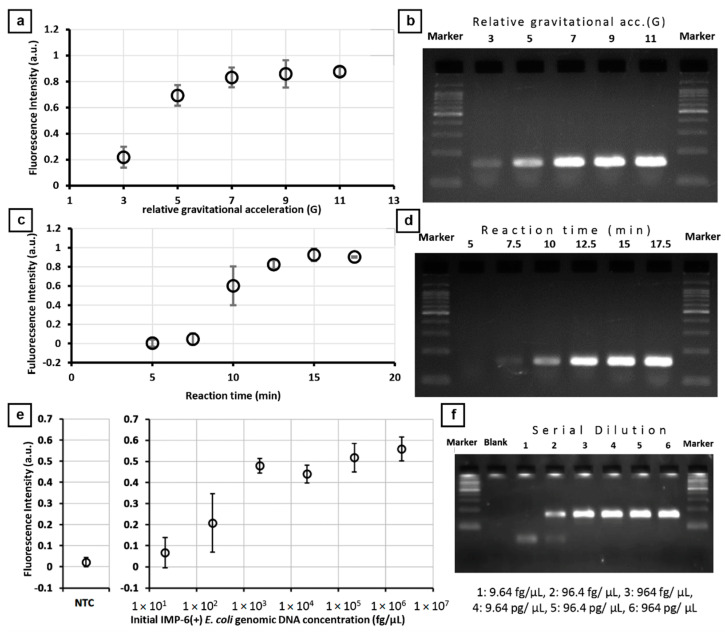
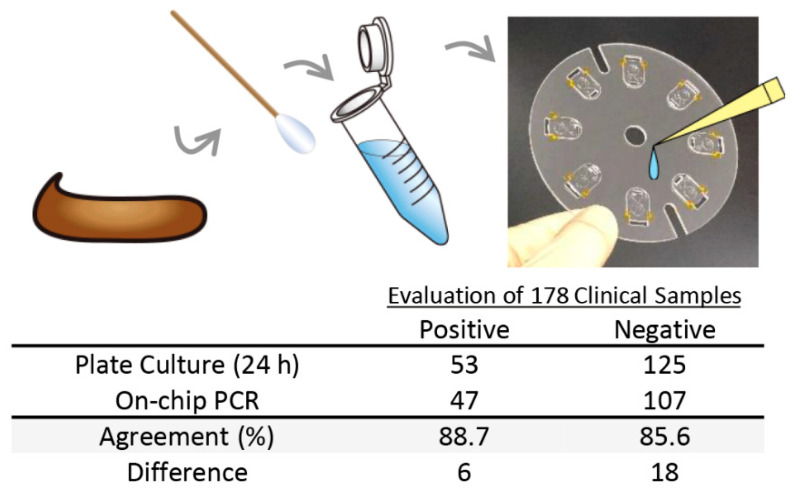
Here we report the improved Cyclo olefin polymer (COP) microfluidic chip and polymerase chain reaction (PCR) amplification system for point-of-care testing (POCT) in rapid detection of Carbapenem-resistant Enterobacteriaceae (CRE). The PCR solution and thermal cycling is controlled by the relative gravitational acceleration (7G) only and is expected to pose minimal problem in operation by non-expert users. Detection is based on identifying the presence of carbapenemase encoding gene through the corresponding fluorescence signal after amplification. For preliminary tests, the device has been demonstrated to detect from patients stool samples. From the prepared samples, 96.4 fg/µL was detected with good certainty within 15 min (~106 thermocycles,) which is significantly faster than the conventional culture plate method. Moreover, the device is expected to detect other target genes in parallel as determination of the presence of and from control samples has also been demonstrated. With the rising threat of drug-resistant bacteria in global healthcare, this technology can greatly aid the health sector by enabling the appropriate use of antibiotics, accelerating the treatment of carriers, and suppressing the spread.
在这里,我们报告了改进的环烯烃聚合物 (COP) 微流控芯片和聚合酶链反应 (PCR) 扩增系统,用于即时检测 (POCT) 中耐碳青霉烯肠杆菌科 (CRE) 的快速检测。PCR 溶液和热循环仅由相对重力加速度 (7G) 控制,预计非专业用户在操作时不会出现最小问题。检测是基于在扩增后通过相应的荧光信号识别存在碳青霉烯酶编码基因。初步测试表明,该设备能够检测来自患者粪便样本中的 CRE。从制备的样品中,在 15 分钟内(约 106 个热循环)以良好的确定性检测到 96.4 fg/µL,这明显快于传统的培养板方法。此外,该设备预计可以并行检测其他靶基因,因为已经证明可以从对照样品中检测到 和 。随着全球医疗保健中耐药菌威胁的增加,这项技术可以通过促进抗生素的合理使用、加速携带者的治疗和抑制传播,极大地帮助卫生部门。