Kim Yelee, Park Jun Bum, Fukuda Junji, Watanabe Masatoshi, Chun Yang-Sook
Department of Biomedical Science, Seoul National University College of Medicine, Seoul 03080, Korea.
Ischemic/Hypoxic Disease Institute, Seoul National University College of Medicine, Seoul 03080, Korea.
Cancers (Basel). 2021 Jan 30;13(3):531. doi: 10.3390/cancers13030531.
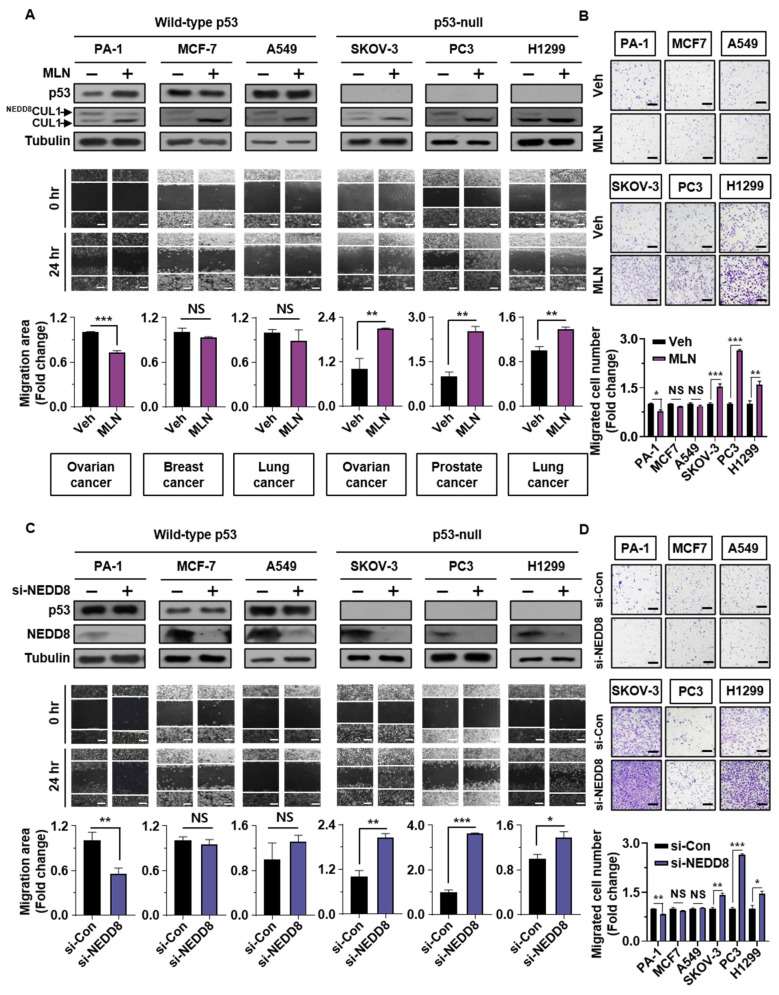
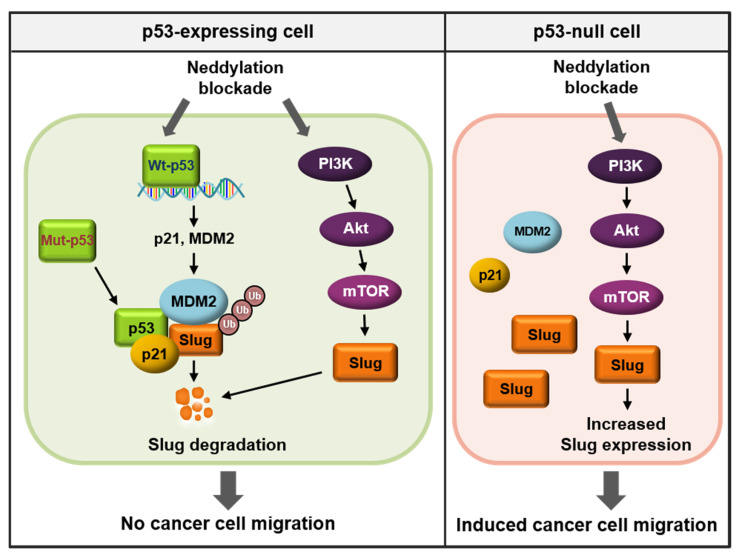
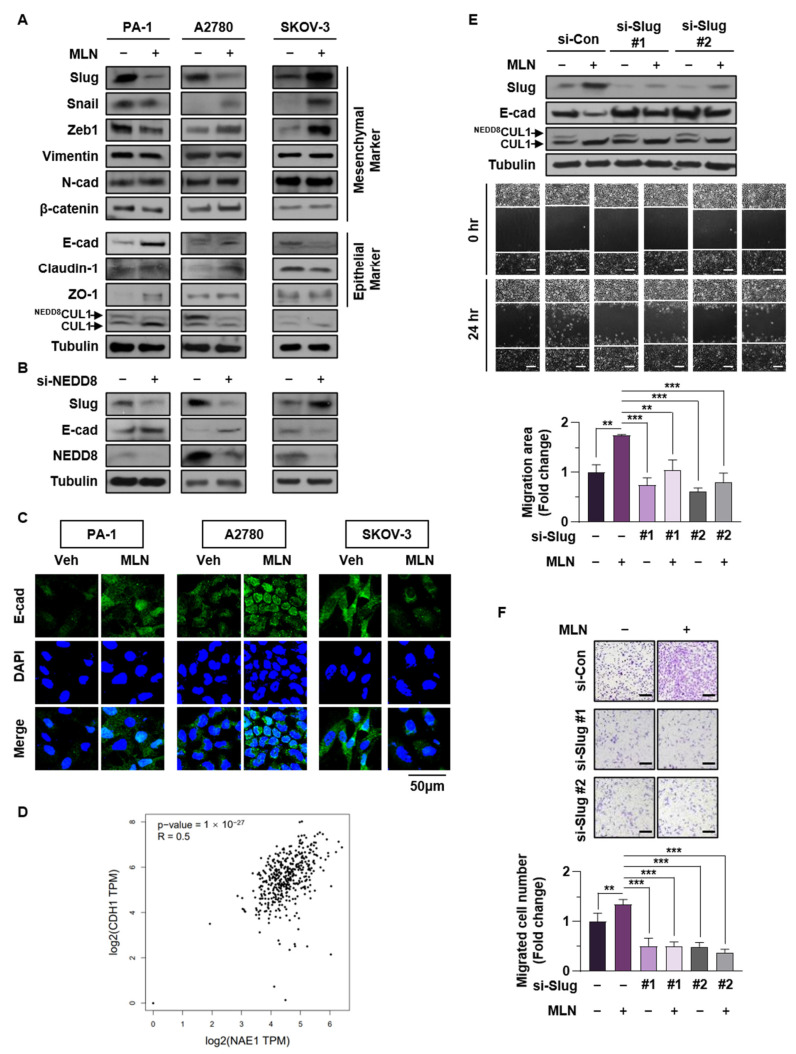
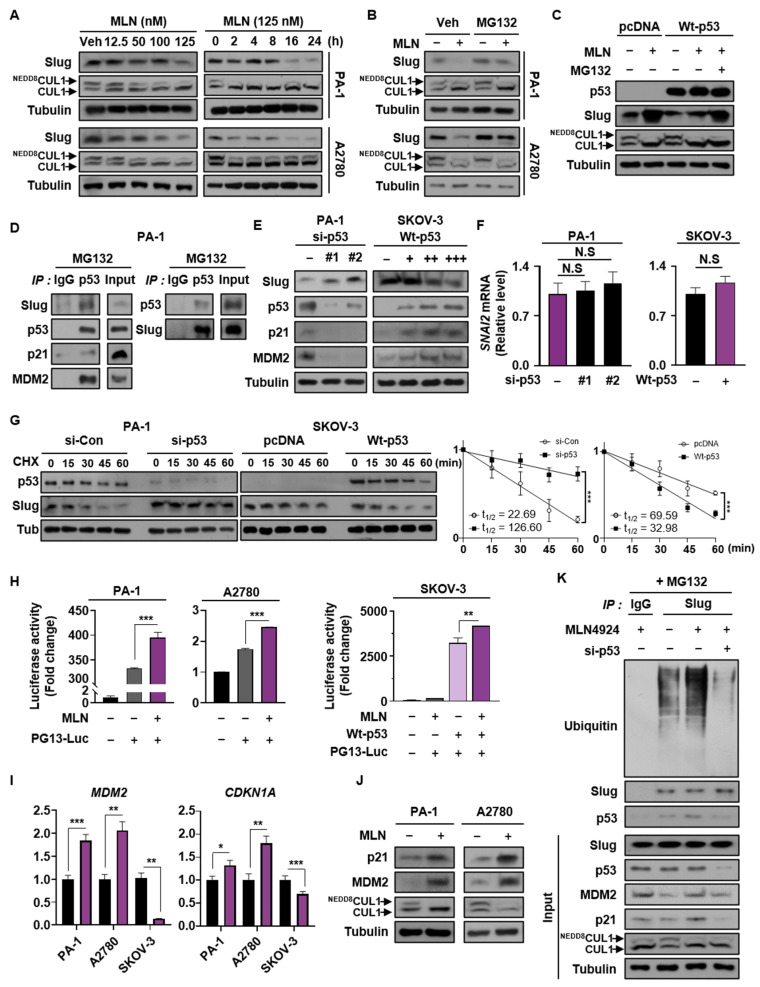
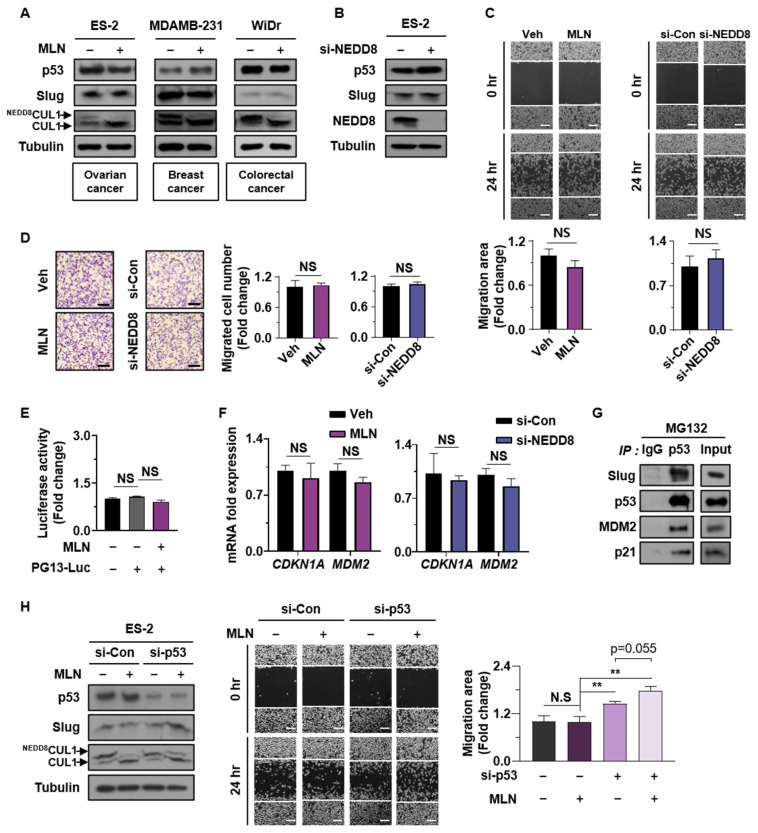
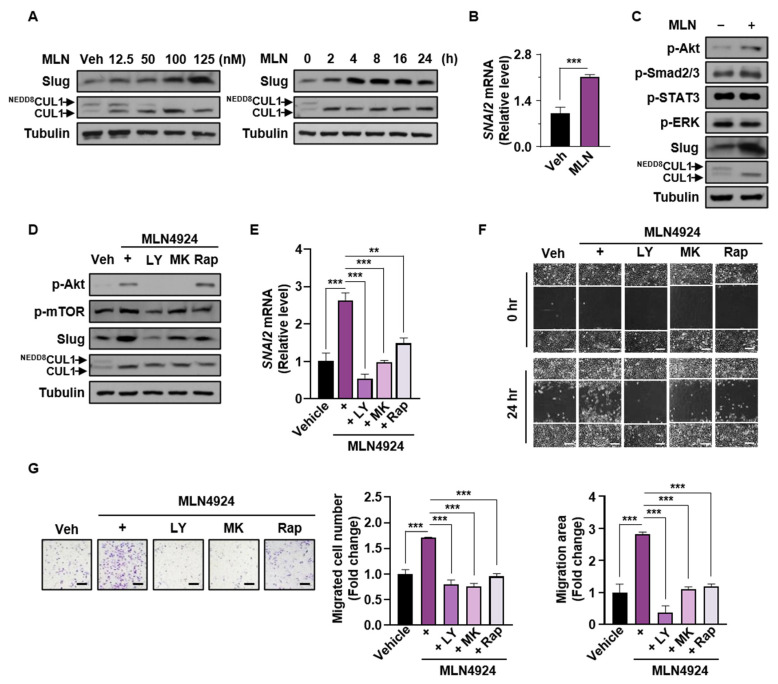
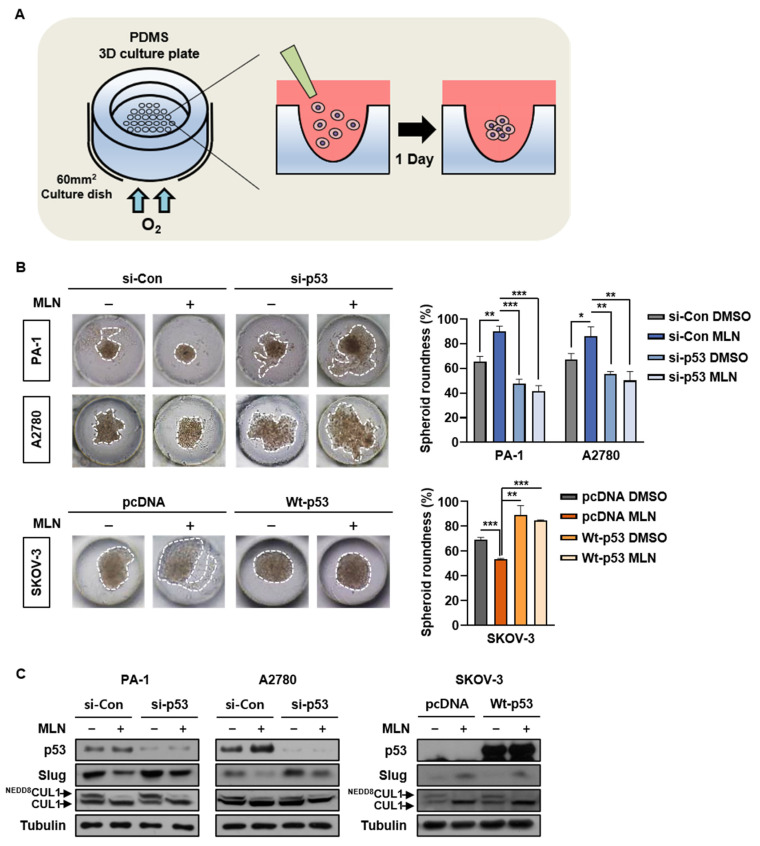
The tumor suppressor protein p53 is frequently inactivated in human malignancies, in which it is associated with cancer aggressiveness and metastasis. Because p53 is heavily involved in epithelial-mesenchymal transition (EMT), a primary step in cell migration, p53 regulation is important for preventing cancer metastasis. p53 function can be modulated by diverse post-translational modifications including neddylation, a reversible process that conjugates NEDD8 to target proteins and inhibits the transcriptional activity of p53. However, the role of p53 in cancer migration by neddylation has not been fully elucidated. In this study, we reported that neddylation blockade induces cell migration depending on p53 status, specifically via the EMT-promoting transcription factor Slug. In cancer cell lines expressing wild type p53, neddylation blockade increased the transcriptional activity of p53 and expression of its downstream genes p21 and MDM2, eventually promoting proteasomal degradation of Slug. In the absence of p53, neddylation blockade increased cell migration by activating the PI3K/Akt/mTOR/Slug signaling axis. Because mutant p53 was transcriptionally inactivated but maintained the ability to bind to Slug, neddylation blockade did not affect the migration of cells expressing mutant p53. Our findings highlight how the p53 expression status influences neddylation-mediated cell migration in multiple cancer cell lines via Slug.
肿瘤抑制蛋白p53在人类恶性肿瘤中经常失活,它与癌症侵袭性和转移有关。由于p53大量参与上皮-间质转化(EMT),即细胞迁移的第一步,因此p53调控对于预防癌症转移很重要。p53功能可通过多种翻译后修饰进行调节,包括NEDD8化,这是一个可逆过程,将NEDD8缀合到靶蛋白上并抑制p53的转录活性。然而,p53在NEDD8化介导的癌症迁移中的作用尚未完全阐明。在本研究中,我们报道NEDD8化阻断根据p53状态诱导细胞迁移,具体是通过促进EMT的转录因子Slug。在表达野生型p53的癌细胞系中,NEDD8化阻断增加了p53的转录活性及其下游基因p21和MDM2的表达,最终促进了Slug的蛋白酶体降解。在没有p53的情况下,NEDD8化阻断通过激活PI3K/Akt/mTOR/Slug信号轴增加细胞迁移。由于突变型p53转录失活但仍保持与Slug结合的能力,NEDD8化阻断不影响表达突变型p53的细胞的迁移。我们的研究结果突出了p53表达状态如何通过Slug影响多种癌细胞系中NEDD8化介导的细胞迁移。