Long Yanlin, Cheng Xian, Jansen John A, Leeuwenburgh Sander G C, Mao Jing, Yang Fang, Chen Lili
Department of Stomatology, Union Hospital, Tongji Medical College, Huazhong University of Science and Technology, Wuhan, 430022, China.
Hubei Province Key Laboratory of Oral and Maxillofacial Development and Regeneration, Wuhan, 430022, China.
Bone Res. 2021 Feb 11;9(1):13. doi: 10.1038/s41413-020-00130-0.
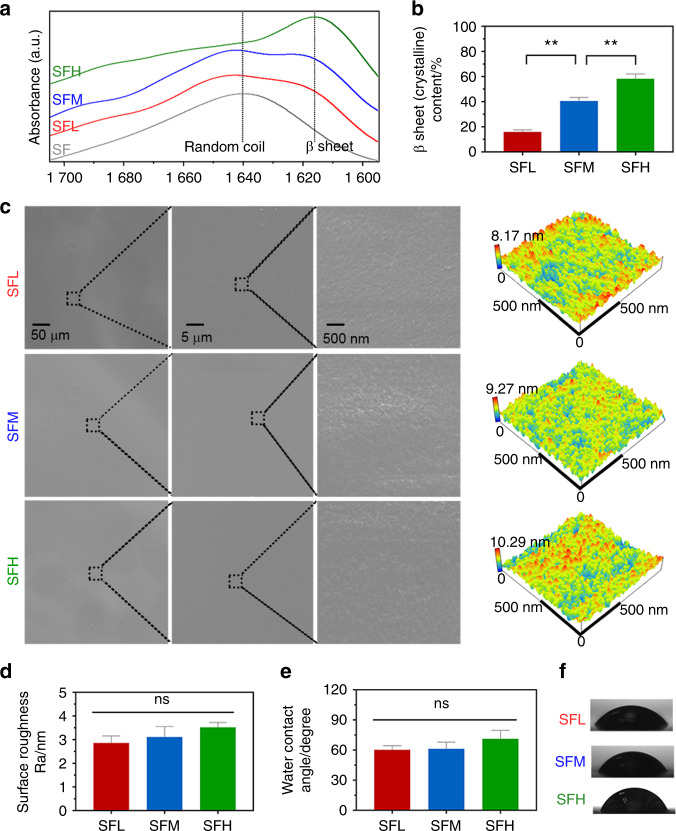
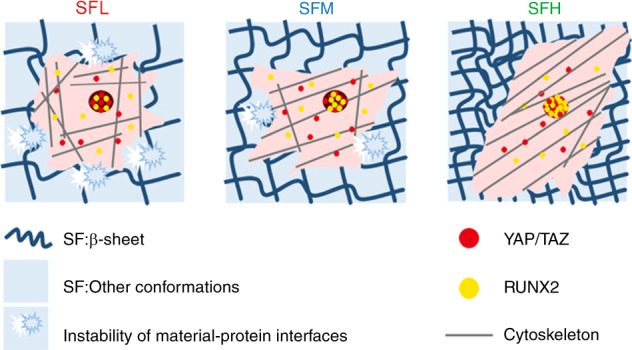
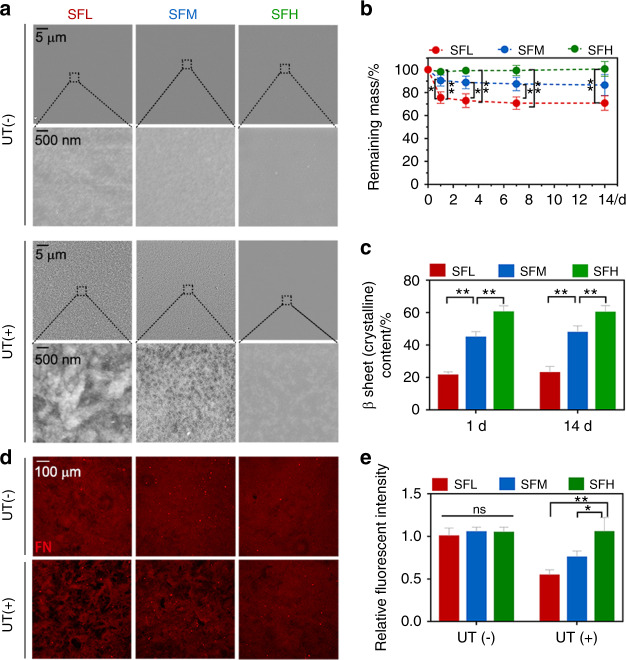
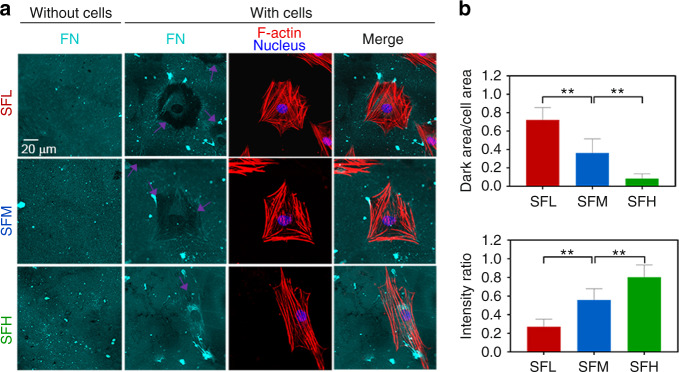
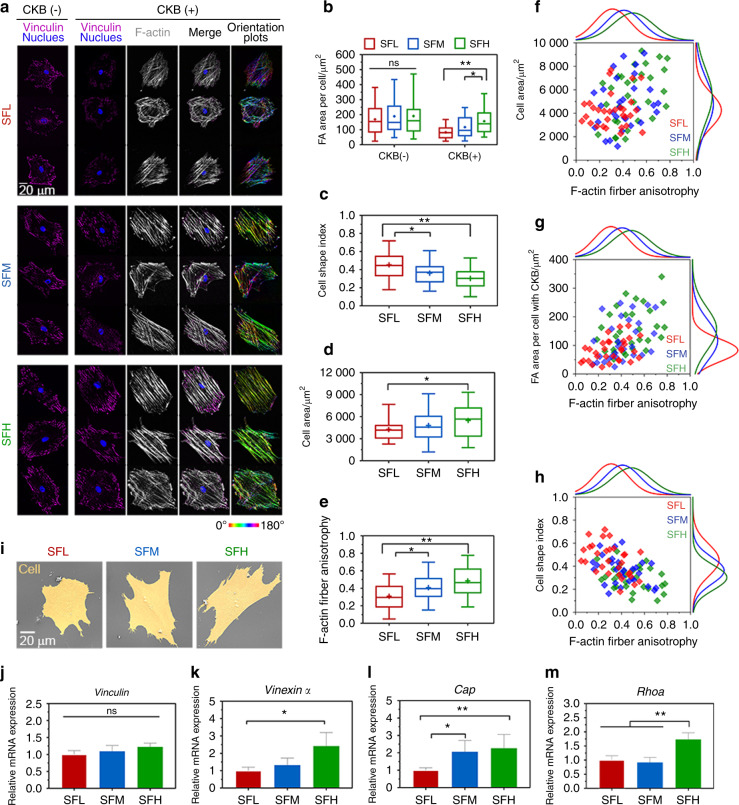
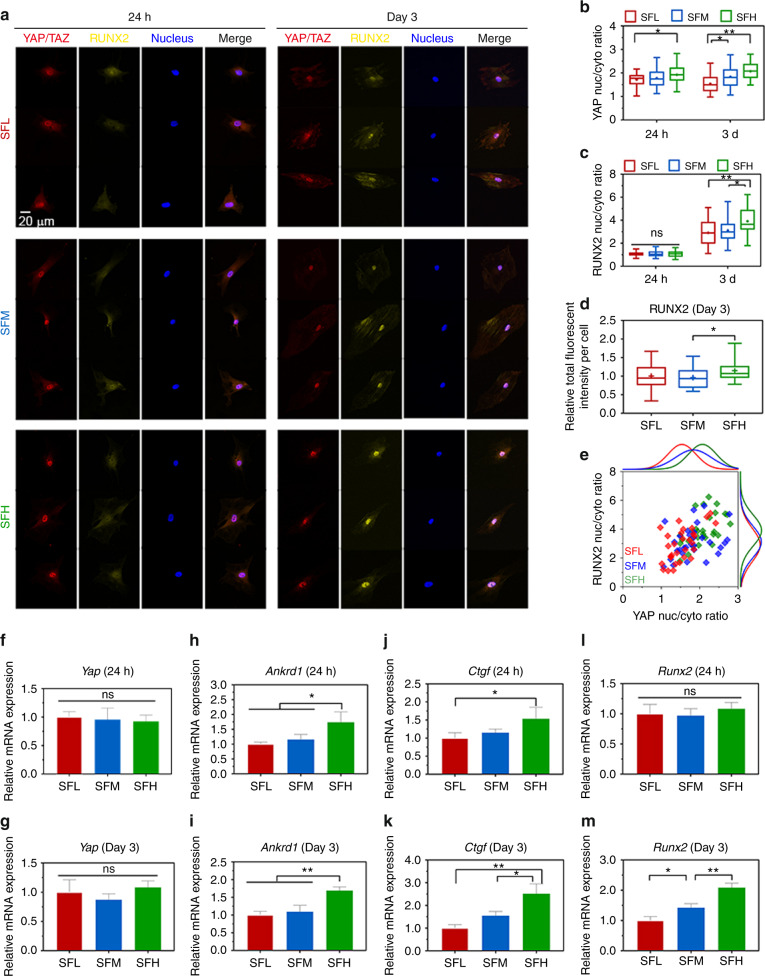
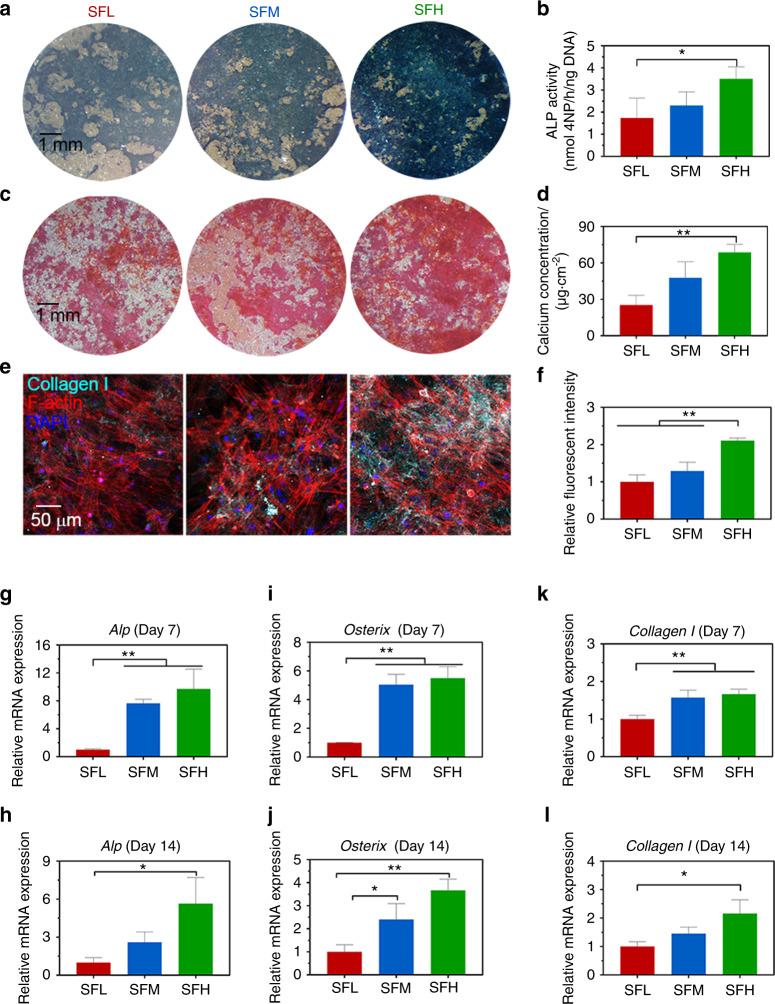
Silk fibroin (SF) can be used to construct various stiff material interfaces to support bone formation. An essential preparatory step is to partially transform SF molecules from random coils to β-sheets to render the material water insoluble. However, the influence of the SF conformation on osteogenic cell behavior at the material interface remains unknown. Herein, three stiff SF substrates were prepared by varying the β-sheet content (high, medium, and low). The substrates had a comparable chemical composition, surface topography, and wettability. When adsorbed fibronectin was used as a model cellular adhesive protein, the stability of the adsorbed protein-material interface, in terms of the surface stability of the SF substrates and the accompanying fibronectin detachment resistance, increased with the increasing β-sheet content of the SF substrates. Furthermore, (i) larger areas of cytoskeleton-associated focal adhesions, (ii) higher orders of cytoskeletal organization and (iii) more elongated cell spreading were observed for bone marrow-derived mesenchymal stromal cells (BMSCs) cultured on SF substrates with high vs. low β-sheet contents, along with enhanced nuclear translocation and activation of YAP/TAZ and RUNX2. Consequently, osteogenic differentiation of BMSCs was stimulated on high β-sheet substrates. These results indicated that the β-sheet content influences osteogenic differentiation of BMSCs on SF materials in vitro by modulating the stability of the adsorbed protein-material interface, which proceeds via protein-focal adhesion-cytoskeleton links and subsequent intracellular mechanotransduction. Our findings emphasize the role of the stability of the adsorbed protein-material interface in cellular mechanotransduction and the perception of stiff SF substrates with different β-sheet contents, which should not be overlooked when engineering stiff biomaterials.
丝素蛋白(SF)可用于构建各种硬质材料界面以支持骨形成。一个重要的准备步骤是将SF分子部分地从无规卷曲转变为β-折叠,以使材料不溶于水。然而,SF构象对材料界面处成骨细胞行为的影响仍然未知。在此,通过改变β-折叠含量(高、中、低)制备了三种硬质SF底物。这些底物具有可比的化学成分、表面形貌和润湿性。当使用吸附的纤连蛋白作为模型细胞粘附蛋白时,就SF底物的表面稳定性和随之而来的纤连蛋白抗脱离性而言,吸附的蛋白质-材料界面的稳定性随着SF底物β-折叠含量的增加而增加。此外,对于在高β-折叠含量与低β-折叠含量的SF底物上培养的骨髓间充质基质细胞(BMSC),观察到(i)更大面积的与细胞骨架相关的粘着斑,(ii)更高阶的细胞骨架组织,以及(iii)更细长的细胞铺展,同时YAP/TAZ和RUNX2的核转位和激活增强。因此,在高β-折叠底物上刺激了BMSC的成骨分化。这些结果表明,β-折叠含量通过调节吸附的蛋白质-材料界面的稳定性来影响体外SF材料上BMSC的成骨分化,这是通过蛋白质-粘着斑-细胞骨架连接以及随后的细胞内机械转导进行的。我们的研究结果强调了吸附的蛋白质-材料界面的稳定性在细胞机械转导以及对具有不同β-折叠含量的硬质SF底物的感知中的作用,在设计硬质生物材料时不应忽视这一点。