Xie Shulan, Wang Xuanwei, Gan Shuyuan, Tang Xiaodong, Kang Xianhui, Zhu Shengmei
Department of Anesthesiology, The First Affiliated Hospital, Zhejiang University School of Medicine, Hangzhou, China.
Department of Orthopedics, The First Affiliated Hospital, Zhejiang University School of Medicine, Hangzhou, China.
Front Oncol. 2021 Jan 26;10:585047. doi: 10.3389/fonc.2020.585047. eCollection 2020.
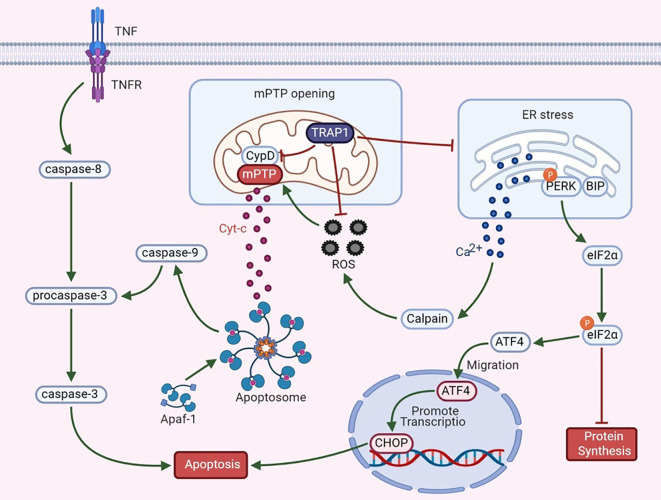
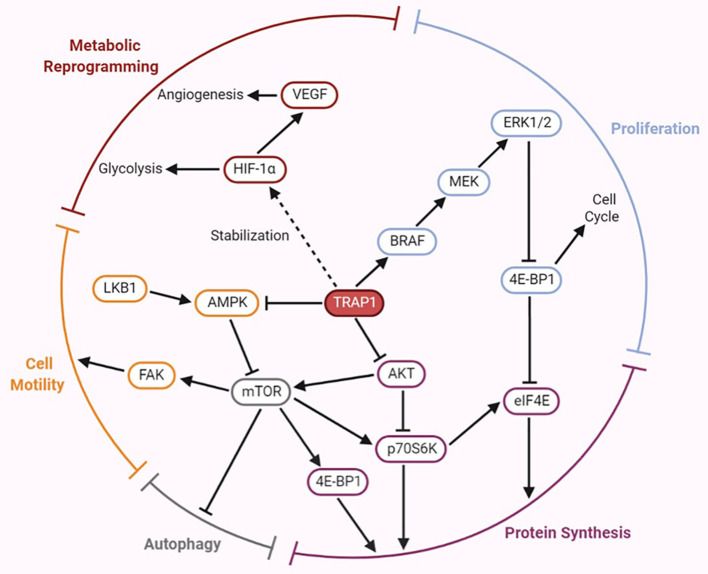
Tumor necrosis factor receptor-associated protein 1 (TRAP1), a member of the heat shock protein 90 (Hsp90) chaperone family, protects cells against oxidative stress and maintains mitochondrial integrity. To date, numerous studies have focused on understanding the relationship between aberrant TRAP1 expression and tumorigenesis. Mitochondrial TRAP1 is a key regulatory factor involved in metabolic reprogramming in tumor cells that favors the metabolic switch of tumor cells toward the Warburg phenotype. In addition, TRAP1 is involved in dual regulation of the mitochondrial apoptotic pathway and exerts an antiapoptotic effect on tumor cells. Furthermore, TRAP1 is involved in many cellular pathways by disrupting the cell cycle, increasing cell motility, and promoting tumor cell invasion and metastasis. Thus, TRAP1 is a very important therapeutic target, and treatment with TRAP1 inhibitors combined with chemotherapeutic agents may become a new therapeutic strategy for cancer. This review discusses the molecular mechanisms by which TRAP1 regulates tumor progression, considers its role in apoptosis, and summarizes recent advances in the development of selective, targeted TRAP1 and Hsp90 inhibitors.
肿瘤坏死因子受体相关蛋白1(TRAP1)是热休克蛋白90(Hsp90)伴侣家族的成员,可保护细胞免受氧化应激并维持线粒体完整性。迄今为止,众多研究聚焦于理解TRAP1异常表达与肿瘤发生之间的关系。线粒体TRAP1是参与肿瘤细胞代谢重编程的关键调节因子,有利于肿瘤细胞向瓦伯格表型的代谢转变。此外,TRAP1参与线粒体凋亡途径的双重调节,并对肿瘤细胞发挥抗凋亡作用。此外,TRAP1通过扰乱细胞周期、增加细胞运动性以及促进肿瘤细胞侵袭和转移,参与许多细胞途径。因此,TRAP1是一个非常重要的治疗靶点,使用TRAP1抑制剂联合化疗药物进行治疗可能成为一种新的癌症治疗策略。本文综述讨论了TRAP1调节肿瘤进展的分子机制,探讨了其在凋亡中的作用,并总结了选择性、靶向TRAP1和Hsp90抑制剂开发的最新进展。