Gaire Tara N, Scott Harvey Morgan, Sellers Laura, Nagaraja T G, Volkova Victoriya V
Department of Diagnostic Medicine/Pathobiology, College of Veterinary Medicine, Kansas State University, Manhattan, KS, United States.
Department of Veterinary Pathobiology, College of Veterinary Medicine and Biomedical Sciences, Texas A&M University, College Station, TX, United States.
Front Vet Sci. 2021 Jan 26;7:622495. doi: 10.3389/fvets.2020.622495. eCollection 2020.
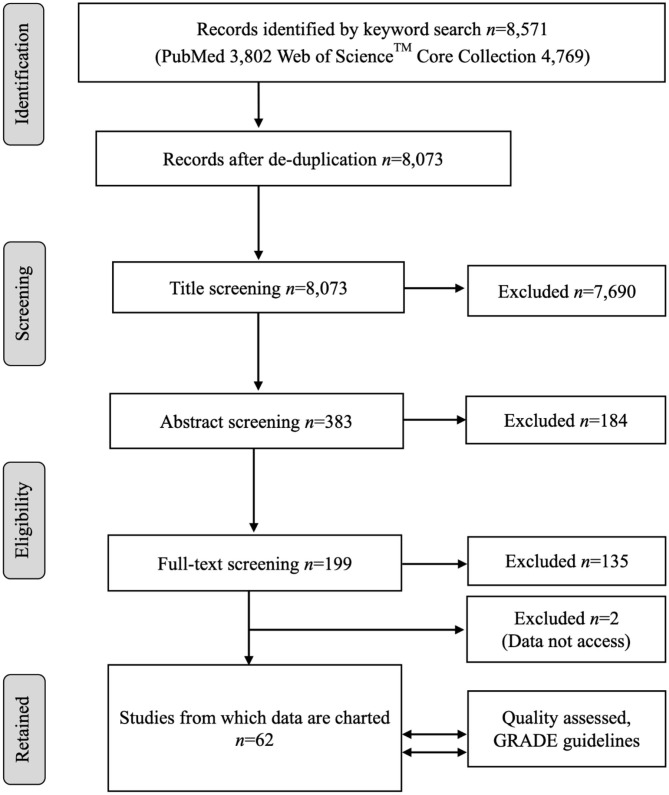
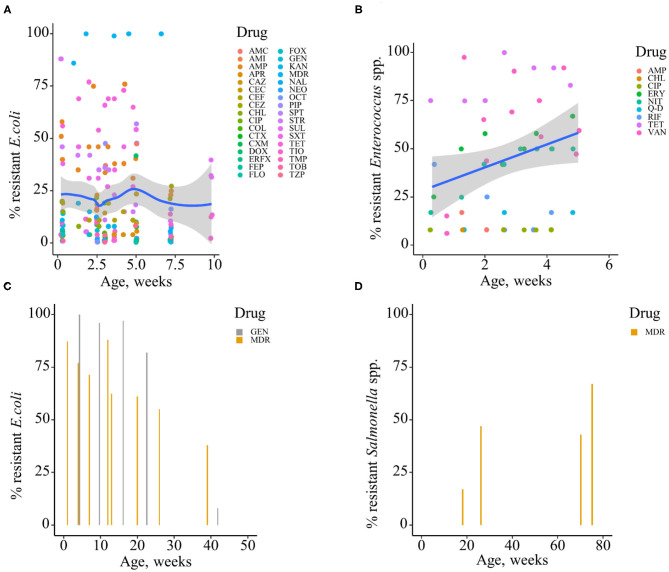
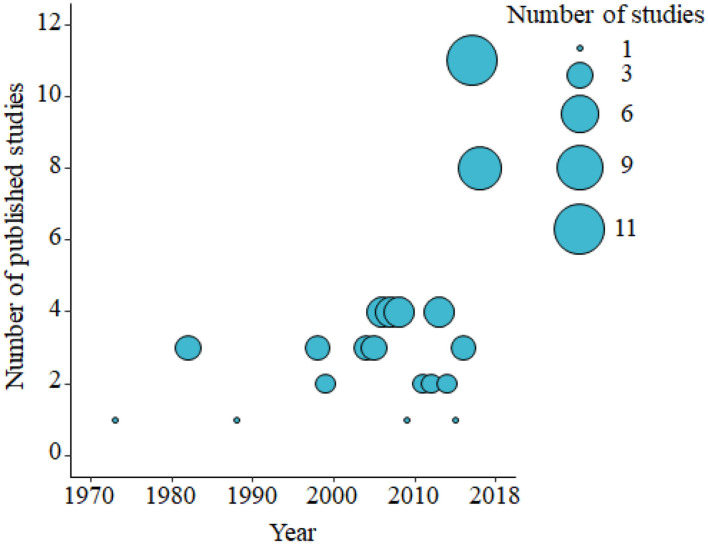
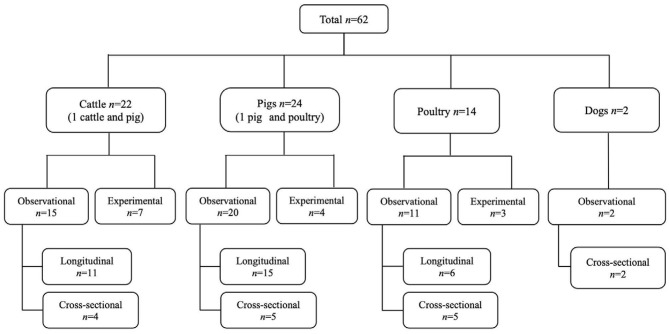
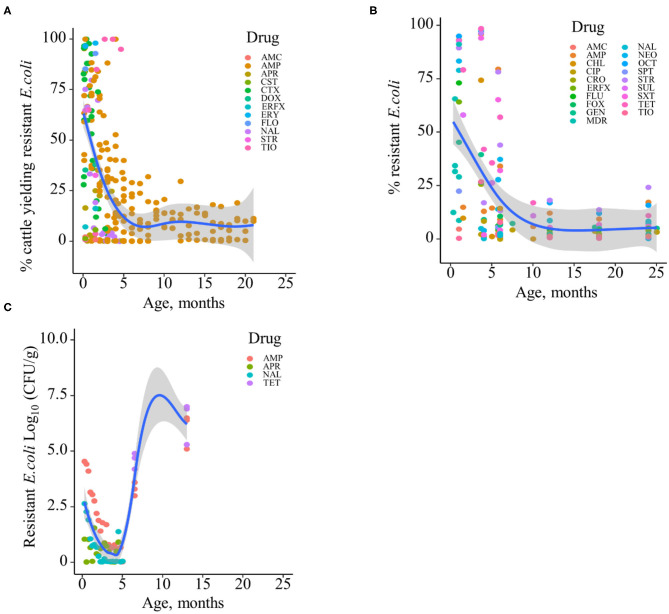
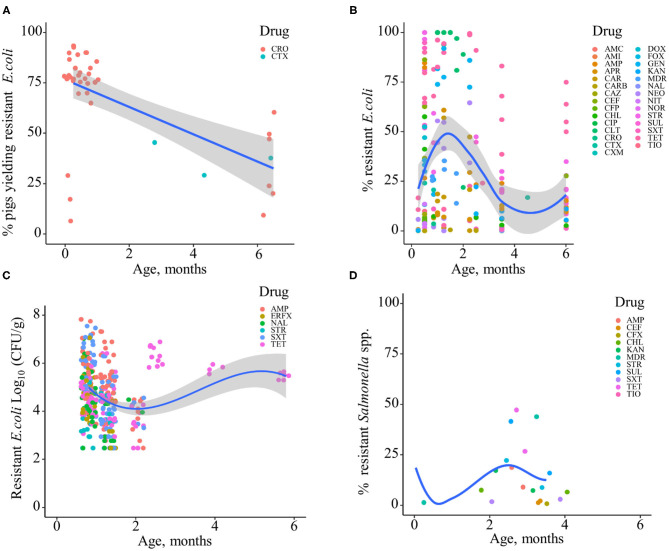
A phenomenon of decreasing antimicrobial resistance (AMR) among fecal bacteria as food animals age has been noted in multiple field studies. We conducted a scoping review to summarize the extent, range, and nature of research activity and the data for the following question: "does AMR among enteric/fecal bacteria predictably shift as animals get older?". This review followed a scoping review methodology framework. Pertinent literature published up until November 2018 for all animals (except humans) was retrieved using keyword searches in two online databases, namely, PubMed® and the Web of Science™ Core Collection, without filtering publication date, geographic location, or language. Data were extracted from the included studies, summarized, and plotted. Study quality was also assessed using the Grades of Recommendation, Assessment, Development, and Evaluation (GRADE) guidelines for all included papers. The publications with detailed relevant data ( = 62) in food animals, poultry, and dogs were identified. These included longitudinal studies ( = 32), cross-sectional studies of different age groups within one food animal production system or small-animal catchment area ( = 16), and experimental or diet trials ( = 14). A decline in host-level prevalence and/or within-host abundance of AMR among fecal bacteria in production beef, dairy cattle, and swine was reported in nearly two-thirds (65%) of the identified studies in different geographic locations from the 1970's to 2018. Mixed results, with AMR abundance among fecal bacteria either increasing or decreasing with age, have been reported in poultry (broiler chicken, layer, and grow-out turkey) and dogs. Quantitative synthesis of the data suggests that the age-dependent AMR phenomenon in cattle and swine is observed irrespective of geographic location and specific production practices. It is unclear whether the phenomenon predates or is related to antimicrobial drug use. However, almost 50% of the identified studies predate recent changes in antimicrobial drug use policy and regulations in food animals in the United States and elsewhere.
多项实地研究表明,随着食用动物年龄增长,其粪便细菌的抗菌药物耐药性(AMR)呈下降趋势。我们进行了一项范围综述,以总结研究活动的范围、广度和性质,以及针对以下问题的数据:“随着动物年龄增长,肠道/粪便细菌中的AMR是否会发生可预测的变化?” 本综述遵循范围综述方法框架。使用两个在线数据库(即PubMed®和Web of Science™核心合集)中的关键词搜索,检索了截至2018年11月发表的所有动物(人类除外)的相关文献,未对出版日期、地理位置或语言进行筛选。从纳入研究中提取数据、进行总结并绘图。还使用推荐分级、评估、制定和评价(GRADE)指南对所有纳入论文的研究质量进行了评估。确定了有关食用动物、家禽和狗的具有详细相关数据(n = 62)的出版物。其中包括纵向研究(n = 32)、一个食用动物生产系统或小动物集水区内不同年龄组的横断面研究(n = 16)以及实验或饮食试验(n = 14)。在1970年代至2018年不同地理位置的已识别研究中,近三分之二(65%)的研究报告称,生产牛肉、奶牛和猪粪便细菌中宿主水平的AMR患病率和/或宿主内丰度有所下降。在家禽(肉鸡、蛋鸡和育肥火鸡)和狗中,报告的结果不一,粪便细菌中的AMR丰度随年龄增长而增加或减少。数据的定量综合分析表明,无论地理位置和具体生产方式如何,牛和猪中均存在年龄依赖性AMR现象。目前尚不清楚该现象是早于还是与抗菌药物使用有关。然而,几乎50%的已识别研究早于美国和其他地区食用动物抗菌药物使用政策和法规的近期变化。