Lhermie Guillaume, Verteramo Chiu Leslie, Kaniyamattam Karun, Tauer Loren William, Scott Harvey Morgan, Gröhn Yrjö Tapio
Department of Population Medicine and Diagnostic Sciences, College of Veterinary Medicine, Cornell University, Ithaca, NY, United States.
Dyson School of Applied Economics and Management, Cornell SC Johnson College of Business, Cornell University, Ithaca, NY, United States.
Front Vet Sci. 2019 Jul 19;6:245. doi: 10.3389/fvets.2019.00245. eCollection 2019.
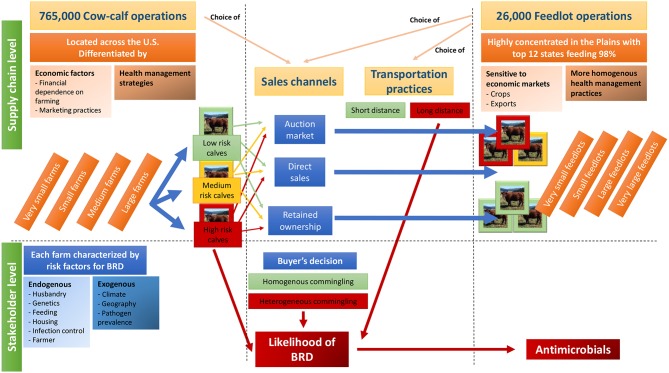
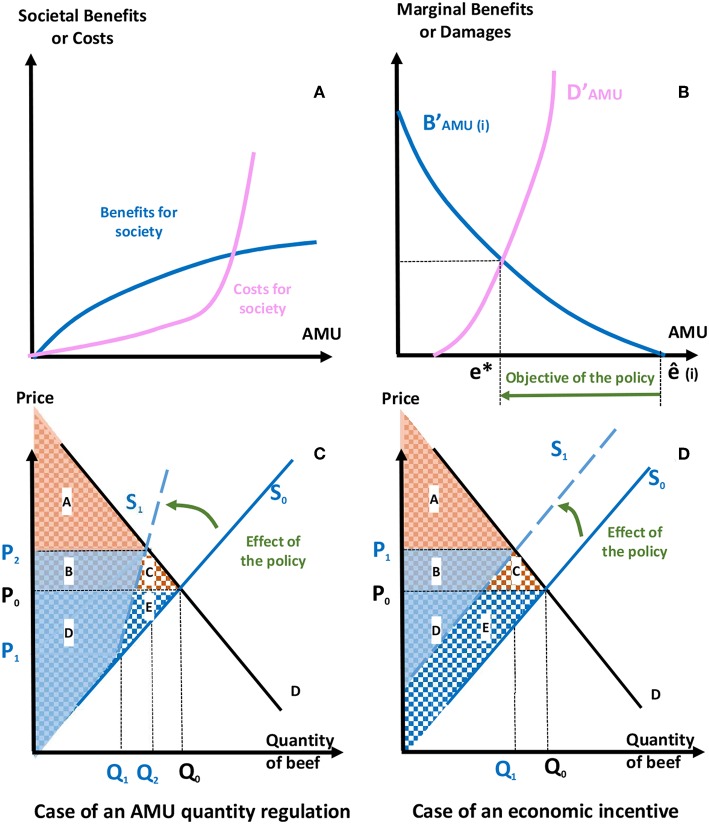
Antimicrobial use (AMU) in animal agriculture contributes to the selection of resistant bacteria, potentially constituting a public health threat. To address antimicrobial resistance, public policies set by governments, as well as intra-sectoral approaches, can be implemented. In this paper, we explore how common policy instruments such as regulations, economic incentives, and voluntary agreements could help reduce AMU in beef production. We first describe the structure of the beef supply chain which directly influences the choice of policy instruments. We describe how externalities and imperfect information affect this system. We then discuss how five policy instruments would each perform to achieve a reduction in AMU. Bovine respiratory disease complex (BRD) represents the major driver of AMU in beef production; consequently, reducing its incidence would decrease significantly the amounts of antimicrobials administered. We consider control options for BRD at different stages of the beef supply chain.
畜牧业中的抗菌药物使用(AMU)促使耐药菌产生,这可能对公众健康构成威胁。为应对抗菌药物耐药性问题,政府制定的公共政策以及行业内部方法均可付诸实施。在本文中,我们探讨了诸如法规、经济激励措施和自愿协议等常见政策手段如何有助于减少牛肉生产中的抗菌药物使用。我们首先描述了直接影响政策手段选择的牛肉供应链结构。我们阐述了外部性和信息不完美如何影响该系统。然后,我们讨论了五种政策手段各自将如何发挥作用以实现抗菌药物使用量的减少。牛呼吸道疾病综合征(BRD)是牛肉生产中抗菌药物使用的主要驱动因素;因此,降低其发病率将显著减少抗菌药物的使用量。我们考虑了牛肉供应链不同阶段BRD的控制方案。