International Vaccine Institute, Seoul 08826, Korea.
Immunization Unit, Robert Koch Institute, 13353 Berlin, Germany.
Int J Environ Res Public Health. 2021 Feb 10;18(4):1736. doi: 10.3390/ijerph18041736.
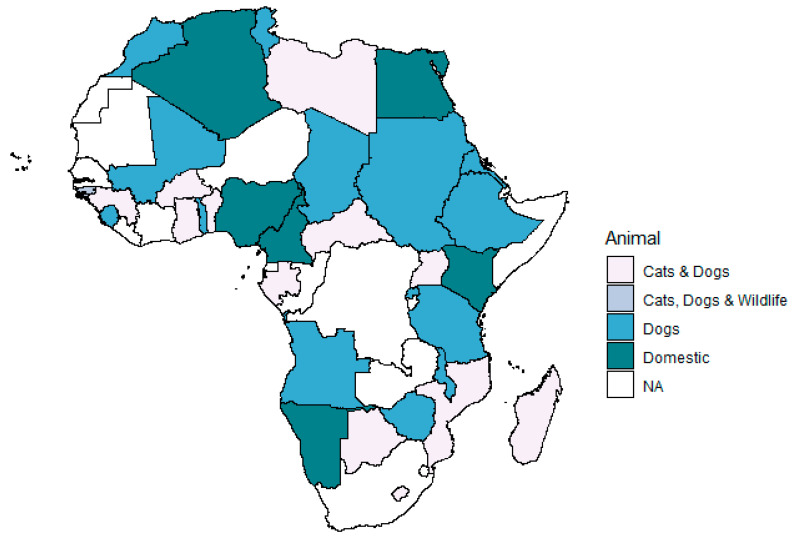
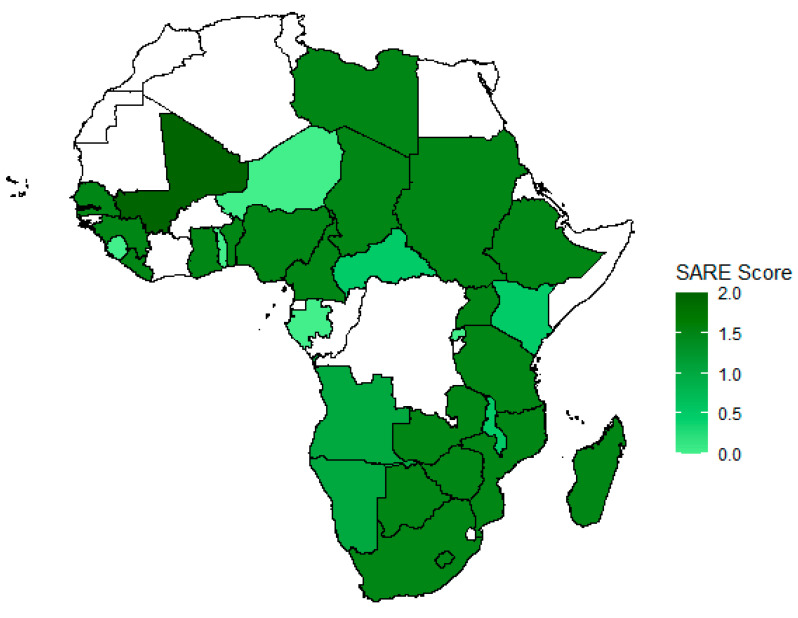
Nearly 59,000 human deaths worldwide are attributable to rabies annually, of which more than a third occur in Africa. In recent years, progress has been made in both action and collaboration including implementation of surveillance and prevention measures. In this review we assess the scale of surveillance, preventive, and control efforts of canine-transmitted human rabies in African countries. We reviewed literature published from 2014 to 2018, retrieved from electronic databases including MEDLINE, Global Index Medicus, BIOSIS, Science Citation Index, and EMBASE. WHO reports, national disease control program reports, and conference proceedings were also reviewed. The database search was conducted using keywords including rabies, control, and prevention. In forty countries (40/54), some level of rabies control and prevention strategy was available while in fourteen (14/54) countries, no specific national control and prevention strategy for human rabies could be retrieved. Thirty-four (34/54) countries utilized the Stepwise Approach towards Rabies Elimination (SARE) tool to monitor the national rabies control efforts-five of these countries were at the lowest tier (0/5) of the SARE scoring system while no country had achieved the highest score (5/5). High burden countries need to step up the implementation of context specific national rabies control, prevention, and monitoring strategies. As a zoonosis, rabies control and elimination require coordination between human and veterinarian health sectors under the "One Health" umbrella and with national master plans on the prevention and control of neglected tropical diseases ending in 2020, the time to act is now.
全球每年有近 59000 人死于狂犬病,其中超过三分之一发生在非洲。近年来,在行动和合作方面都取得了进展,包括实施监测和预防措施。在这篇综述中,我们评估了非洲国家犬传播人类狂犬病的监测、预防和控制工作的规模。我们回顾了 2014 年至 2018 年发表的文献,这些文献来自 MEDLINE、全球索引医学、BIOSIS、科学引文索引和 EMBASE 等电子数据库。还审查了世界卫生组织的报告、国家疾病控制计划报告和会议记录。数据库搜索使用了包括狂犬病、控制和预防在内的关键词。在四十个国家(40/54)中,有某种程度的狂犬病控制和预防战略,而在十四个国家(14/54)中,无法检索到针对人类狂犬病的具体国家控制和预防战略。三十四个(34/54)国家利用逐步消除狂犬病的方法(SARE)工具来监测国家狂犬病控制工作——其中五个国家处于 SARE 评分系统的最低层次(0/5),而没有一个国家达到了最高分数(5/5)。高负担国家需要加强实施针对具体国情的国家狂犬病控制、预防和监测战略。作为一种人畜共患病,狂犬病的控制和消除需要人类和兽医卫生部门在“同一健康”保护伞下进行协调,并在 2020 年结束时制定国家防治被忽视热带病的总体计划,现在是采取行动的时候了。