Department of Veterinary Medicine, University of Rwanda, Nyagatare, Rwanda.
Department of Veterinary Pathology, Microbiology and Parasitology, University of Nairobi, Nairobi, Kenya.
PLoS One. 2019 Aug 20;14(8):e0210044. doi: 10.1371/journal.pone.0210044. eCollection 2019.
Rabies is a zoonotic viral disease that can occur in all warm-blooded animals, including humans. Vaccinating dogs can protect people from contracting rabies. Rabies is a public health threat in Rwanda, but the country does not have information on the epidemiology of rabies. The present study aimed to understand the knowledge, attitudes and practices (KAP) of rabies and its control among dog owners in Kigali city of Rwanda.
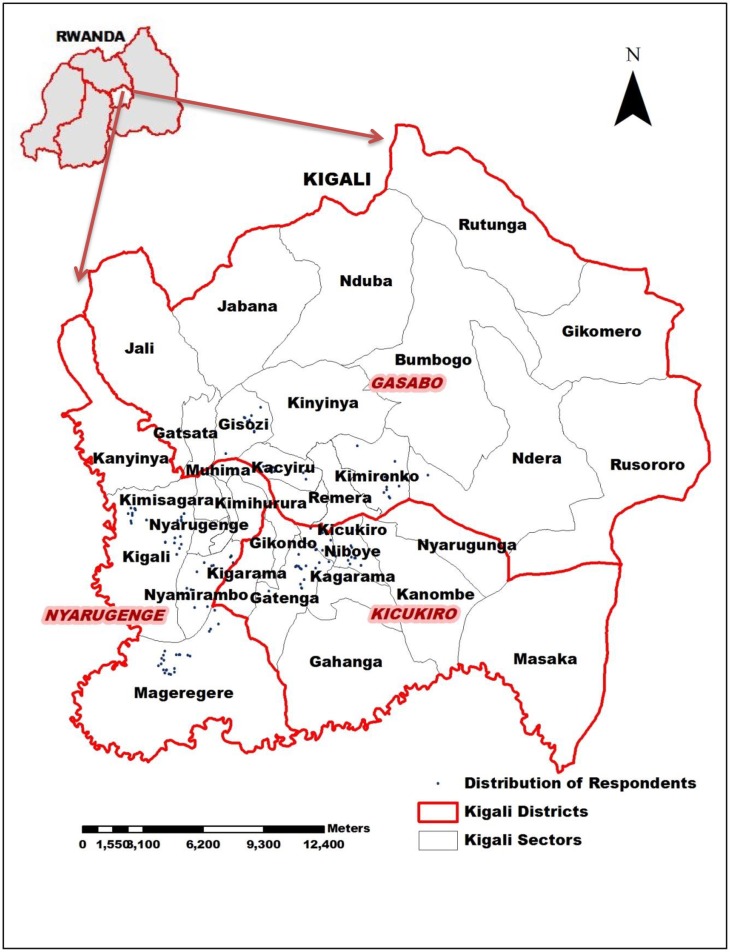
We conducted a cross-sectional survey using a structured questionnaire among 137 dog owners selected from nine administrative study sites. A two-stage random sampling procedure was used to select the participants. Frequency distributions analysis and a series of chi-square tests of associations as well as binary logistic regressions were performed to determine the important factors associated with the response variables.
The results showed that 99.5% of respondents knew at least a host susceptible to rabies. Only 22.4% and 21.3% knew that dogs and people can develop rabies, respectively. Nearly 73.6% knew that human rabies can be transmitted through dog-bites and 99% could identify at least a clinical sign of canine rabies. Overall, 81.8% knew that regular vaccination of dogs helps to prevent dog-transmitted human rabies and 43.1% and 26.3% were aware that rabies in humans and in dogs are fatal once clinical symptoms have shown, respectively. Only 69% would observe a dog for 10 days after it bites a man or an animal. Approximately 20.4% were familiar with appropriate cleaning of dog-bites wounds, and 20.6% knew that puppies could receive rabies vaccination before they are three months old. Of those who owned vaccinated dogs, 78% were happy about the cost (US $ ≤ 34) of rabies vaccination. Of all the respondents, 58% had their dogs vaccinated at home by veterinarians while 86% indicated their veterinarians kept rabies vaccines on ice in a cool box. Overall, 53% of the dog owners had sufficient knowledge of rabies, whilst 66% and 17% adopted adequate practices and positive attitudes towards rabies, respectively. Multivariable logistic regression analyses indicated that none of the respondents' sex, educational level, and the length of dog ownership were statistically associated with their knowledge, attitudes and practices of rabies.
This study showed that majority of the dog owners had sufficient knowledge and adopted appropriate practices of rabies. However there exist some knowledge gaps among the dog owners particularly on treatment, transmission and control methods. Therefore, rabies awareness campaign is required to upgrade rabies knowledge of the dog owners on rabies prevention and control in Rwanda.
狂犬病是一种可以发生在所有温血动物(包括人类)身上的人畜共患病毒疾病。给狗接种疫苗可以保护人们免受狂犬病的侵害。狂犬病是卢旺达的一个公共卫生威胁,但该国没有狂犬病流行病学的信息。本研究旨在了解卢旺达基加利市狗主人对狂犬病及其控制的知识、态度和实践(KAP)。
我们在卢旺达基加利市的九个行政研究地点,使用经过结构化问卷对 137 名狗主人进行了横断面调查。采用两阶段随机抽样程序选择参与者。进行频率分布分析和一系列卡方检验关联以及二元逻辑回归分析,以确定与应答变量相关的重要因素。
结果表明,99.5%的受访者至少知道一种易患狂犬病的宿主。只有 22.4%和 21.3%的人知道狗和人都会患狂犬病。近 73.6%的人知道人狂犬病可以通过狗咬伤传播,99%的人可以识别至少一种犬狂犬病的临床症状。总体而言,81.8%的人知道定期给狗接种疫苗有助于预防狗传播的人类狂犬病,43.1%和 26.3%的人知道人类和狗狂犬病一旦出现临床症状就会致命。只有 69%的人会在狗咬伤人或动物后观察狗 10 天。大约 20.4%的人熟悉狗咬伤伤口的适当清洁方法,20.6%的人知道小狗可以在三个月大之前接受狂犬病疫苗接种。在所有拥有接种疫苗的狗的主人中,有 78%的人对狂犬病疫苗的费用(≤34 美元)感到满意。在所有受访者中,58%的人在家中由兽医为其狗接种疫苗,而 86%的人表示他们的兽医将狂犬病疫苗放在冷藏箱中的冰上保存。总体而言,53%的狗主人对狂犬病有足够的了解,而 66%和 17%的人对狂犬病分别采取了适当的做法和积极的态度。多变量逻辑回归分析表明,受访者的性别、教育水平和养狗时间均与他们对狂犬病的知识、态度和实践无统计学关联。
本研究表明,大多数狗主人对狂犬病有足够的了解,并采取了适当的狂犬病预防措施。然而,狗主人在治疗、传播和控制方法方面存在一些知识差距。因此,需要开展狂犬病宣传活动,以提高卢旺达狗主人对狂犬病预防和控制的狂犬病知识。