Vascular Biology Center, Medical College of Georgia at Augusta University, 1460 Laney Walker Blvd., CB-3712, Augusta, GA, 30912, USA.
Department of Medicine, Medical College of Georgia at Augusta University, 1460 Laney Walker Blvd, CB-3712, Augusta, GA, 30912, USA.
Stem Cell Res Ther. 2021 Feb 12;12(1):131. doi: 10.1186/s13287-021-02174-3.
Duchenne muscular dystrophy (DMD) is caused by mutations of the gene that encodes the protein dystrophin. A loss of dystrophin leads to severe and progressive muscle wasting in both skeletal and heart muscles. Human induced pluripotent stem cells (hiPSCs) and their derivatives offer important opportunities to treat a number of diseases. Here, we investigated whether givinostat (Givi), a histone deacetylase inhibitor, with muscle differentiation properties could reprogram hiPSCs into muscle progenitor cells (MPC) for DMD treatment.
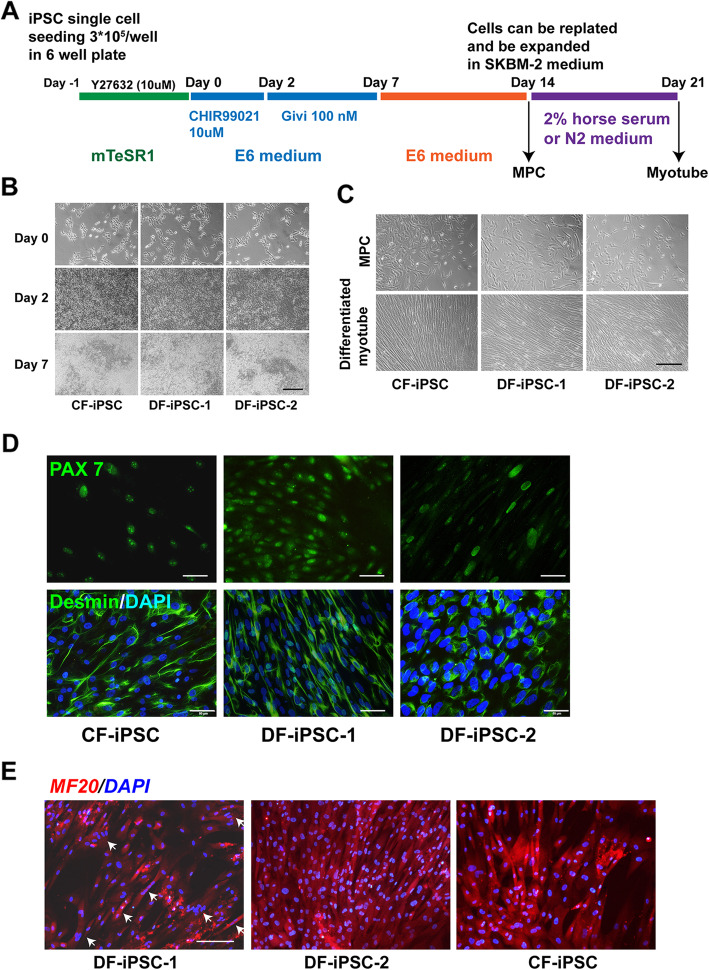
MPC were generated from hiPSCs by treatment with CHIR99021 and givinostat called Givi-MPC or with CHIR99021 and fibroblast growth factor as control-MPC. The proliferation and migration capacity were investigated by CCK-8, colony, and migration assays. Engraftment, pathological changes, and restoration of dystrophin were evaluated by in vivo transplantation of MPC. Conditioned medium from cultured MPC was collected and analyzed for extracellular vesicles (EVs).
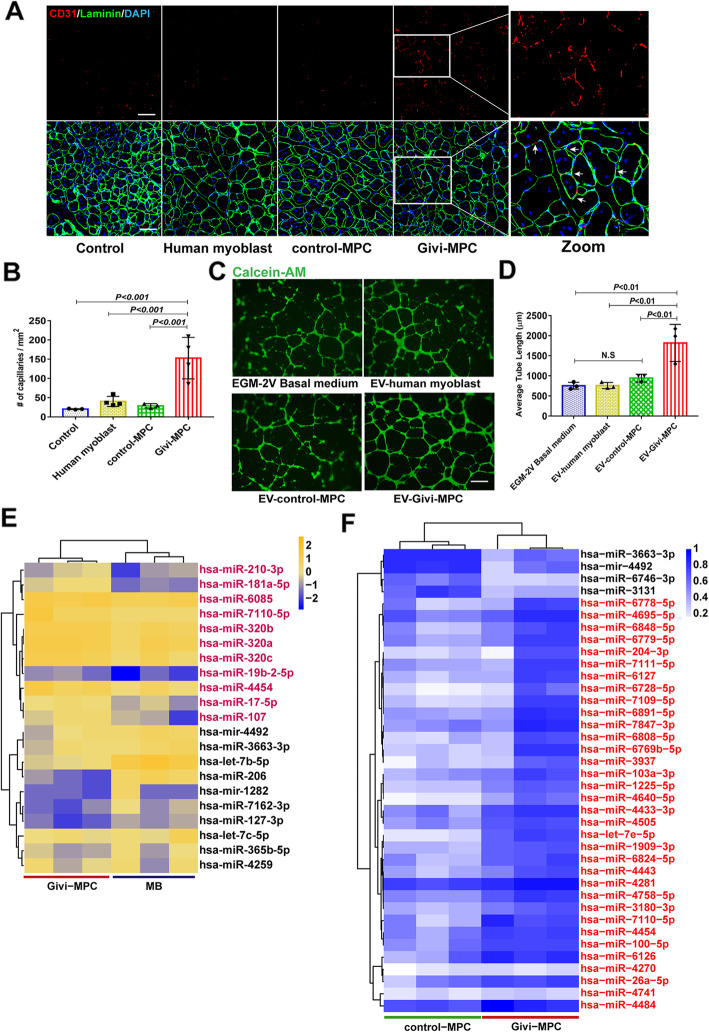
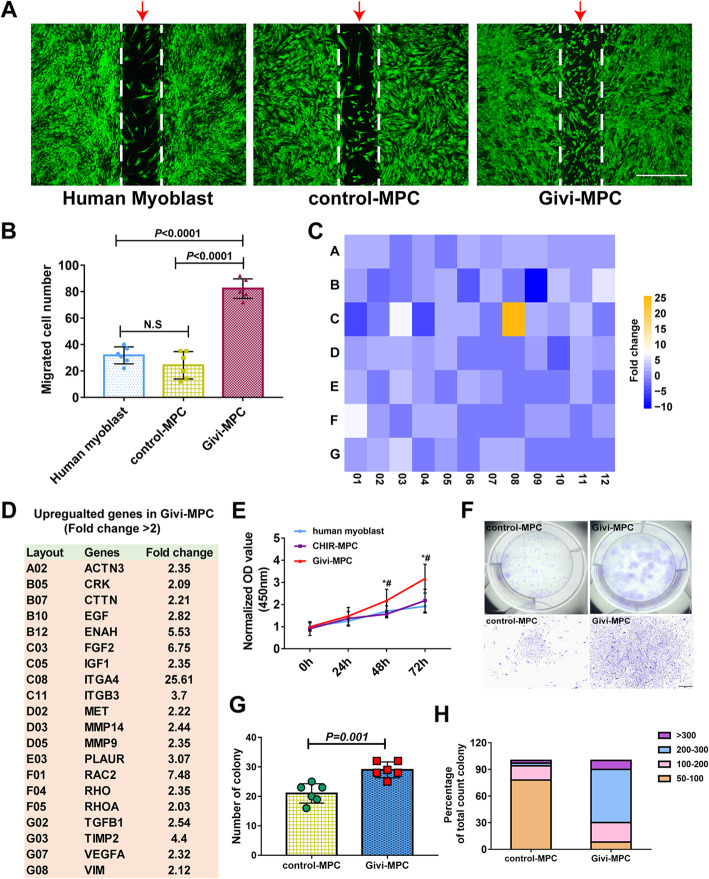
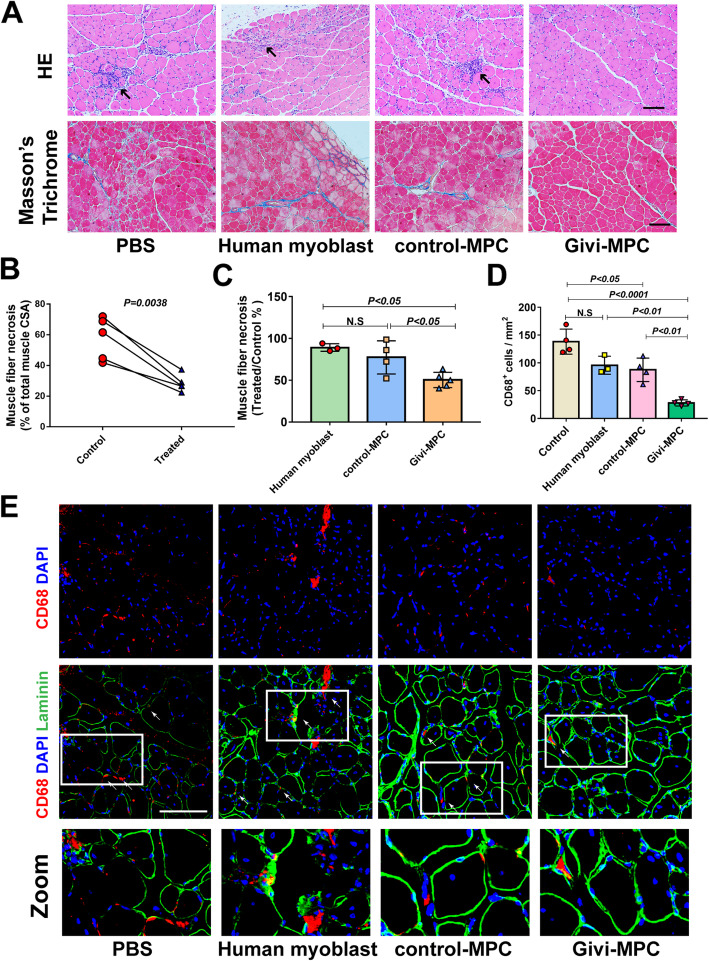
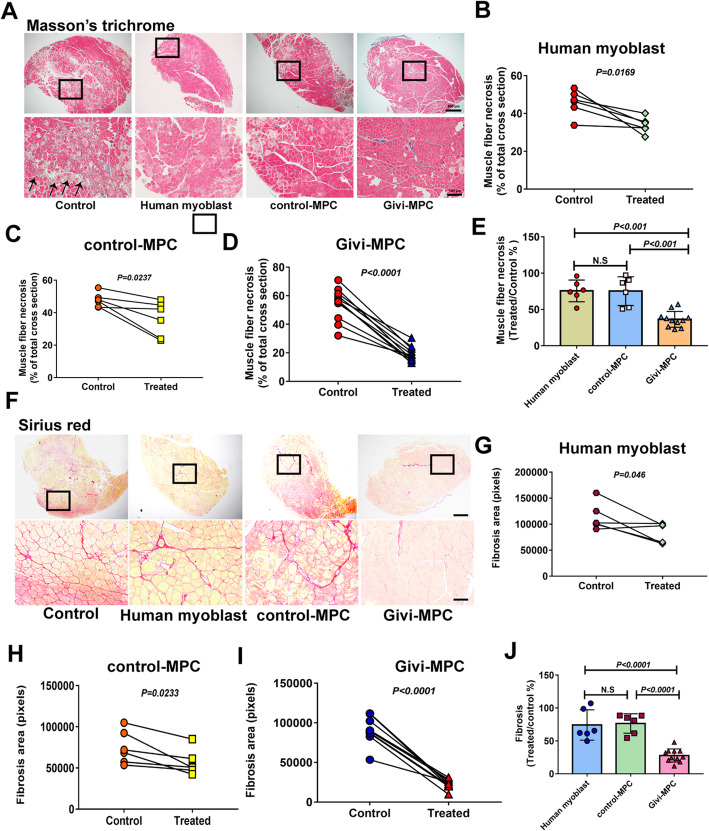
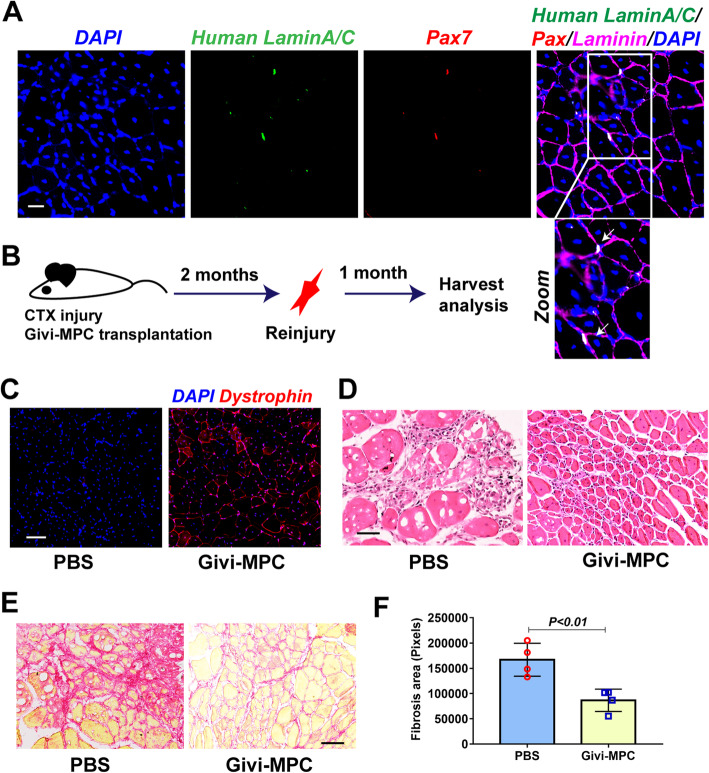
Givi-MPC exhibited superior proliferation and migration capacity compared to control-MPC. Givi-MPC produced less reactive oxygen species (ROS) after oxidative stress and insignificant expression of IL6 after TNF-α stimulation. Upon transplantation in cardiotoxin (CTX)-injured hind limb of Mdx/SCID mice, the Givi-MPC showed robust engraftment and restored dystrophin in the treated muscle than in those treated with control-MPC or human myoblasts. Givi-MPC significantly limited infiltration of inflammatory cells and reduced muscle necrosis and fibrosis. Additionally, Givi-MPC seeded the stem cell pool in the treated muscle. Moreover, EVs released from Givi-MPC were enriched in several miRNAs related to myoangiogenesis including miR-181a, miR-17, miR-210 and miR-107, and miR-19b compared with EVs from human myoblasts.
It is concluded that hiPSCs reprogrammed into MPC by givinostat possessing anti-oxidative, anti-inflammatory, and muscle gene-promoting properties effectively repaired injured muscle and restored dystrophin in the injured muscle.
杜氏肌营养不良症(DMD)是由编码肌营养不良蛋白的基因突变引起的。肌营养不良蛋白的缺失导致骨骼和心肌中的肌肉严重且进行性消耗。人诱导多能干细胞(hiPSC)及其衍生物为治疗多种疾病提供了重要机会。在这里,我们研究了具有肌肉分化特性的组蛋白去乙酰化酶抑制剂 Givinostat 是否可以将 hiPSC 重新编程为肌肉祖细胞(MPC),用于 DMD 治疗。
通过用 CHIR99021 和 Givinostat 处理 hiPSC 生成 MPC,称为 Givi-MPC,或用 CHIR99021 和成纤维细胞生长因子作为对照-MPC。通过 CCK-8、集落和迁移实验研究增殖和迁移能力。通过 MPC 的体内移植评估植入、病理变化和肌营养不良蛋白的恢复。收集和分析培养的 MPC 的条件培养基以获得细胞外囊泡(EVs)。
与对照-MPC 相比,Givi-MPC 表现出更高的增殖和迁移能力。Givi-MPC 在氧化应激后产生较少的活性氧(ROS),在 TNF-α 刺激后 IL6 的表达无显著差异。在 Mdx/SCID 小鼠的心脏毒素(CTX)损伤后后肢移植中,与对照-MPC 或人成肌细胞处理的肌肉相比,Givi-MPC 显示出更强的植入能力,并在处理的肌肉中恢复了肌营养不良蛋白。Givi-MPC 显著限制了炎症细胞的浸润,减少了肌肉坏死和纤维化。此外,Givi-MPC 在处理的肌肉中播种了干细胞池。此外,与来自人成肌细胞的 EVs 相比,来自 Givi-MPC 的 EVs 富含几种与肌血管生成相关的 miRNAs,包括 miR-181a、miR-17、miR-210 和 miR-107,以及 miR-19b。
综上所述,由 Givinostat 重新编程为 MPC 的 hiPSC 具有抗氧化、抗炎和促进肌肉基因表达的特性,可有效修复受损肌肉并在受损肌肉中恢复肌营养不良蛋白。