Hematopoietic Innovative Therapies Division, Centro de Investigaciones Energéticas, Medioambientales y Tecnológicas (CIEMAT), Av. Complutense 40, 28040, Madrid, Spain.
Centro de Investigación Biomédica en Red de Enfermedades Raras (CIBERER), Madrid, Spain.
Stem Cell Res Ther. 2021 Feb 12;12(1):124. doi: 10.1186/s13287-021-02193-0.
Mesenchymal stromal cells (MSCs) constitute one of the cell types most frequently used in cell therapy. Although several studies have shown the efficacy of these cells to modulate inflammation in different animal models, the results obtained in human clinical trials have been more modest. Here, we aimed at improving the therapeutic properties of MSCs by inducing a transient expression of two molecules that could enhance two different properties of these cells. With the purpose of improving MSC migration towards inflamed sites, we induced a transient expression of the C-X-C chemokine receptor type 4 (CXCR4). Additionally, to augment the anti-inflammatory properties of MSCs, a transient expression of the anti-inflammatory cytokine, interleukin 10 (IL10), was also induced.
Human adipose tissue-derived MSCs were transfected with messenger RNAs carrying the codon-optimized versions of CXCR4 and/or IL10. mRNA-transfected MSCs were then studied, first to evaluate whether the characteristic phenotype of MSCs was modified. Additionally, in vitro and also in vivo studies in an LPS-induced inflamed pad model were conducted to evaluate the impact associated to the transient expression of CXCR4 and/or IL10 in MSCs.
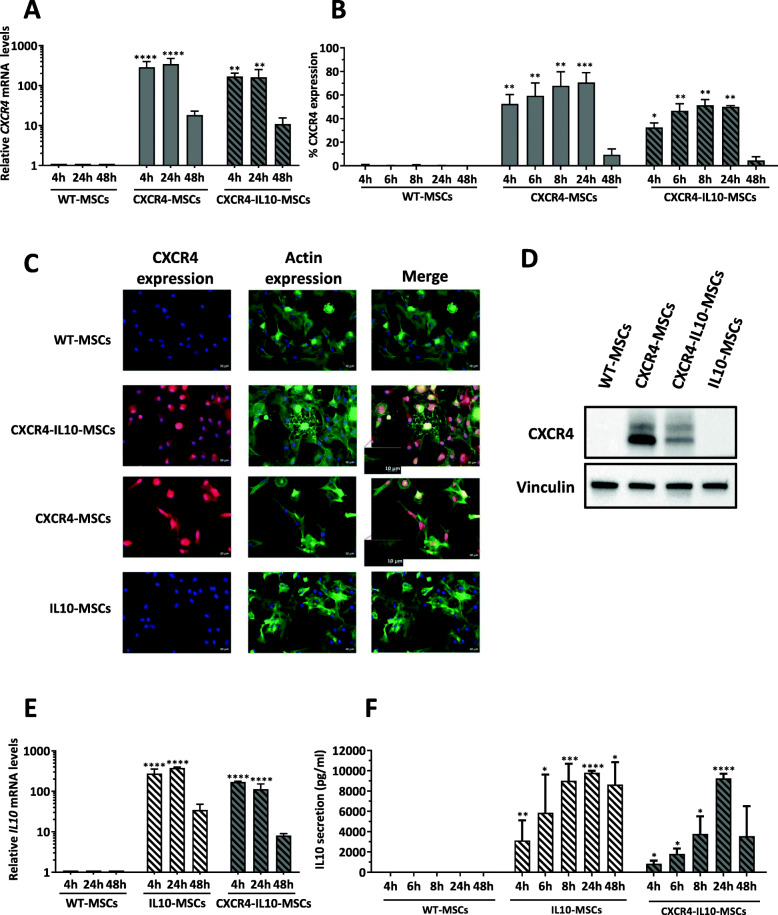
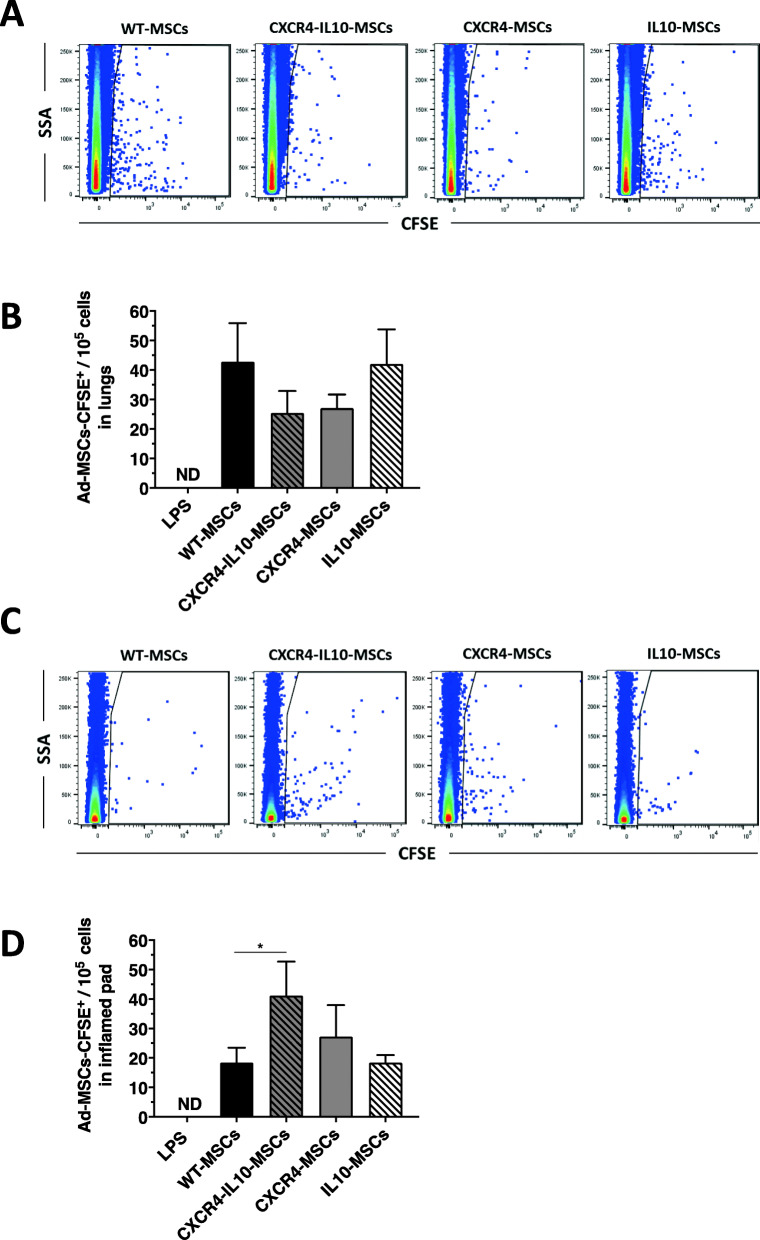
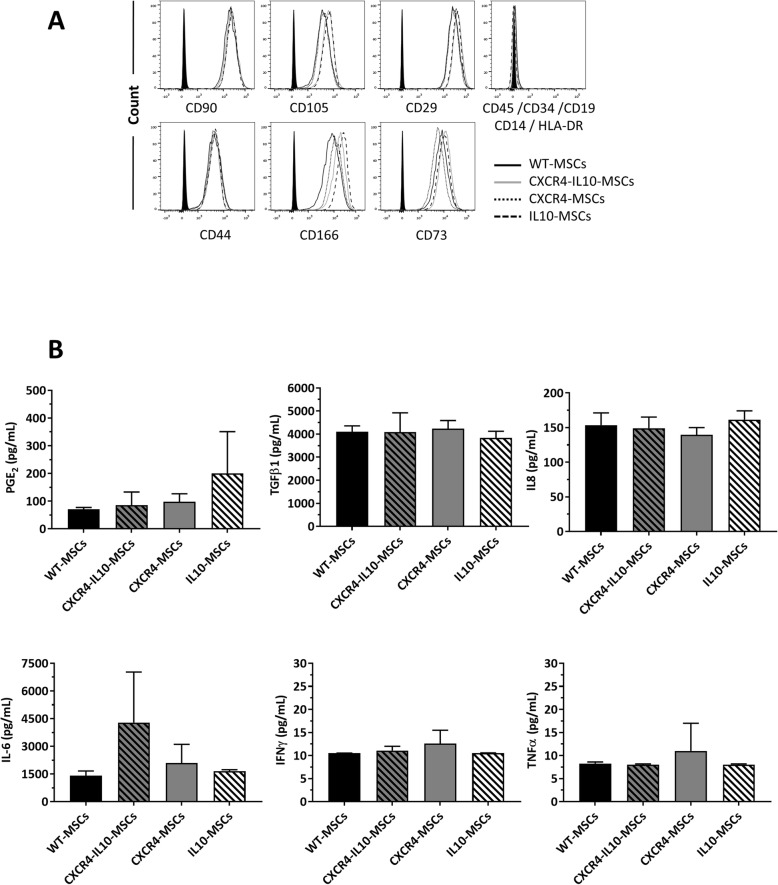
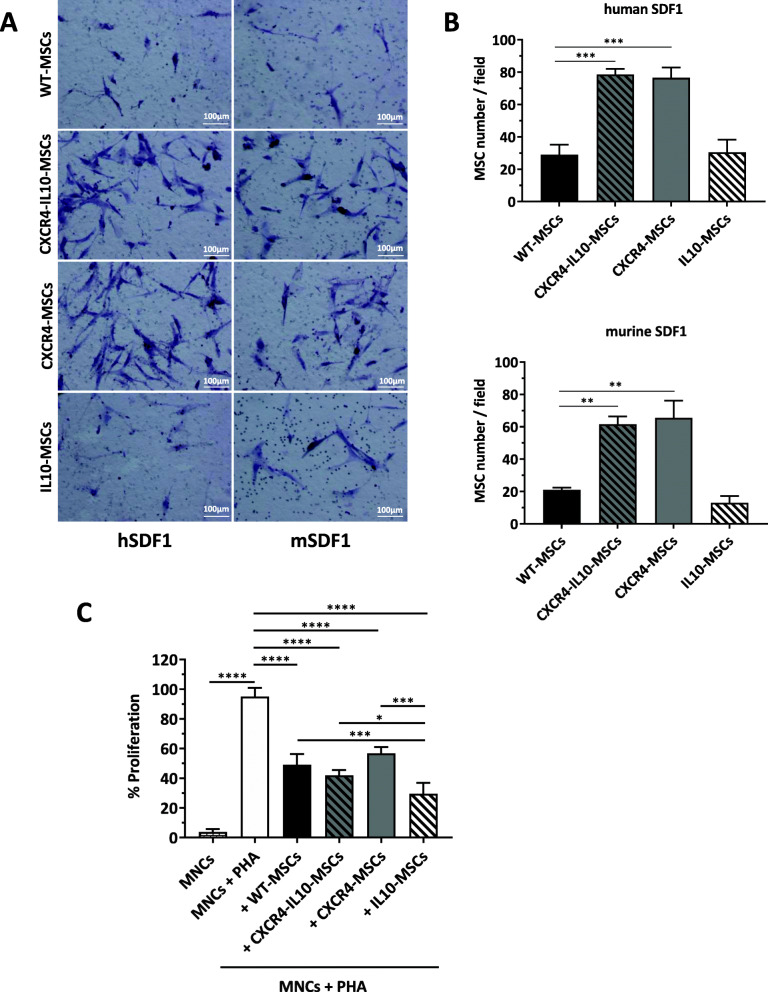
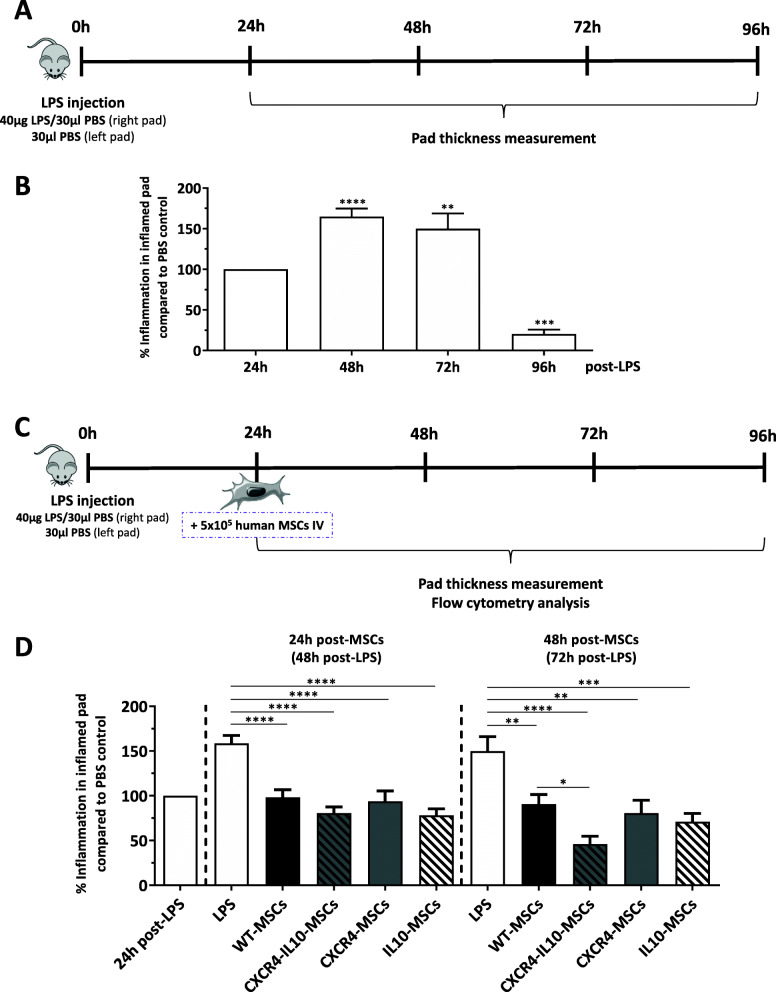
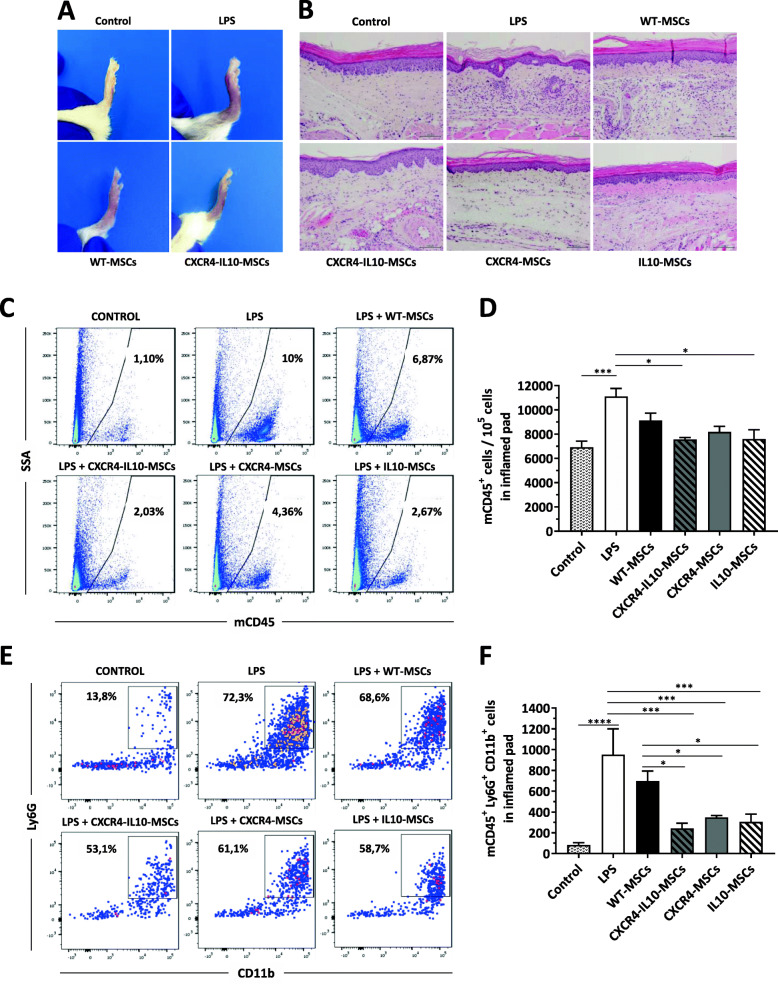
Transfection of MSCs with CXCR4 and/or IL10 mRNAs induced a transient expression of these molecules without modifying the characteristic phenotype of MSCs. In vitro studies then revealed that the ectopic expression of CXCR4 significantly enhanced the migration of MSCs towards SDF-1, while an increased immunosuppression was associated with the ectopic expression of IL10. Finally, in vivo experiments showed that the co-expression of CXCR4 and IL10 increased the homing of MSCs into inflamed pads and induced an enhanced anti-inflammatory effect, compared to wild-type MSCs.
Our results demonstrate that the transient co-expression of CXCR4 and IL10 enhances the therapeutic potential of MSCs in a local inflammation mouse model, suggesting that these mRNA-modified cells may constitute a new step in the development of more efficient cell therapies for the treatment of inflammatory diseases.
间充质基质细胞(MSCs)是细胞治疗中最常使用的细胞类型之一。尽管多项研究表明这些细胞在不同的动物模型中具有调节炎症的功效,但在人体临床试验中得到的结果较为有限。在此,我们旨在通过诱导两种可增强这些细胞两种不同特性的分子的瞬时表达来改善 MSC 的治疗特性。为了提高 MSC 向炎症部位迁移的能力,我们诱导了 C-X-C 趋化因子受体 4(CXCR4)的瞬时表达。此外,为了增强 MSC 的抗炎特性,还诱导了抗炎细胞因子白细胞介素 10(IL10)的瞬时表达。
用人脂肪组织来源的 MSC 转染带有 CXCR4 和/或 IL10 的密码子优化版本的信使 RNA。然后研究转染的 MSC,首先评估 MSC 的特征表型是否发生改变。此外,还进行了体外和体内 LPS 诱导的炎症垫模型研究,以评估 CXCR4 和/或 IL10 在 MSC 中的瞬时表达对其产生的影响。
用 CXCR4 和/或 IL10 mRNA 转染 MSC 会诱导这些分子的瞬时表达,而不会改变 MSC 的特征表型。体外研究表明,CXCR4 的异位表达显著增强了 MSC 向 SDF-1 的迁移能力,而 IL10 的异位表达则与增强的免疫抑制作用相关。最后,体内实验表明,与野生型 MSC 相比,CXCR4 和 IL10 的共表达增加了 MSC 向炎症垫的归巢,并诱导了增强的抗炎作用。
我们的结果表明,CXCR4 和 IL10 的瞬时共表达增强了 MSC 在局部炎症小鼠模型中的治疗潜力,这表明这些经过 mRNA 修饰的细胞可能是开发更有效的细胞疗法治疗炎症性疾病的新一步。