Department of Ophthalmology & Visual Sciences, Vanderbilt University School of Medicine, Nashville, TN, USA.
Vanderbilt Eye Institute, Vanderbilt University Medical Center, Nashville, TN, USA.
Redox Biol. 2021 Jun;42:101883. doi: 10.1016/j.redox.2021.101883. Epub 2021 Jan 29.
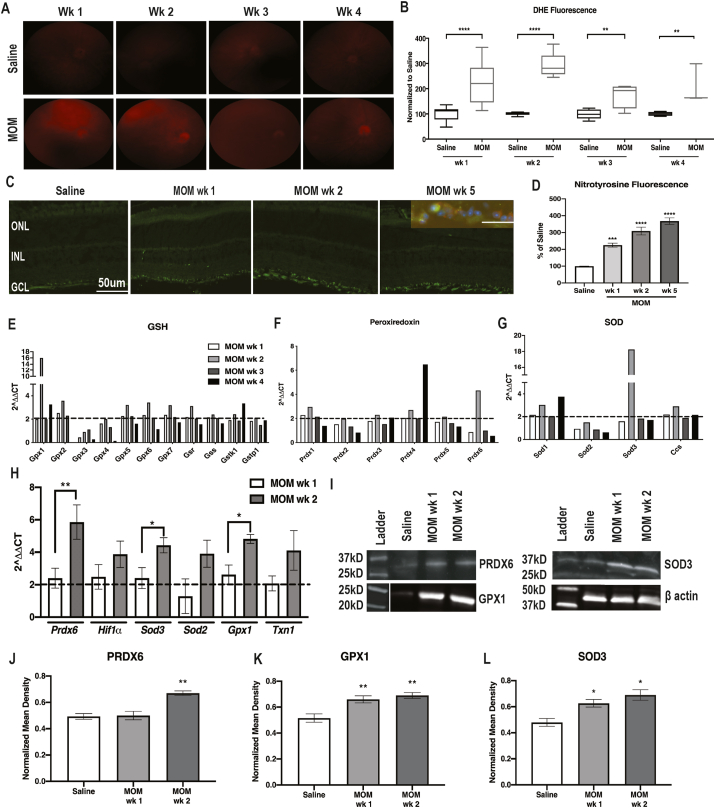
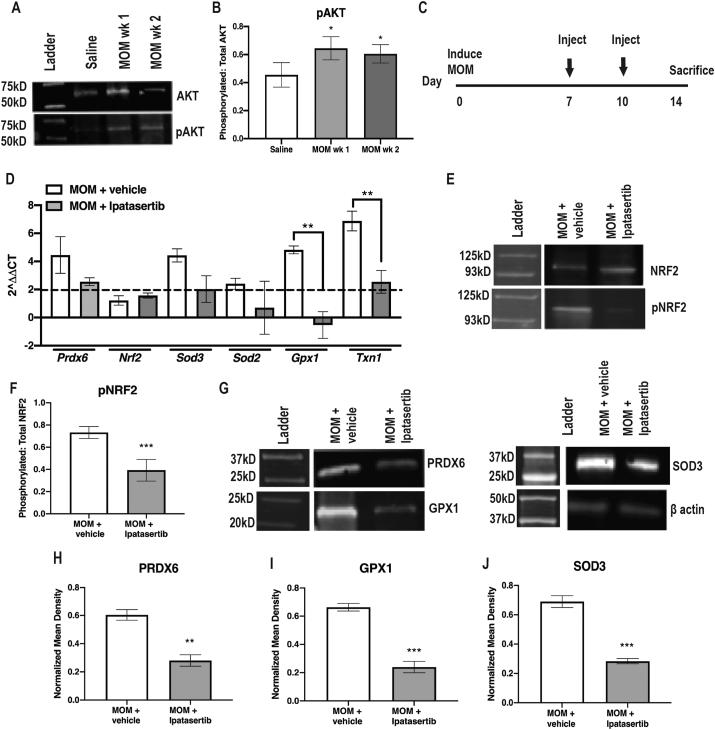
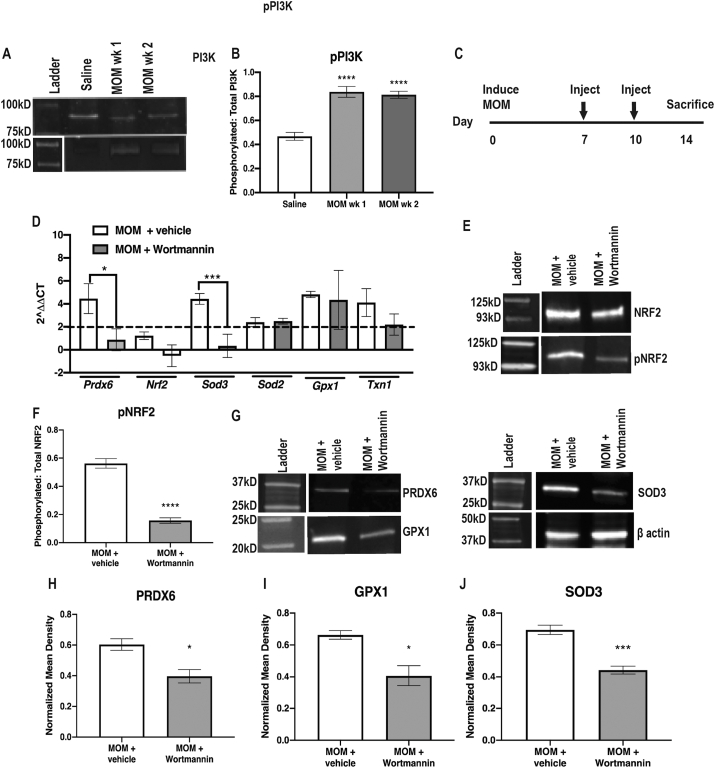
Oxidative stress contributes to degeneration of retinal ganglion cells and their axons in glaucoma, a leading cause of irreversible blindness worldwide, through sensitivity to intraocular pressure (IOP). Here, we investigated early elevations in reactive oxygen species (ROS) and a role for the NRF2-KEAP1-ARE endogenous antioxidant response pathway using microbead occlusion to elevate IOP in mice. ROS levels peaked in the retina at 1- and 2-wks following IOP elevation and remained elevated out to 5-wks. Phosphorylation of NRF2 and antioxidant gene transcription and protein levels increased concomitantly at 2-wks after IOP elevation, along with phosphorylation of PI3K and AKT. Inhibiting PI3K or AKT signaling prevented NRF2 phosphorylation and reduced transcription of antioxidant-regulated genes. Ocular hypertensive mice lacking Nrf2 had elevated ROS and a diminished increase in antioxidant gene expression. They also exhibited earlier axon degeneration and loss of visual function. In conclusion, the NRF2-KEAP1-ARE pathway is endogenously activated early in ocular hypertension due to phosphorylation of NRF2 by the PI3K/AKT pathway and serves to slow the onset of axon degeneration and vision loss in glaucoma. These data suggest that exogenous activation of this pathway might further slow glaucomatous neurodegeneration.
氧化应激通过对眼内压 (IOP) 的敏感性,导致青光眼(一种全球范围内导致不可逆转失明的主要原因)中视网膜神经节细胞及其轴突的变性。在这里,我们使用微珠阻塞来升高小鼠的 IOP,研究了活性氧 (ROS) 的早期升高以及 NRF2-KEAP1-ARE 内源性抗氧化反应途径的作用。ROS 水平在 IOP 升高后 1 至 2 周内在视网膜中达到峰值,并持续升高至 5 周。IOP 升高 2 周后,NRF2 的磷酸化以及抗氧化基因的转录和蛋白水平与 PI3K 和 AKT 的磷酸化同时增加。抑制 PI3K 或 AKT 信号通路可防止 NRF2 磷酸化并减少抗氧化调节基因的转录。缺乏 Nrf2 的眼高压小鼠表现出更高的 ROS 和抗氧化基因表达的减少。它们还表现出更早的轴突退化和视觉功能丧失。总之,由于 PI3K/AKT 通路对 NRF2 的磷酸化,NRF2-KEAP1-ARE 通路在眼高压的早期被内源性激活,有助于减缓青光眼的轴突退化和视力丧失的发生。这些数据表明,该通路的外源性激活可能进一步减缓青光眼的神经退行性变。