SARS-CoV-2 Research Group, Virology Program, Institute of Biomedical Sciences, Faculty of Medicine, Universidad de Chile, Santiago, Chile.
Laboratory of Molecular and Cellular Virology, Virology Program, Institute of Biomedical Sciences, Faculty of Medicine, Universidad de Chile, Santiago, Chile.
Sci Adv. 2021 Feb 12;7(7). doi: 10.1126/sciadv.abe6855. Print 2021 Feb.
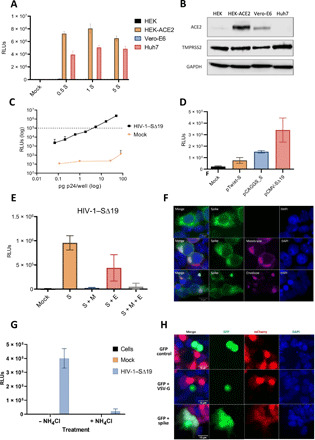
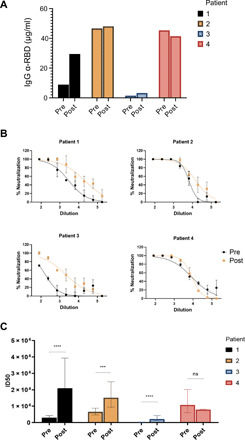
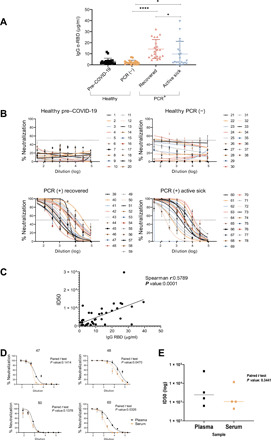
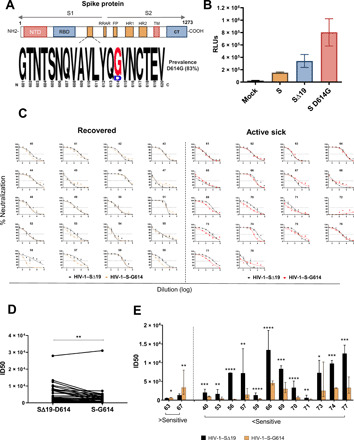
Chile has one of the worst numbers worldwide in terms of SARS-CoV-2 positive cases and COVID-19-related deaths per million inhabitants; thus, characterization of neutralizing antibody (NAb) responses in the general population is critical to understanding of immunity at the local level. Given our inability to perform massive classical neutralization assays due to the scarce availability of BSL-3 facilities in the country, we developed and fully characterized an HIV-based SARS-CoV-2 pseudotype, which was used in a 96-well plate format to investigate NAb responses in samples from individuals exposed to SARS-CoV-2 or treated with convalescent plasma. We also identified samples with decreased or enhanced neutralization activity against the D614G spike variant compared with the wild type, indicating the relevance of this variant in host immunity. The data presented here represent the first insights into NAb responses in individuals from Chile, serving as a guide for future studies in the country.
智利每百万居民中的 SARS-CoV-2 阳性病例和 COVID-19 相关死亡人数在全球范围内处于最差之列;因此,对普通人群中中和抗体 (NAb) 反应的特征分析对于了解当地的免疫情况至关重要。鉴于我们因国内 BSL-3 设施稀缺而无法进行大规模的经典中和测定,我们开发并充分表征了一种基于 HIV 的 SARS-CoV-2 假型,该假型用于 96 孔板格式来研究接触过 SARS-CoV-2 的个体或接受过恢复期血浆治疗的个体的 NAb 反应。我们还鉴定出与野生型相比对 D614G 刺突变异体的中和活性降低或增强的样本,表明该变异体在宿主免疫中的相关性。这里呈现的数据代表了对智利个体 NAb 反应的首次深入了解,为该国未来的研究提供了指导。