Department of Psychology, Università degli Studi di Milano-Bicocca, Piazza Ateneo Nuovo, 1 (U6), 20126, Milano, Italy.
NeuroMi, Milan Center for Neuroscience, Milano, Italy.
J Autism Dev Disord. 2021 Dec;51(12):4621-4631. doi: 10.1007/s10803-021-04894-0. Epub 2021 Feb 13.
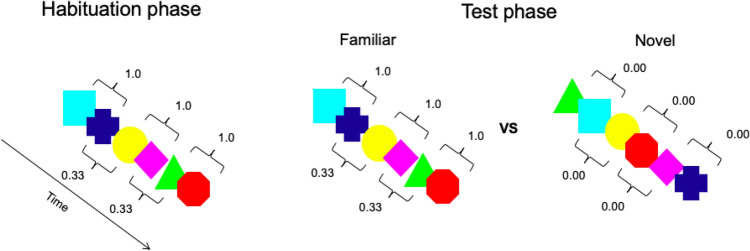
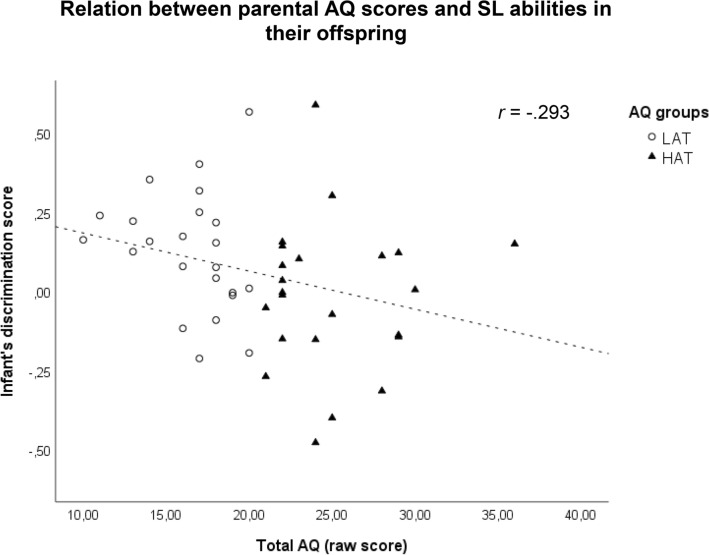
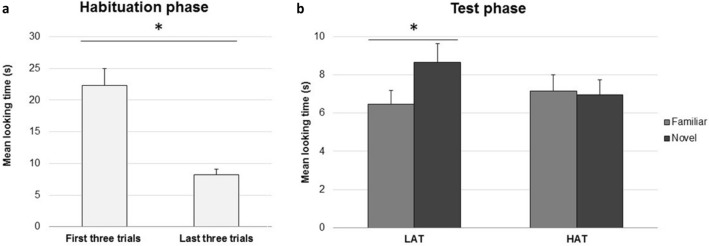
Statistical learning refers to the ability to extract the statistical relations embedded in a sequence, and it plays a crucial role in the development of communicative and social skills that are impacted in the Autism Spectrum Disorder (ASD). Here, we investigated the relationship between infants' SL ability and autistic traits in their parents. Using a visual habituation task, we tested infant offspring of adults (non-diagnosed) who show high (HAT infants) versus low (LAT infants) autistic traits. Results demonstrated that LAT infants learned the statistical structure embedded in a visual sequence, while HAT infants failed. Moreover, infants' SL ability was related to autistic traits in their parents, further suggesting that early dysfunctions in SL might contribute to variabilities in ASD symptoms.
统计学习是指从序列中提取统计关系的能力,它在发展受自闭症谱系障碍(ASD)影响的交际和社交技能方面起着至关重要的作用。在这里,我们研究了婴儿 SL 能力与父母自闭症特征之间的关系。我们使用视觉习惯化任务,测试了具有高(HAT 婴儿)和低(LAT 婴儿)自闭症特征的成年人(未确诊)的婴儿后代。结果表明,LAT 婴儿学习了视觉序列中嵌入的统计结构,而 HAT 婴儿则没有。此外,婴儿的 SL 能力与其父母的自闭症特征有关,这进一步表明,SL 的早期功能障碍可能导致 ASD 症状的变异性。