Institute of Basic Medicine, The First Affiliated Hospital of Shandong First Medical University, Jinan, China.
Science and Technology Innovation Center, Shandong First Medical University & Shandong Academy of Medical Sciences, Jinan, China.
Front Immunol. 2021 Jan 28;11:592622. doi: 10.3389/fimmu.2020.592622. eCollection 2020.
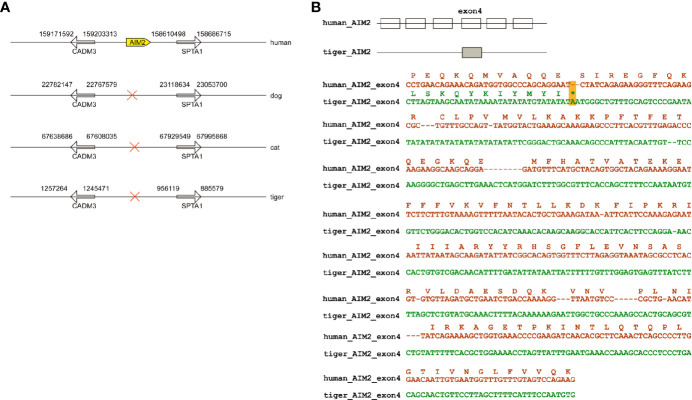
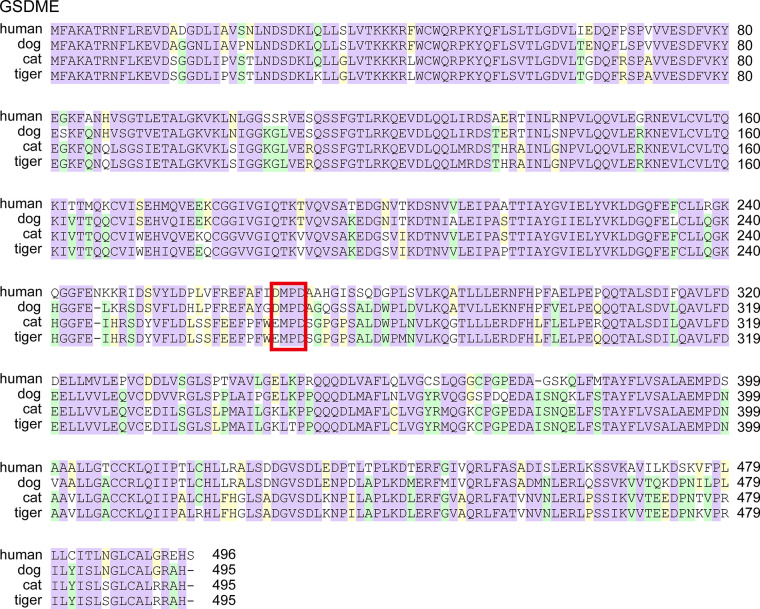
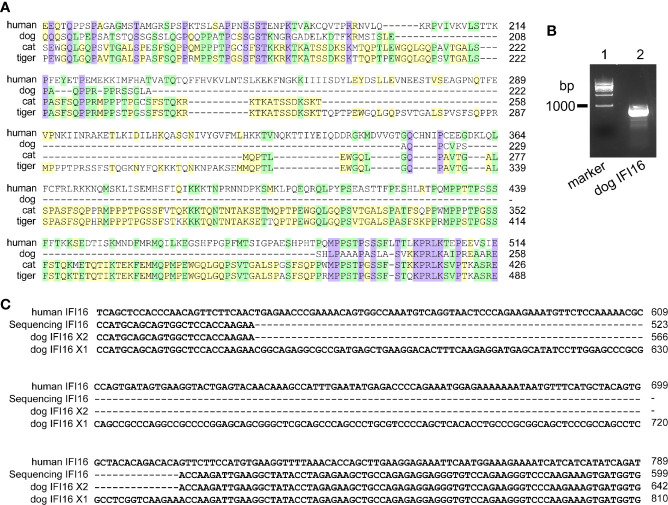
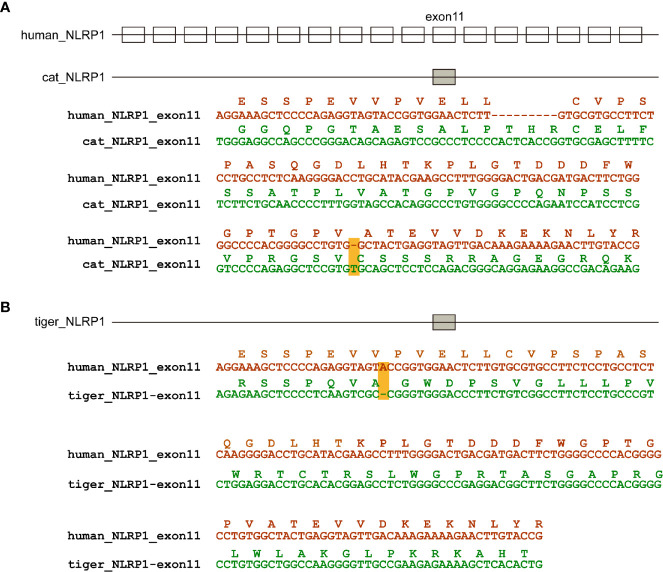
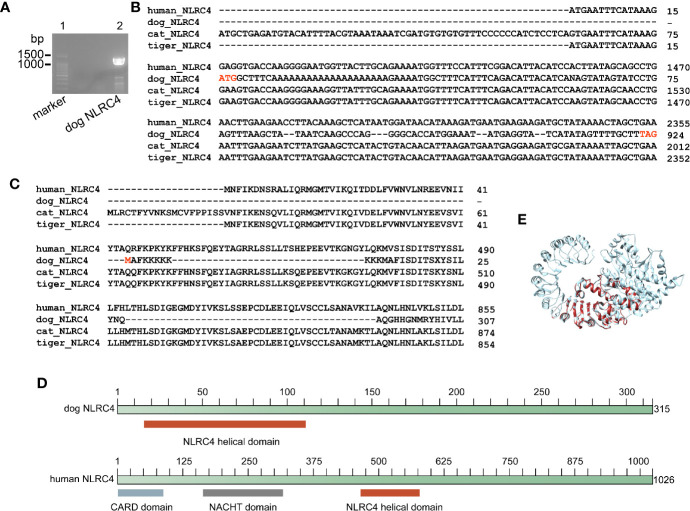
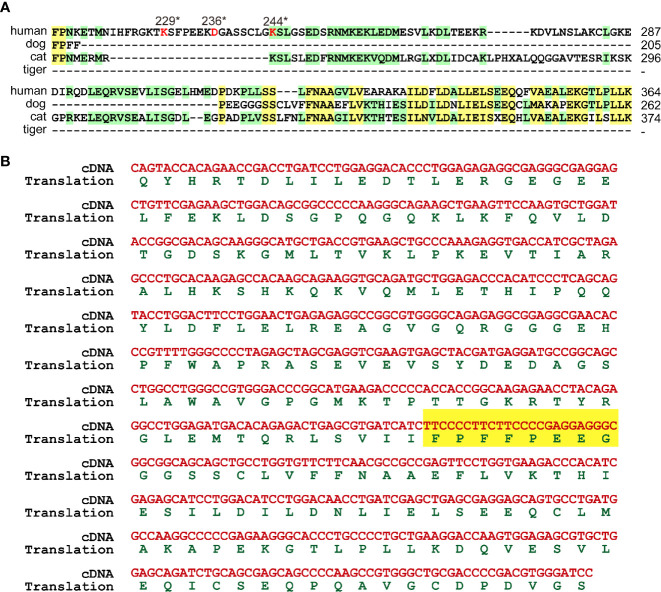
SARS-CoV-2 causes the ongoing COVID-19 pandemic. Natural SARS-COV-2 infection has been detected in dogs, cats and tigers. However, the symptoms in canines and felines were mild. The underlying mechanisms are unknown. Excessive activation of inflammasome pathways can trigger cytokine storm and severe damage to host. In current study, we performed a comparative genomics study of key components of inflammasome and pyroptosis pathways in dogs, cats and tigers. Cats and tigers do not have AIM2 and NLRP1. Dogs do not contain AIM2, and encode a short form of NLRC4. The activation sites in GSDMB were absent in dogs, cats and tigers, while GSDME activation sites in cats and tigers were abolished. We propose that deficiencies of inflammasome and pyroptosis pathways might provide an evolutionary advantage against SARS-CoV-2 by reducing cytokine storm-induced host damage. Our findings will shed important lights on the mild symptoms in canines and felines infected with SARS-CoV-2.
SARS-CoV-2 引发了持续的 COVID-19 大流行。已经在狗、猫和老虎中检测到天然 SARS-COV-2 感染。然而,犬类和猫类的症状较轻。其潜在机制尚不清楚。炎性小体途径的过度激活会引发细胞因子风暴并对宿主造成严重损害。在本研究中,我们对犬、猫和虎中炎性小体和细胞焦亡途径的关键成分进行了比较基因组学研究。猫和虎中没有 AIM2 和 NLRP1。狗中没有 AIM2,并且编码 NLRC4 的短形式。狗、猫和虎中 GSDMB 的激活位点缺失,而猫和虎中 GSDME 的激活位点被废除。我们提出,炎性小体和细胞焦亡途径的缺失可能通过减少细胞因子风暴诱导的宿主损伤,为犬科和猫科动物对抗 SARS-CoV-2 提供了进化优势。我们的研究结果将为犬科和猫科动物感染 SARS-CoV-2 时的轻微症状提供重要线索。