Department of Pathology and Medical Biology, Division of Pathology, University of Groningen, University Medical Center Groningen, Groningen, The Netherlands.
Department of Paediatrics, Subdivision of Neonatology, Radboud University Medical Center Amalia Children's Hospital, Nijmegen, The Netherlands.
J Pathol. 2021 Jul;254(4):307-331. doi: 10.1002/path.5642. Epub 2021 Mar 25.
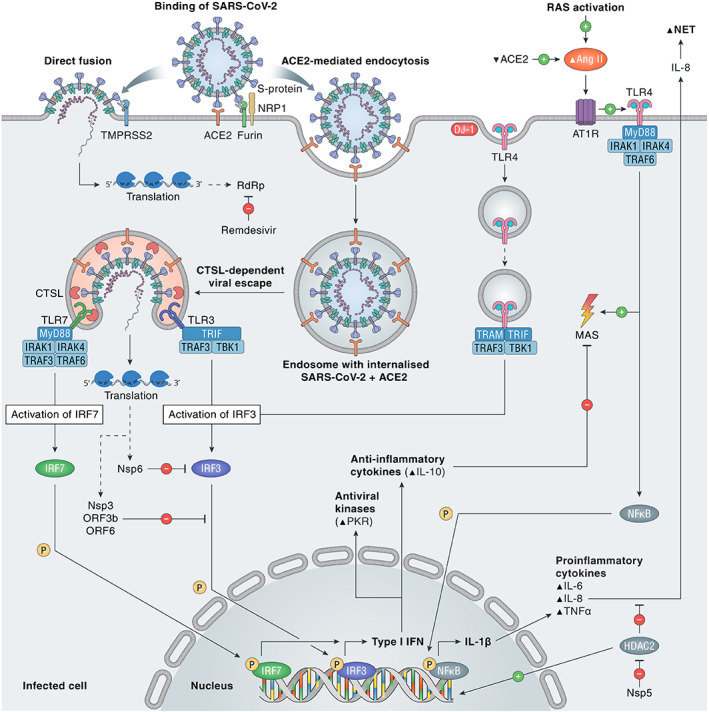
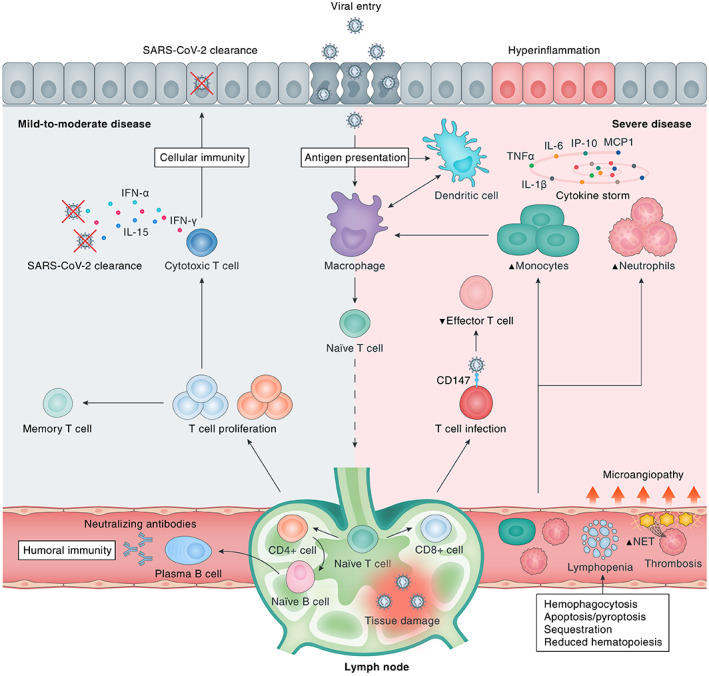
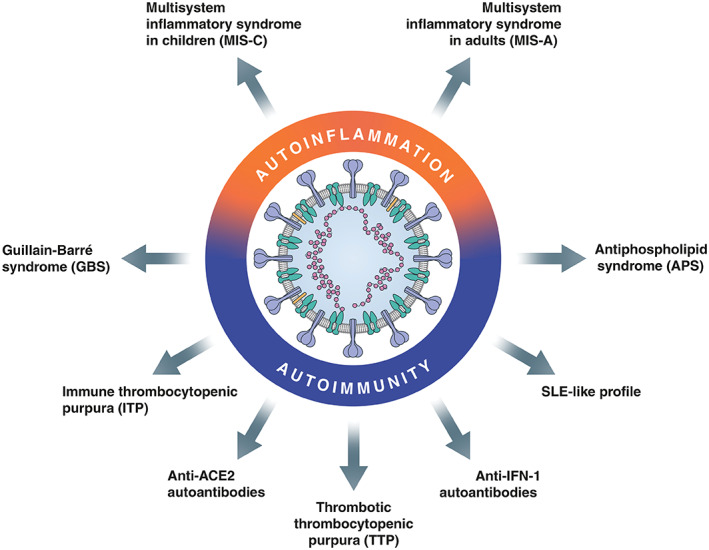
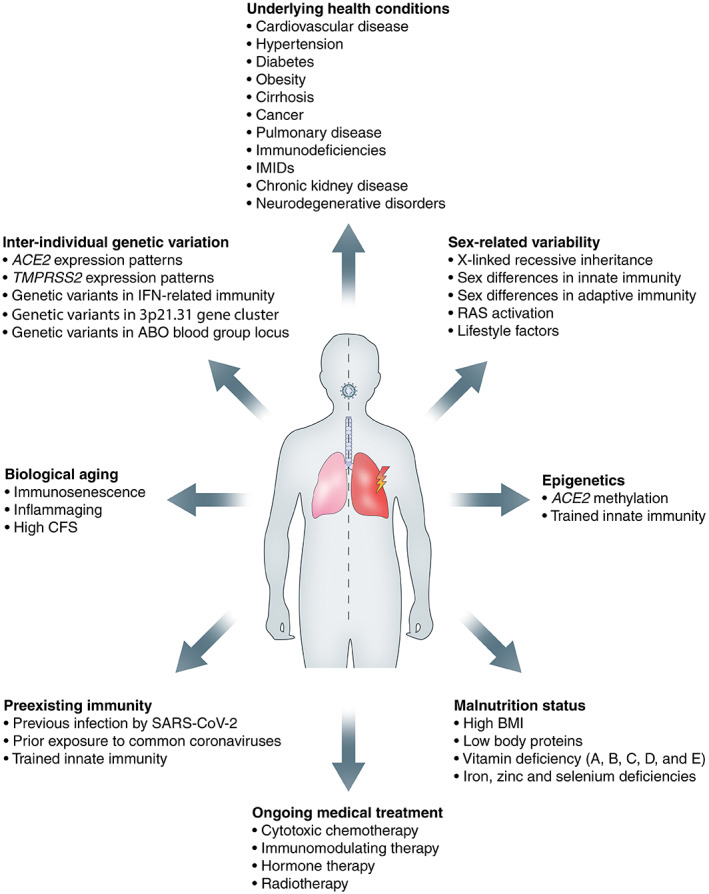
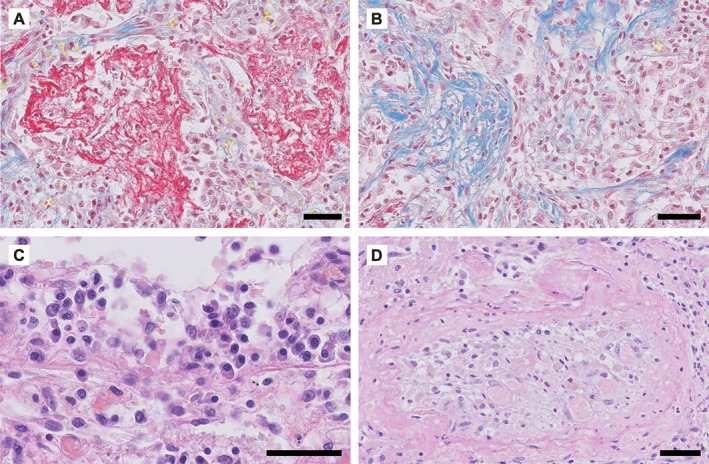
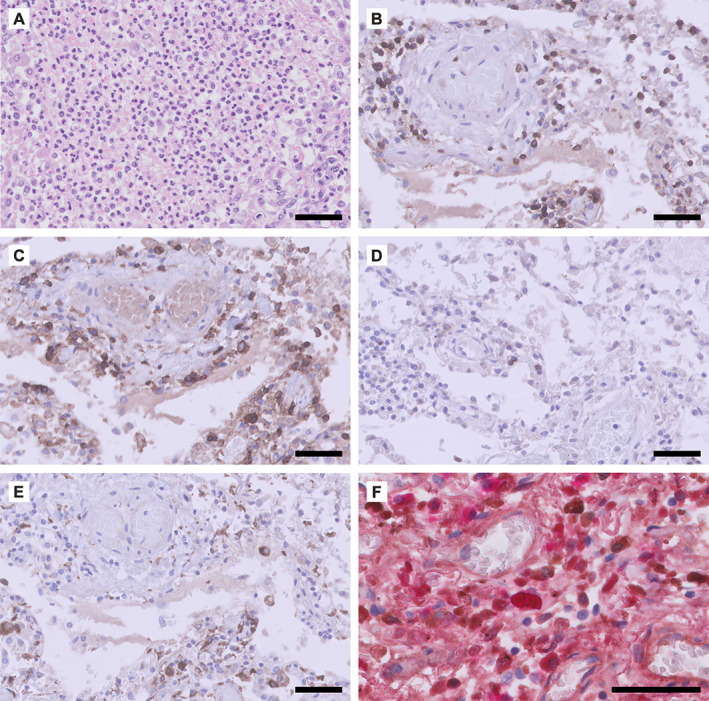
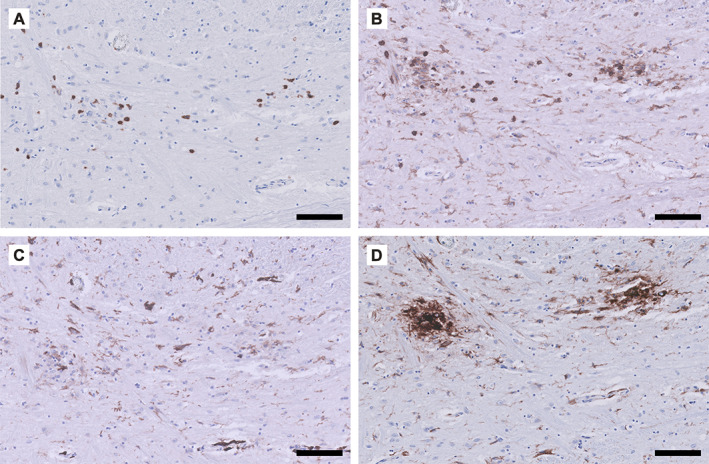
Coronavirus disease 2019 (COVID-19), caused by severe acute respiratory syndrome coronavirus 2 (SARS-CoV-2), continues to spread globally despite the worldwide implementation of preventive measures to combat the disease. Although most COVID-19 cases are characterised by a mild, self-limiting disease course, a considerable subset of patients develop a more severe condition, varying from pneumonia and acute respiratory distress syndrome (ARDS) to multi-organ failure (MOF). Progression of COVID-19 is thought to occur as a result of a complex interplay between multiple pathophysiological mechanisms, all of which may orchestrate SARS-CoV-2 infection and contribute to organ-specific tissue damage. In this respect, dissecting currently available knowledge of COVID-19 immunopathogenesis is crucially important, not only to improve our understanding of its pathophysiology but also to fuel the rationale of both novel and repurposed treatment modalities. Various immune-mediated pathways during SARS-CoV-2 infection are relevant in this context, which relate to innate immunity, adaptive immunity, and autoimmunity. Pathological findings in tissue specimens of patients with COVID-19 provide valuable information with regard to our understanding of pathophysiology as well as the development of evidence-based treatment regimens. This review provides an updated overview of the main pathological changes observed in COVID-19 within the most commonly affected organ systems, with special emphasis on immunopathology. Current management strategies for COVID-19 include supportive care and the use of repurposed or symptomatic drugs, such as dexamethasone, remdesivir, and anticoagulants. Ultimately, prevention is key to combat COVID-19, and this requires appropriate measures to attenuate its spread and, above all, the development and implementation of effective vaccines. © 2021 The Authors. The Journal of Pathology published by John Wiley & Sons, Ltd. on behalf of The Pathological Society of Great Britain and Ireland.
新型冠状病毒病 2019(COVID-19)由严重急性呼吸综合征冠状病毒 2(SARS-CoV-2)引起,尽管全球范围内采取了预防措施来对抗这种疾病,但仍在继续传播。尽管大多数 COVID-19 病例的病程轻微且具有自限性,但相当一部分患者会出现更严重的病情,从肺炎和急性呼吸窘迫综合征(ARDS)到多器官衰竭(MOF)不等。COVID-19 的进展被认为是由于多种病理生理机制之间的复杂相互作用所致,所有这些机制都可能协调 SARS-CoV-2 感染并导致特定于器官的组织损伤。在这方面,剖析目前关于 COVID-19 免疫发病机制的知识至关重要,这不仅有助于我们更好地理解其病理生理学,而且为新型和重新利用的治疗方式提供了依据。在 SARS-CoV-2 感染过程中,各种免疫介导的途径与固有免疫、适应性免疫和自身免疫有关。COVID-19 患者组织标本的病理发现为我们理解病理生理学以及制定基于证据的治疗方案提供了有价值的信息。 本文综述了 COVID-19 在最常受影响的器官系统中观察到的主要病理变化,特别强调了免疫病理学。目前 COVID-19 的治疗策略包括支持性护理和使用重新利用或对症药物,如地塞米松、瑞德西韦和抗凝剂。最终,预防是抗击 COVID-19 的关键,这需要采取适当措施来减轻其传播,尤其是开发和实施有效的疫苗。 © 2021 作者。《病理学杂志》由 John Wiley & Sons, Ltd. 代表英国和爱尔兰病理学会出版。