Law Vincent, Baldwin Margi, Ramamoorthi Ganesan, Kodumudi Krithika, Tran Nam, Smalley Inna, Duckett Derek, Kalinski Pawel, Czerniecki Brian, Smalley Keiran S M, Forsyth Peter A
Department of Neuro-Oncology, H. Lee Moffitt Cancer Center & Research Institute; Department of Tumor Biology, H. Lee Moffitt Cancer Center & Research Institute.
Department of Comparative Medicine, University of South Florida.
J Vis Exp. 2021 Jan 29(167). doi: 10.3791/62033.
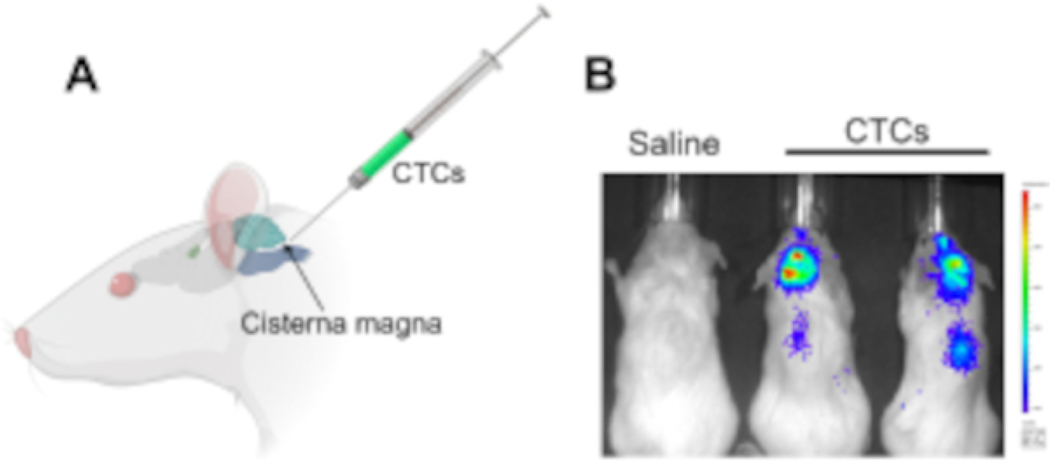
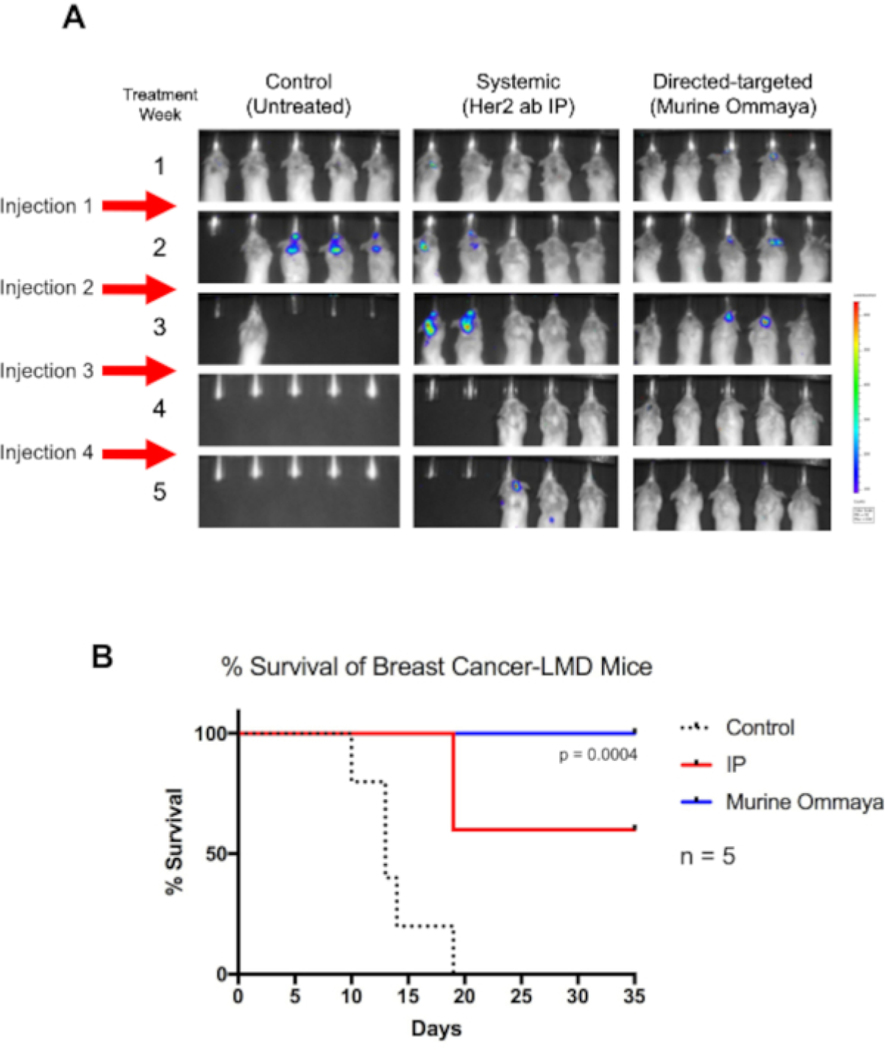
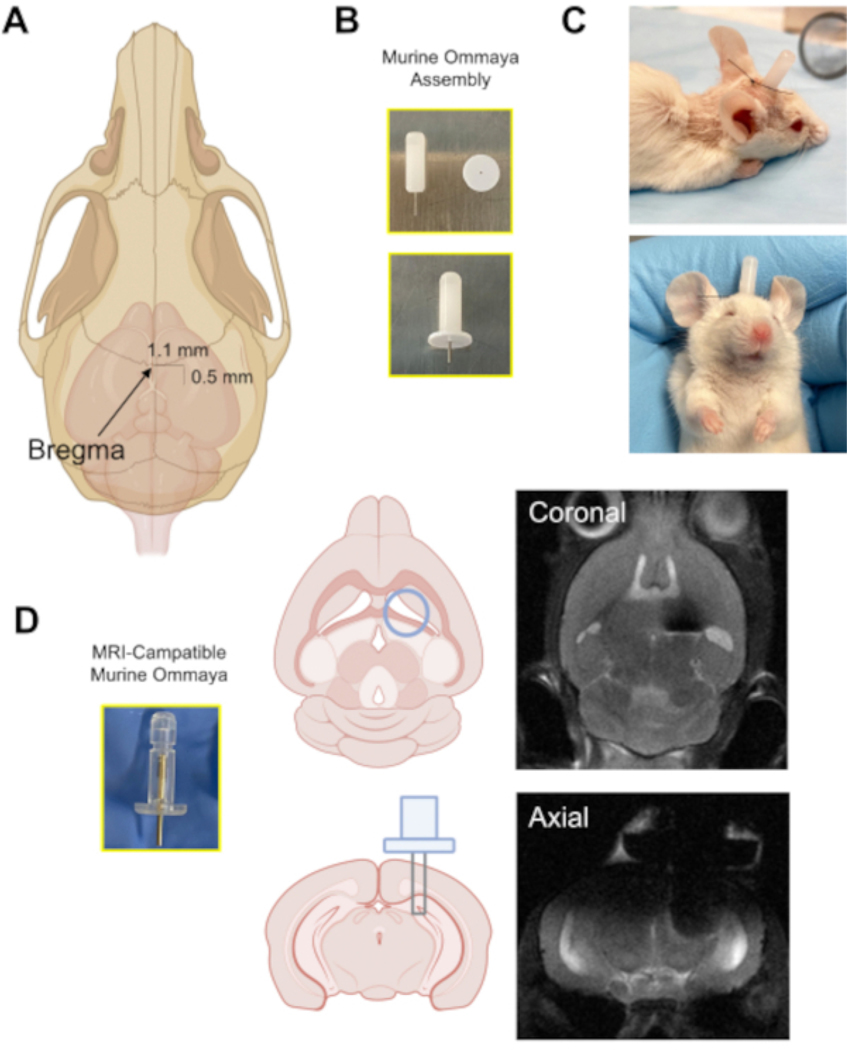
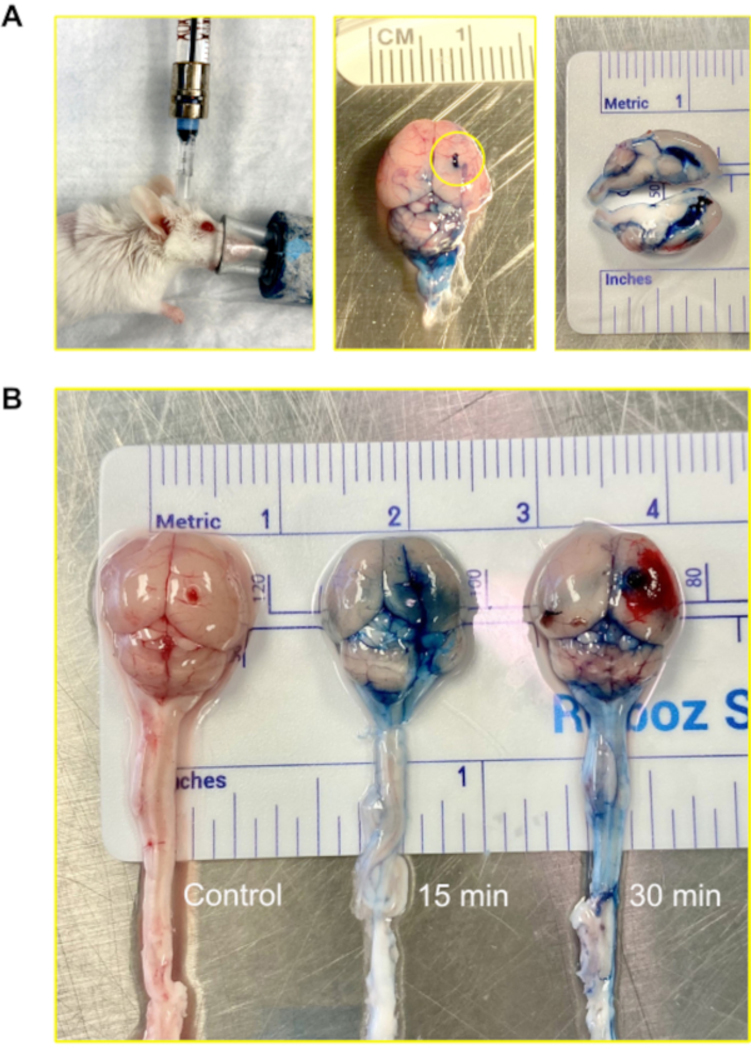
Leptomeningeal disease (LMD) is an uncommon type of central nervous system (CNS) metastasis to the cerebral spinal fluid (CSF). The most common cancers that cause LMD are breast and lung cancers and melanoma. Patients diagnosed with LMD have a very poor prognosis and generally survive for only a few weeks or months. One possible reason for the lack of efficacy of systemic therapy against LMD is the failure to achieve therapeutically effective concentrations of drug in the CSF because of an intact and relatively impermeable blood-brain barrier (BBB) or blood-CSF barrier across the choroid plexus. Therefore, directly administering drugs intrathecally or intraventricularly may overcome these barriers. This group has developed a model that allows for the effective delivery of therapeutics (i.e., drugs, antibodies, and cellular therapies) chronically and the repeated sampling of CSF to determine drug concentrations and target modulation in the CSF (when the tumor microenvironment is targeted in mice). The model is the murine equivalent of a magnetic resonance imaging-compatible Ommaya reservoir, which is used clinically. This model, which is affixed to the skull, has been designated as the "Murine Ommaya." As a therapeutic proof of concept, human epidermal growth factor receptor 2 antibodies (clone 7.16.4) were delivered into the CSF via the Murine Ommaya to treat mice with LMD from human epidermal growth factor receptor 2-positive breast cancer. The Murine Ommaya increases the efficiency of drug delivery using a miniature access port and prevents the wastage of excess drug; it does not interfere with CSF sampling for molecular and immunological studies. The Murine Ommaya is useful for testing novel therapeutics in experimental models of LMD.
软脑膜疾病(LMD)是一种罕见的中枢神经系统(CNS)转移至脑脊液(CSF)的疾病。导致LMD的最常见癌症是乳腺癌、肺癌和黑色素瘤。被诊断为LMD的患者预后很差,通常仅能存活几周或几个月。全身治疗对LMD缺乏疗效的一个可能原因是,由于完整且相对不可渗透的血脑屏障(BBB)或穿过脉络丛的血脑脊液屏障,无法在脑脊液中达到治疗有效的药物浓度。因此,鞘内或脑室内直接给药可能会克服这些屏障。该团队开发了一种模型,可长期有效地递送治疗剂(即药物、抗体和细胞疗法),并能重复采集脑脊液以确定脑脊液中的药物浓度和靶点调节情况(在小鼠中靶向肿瘤微环境时)。该模型相当于临床上使用的与磁共振成像兼容的奥马亚贮液器的小鼠版本。这个固定在颅骨上的模型被命名为“小鼠奥马亚”。作为一种治疗概念验证,通过小鼠奥马亚将人表皮生长因子受体2抗体(克隆7.16.4)递送至脑脊液中,以治疗患有源自人表皮生长因子受体2阳性乳腺癌的LMD的小鼠。小鼠奥马亚使用微型接入端口提高了药物递送效率,并防止了过量药物的浪费;它不干扰用于分子和免疫学研究的脑脊液采样。小鼠奥马亚可用于在LMD实验模型中测试新型治疗方法。